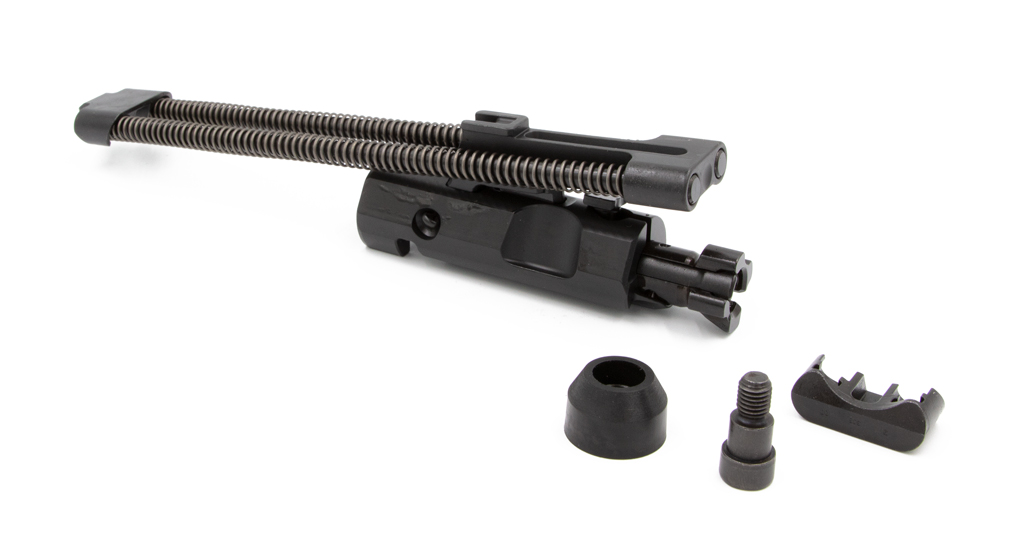
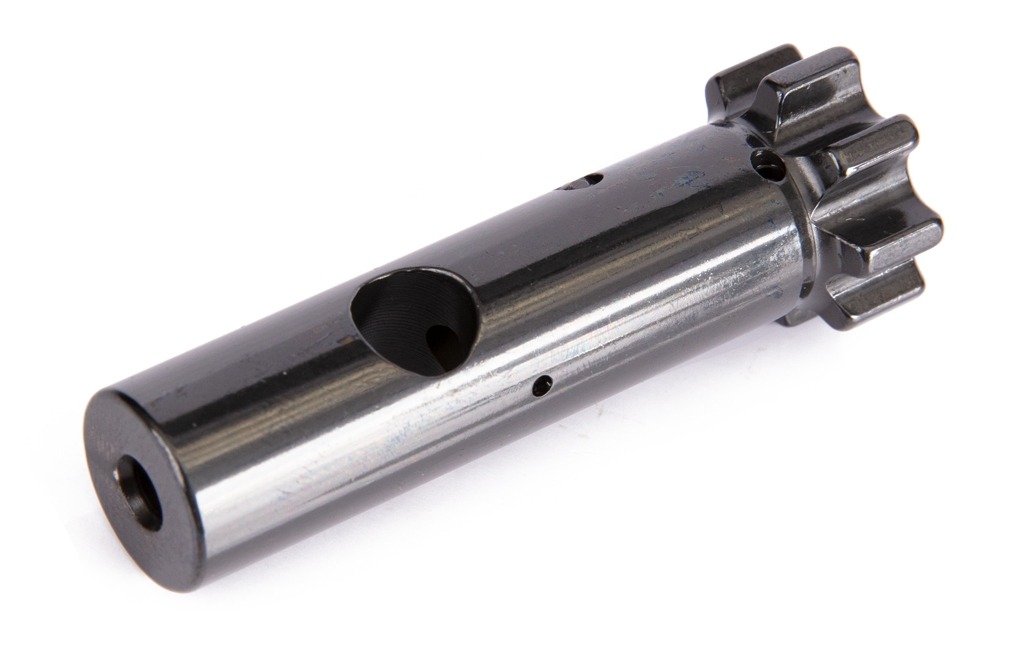
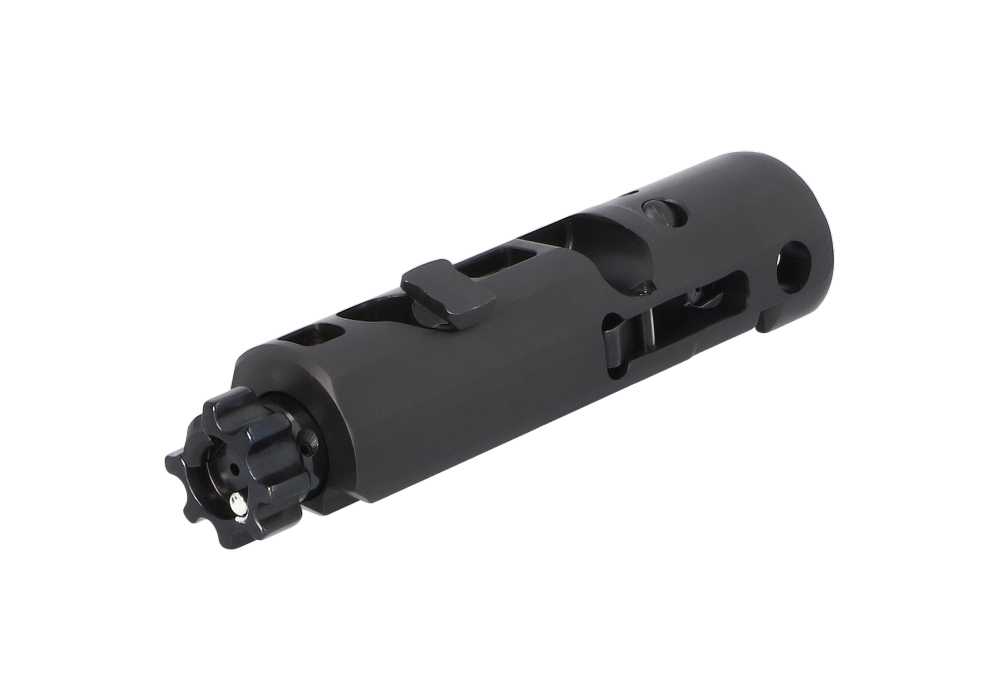
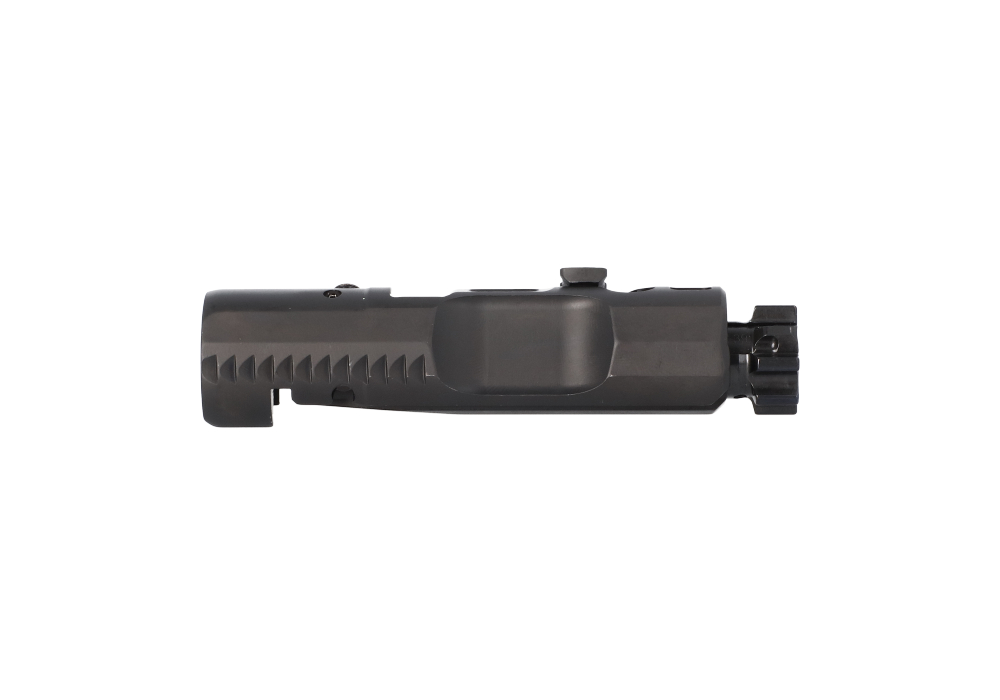
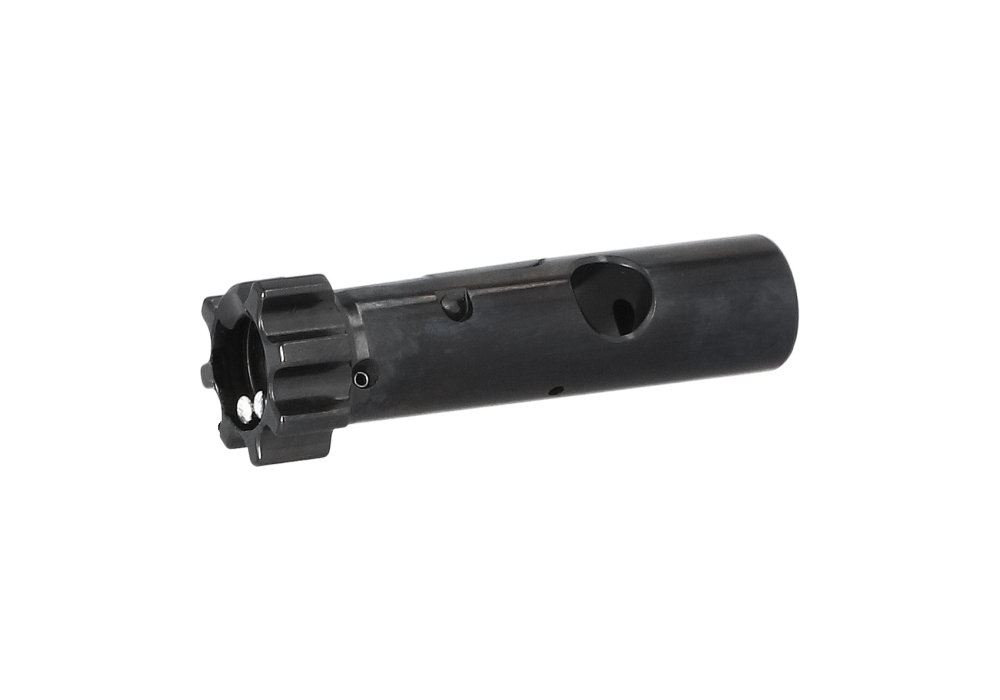
A durable bolt carrier assembly combines high-strength materials, appropriate heat treatment, precise fit, and documented quality testing. Its durability depends on how those qualities work together, not on a particular finish or a single steel designation. In many semiautomatic rifle designs, the bolt carrier group helps chamber a cartridge, lock the bolt, and support extraction and ejection as the action cycles. Those repeated movements place different demands on the bolt, carrier body, and smaller components, so material selection needs to match each component’s role. High-strength alloy steels such as 9310 are common choices for bolts, while 8620 steel is widely used for carrier bodies. The bolt must withstand repeated loading at its locking surfaces, and the carrier needs resistance to wear along its contact surfaces while retaining toughness throughout its structure. Heat treatment is an important part of that balance: a material name alone does not establish how well a finished component will resist fatigue, cracking, or surface wear. Machining quality also matters, particularly around locking lugs, bearing surfaces, and areas where moving components meet. Protective finishes can help limit corrosion and wear, although their characteristics differ. Phosphate, nitride treatments, and other protective surface technologies each have distinct maintenance considerations; none eliminates the need for proper care. Inspection adds another layer of confidence. High-pressure testing evaluates a component under a specified proof load, while magnetic particle inspection can reveal certain surface and near-surface flaws in suitable ferromagnetic materials. These processes serve different purposes and are most informative when the documentation explains the testing standard and whether inspection covers individual components or a sampled batch. For shoppers comparing durable bolt carrier assemblies, the strongest basis for comparison is a clear combination of material specifications, treatment details, inspection practices, and compatibility information. A smooth-looking exterior can be appealing, but the less visible qualities—consistent machining, controlled processing, and verified dimensions—have a greater bearing on long-term service. Published specifications provide useful context without turning a single feature into a promise of unlimited life.
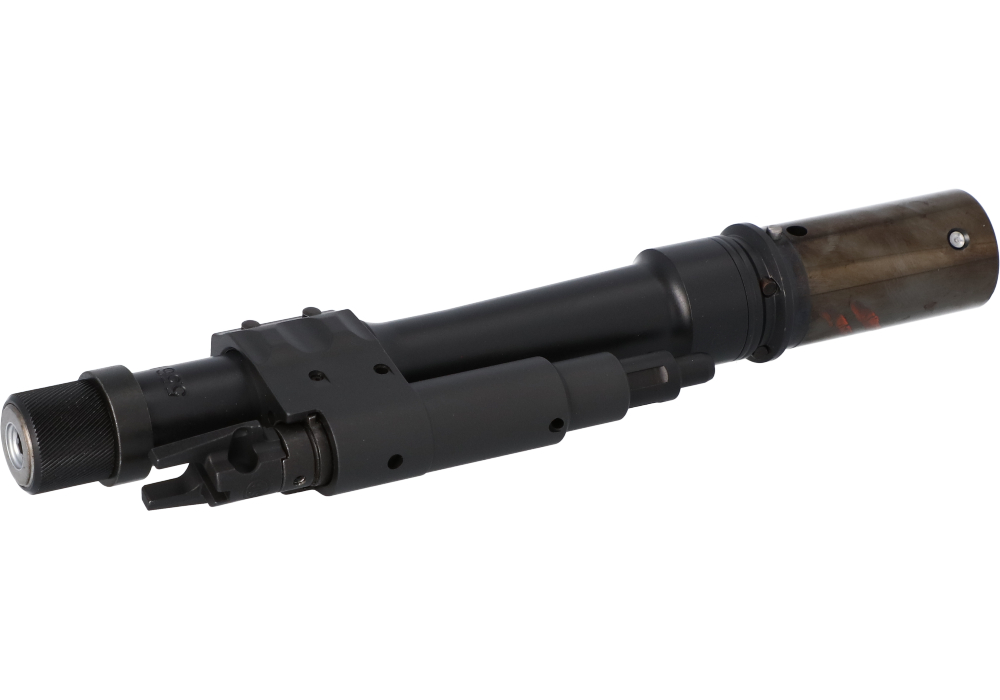
Fit is just as important as construction because bolt carrier assemblies are not interchangeable across every rifle that shares a similar appearance. Platform, cartridge, operating system, and the firearm manufacturer’s specifications all influence compatibility. Even within a familiar rifle family, differences in dimensions, bolt configuration, and carrier design can make an assembly unsuitable for another firearm. Direct-impingement and piston-operated systems may use different carrier arrangements, and proprietary platforms can require components designed specifically for that action. A dependable purchase begins with an exact match to the firearm’s documented requirements rather than an assumption based on caliber alone. The meaning of “assembly” also deserves attention. Some descriptions refer to the carrier and its attached components, while others describe a complete group that includes the bolt and associated parts. The stated contents should make that distinction clear. On designs that use a carrier-mounted gas key, secure attachment and appropriate factory staking are relevant construction details, but that feature is not universal across operating systems. Likewise, extractor design, retaining components, and internal surface treatment need to be considered within the intended platform rather than treated as interchangeable upgrades. Headspace and safe function are matters for a qualified gunsmith or armorer, especially when replacing a bolt or combining components from different sources. Intended use provides another practical point of comparison. A rifle used for occasional target shooting may experience a different service pattern from one used regularly for organized practice, instruction, or competition. A long range session can involve repeated cycling and substantial fouling, making consistent fit and straightforward maintenance valuable characteristics. Suppressor use can also change operating conditions on some firearms, so compatibility should follow the firearm and suppressor manufacturers’ guidance rather than broad claims about universal performance. Durability is not simply a matter of choosing the heaviest carrier or the hardest surface. It means selecting an assembly whose materials, dimensions, and construction suit the firearm and its intended role. A clearly documented match is more useful than a feature list that leaves essential fit questions unanswered.
Care helps preserve those qualities throughout an assembly’s service life. Residue, old lubricant, and environmental contamination can collect around moving surfaces, while corrosion can affect areas that are difficult to see during a casual inspection. Manufacturer-approved cleaning products and lubrication practices help protect the assembly without exposing its finish or surrounding components to unsuitable chemicals. More lubricant is not automatically better, and a slick finish does not mean lubrication can be omitted. The firearm’s maintenance instructions remain the appropriate reference for cleaning intervals, products, and inspection expectations. Any maintenance should take place with the firearm unloaded and ammunition kept separate from the work area. Visible cracks, damaged locking surfaces, unusual wear, or a change in normal operation warrant evaluation by a qualified professional rather than continued use. Routine inspection is also an opportunity to distinguish ordinary finish wear from damage that could affect safe function; appearance alone cannot settle that judgment. For owners considering a replacement or a compatible spare, Complete Bolt Carrier Assemblies offers a related category to explore, with the stated configuration and compatibility details guiding the comparison. Keeping those details alongside the firearm’s records can make later service decisions more straightforward, particularly when several similar rifles are stored together. These components may interest experienced recreational shooters, competitors, and owners who value dependable equipment and organized maintenance. They can also be a thoughtful gift for a knowledgeable firearm owner, provided the exact platform requirements and the recipient’s preferences are confirmed beforehand. An assembly is a fit-sensitive purchase, not a generic accessory chosen by appearance. For many owners, lasting value comes from construction that stands up to regular use, specifications that are easy to verify, and care requirements that fit an established maintenance routine. Durable bolt carrier assemblies bring those considerations together: sound materials, controlled manufacturing processes, appropriate inspection, and a precise match to the firearm. Combined with responsible handling and professional attention when needed, those qualities support dependable service without relying on exaggerated claims or treating any mechanical component as maintenance-free.