Elevation turret scopes give shooters a practical way to refine point-of-impact placement as distance, ammunition, and environmental conditions change. The elevation turret is the dial positioned on top of a riflescope, and turning it shifts the reticle vertically in relation to the target. In most configurations, rotating the turret counterclockwise moves the point of impact upward, while rotating it clockwise moves the point of impact downward; however, turret markings and manufacturer instructions should always be checked before making adjustments. These scopes are useful for hunters, target shooters, and rifle owners who want a clear, repeatable method for aligning a sight picture with a rifle’s trajectory. Before selecting an optic, consider the distances you expect to shoot, the type of rifle and ammunition involved, the size and weight you are comfortable carrying, and whether adjustments will be occasional or frequent. A hunter moving through timber may prefer a compact scope with a protected, capped elevation turret that resists brush and gear interference. A target shooter working from a bench or precision position may value a taller, exposed turret that allows quick, deliberate changes while monitoring groups at extended distances. Either style can serve well when its controls, reticle, optical performance, and adjustment range suit the intended use. As cooler weather brings more time afield and clearer routines at the range, a dependable elevation system can help keep sight-in work organized and confidence grounded in a rifle’s verified performance.
Turret measurements are generally expressed in MOA, or Minutes of Angle, and MIL, or milliradians. Both systems divide angular movement into precise increments, but they use different units and numbering conventions. A scope with 1/4 MOA clicks shifts the point of impact by approximately one-quarter inch at 100 yards, with the amount increasing as distance increases. A scope with 1/10 MIL clicks shifts the point of impact by one-tenth of a milliradian per click, which corresponds to approximately one centimeter at 100 meters. The important consideration is consistency: select a system that matches your preferred ballistic references, range tools, and shooting habits, then learn how its values translate at the distances you use. Zeroing typically begins at a known baseline, often 100 yards, with the rifle supported securely and the shooter confirming several groups rather than relying on a single shot. Once the sight picture and point of impact align, record the ammunition, distance, weather conditions, and turret position. From there, a verified ballistic table or reliable calculator can help estimate elevation corrections for longer shots, while actual range confirmation remains essential. A zero-stop feature can provide a useful reference point by allowing the turret to return to the established zero without turning beyond it. Capped turrets add protection for a set-and-use approach, while exposed turrets support fast, repeated corrections. Some configurations use custom or ballistic-compensation markings with range references in place of, or alongside, MOA and MIL values. These markings can simplify dialing for a particular setup, but they depend on the correct ammunition, velocity, distance, and environmental information.
When choosing among elevation turret scopes, pay attention to the full system rather than the top dial alone. Glass clarity, reticle design, magnification range, eye relief, tube dimensions, mounting height, adjustment travel, and return-to-zero performance all influence how naturally an optic works with a rifle. A reticle with clear hold points may complement a shooter who prefers to keep the turret near zero, while a simple reticle and exposed elevation control may suit someone who dials corrections for each confirmed distance. Turret feel matters as well: distinct clicks, readable markings, and controls that can be operated without losing a stable shooting position are valuable in bright range conditions and in the subdued light of early or late field use. Protective covers can be especially helpful when a rifle is carried through dense vegetation, transported in a case, or stored with other equipment. For additional protection and organization around the adjustment area, shoppers can explore Elevation Turret Caps for Target Shooting Optics. These scopes can be a thoughtful gift for a hunter preparing for a new season, a recreational shooter refining a rifle setup, or a precision-minded enthusiast building a more methodical range routine. The best choice is one that matches the recipient’s shooting distance, preferred measurement system, mounting platform, and level of hands-on experience. Safe handling remains the foundation of every session: follow the firearm and optic instructions, confirm the rifle is unloaded when installing or adjusting equipment outside a live-fire setting, use a suitable backstop, and verify every sighting change under controlled range conditions. With careful setup and regular practice, an elevation turret scope can bring repeatable vertical correction, clearer records, and a more confident connection between the aiming point and the rifle’s verified trajectory.




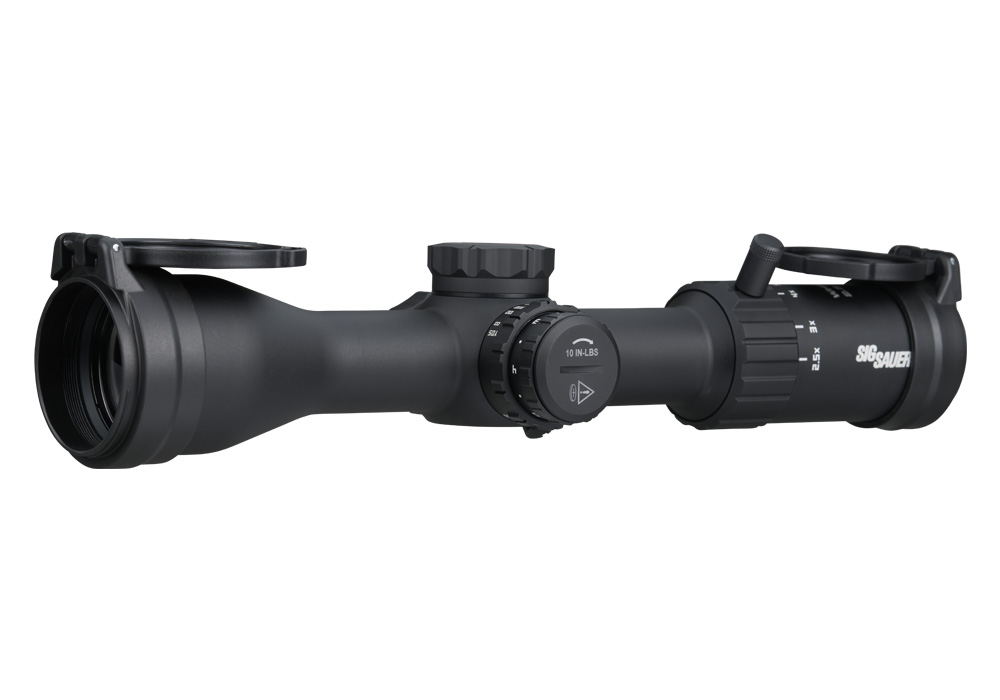


![[["TANGO6T SCOPE, 1-6X24MM, 30MM, FFP, 556-762 HORSESHOE ILLUM RETICLE, 0.2 MRAD, CAPPED TURRET, ","FDE"]]](http://www.sigsauer.com/media/catalog/product/s/o/sot61230-web0-hero-left-updated.jpg)