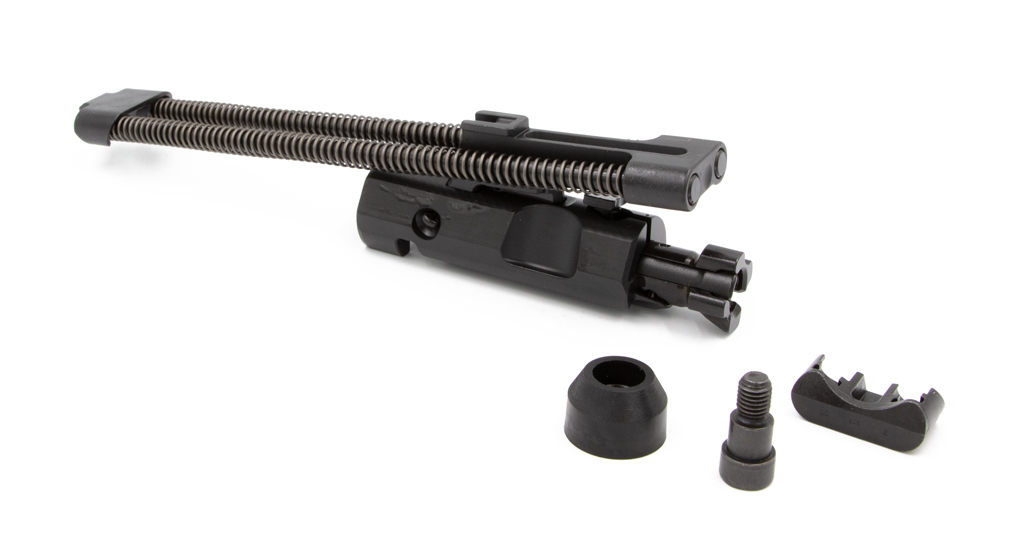
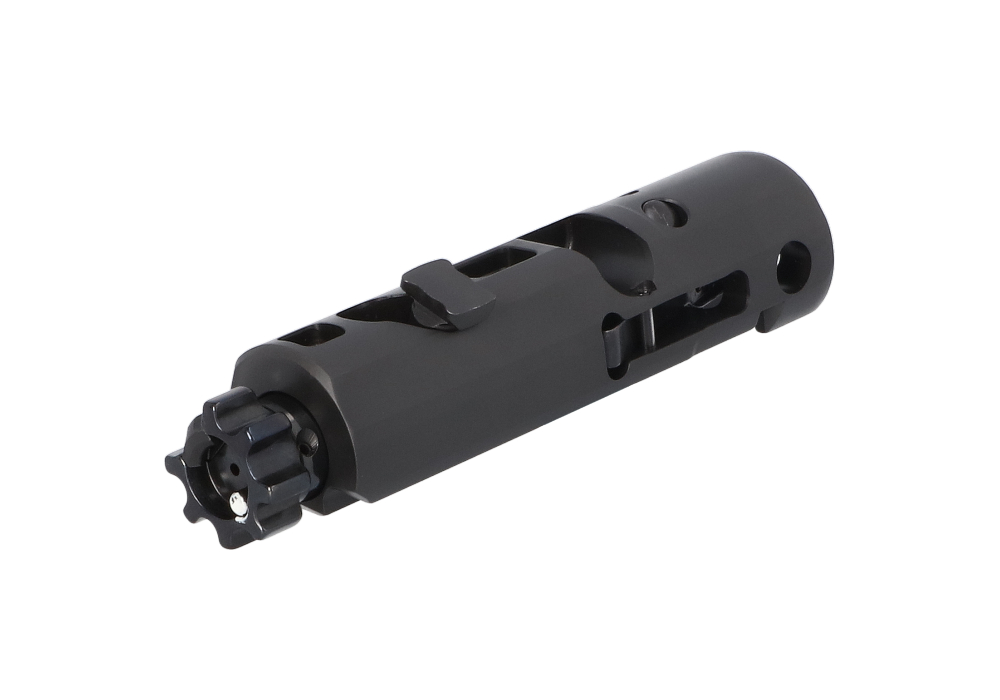
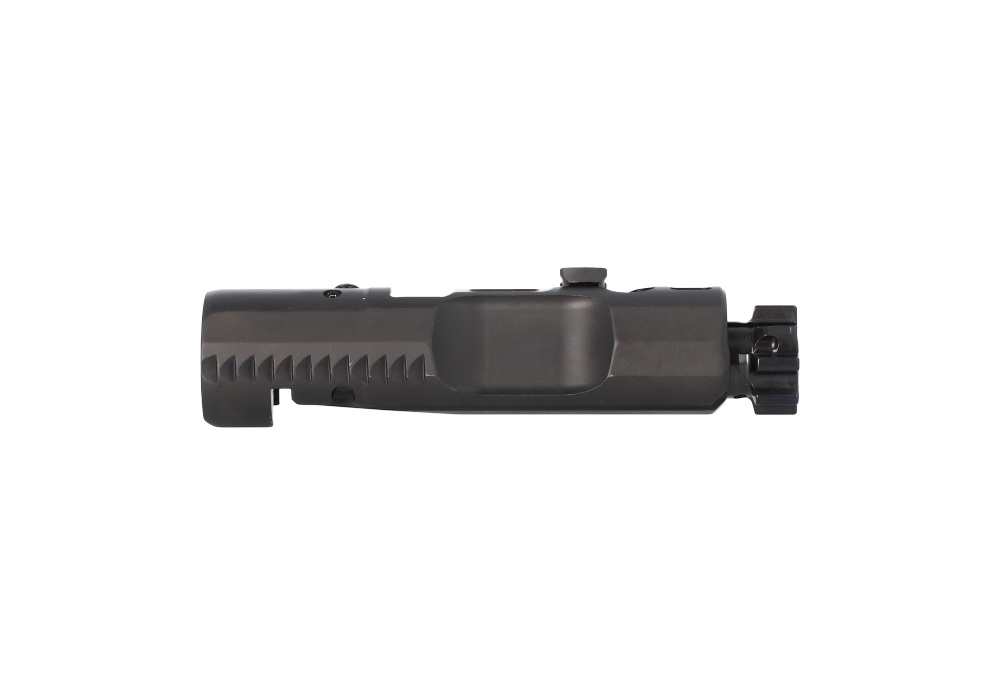
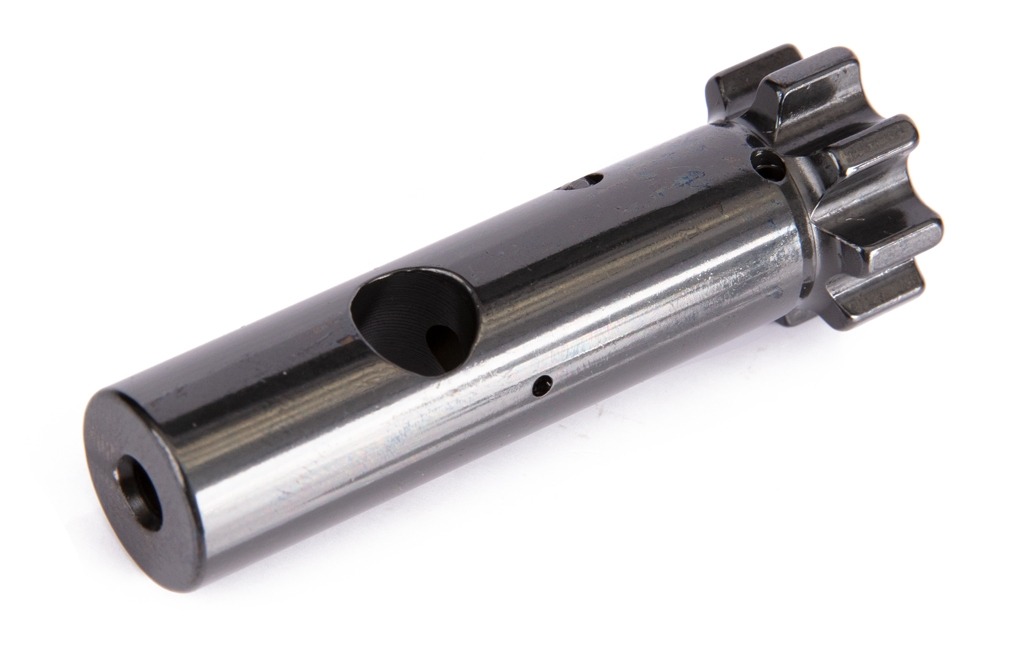
Enhanced Bolt Carrier Assemblies are designed for shooters who want to refine the operation of an AR-pattern rifle or pistol beyond a conventional bolt carrier group. An assembly typically combines the carrier, bolt, gas key, firing pin, cam pin, retaining pin, and related hardware into one matched unit, allowing the moving parts to work together as a system. Depending on the design, enhancements may include a stronger bolt material, improved heat treatment, a revised cam path, enlarged or strategically positioned bearing surfaces, upgraded gas-key fasteners, and a low-friction finish that helps reduce carbon adhesion. These changes can be especially useful on firearms that see frequent range sessions, demanding training schedules, competition use, or hard service in dusty, wet, or cold conditions. A well-made carrier assembly should move smoothly through the upper receiver, maintain consistent lockup, and support dependable extraction and ejection when the rifle is properly assembled and tuned. For shoppers comparing enhanced bolt carrier assemblies, compatibility remains the first consideration. Confirm the intended caliber, operating system, barrel length, gas-system length, receiver dimensions, and firing-pin configuration before making a purchase. A carrier designed for one cartridge family or platform may not be suitable for another, and a component that appears similar at a glance can differ in bolt face dimensions, extractor geometry, gas handling, or headspace requirements. It is also important to distinguish a complete bolt carrier assembly from a carrier-only component. A complete assembly may be the simpler choice for an upgrade because it arrives with the principal internal parts already selected to function together, while a carrier-only purchase may be better suited to an experienced builder who already has compatible components on hand. When in doubt, compare the manufacturer’s specifications with the firearm’s owner’s manual and consult a qualified gunsmith before installation.
Many shooters choose enhanced bolt carrier assemblies to address the demands of suppressed firing, short-barreled configurations, or rifles that run with a noticeable amount of excess gas. A suppressor can alter the timing and pressure behavior of a direct-impingement operating system, sometimes sending additional gas and fouling back through the action. Enhanced designs may use venting features, altered gas pathways, or carrier geometry intended to manage that change more consistently, although no carrier can compensate for every ammunition, gas-block, buffer, spring, or barrel combination. Modified cam paths may help delay or smooth the beginning of extraction until chamber pressure has fallen to a safer level, while additional bearing surfaces or a flared carrier tail can help keep the carrier aligned as it travels inside the receiver. Some assemblies use dual ejectors or revised extractor and ejector components to provide a more positive release of spent cases, while others focus on a carefully treated bolt, strengthened lugs, or improved fasteners that resist loosening during extended use. Coatings such as black nitride, nickel-based finishes, or diamond-like carbon may reduce friction and make carbon easier to wipe away, but finish alone should never be treated as a substitute for correct dimensions, proper lubrication, or sound manufacturing. The practical benefit is often felt in the small moments: a bolt that continues moving cleanly after a long afternoon on the firing line, an action that is easier to inspect at the workbench, or a rifle that remains predictable when the temperature drops and gloves make every maintenance task more deliberate. Suppressed shooters should also evaluate adjustable gas systems, buffer weights, spring rates, and ammunition as part of the overall setup rather than expecting one upgraded component to solve every cycling concern. After installation, verify safe function with the firearm unloaded, follow the applicable instructions, and have the system inspected if extraction, ejection, primer appearance, unusual wear, or carrier movement seems abnormal.
Enhanced Bolt Carrier Assemblies can be a practical choice for a new rifle build, a carefully planned upgrade, or a thoughtful gift for an experienced shooter who keeps detailed track of maintenance and component wear. They are particularly appealing to competitors who value repeatable cycling, range regulars who clean carbon from their rifle after nearly every session, and hunters or outdoor enthusiasts who want durable internal parts before the cooler months bring rain, dust, and changing field conditions. They can also make sense for a professional user who needs a spare assembly prepared and inspected before a training trip, provided the recipient’s firearm specifications are known. Because fitment is so important, a complete assembly is usually a better gift when the giver can confirm the platform, caliber, and receiver configuration in advance; a gift card or a conversation about the intended build may be wiser than guessing at compatibility. Before choosing among enhanced bolt carrier assemblies, review the bolt material and treatment, carrier finish, gas-key construction, staking or retention method, extractor and ejector arrangement, lubrication guidance, and warranty support. Look for clear dimensional information and a design that matches the intended firing schedule rather than selecting solely on appearance. Keeping a spare set of compatible components on hand can also reduce downtime when a bolt, extractor spring, or retaining pin eventually needs attention. For shoppers who want to compare a broader selection of ready-to-install options, explore Complete Bolt Carrier Assemblies. Whether the goal is smoother operation with a suppressor, improved durability during intensive practice, easier cleaning, or a dependable replacement for a worn assembly, the best choice is one that matches the firearm precisely and supports a disciplined routine of inspection, lubrication, and function checks.