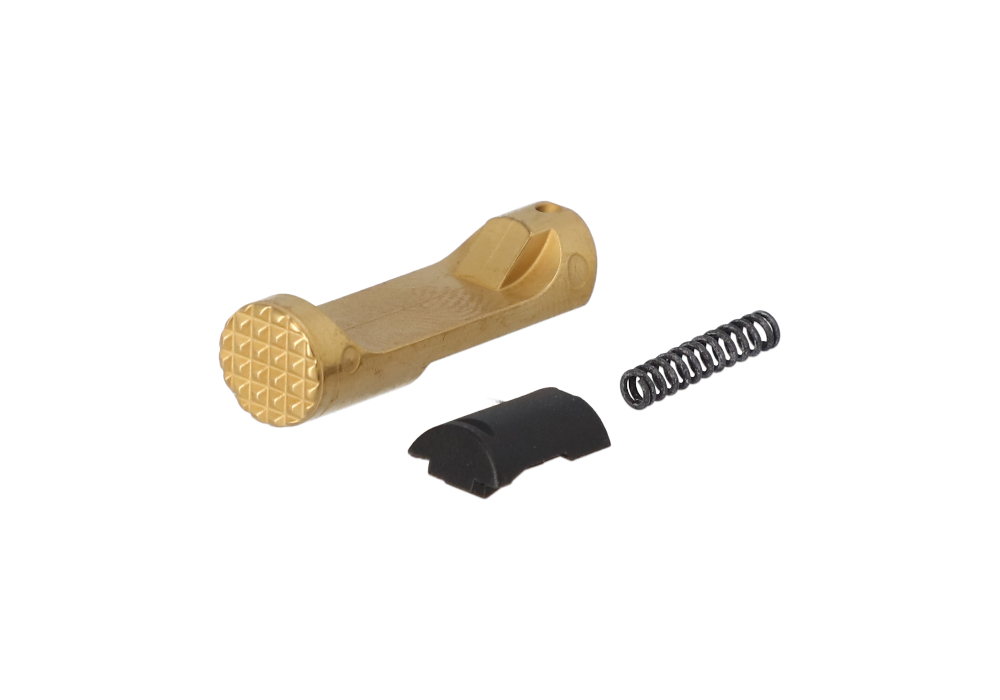
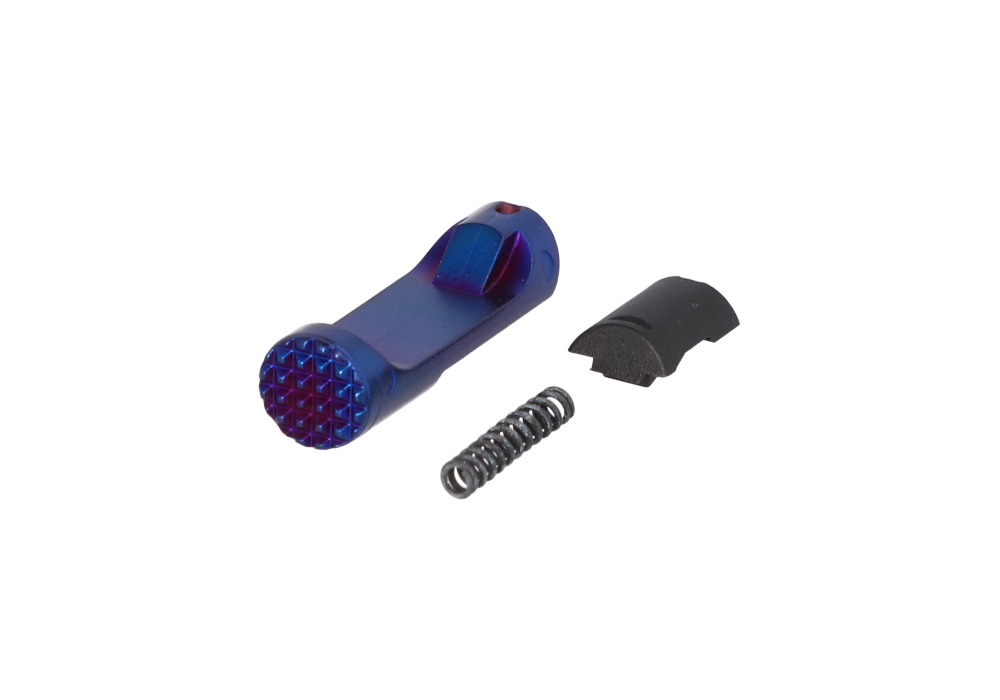
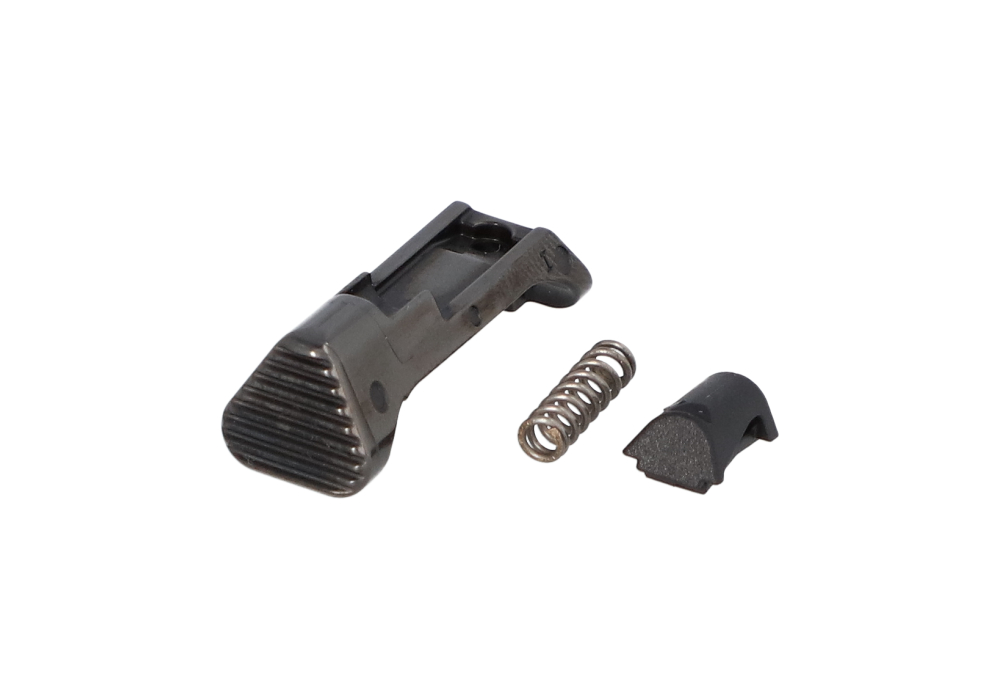
Factory replacement magazine catches are original-equipment components that retain a firearm’s magazine in its seated position and work with the release control to let the magazine be removed. The catch engages a corresponding retention surface on the magazine, so its dimensions and condition matter even though much of the part may sit inside the grip or receiver. A factory replacement is intended for the fit and operation specified for its designated firearm, rather than a change in control shape or reach. These components are relevant when an existing catch shows wear, damage, or another condition that warrants professional assessment and replacement. They also belong to a broader group of magazine-release parts that may include buttons, springs, and retainers, depending on the design. Those terms are related, but they are not interchangeable: a catch may be a separate internal piece, while a release assembly may contain several components. The product description determines what is included, which is especially important when a repair requires more than the visible control. Compatibility depends on more than a similar silhouette. Firearm family, exact model, generation, frame or grip configuration, and designated magazine type can all affect the correct match. Two catches that look nearly identical in a photograph may have different engagement surfaces, mounting features, or relationships to the release mechanism. Likewise, a magazine that fits a grip does not by itself establish that a particular catch is compatible. Clear manufacturer fit information is more useful than an assumption based on size or appearance. For owners maintaining familiar equipment, the appeal of a factory-specification replacement is continuity: the intended control position, the familiar operating arrangement, and a component selected for the firearm’s original design. It is a practical maintenance category rather than a cosmetic accessory, with attention centered on proper retention, deliberate release, and the relationship among parts that must work together.
The materials in a magazine-catch system reflect the job of each component. Designs may use steel or other specified metals for engagement features, with metal or polymer appearing in associated controls, depending on the firearm. Material alone does not establish suitability; dimensions, surface condition, and compatibility with the surrounding parts are equally important. A steel catch with the wrong profile is not a substitute for the correctly specified component, and a finish that looks similar does not prove that two parts are equivalent. Surface treatments, where specified, can help address wear or corrosion, while the shape of the engagement area determines how the catch interfaces with the magazine. Repeated magazine insertion and removal place demands on that interface over time. The visible button may still look presentable even when a concern involves an internal surface, spring, or another element of the mechanism. Conversely, cosmetic marks on an exposed control do not automatically identify a functional problem. Professional evaluation helps distinguish normal use from a condition that requires attention. Care should follow the firearm manufacturer’s cleaning and lubrication recommendations, including guidance for the frame or receiver area surrounding the release mechanism. Fine grit, lint from everyday carry, and residue from regular range use can collect near controls, making routine inspection a useful part of responsible maintenance. Aggressive abrasives, unapproved chemicals, or attempts to reshape engagement surfaces can compromise fit or protective finishes. A replacement component is not a remedy for every magazine-retention concern, since the magazine itself and other related parts may also need assessment. An unloaded firearm and an ammunition-free work area are essential for inspection or service, and work beyond the owner’s training belongs with a qualified gunsmith. After replacement, confirmation of proper function should follow the manufacturer’s procedures. Durability depends on a correctly matched, properly maintained system, not simply the hardness of one small part or the appearance of its finish.
Owners who use their firearms for regular range practice, competition, or lawful personal protection often value consistent controls more than a visibly different accessory. A familiar release location helps preserve the handling experience after maintenance, while the correct catch supports the magazine interface the firearm was designed around. Instructors and armorers may also focus on factory-specification components when preserving the original configuration of training or service equipment. The priorities are practical: a magazine should remain securely retained until the release is intentionally operated, and the control should function as specified for that design. An enlarged or extended control is a different consideration from a standard replacement. Added reach or a different button profile can change how the control interacts with the hand, grip, or holster, so a different shape is not automatically a better fit. Hand size, established handling habits, and the intended role of the firearm all influence that choice. Factory replacement magazine catches are most relevant when the objective is to maintain the designated arrangement rather than alter it. A reversible control arrangement is also a model-specific feature, not something that can be assumed from the catch’s outline or the appearance of a button. Related hardware appears in Aftermarket Mag Catch Locks for Handguns, where each component’s stated purpose and compatibility remain central to selection. When a replacement is being considered as a practical gift for an experienced owner, verified compatibility is far more important than appearance or a broad description such as “fits compact pistols.” The recipient’s exact firearm details and the part’s stated application should align before a selection is finalized. Whether the need follows years of regular practice or an inspection that identifies wear, the basis for choosing is the same: clear application information, appropriate materials, and the correct component for the firearm. A modest-looking catch can have an important role, and its suitability rests on details that are not always visible in a photograph.