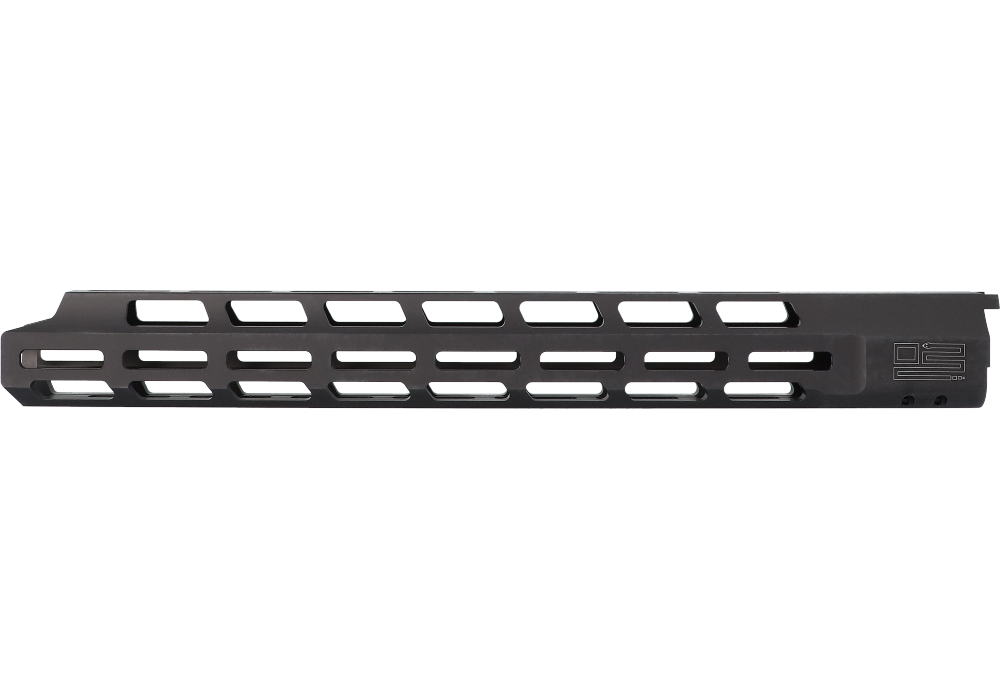
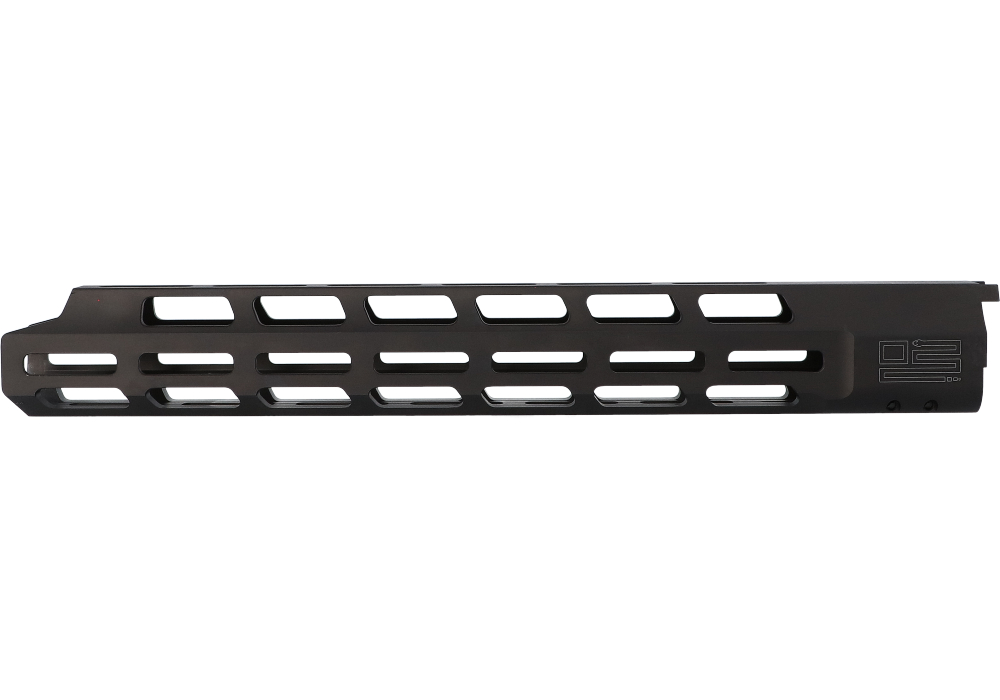
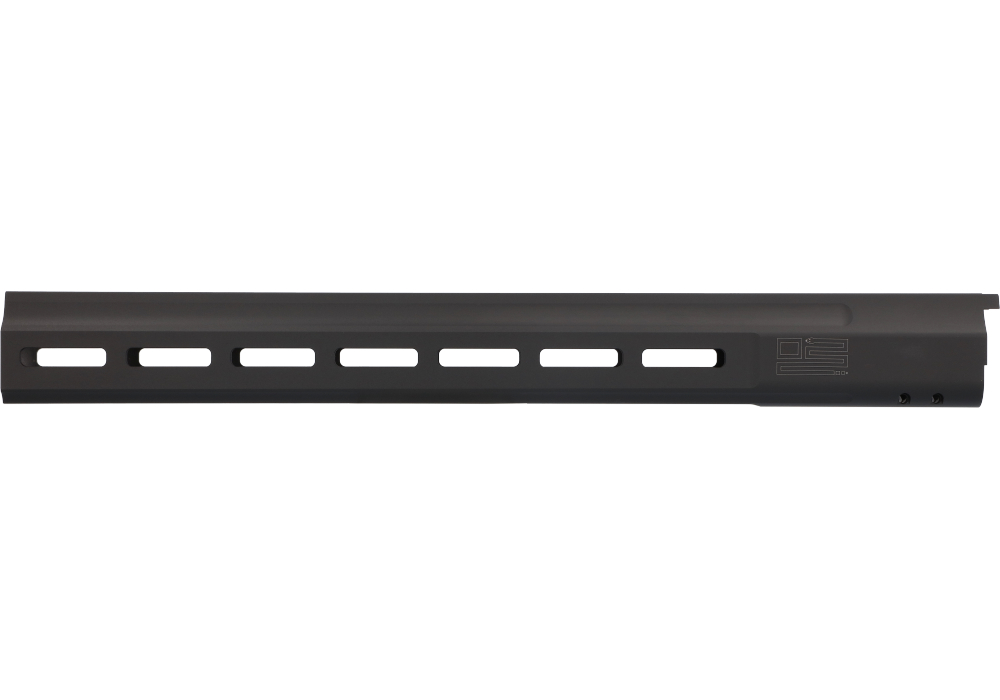
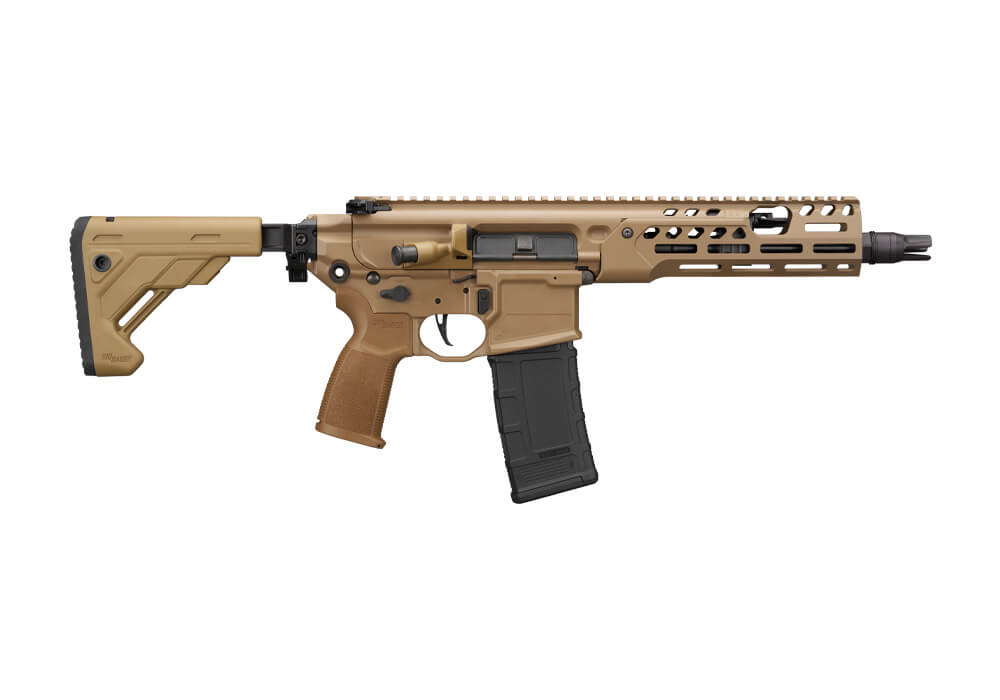
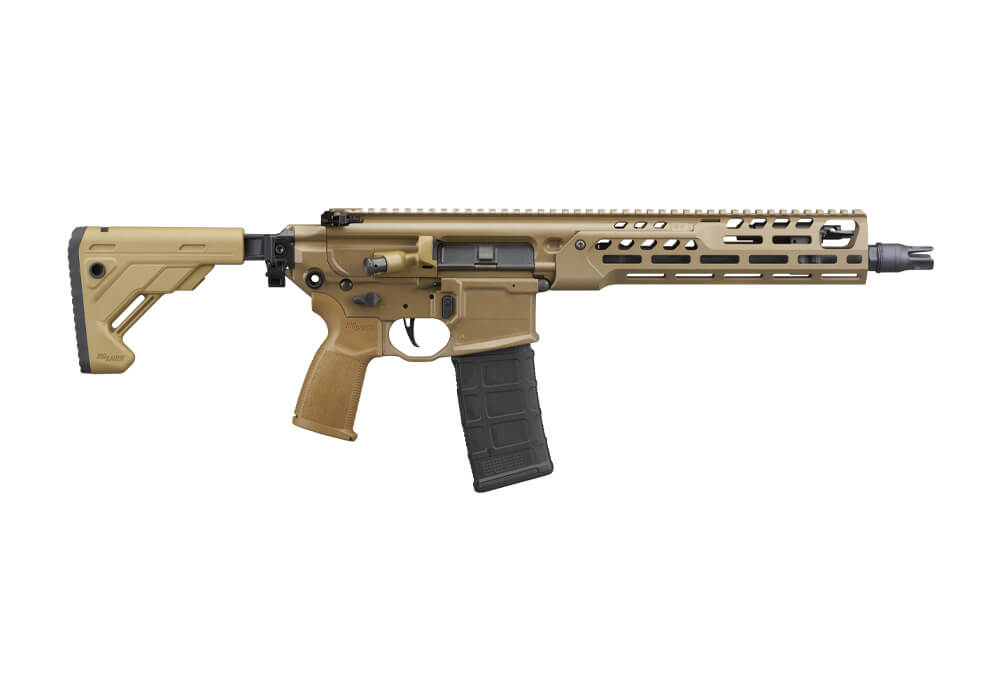
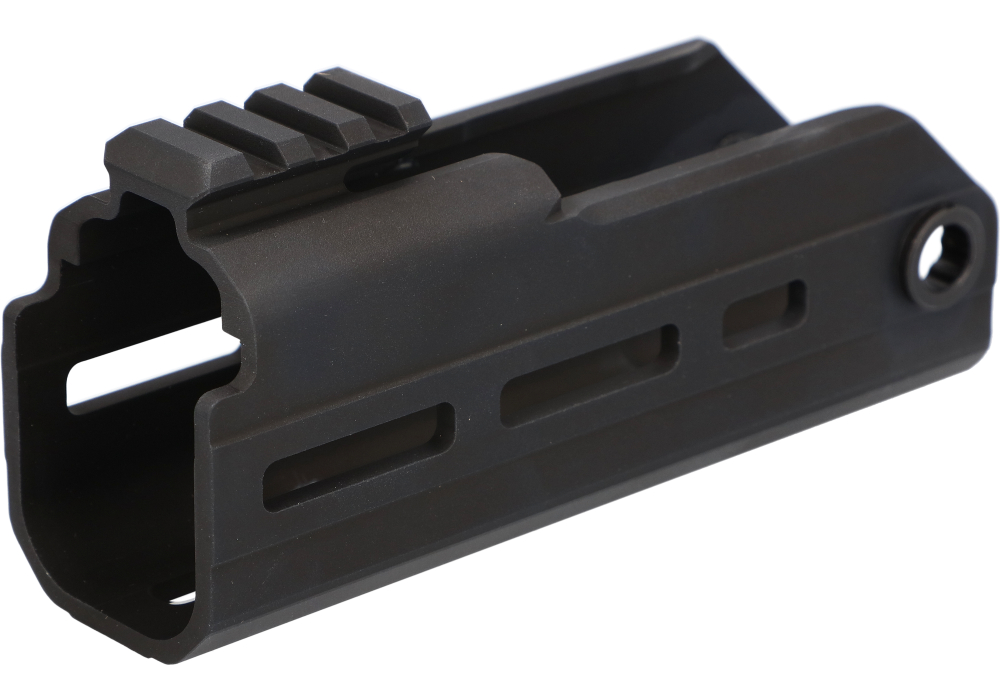
FDE tactical handguards provide a support-hand gripping surface and accessory mounting space in a flat dark earth finish, typically a muted shade of tan or brown. As the fore-end of a compatible rifle or other firearm platform, a handguard helps separate the support hand from the barrel while shaping how the firearm feels during handling. The FDE color creates an earth-tone appearance that can complement matching receivers, stocks, and grips, although shades and surface textures vary between finishes. Color alone does not determine glare reduction, wear resistance, or mechanical compatibility; those qualities depend on the coating, construction, and design. Common attachment layouts include M-LOK slots, Picatinny rails, and combinations of both. M-LOK configurations provide mounting positions for compatible accessories while leaving much of the exterior relatively smooth. Quad-rail designs have Picatinny mounting surfaces along four sides, offering extensive attachment space with a more pronounced profile. Neither layout is automatically better for every application. A recreational shooter who values a comfortable, uncluttered grip may prefer a slim slotted profile, while someone using several compatible rail-mounted accessories may appreciate a fuller rail arrangement. Integrated top rails can extend mounting space, but their dimensions and alignment should match the intended setup. Rail covers can soften exposed edges and improve hand comfort when compatible with the attachment system. Cross-sectional shape matters as much as the rail pattern: a narrow, rounded handguard feels different from a broad, angular fore-end, especially when used with gloves or held for an extended range session. Overall width, surface texture, and the location of mounting hardware all influence whether the support hand rests naturally. Useful mounting space is not the same as a need to fill every slot. A streamlined configuration can keep the fore-end easier to handle, with fewer protrusions competing for grip space or catching against a range bag. The strongest appeal of FDE tactical handguards is the combination of a coordinated finish, practical ergonomics, and an attachment layout suited to the firearm’s intended use.
Fit is the central consideration when comparing handguards, because a shared color or similar appearance does not establish compatibility. The firearm platform, receiver geometry, attachment interface, barrel arrangement, and required mounting hardware all need to agree with the manufacturer’s specifications. Some two-piece handguards use an existing retaining system, while free-float designs generally secure through a compatible barrel nut or a platform-specific mounting interface without touching the barrel along the fore-end. That separation is intended to limit the direct influence of support-hand pressure on the barrel, but it does not guarantee an accuracy improvement or replace sound shooting fundamentals. Mounting requirements vary, and similar-looking components are not necessarily interchangeable. Length also affects more than appearance. A shorter fore-end leaves more of the barrel exposed and offers less gripping and accessory space; a longer design provides additional room for hand placement and compatible attachments, while potentially adding weight farther forward. Barrel length alone is not enough to confirm the correct handguard length. Clearance around the gas system, muzzle device, and other adjacent components remains important, as do any platform-specific restrictions. A slim internal profile may feel comfortable in the hand yet offer less room around underlying components than a wider design. Materials introduce another set of practical differences. Aluminum is common because it combines relatively low weight with rigidity, and machined mounting surfaces can provide a precise interface when correctly matched. Reinforced polymer designs can offer a different feel, with performance shaped by the material formulation, internal shielding, and intended platform. Steel fasteners and mounting hardware contribute to the assembly’s secure attachment, although their presence alone says little about overall quality. Protective coatings and anodized surfaces can help resist routine abrasion and corrosion, but scratches, edge wear, and finish variation remain possible with use. Rounded edges, cleanly finished slots, and consistent coating coverage are worthwhile details to examine alongside the stated dimensions. For coordinated configurations, FDE Handguards for Custom Builds offers a related place to explore the earth-tone theme while keeping mechanical fit ahead of visual matching.
Durability depends on the complete design rather than a single material claim or an aggressive-looking exterior. A well-suited handguard should maintain a secure attachment, provide comfortable access to the intended gripping area, and support compatible accessories within the manufacturer’s stated limits. Ventilation openings can reduce weight and allow airflow around the barrel, but they do not eliminate heat generated during firing. Hand protection and handling practices should reflect the firearm’s condition and the manufacturer’s guidance. For repeated range use, smooth contact surfaces and a manageable front-end weight can matter more than an elaborate rail arrangement. For organized training or professional applications, consistent accessory placement and dependable mounting interfaces may receive greater emphasis. These differences make FDE tactical handguards relevant to recreational firearm owners, sport shooters, and trained users seeking a fore-end that fits a defined role without unnecessary bulk. Routine care helps preserve both function and appearance. Cleaning should take place only after the firearm has been verified unloaded and secured according to its manufacturer’s instructions. A soft cloth or nonabrasive brush can remove ordinary surface debris, while an appropriate cleaner can address residue without unnecessarily stressing the finish. Strong solvents, abrasive pads, and unapproved chemicals can damage coatings or polymer surfaces, so care guidance should match the actual materials. Mounting areas deserve periodic inspection for wear, movement, or damaged hardware; looseness should be addressed through the manufacturer’s instructions or a qualified gunsmith rather than improvised tightening. Changes to the mounting interface or uncertainty about compatibility are also reasons to seek professional assistance. FDE finishes can show marks differently from darker finishes, and a close visual match between separate components is never assured. For a gift, confirmed platform compatibility and the recipient’s preferred grip profile are more useful than color alone. A suitable handguard brings together the right attachment system, appropriate dimensions, comfortable handling, and a finish that complements the firearm without overshadowing its functional requirements.