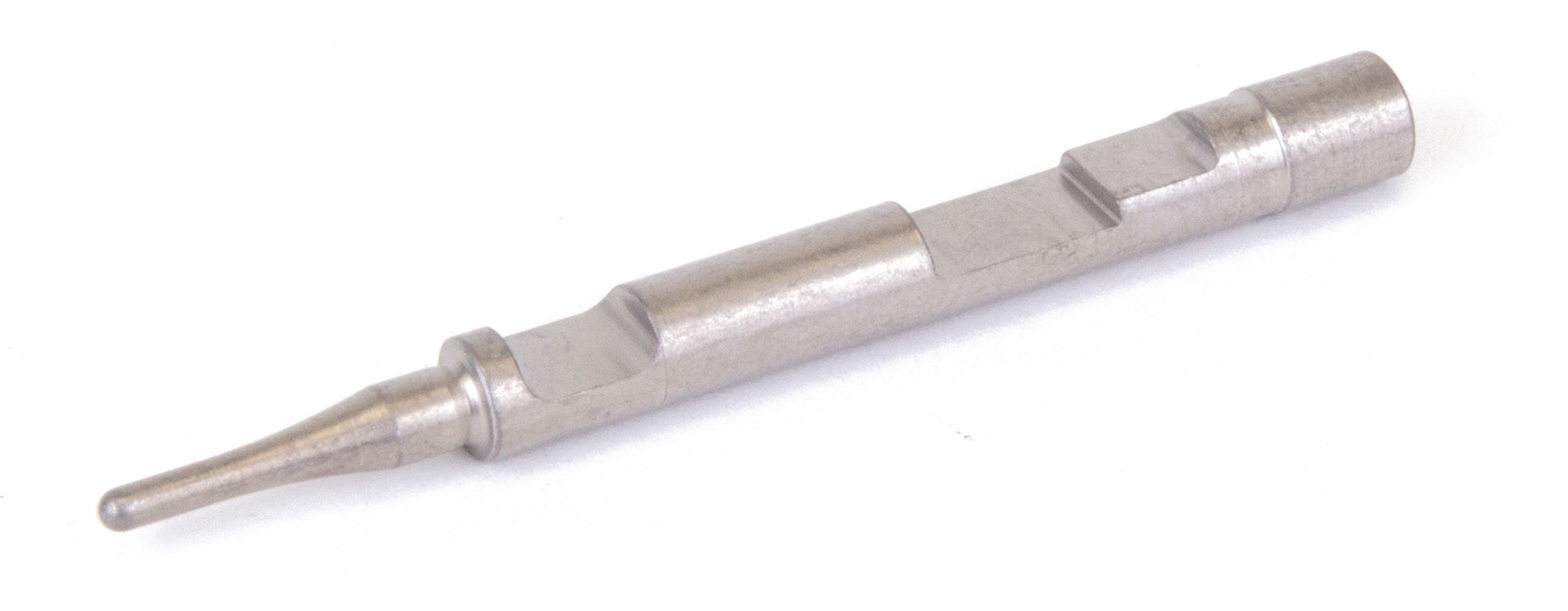
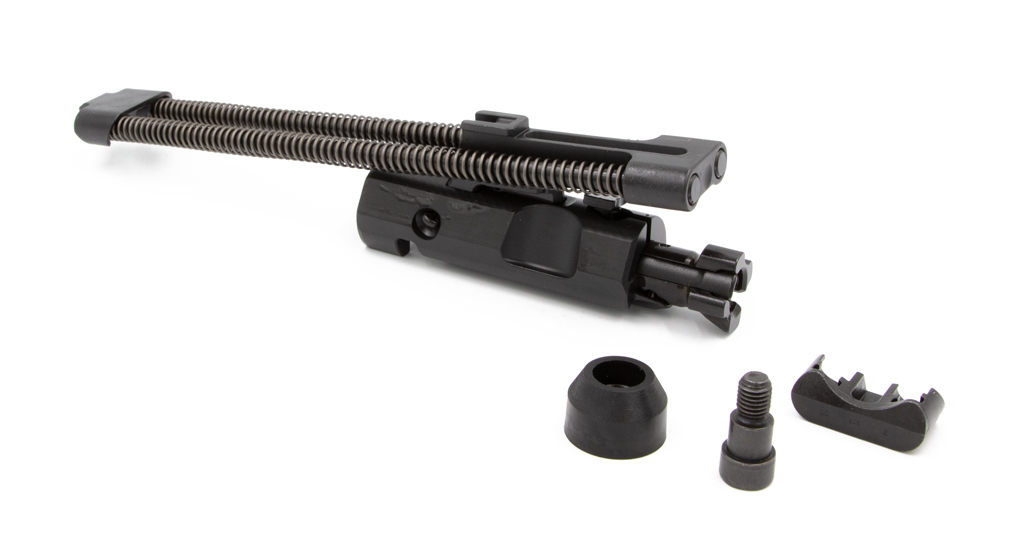
Firearm restoration firing pin kits are useful for returning older, well-used, or carefully preserved firearms to dependable mechanical condition. These kits commonly include a replacement firing pin or striker, a firing pin spring, and retaining or positioning pins designed to secure the assembly inside the bolt, slide, or related operating component. Because the firing pin is responsible for striking the cartridge primer, its condition has a direct effect on ignition and overall reliability. A worn, bent, chipped, improperly fitted, or weakened firing pin may contribute to light strikes, misfires, inconsistent ignition, or a firearm that no longer performs as it did when it was first maintained. Replacing the supporting spring and retaining hardware at the same time can help restore proper tension, alignment, and controlled movement rather than addressing only the most obvious damaged part. These components are especially relevant to firearm owners working on classic pistols, surplus firearms, heirloom pieces, competition firearms, and restoration projects that have spent years in storage. They may also be useful when a firearm has been exposed to heavy use, repeated disassembly, corrosion, or long periods in a damp environment. Before purchasing a firearm restoration firing pin kit, identify the exact make, model, variant, action type, caliber designation, and production details of the firearm. Small differences between generations or configurations can affect the length, diameter, shoulder profile, spring dimensions, retaining-pin size, and fit of the replacement parts. A kit intended for one variant may not be suitable for another, even when the firearms appear nearly identical. Comparing the original components with the listed specifications, consulting the firearm’s documentation, and confirming compatibility through a qualified professional can help prevent an incorrect purchase. Raw blanks or unfinished components may be appropriate for experienced restoration specialists with the proper measuring tools and machining knowledge, while most owners will be better served by correctly fitted replacement parts intended for the specific firearm.
These kits are often selected by collectors, gunsmiths, armorer’s benches, competitive shooters, and responsible firearm owners who value dependable maintenance and historically appropriate restoration. They can make a thoughtful gift for a knowledgeable collector or hobbyist, particularly when the recipient is rebuilding a family firearm, preserving a vintage action, or organizing a dedicated supply of replacement hardware. Because compatibility is so important, a gift card, a verified part number, or a kit selected with the recipient’s exact firearm information is generally more useful than choosing a component based on appearance alone. During the cooler months, restoration work often moves indoors to a well-lit bench, where careful inspection can reveal flattened spring coils, peening, unusual wear marks, corrosion, or damage around the firing-pin channel. Any maintenance should begin with the firearm completely unloaded, with all ammunition removed from the work area, and should follow the owner’s manual and applicable laws. Firing-pin assemblies can contain spring tension, small retaining parts, and components that require specialized tools or a particular disassembly procedure. If the assembly is difficult to remove, if the firearm has an unknown maintenance history, or if the replacement part requires fitting, a qualified gunsmith should handle the work. After installation, function checks should be performed only in accordance with the manufacturer’s instructions, and live-fire testing should take place at an appropriate range with safe handling practices. Owners seeking related spring and retention components may also wish to review Firing Pin Spring Maintenance Kits when planning a broader maintenance project. Keeping replacement parts clean, lightly protected as recommended for the firearm, and stored in labeled packaging helps preserve them for future use. A small parts tray, magnifying light, non-marring tools, and clear notes about the firearm’s configuration can make a restoration project more organized, especially when several vintage firearms are being serviced. Whether the goal is to return a trusted range firearm to consistent operation or preserve the character of a long-held heirloom, the right firing pin kit provides a practical foundation for careful, model-specific restoration.