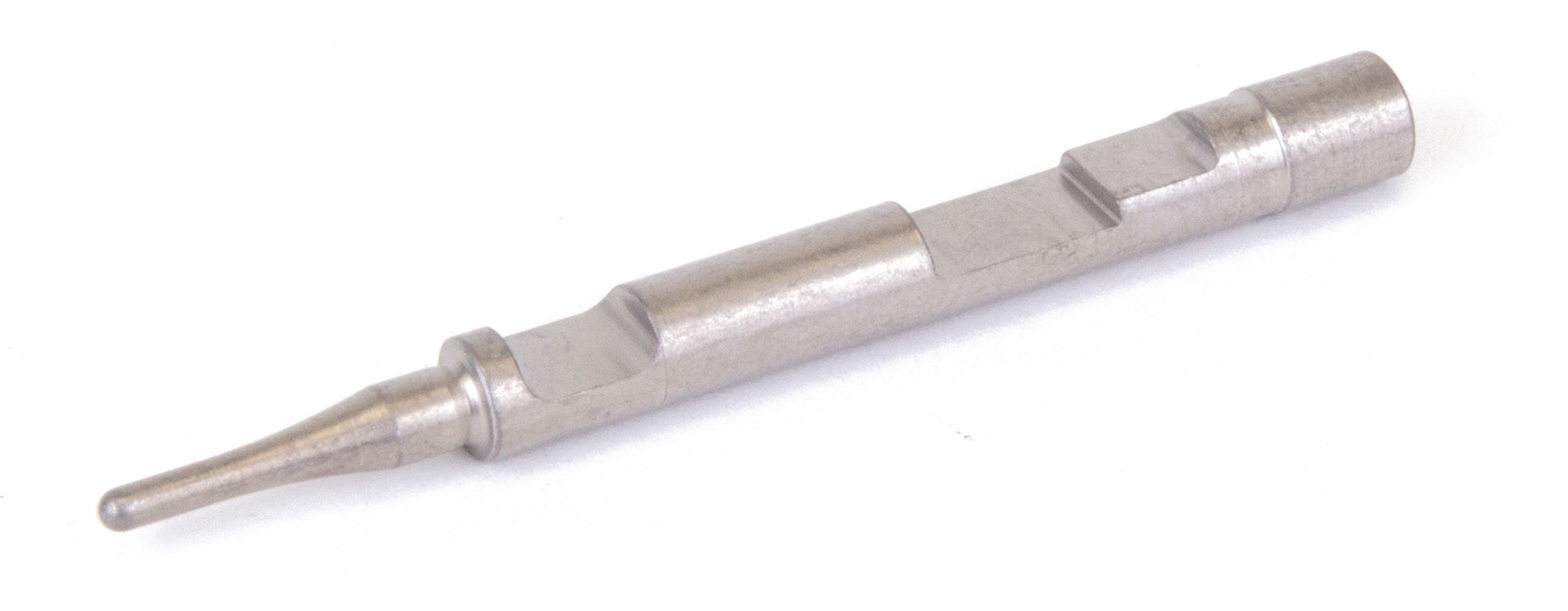
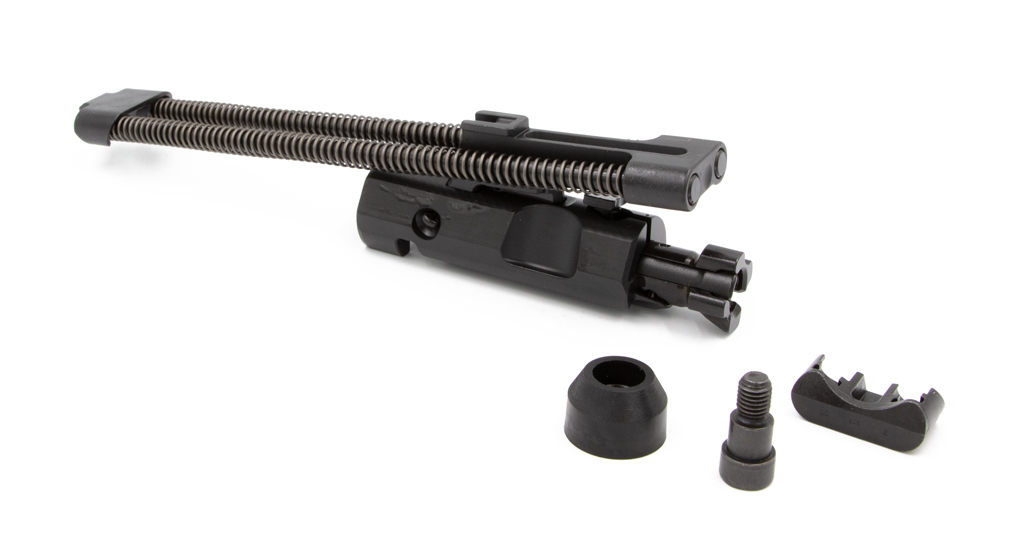
Firing pin kits provide a practical way to replace worn, damaged, or missing components within a firearm’s ignition system. Depending on the platform, a kit may include the firing pin or striker, a return or power-tuned spring, spring cups, retainers, cross-pins, stop plates, or other small parts that keep the assembly properly positioned and functioning. The firing pin is the metal component that moves forward to contact the primer, while a striker may combine the impact function with a partially or fully integrated spring-loaded design. These parts work together in a compact space, and even a small change in fit, tension, or alignment can affect ignition reliability. A replacement kit can be useful after extended use, as part of a careful maintenance routine, or when restoring a firearm with worn internal components. It may also serve as a sensible addition to a range bag, armorer’s tool kit, or secure home workshop, particularly for owners who prefer to keep commonly needed replacement parts organized before a small component interrupts a training session. Anyone selecting a kit should begin with the exact make, model, caliber, generation, and action type of the firearm. Components that appear similar may not be interchangeable, and a kit intended for one platform may differ in length, diameter, spring tension, retention method, or safety interface from another. Reviewing the manufacturer’s specifications and the firearm’s owner’s manual is an important first step, followed by confirming whether the kit is intended as a factory-style replacement or a performance-oriented option. When in doubt, a qualified gunsmith or certified armorer can help verify compatibility and installation requirements.
Firing pin kits are used across several firearm categories, and each platform brings its own considerations. Handgun kits may be sold as slide completion or striker assemblies and can include a striker or firing pin, striker spring, spring cups, safety plunger, plunger spring, and related retaining hardware. In these assemblies, the safety plunger and firing pin must move smoothly and coordinate correctly, so selecting a complete, compatible set can be preferable to mixing individual parts from different specifications. Rimfire rifles and pistols often use specialized firing pins designed around the shape and location of the rimfire cartridge’s priming compound. Their replacement components may include a dedicated pin and a spring selected to help reduce light strikes while preserving appropriate function. Centerfire rifles can use longer or differently shaped firing pins, along with springs and retainers matched to the bolt or firing mechanism. Shotguns may require platform-specific pins, bushings, springs, or retaining components, while muzzleloaders can use ignition parts associated with a breech plug or other specialized assembly. These differences make careful identification especially important. A clear photograph of the existing part can be helpful, but measurements and model markings should also be checked because visual similarity alone does not establish compatibility. Users who participate in frequent practice, seasonal hunting, competition, or regular defensive training may choose to keep a properly matched spare kit available as part of a broader maintenance plan. A kit can also be a thoughtful gift for an experienced firearm owner, gunsmithing student, or range enthusiast who appreciates practical accessories more than decorative items. Since firing pin components are small and easy to misplace, storage in a labeled container away from moisture, ammunition, and unauthorized access helps protect the parts and makes inspection easier when needed.
Before installing any firing pin kit, unload the firearm completely, remove all ammunition from the work area, and follow the manufacturer’s disassembly and reassembly instructions. Safety checks should be performed more than once, especially when working in a familiar space where routine can create overconfidence. Small springs can release unexpectedly during disassembly, and retaining pins or cups may be difficult to see against a workbench, so eye protection, a clean surface, and a parts tray are useful additions to the process. Inspect the old and new components for burrs, unusual wear, cracks, deformation, corrosion, or signs of excessive impact. The firing pin channel, bolt face, breech area, and related contact surfaces should be clean and free of debris, but lubrication should be applied only as directed; excess oil can attract fouling or interfere with reliable movement. After installation, confirm that all retainers are seated, the spring is oriented correctly, and the safety features operate as designed. Function checks must follow the firearm manufacturer’s instructions and should never involve live ammunition during assembly or initial testing. If the firing pin protrusion, spring tension, safety engagement, or trigger-related function appears abnormal, stop and consult a qualified professional rather than attempting to correct the issue through guesswork. During the cooler months, firearms may move between heated interiors, vehicles, and damp outdoor environments, making inspection for condensation and surface corrosion especially worthwhile. For additional replacement-part options and related components, explore Gun Pin Kits, then compare the listed specifications with the exact firearm before placing an order. A properly matched firing pin kit, installed with attention to detail and maintained as part of a consistent safety routine, can help support dependable operation without replacing the need for regular cleaning, inspection, and responsible handling.