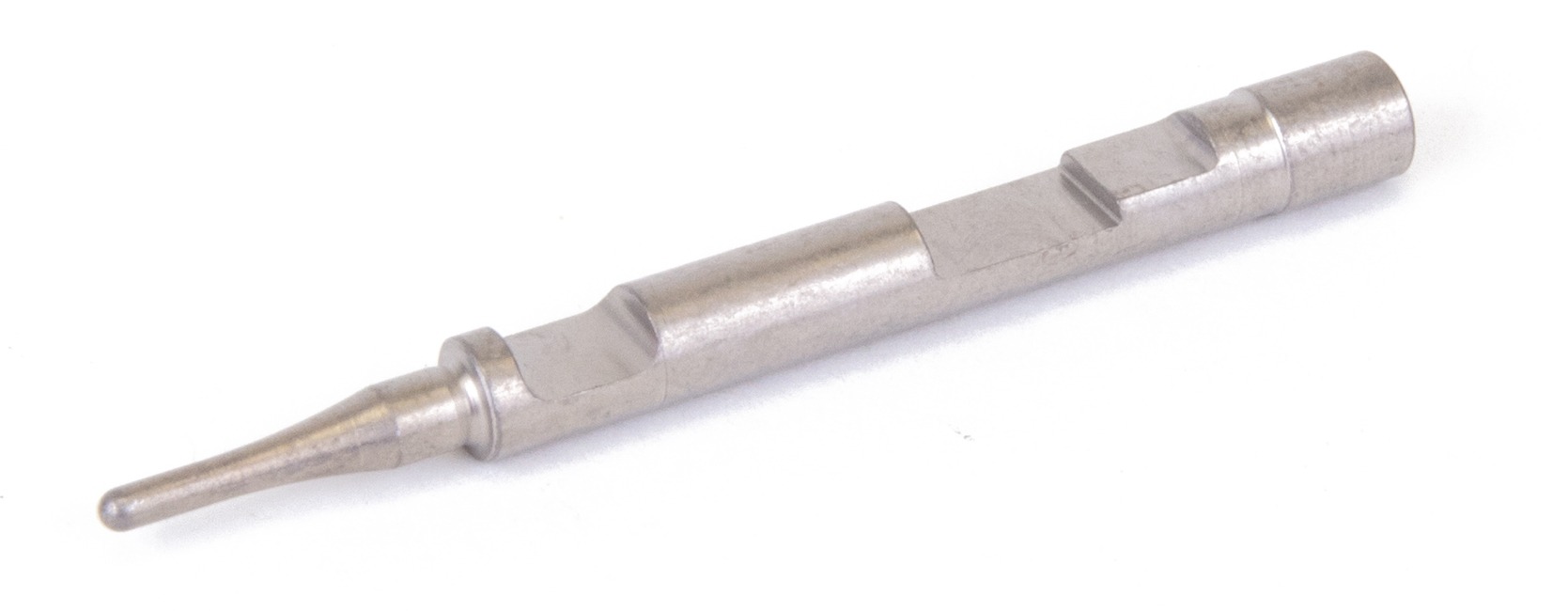
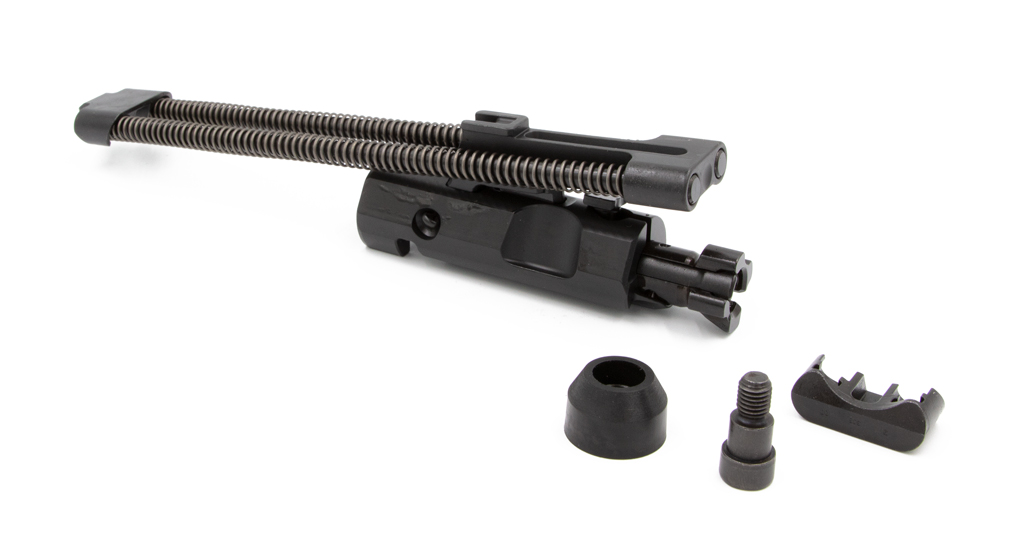
Aftermarket firing pin kits group replacement components associated with a firearm’s firing pin or striker assembly. Their purpose is generally to support maintenance or the replacement of worn components, with the exact application determined by the firearm and the kit’s stated specifications. Depending on the design, a kit may contain a firing pin, springs, retaining pieces, or other related hardware; the word “kit” does not establish a universal set of contents. A firing pin transfers a mechanical impact to a cartridge’s primer, while a striker combines that function with a spring-driven mechanism. These terms sometimes appear together in replacement-parts categories, but they do not identify interchangeable assemblies. That distinction matters when comparing aftermarket firing pin kits for different operating systems. Compatibility depends on more than a familiar model name: production generation, chambering, slide or bolt configuration, and documented design revisions can all affect which replacement components belong in a particular firearm. Two pins that look similar in a photograph may have different dimensions or retaining features. Clear fitment information, an itemized component list, and manufacturer documentation therefore carry more weight than appearance alone. A replacement intended for routine service should match the firearm’s approved specifications rather than rely on a broad claim of universal fit. For an owner arranging scheduled maintenance, the useful comparison is not simply between a single pin and a larger package. It is between the components a qualified professional has identified as appropriate and the components each kit actually includes. A package containing several related pieces may suit one service requirement, while another firearm may require only a specific replacement part. Keeping those distinctions visible helps shoppers understand this category without treating every firing pin kit as the same solution. The most useful product descriptions identify the intended application, explain what is included, and distinguish a replacement component from an assembly that requires additional hardware.
Materials and manufacturing quality influence how these small components withstand repeated mechanical contact. Steel is common in firing pin construction, but the material name by itself does not describe the finished part’s suitability. Alloy selection, heat treatment, dimensional consistency, and surface finish work together, and their importance varies with the firearm’s design. Where a material or coating is specified, that information is most meaningful alongside an explicit compatibility statement and a clear description of the component’s intended role. A bright finish, dark coating, or polished surface does not independently establish strength, corrosion resistance, or service life. Likewise, a claim of exceptional hardness is not a substitute for the correct balance of properties for the application. Firing pins, springs, and retaining components function within an engineered assembly, so replacement selection should respect the specifications of that assembly as a whole. Durability also depends on use history, maintenance, storage, and the condition of surrounding parts. No universal round-count interval applies to every design, and visible appearance alone cannot establish that a component remains suitable for service. A firearm with an uncertain maintenance history deserves professional evaluation rather than assumptions based on how clean its exterior looks. Care requirements should follow the firearm and component manufacturers’ documentation, including their guidance on cleaning products, lubrication, inspection, and replacement intervals. More lubricant is not automatically better, and a finish should not be treated as permission to neglect routine care. Abrasive refinishing or changes to a component’s shape can affect its intended fit and function. Installation and any necessary function checks belong with a qualified gunsmith when the work exceeds the owner’s knowledge or the manufacturer’s stated maintenance procedures. If a firearm exhibits unreliable ignition or other abnormal operation, a firing pin kit should not be treated as a diagnosis. Several conditions can produce similar symptoms, and identifying the underlying issue is more important than replacing a part because it appears related.
These considerations make aftermarket firing pin kits relevant to owners who maintain firearms for recreational range use, organized shooting sports, or other lawful activities where documented service and dependable mechanical condition matter. Someone who practices regularly may keep records of professional inspections and component replacements, while an owner returning a long-stored firearm to service may need a broader condition assessment before selecting parts. Neither situation calls for choosing by package size or visual similarity. The appropriate kit is the one supported by the firearm’s exact identification, the component manufacturer’s fitment information, and the service requirement. For handgun-specific applications, Pistol Firing Pin Kits provides a more focused category for comparing relevant replacement components. Even within that narrower category, firing pin and striker terminology, included hardware, and model revisions remain important distinctions. A useful product description should make those details easy to separate rather than imply that all handgun assemblies share the same layout. Owners who have previously installed non-original slides, bolts, or related assemblies may also need documentation for those components, since the firearm’s original model designation may not tell the whole compatibility story. A qualified professional can help reconcile those records before a replacement is selected. When considered as a gift, a firing pin kit is most appropriate for a recipient who has already identified the exact compatible replacement for a planned service need; it is not an ideal guess based only on the firearm’s general appearance. Practical value comes from correct fit and a clear maintenance purpose, not from the number of pieces in the package. Retaining the product description, compatibility information, and service records can make later maintenance easier to document. Across this category, careful selection centers on a few lasting fundamentals: a clearly identified application, suitable materials, complete and accurate contents, appropriate care, and professional support when needed. Those details give a small replacement assembly its proper context within responsible firearm ownership.