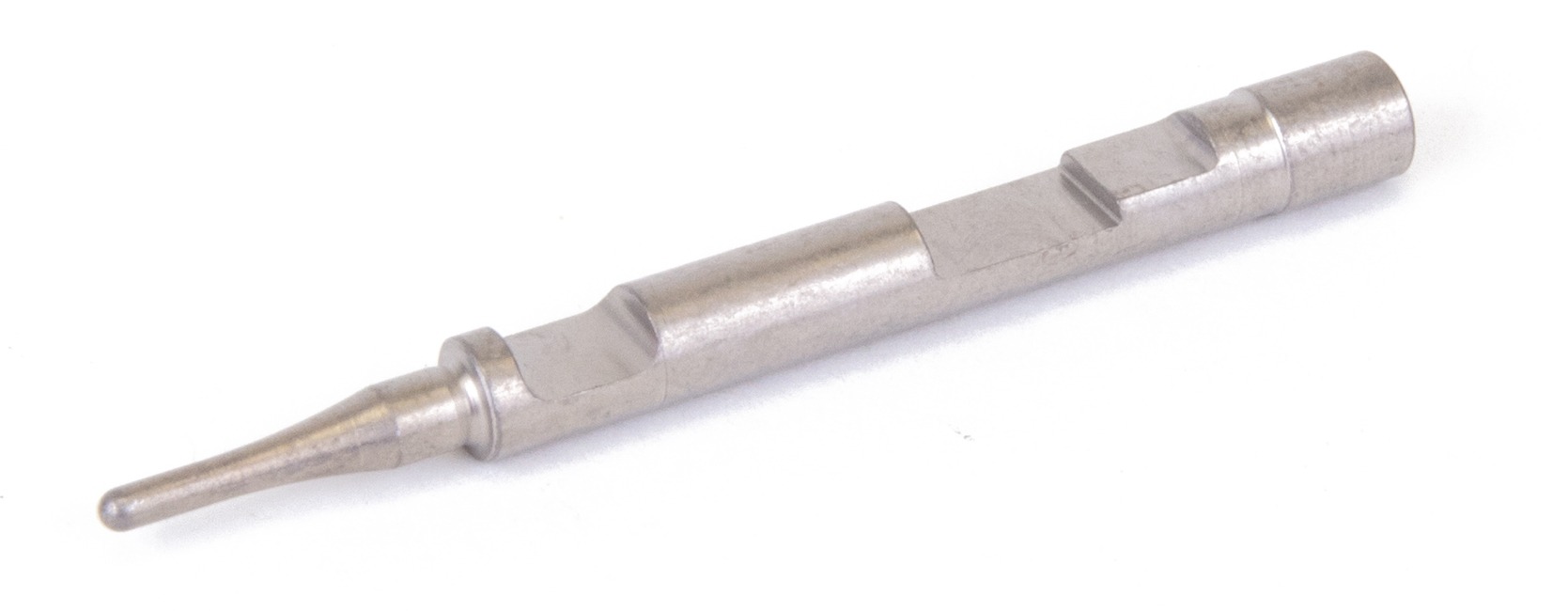
Pistol firing pin kits bring together replacement components for the ignition system inside a compatible pistol slide. Depending on the configuration, a kit may include a firing pin, associated springs, retaining components, or a complete striker assembly; the contents listed for each kit determine what is included. These parts serve a precise mechanical role, transferring energy to the cartridge primer as part of the pistol’s firing cycle. Although firing pins and strikers share that general purpose, they belong to different operating designs and should not be treated as interchangeable. Hammer-fired pistols typically use a separate firing pin struck by the hammer, while striker-fired pistols use a spring-driven striker within the slide. That distinction matters when comparing pistol firing pin kits, particularly when similar names or familiar-looking components appear across several pistol families. The strongest starting point is documented compatibility with the exact pistol model, configuration, and applicable production revision. A shared caliber, similar slide profile, or matching overall size does not establish fit. Even within one pistol family, changes to internal geometry or retaining arrangements can affect which replacement components are appropriate. For an owner arranging scheduled maintenance, a kit can provide a clearly defined group of related parts rather than a collection of separately sourced components. For a qualified gunsmith overseeing several pistols, clear application information helps keep parts organized by the firearm they are intended to support. Kit descriptions should distinguish a standalone firing pin from a firing pin and spring set, a complete striker assembly, or a broader slide component package. Those are different scopes of replacement, not alternate names for the same thing. Comparing the stated contents with the pistol manufacturer’s documentation helps establish whether a kit matches the work identified by a qualified professional. The value lies in the correct components for a specific application, with a clear understanding of what the package includes and what remains outside its scope.
Materials and manufacturing quality matter because firing system components operate within closely controlled dimensions and experience repeated mechanical stress. Hardened steel is common in firing pins and related components, while some designs use other alloys or surface treatments suited to their intended application. Material descriptions are useful, but no single material name establishes compatibility, service life, or suitability for every pistol. Heat treatment, dimensional consistency, surface finish, and the relationship between mating components all contribute to how a part performs within its intended system. A coating may be specified to support corrosion resistance or manage surface friction, but its purpose and care requirements should come from the manufacturer’s documentation rather than assumptions based on color or appearance. Likewise, a lighter component is not automatically the better choice for a pistol intended to retain its original operating characteristics. Springs deserve the same attention as the more visible metal parts: their specifications belong to the complete design, and superficially similar springs may serve different applications. For the owner who practices regularly, the relevant considerations include documented service recommendations, the pistol’s maintenance history, and professional assessment of wear. For someone maintaining a pistol carried routinely, compatibility and adherence to the manufacturer’s requirements take priority over cosmetic differences or broad performance claims. A recreational target shooter may have a different schedule of use, but the need for correctly specified parts remains the same. No kit can guarantee reliable ignition independently of the firearm’s overall condition, appropriate ammunition, and proper maintenance. Repeated failures to fire or other changes in operation call for evaluation by a qualified gunsmith, not an assumption that replacing one component will resolve the issue. Pistol firing pin kits are best understood as application-specific maintenance components, not universal remedies. Product information that clearly identifies materials, included components, and intended fit provides a firmer basis for selection than claims of dramatically different performance without supporting technical details.
Care and handling help protect both the components and the information needed to identify them correctly. Small firing system parts can look nearly identical on a workbench, so retaining labeled packaging and keeping components grouped by their documented application is a practical habit. A clearly marked package is more useful than an unmarked compartment holding several similar springs and pins, especially when multiple pistols share a storage or maintenance area. Before any inspection or maintenance, follow the firearm manufacturer’s safety procedures, confirm the pistol is unloaded, and keep ammunition away from the work area. Cleaning products, lubrication requirements, and service intervals should follow the instructions for the specific firearm; more lubricant is not necessarily better, and internal channels may have requirements that differ from exposed slide surfaces. Abrasive cleaning, improvised polishing, or attempts to alter component dimensions can compromise the intended fit and should not substitute for professional evaluation. Installation and any required safety or function checks belong with a qualified gunsmith when the owner lacks the appropriate training or when the manufacturer specifies professional service. Long-term durability also depends on recognizing that replacement parts do not eliminate the need to inspect the rest of the firearm. The condition of related components, prior alterations, and the pistol’s service history can all influence the appropriate scope of maintenance. For projects extending beyond a single pistol’s routine upkeep, Firearm Restoration Firing Pin Kits provides a related category to consider alongside the requirements of the individual firearm. Whether the intended use involves regular range practice, recreational target shooting, or maintaining an established collection, the same priorities remain useful: exact fit, clearly stated contents, suitable materials, and care consistent with manufacturer guidance. Keeping a record of the component identification and professional service can make future maintenance decisions more straightforward. A well-chosen pistol firing pin kit supports a considered maintenance plan, with attention directed toward the pistol’s documented requirements rather than appearances, generalized upgrade claims, or the assumption that similar parts will behave alike.