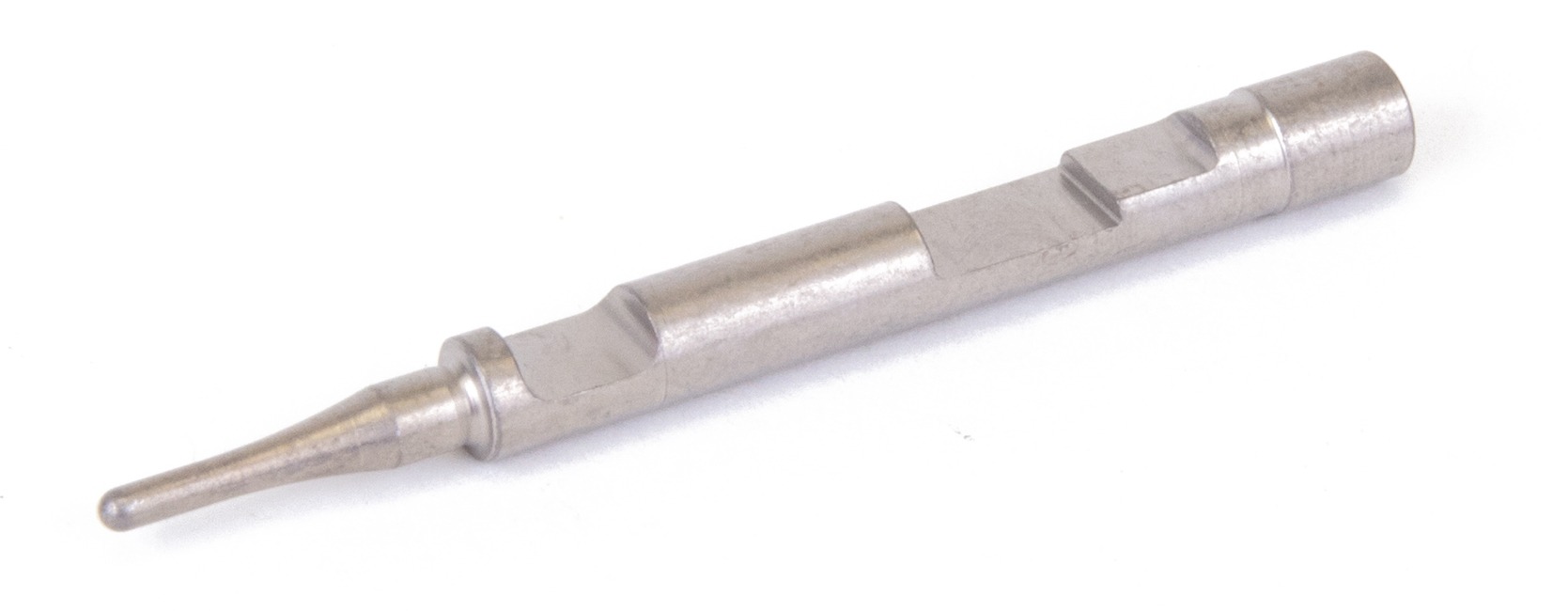
Firing pin spring sets for handguns are replacement components for compatible firing mechanisms, and their function depends on the handgun’s design. In some systems, a firing pin spring helps return the firing pin to its resting position; in striker-fired systems, a striker spring has a different role within the firing assembly. Those terms should not be treated as interchangeable. The correct category, model compatibility, and manufacturer’s part description matter more than a spring’s appearance. Two springs can look nearly identical on a workbench yet differ in dimensions, end configuration, or intended application. For shoppers comparing handgun firing pin spring sets, the most useful information is a clearly identified firearm platform, any applicable production revision, and an accurate description of the set’s contents. A set may include multiple replacement springs or several components intended for a particular assembly, so the word “set” does not establish what is included. Clear component descriptions help distinguish a replacement intended for routine service from a package with a different purpose. These small parts belong to a larger mechanical system, where compatibility involves the firing pin or striker, surrounding components, and the manufacturer’s specifications. Matching only the handgun’s general size or action type is not enough. Even handguns within the same model family can have engineering changes that affect replacement-part selection. Manufacturer documentation and confirmation from a qualified gunsmith provide a sound basis for choosing compatible components when the firearm’s history or configuration is uncertain. That distinction is especially relevant for a previously owned handgun with an incomplete service record. A familiar model name does not reveal whether internal components have been changed. For this category, a precise fit description is more valuable than a broad claim of versatility. The goal is a replacement set appropriate to the handgun’s documented configuration, not a spring that merely resembles the part being replaced. Reliable identification also makes future service simpler, because the replacement can be recorded against the correct firearm rather than remembered as an unspecified small part.
Materials and manufacturing quality influence how a handgun spring holds its intended characteristics through repeated use. Spring steel and suitable stainless steel alloys are common materials in firearm spring applications, although the exact material should be confirmed in the component specifications. Alloy selection, heat treatment, surface condition, and dimensional consistency all contribute to service life; a material name alone cannot establish durability. A smooth, consistent finish can support resistance to wear or corrosion, but a shiny appearance is not proof of quality or correct fit. Likewise, color and surface treatment should not substitute for a verified part description. Small springs experience repeated mechanical stress, and their condition must be considered within the maintenance needs of the complete assembly. Visible corrosion, distortion, or damage warrants professional assessment rather than an assumption that the part remains suitable because the handgun still operates. Conversely, an outwardly clean spring does not establish its remaining service life. Manufacturer maintenance recommendations and the firearm’s use history offer better context than appearance alone. For a handgun that sees frequent range sessions, a record of service and approximate use can help keep small-component maintenance from becoming guesswork. Care also involves the surrounding mechanism. Residue, unsuitable cleaning chemicals, and excessive lubricant can complicate maintenance, which is why the firearm manufacturer’s cleaning and lubrication directions remain the appropriate reference. More lubricant is not automatically better, particularly inside enclosed firing assemblies. Any inspection or maintenance should take place with the handgun unloaded and in accordance with its manual, with work beyond the owner’s knowledge referred to a qualified gunsmith. Replacement springs benefit from orderly storage as well. Original packaging, clear identification, and protection from moisture help prevent a loose component from becoming difficult to identify later. Keeping similar-looking springs separated preserves the connection between the part and its documented application. Durability is therefore not just a matter of metal composition; it also depends on correct selection, appropriate handling, and maintenance that respects the design of the handgun.
The people shopping for firing pin spring sets often have a straightforward purpose: supporting scheduled service, addressing a professionally identified replacement need, or keeping a well-documented handgun in its intended operating condition. Recreational target shooters, experienced firearm owners, instructors, and qualified armorers may encounter these components during the normal service life of a handgun. Their priorities can differ, but correct compatibility remains the common requirement. A frequently used training handgun benefits from consistent maintenance records, while a handgun with a less familiar ownership history may need a closer review of its configuration before replacement parts are selected. A spring set is not a universal solution for an ignition concern, an unfamiliar trigger feel, or another operating issue. Similar symptoms can have different causes, and a replacement should follow an appropriate assessment rather than an assumption about which internal component is responsible. For handguns used for lawful personal protection or professional responsibilities, preserving the manufacturer’s intended operation and obtaining qualified service are particularly important considerations. Clear documentation also supports practical ownership over time. A service record that identifies the firearm, the replacement component, and the date of professional work is more useful than a container of unmarked spare springs. For a gift recipient who maintains handguns, these sets are a specialized choice rather than a broadly interchangeable accessory; the recipient’s exact firearm configuration and preferences need to be known. Where a maintenance task involves more than a single spring, Firing Pin Spring Maintenance Kits provide a related category to consider, with contents and compatibility checked against the same documentation. Whether the purpose is routine upkeep or a defined service requirement, the strongest selection criteria remain clear: an identified application, accurately described materials and contents, and support for the handgun’s established maintenance requirements. Attention to those details keeps the focus on appropriate replacement components and responsible long-term care.