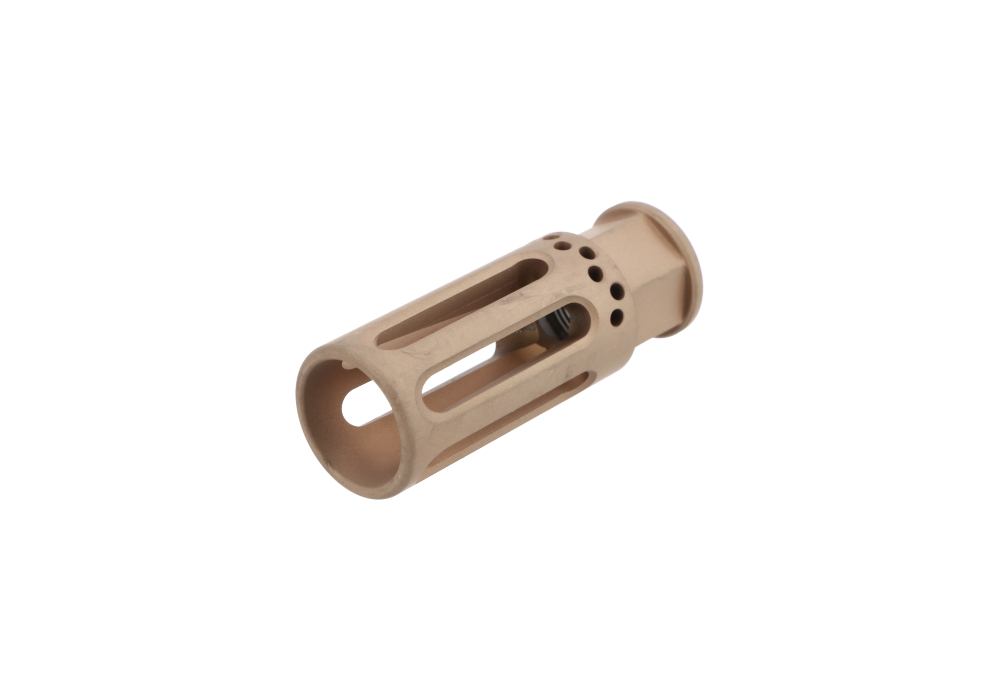
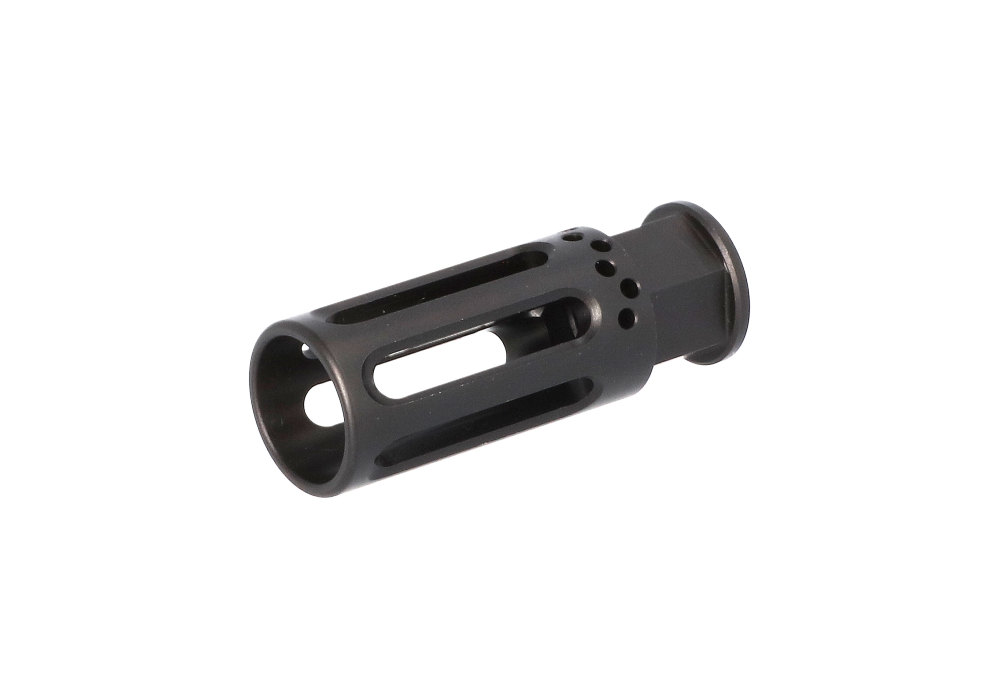
Flash hiders for tactical carbines are muzzle devices designed to reduce the visible flash produced when hot propellant gases exit the barrel. By managing those gases, a flash hider can lessen the brief burst of light associated with firing, although results vary with the firearm, ammunition, and surrounding light. That distinction matters: flash reduction is not the same as sound suppression, recoil reduction, or complete elimination of visible light. For shooters comparing carbine muzzle devices, understanding the purpose of each category helps keep expectations realistic. A muzzle brake primarily addresses recoil, while a compensator primarily addresses muzzle movement; a flash hider centers on the visible signature at the muzzle. Some designs combine functions, but appearance alone does not establish how a device will perform. Flash hiders can have open-ended prongs, enclosed front sections, or other arrangements of openings, each reflecting a particular approach to gas management. The shape can also influence handling considerations, maintenance access, and compatibility with other equipment. For a carbine used in organized range sessions, professional instruction, or authorized duty applications, the relevant choice begins with the firearm’s requirements and the documented purpose of the accessory. A compact profile may look unobtrusive at the end of a barrel, but exterior dimensions are only one part of the picture. Construction, attachment requirements, and manufacturer support deserve equal attention. Visible flash also depends on factors beyond the muzzle device, so photographs or isolated demonstrations should not be treated as a promise of identical results on every firearm. Even products with similar silhouettes can differ in their approved applications and maintenance requirements. Published specifications provide a more dependable basis for comparison than styling alone. A well-considered purchase reflects the complete carbine configuration rather than a single feature. For shoppers building a consistent equipment setup around established range or agency requirements, that means looking for clear compatibility information, a defined intended use, and straightforward documentation before focusing on cosmetic details.
Materials and finish contribute to how a flash hider holds up to repeated firing, routine cleaning, and ordinary handling. Alloy steel and stainless steel are common material categories, though their properties depend on the specific alloy, manufacturing process, and surface treatment. A dark finish may provide more than a uniform appearance, but color by itself says little about resistance to corrosion or wear. Manufacturer descriptions should explain the material and treatment rather than leaving shoppers to infer durability from a photograph. The muzzle area encounters heat, combustion residue, and contact during transport, making sound construction and appropriate care important throughout the accessory’s service life. Edges, openings, and exterior surfaces should be consistent with the documented design, without suggesting that a more aggressive appearance necessarily means better quality. Fit is equally important and cannot be confirmed by visual resemblance. Compatibility depends on the firearm and muzzle-device specifications, including the approved bore application, attachment interface, and any requirements associated with other muzzle-mounted equipment. Two devices can look nearly identical while serving different firearm configurations. Confirmation from the relevant manufacturers or a qualified armorer is more useful than assumptions based on a familiar-looking profile. Where a flash hider also serves as an interface for a suppressor, that additional role introduces its own compatibility requirements; it should never be treated as a universal connection. Installation and any related checks belong with qualified professionals following the applicable manufacturer instructions. Exterior length and weight also deserve attention because accessories become part of the firearm’s overall dimensions and handling characteristics. A device that appears small in a product image may still affect how the carbine fits into a case or interacts with existing equipment. Evaluating those practical details alongside material specifications helps distinguish a suitable accessory from one that merely has the preferred appearance. Durable construction is valuable, but it does not replace correct fit, professional evaluation, or adherence to the firearm’s documented requirements. Clear information on those points makes comparisons more meaningful and helps prevent avoidable mismatches.
Long-term ownership brings the conversation back to care, inspection, and dependable documentation. Combustion residue can collect around a flash hider’s openings and exterior surfaces, and cleaning requirements vary with the material, finish, and design. Manufacturer-approved care methods help protect the accessory without relying on harsh abrasives or improvised treatments that could damage its surface. Routine attention should include professional evaluation of concerns such as visible damage, unusual wear, or a suspected change in attachment security. An accessory that has experienced an impact or no longer appears consistent with its original condition warrants qualified assessment rather than a cosmetic touch-up. For a carbine that travels between a case, a training bench, and a storage area, these ordinary handling considerations are often more relevant than dramatic performance claims. Keeping the accessory’s instructions and compatibility information with the firearm’s records can also simplify future service conversations. Owners outfitting a personally owned range carbine may prioritize clear specifications and manageable upkeep, while an agency armorer may need to evaluate the same characteristics within established equipment standards. Shoppers comparing that professional context can also explore Flash Hiders for Law Enforcement Rifles for the related application. In either setting, the category calls for informed selection rather than assumptions about universal fit or interchangeable functions. As a gift for an experienced firearm owner, a flash hider is best considered only when the recipient’s exact equipment requirements and preferences are already confirmed; familiarity with the general firearm type is not enough. For individual shooters, instructors, and authorized professional users, the most useful product information connects intended use with verified compatibility, construction details, and realistic care expectations. Those fundamentals remain important regardless of whether the preferred appearance is understated or more distinctive. A flash hider should be evaluated as a purpose-specific firearm accessory, with its role clearly understood and its limitations acknowledged, not as a substitute for safe handling, hearing and eye protection, or sound range practices.