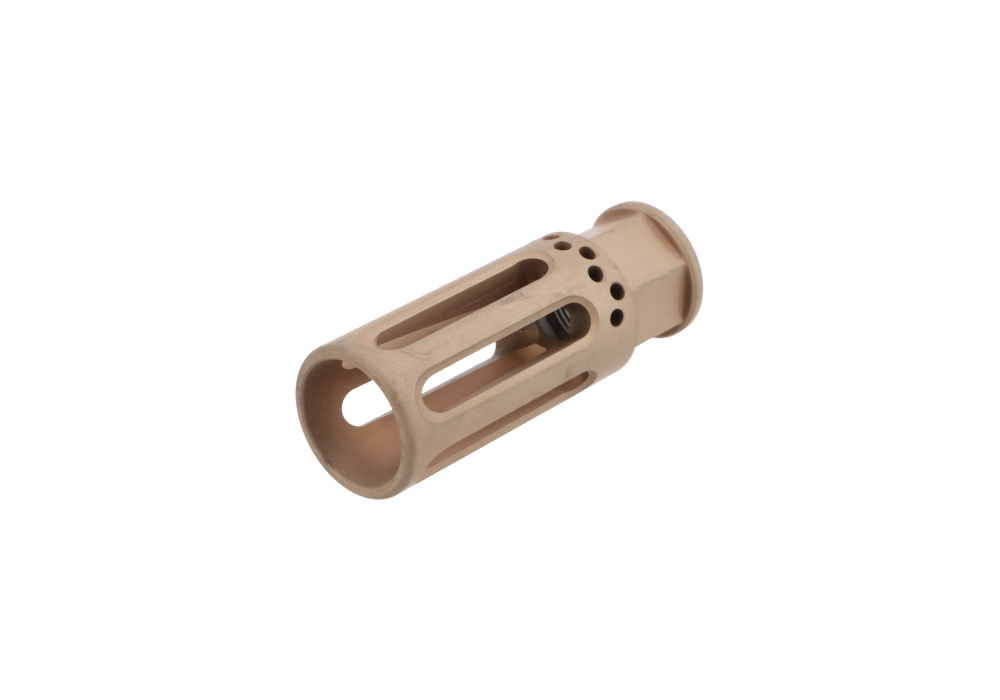
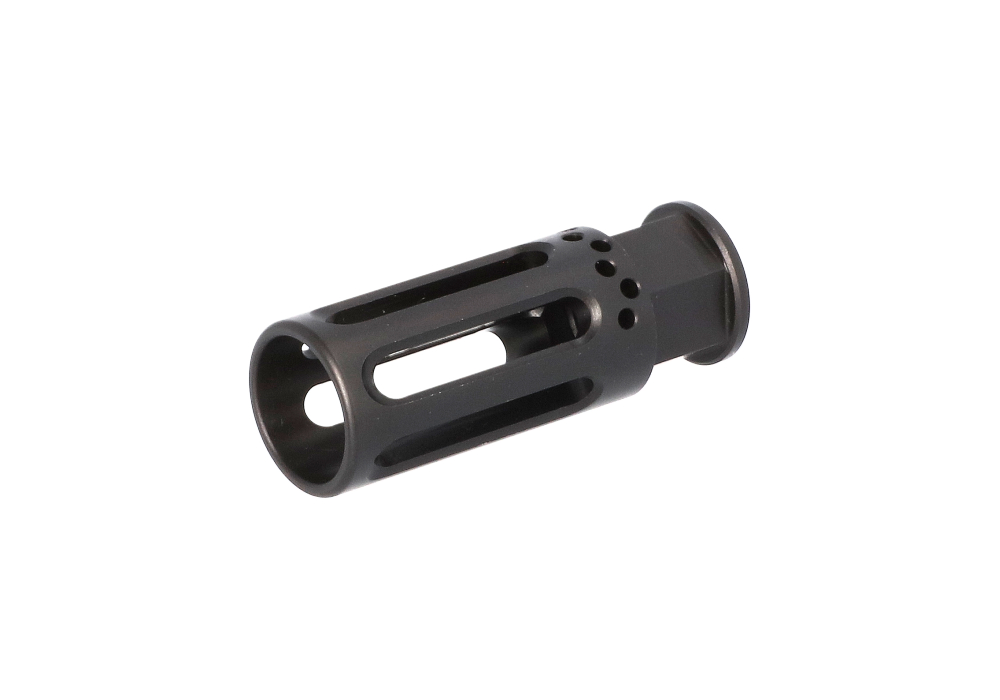
Flash reducing compensators are hybrid muzzle devices designed to address two common concerns at the front of a firearm: muzzle rise and visible flash. During a shot, rapidly expanding propellant gases leave the barrel behind the projectile. A compensator uses carefully positioned ports to redirect some of those gases, commonly upward, helping counteract the tendency of the barrel to climb during rapid strings of fire. At the same time, a flash-reducing design breaks up, cools, and disperses those gases to limit the bright burst that can appear in low-light conditions. The result is a muzzle device that balances control and signature reduction rather than focusing exclusively on one function. A traditional muzzle brake is generally engineered to reduce rearward felt recoil by directing gas to the sides, but that approach can make muzzle flash more noticeable and increase blast for people nearby. A flash hider focuses more directly on reducing visible light, while a hybrid compensator blends flash suppression with active control of muzzle movement. Performance depends on the internal port design, the firearm’s caliber and barrel length, the ammunition used, and the lighting conditions in which it is fired. Shooters who spend time on an outdoor range during the cooler months may appreciate the added control of a compensator when practicing quick follow-up shots, while those who train around dusk or in other low-light environments may value a less distracting muzzle signature. Keeping the sight picture steady can make it easier to track a target through a string of fire, especially when the shooter is working from an imperfect stance, wearing gloves, or managing the extra layers that often come with changing weather.
Selecting a flash reducing compensator begins with confirming precise compatibility. Match the device to the firearm’s caliber and verify the barrel’s muzzle thread pattern before purchasing. The bore opening must be appropriate for the projectile, and the device should be intended for the barrel length and platform where it will be installed. A compensator that is correctly matched to a rifle or pistol can support predictable performance; one with the wrong thread, caliber, or mounting arrangement may be unsafe or impossible to install. Thread direction and available clearance also deserve attention, particularly on compact firearms or platforms with front sights, handguards, or other accessories close to the muzzle. Consider the balance between recoil control, muzzle rise, flash reduction, blast, overall length, and weight. More aggressive porting may provide stronger compensation, but it can also produce a sharper report or redirect more gas toward the shooter and nearby people. Port geometry can influence how much carbon collects on the device and how simple it is to clean after a long practice session. Finish and construction matter as well, especially for equipment exposed to repeated heat cycles, moisture, field handling, and routine transport. If a sound suppressor may be added later, check whether the compensator is compatible with the intended mounting system or whether a different muzzle interface will be needed. Suppressor alignment is critical, and compatibility should be confirmed before installation rather than assumed from similar thread specifications. When in doubt, have the device installed and inspected by a qualified gunsmith, then follow the firearm and ammunition manufacturers’ guidance for function checks. As with any muzzle accessory, users should confirm applicable federal, state, and local requirements before purchase or installation, and should always wear appropriate eye and hearing protection when shooting.
These devices can be useful for recreational range shooters, competitive participants, hunters who need to maintain a clear sight picture, and trained professionals whose equipment must perform consistently across changing light. A shooter practicing controlled pairs may notice that less barrel movement makes it easier to return the sights to the target, while someone working in fading daylight may find that reduced flash helps preserve dark adaptation and avoids the brief visual disruption caused by a bright muzzle flare. Flash reduction does not make a firearm invisible, eliminate sound, or replace safe handling and responsible lighting practices; it is one part of a complete setup. Ammunition selection can also affect visible flash, recoil, and blast, so performance should be evaluated with the loads the shooter actually intends to use. A new compensator can be a thoughtful gift for an experienced firearm owner who enjoys refining a range setup, provided the giver knows the recipient’s exact firearm model, caliber, thread pattern, and intended use. When those details are uncertain, a gift card or an opportunity to choose together is often more practical than guessing at fitment. Shooters who primarily use handguns may also wish to explore Handgun Compensators for options intended specifically for pistol platforms. Whether mounted on a rifle or handgun, the best choice is the one that complements the firearm without compromising safe operation, provides a secure and repeatable fit, and supports the shooter’s priorities for recoil management, muzzle-rise control, and reduced visible flash. Browse the available flash reducing compensators with those considerations in mind, and review product specifications carefully before completing a purchase.