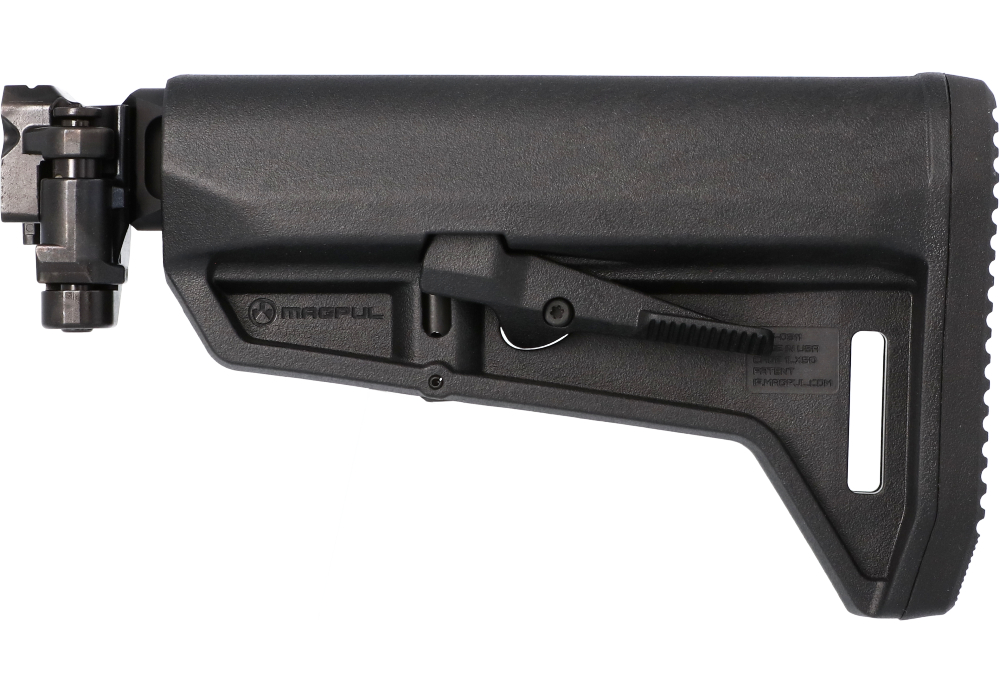
Folding adjustable stocks combine two practical features in one streamlined design: a hinge that allows the stock to fold alongside the firearm and adjustment points that help tailor the fit to the shooter. When extended, the stock supports a stable shoulder position and a consistent cheek weld; when folded, it can reduce the firearm’s overall length for transport, storage, or movement in confined spaces. The folding hinge typically swings to the left or right side of the receiver, while the stock body may use a telescoping beam or multiple locking positions to adjust length of pull. This distance between the trigger and buttpad has a direct effect on comfort, control, and shooting posture. A shorter setting can be useful when wearing heavier layers during cooler months, shooting from a compact position, or sharing the firearm among shooters of different sizes. A longer setting may feel more natural for a taller shooter or when a more extended shoulder position is preferred. Adjustable cheek risers add another layer of fit by helping align the eye with an optic or other sighting system without forcing the shooter to lift or tilt the head. A properly positioned cheek rest can make sight acquisition feel more repeatable, especially during extended range sessions when small ergonomic issues become increasingly noticeable. Recoil pads, interchangeable buttpads, and textured contact surfaces also contribute to comfort by helping the stock stay planted against the shoulder. For shoppers comparing folding adjustable stocks, the best starting point is compatibility. Check the firearm’s receiver configuration, rear interface, folding direction, available clearance, and whether the stock is intended for a buffer tube, receiver extension, dedicated adapter, or 1913 Picatinny rail. Some platforms use a traditional rear mounting system, while others require a platform-specific adapter or direct rail attachment. Compatibility also includes the relationship between the folded stock and the charging handle, ejection port, safety controls, magazine release, optic, and any accessories mounted along the firearm. A stock that folds neatly on one setup may interfere with controls or equipment on another, so reviewing manufacturer specifications and installation requirements before purchase is essential.
Adjustability is especially valuable for households or training groups where more than one shooter may use the same firearm, although every user should confirm a secure fit and consistent setup before live fire. It can also benefit shooters who move between different positions, such as standing, kneeling, bench shooting, or working around vehicle interiors and other restricted spaces. A folding mechanism may make a firearm easier to place in a suitable case or secured storage compartment, while the adjustable portion helps preserve familiar handling once the stock is opened and locked. Folding does not replace safe transport practices: the firearm should be unloaded when required, secured against unauthorized access, and transported according to all applicable laws and regulations. The stock should be fully locked in the intended position before firing, and users should inspect the hinge, locking mechanism, fasteners, and adapter interface as part of normal maintenance. Pay close attention to how the stock feels at the shoulder and how readily it returns to the same position after unfolding. Smooth operation is useful, but positive lockup and minimal movement under recoil are more important than a hinge that simply feels light or quick. Material is another purchase consideration. Aluminum construction can provide a balance of strength, weight, and corrosion resistance for users who want a rigid support surface without unnecessary bulk. Those comparing materials can also review Folding Aluminum Stocks when a durable, low-maintenance design is a priority. Polymer components may offer a lighter feel and comfortable contours, while hybrid designs can combine a metal hinge or mounting block with textured polymer contact areas. Neither material is automatically right for every application; the intended platform, carry method, shooting environment, and personal preference all matter.
Folding adjustable stocks are often selected by recreational range shooters, hunters whose equipment must fit securely in a vehicle or compact case, and professionals who value adaptable ergonomics within the limits of their equipment and local regulations. They may also suit a careful gift buyer shopping for an experienced firearm owner, particularly when the recipient has already identified the correct platform and rear mounting system. Because fitment is highly specific, a gift certificate or conversation about the intended firearm is usually more useful than guessing based on appearance alone. A stock that looks ideal may not attach to the recipient’s receiver, may fold in an inconvenient direction, or may not provide enough clearance for an existing optic and sling arrangement. Before selecting one, consider the shooter’s stature, preferred clothing, optic height, shooting stance, and whether the firearm is normally carried folded or fired with the stock extended. Look at the adjustment range rather than focusing only on the number of positions, and check whether each position locks positively without excessive play. Evaluate the cheek riser’s height range in relation to the sighting system, the buttpad’s shape and grip, the hinge’s folded profile, and the overall weight added to the rear of the firearm. For storage and transport, measure the firearm with the stock folded and confirm that the case or safe provides adequate protection without pressing against controls or optics. For range use, practice the complete sequence of unfolding, locking, shouldering, and confirming the sight picture with an unloaded firearm before moving to live fire. A well-chosen folding adjustable stock should feel natural rather than distracting: the cheek should meet the riser consistently, the trigger hand should fall into a relaxed position, and the buttpad should settle into the shoulder pocket without excessive pressure. As the weather warms or during the cooler months, these details remain important because changing layers, gloves, and shooting conditions can influence how a stock fits. With careful attention to platform compatibility, mounting method, adjustment range, lockup, materials, and safe handling, shoppers can choose a folding adjustable stock that supports practical transport, dependable setup, and comfortable use across a range of shooting environments.