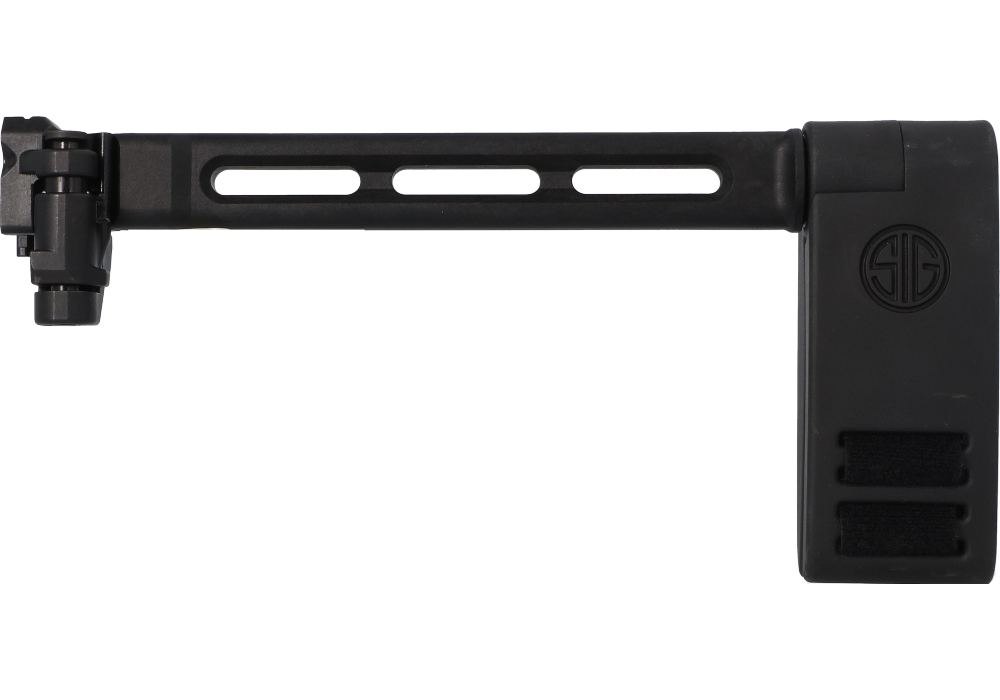
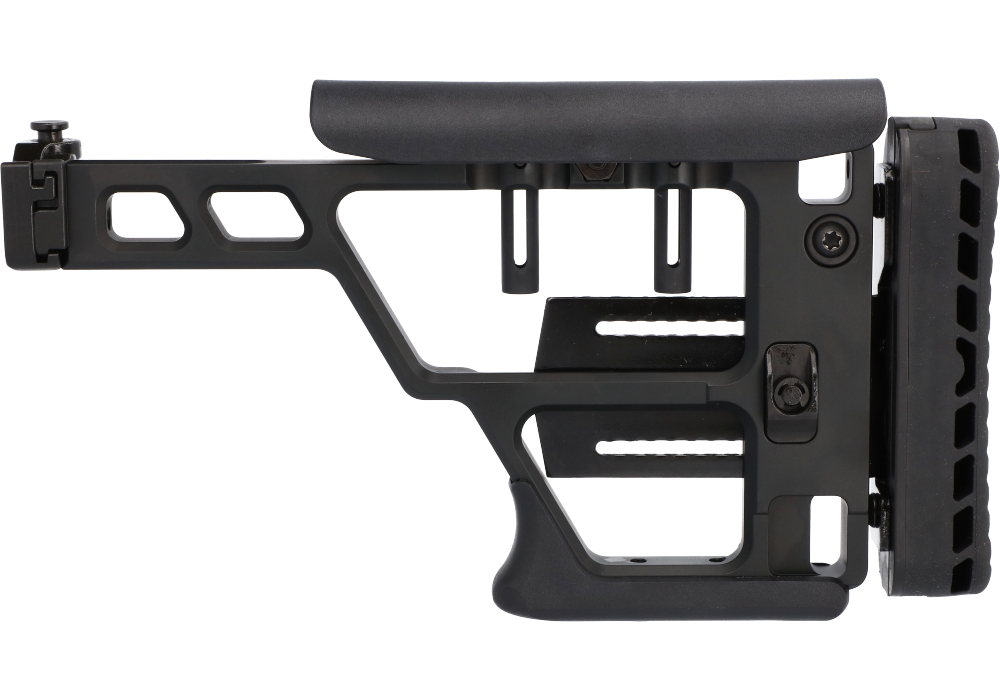
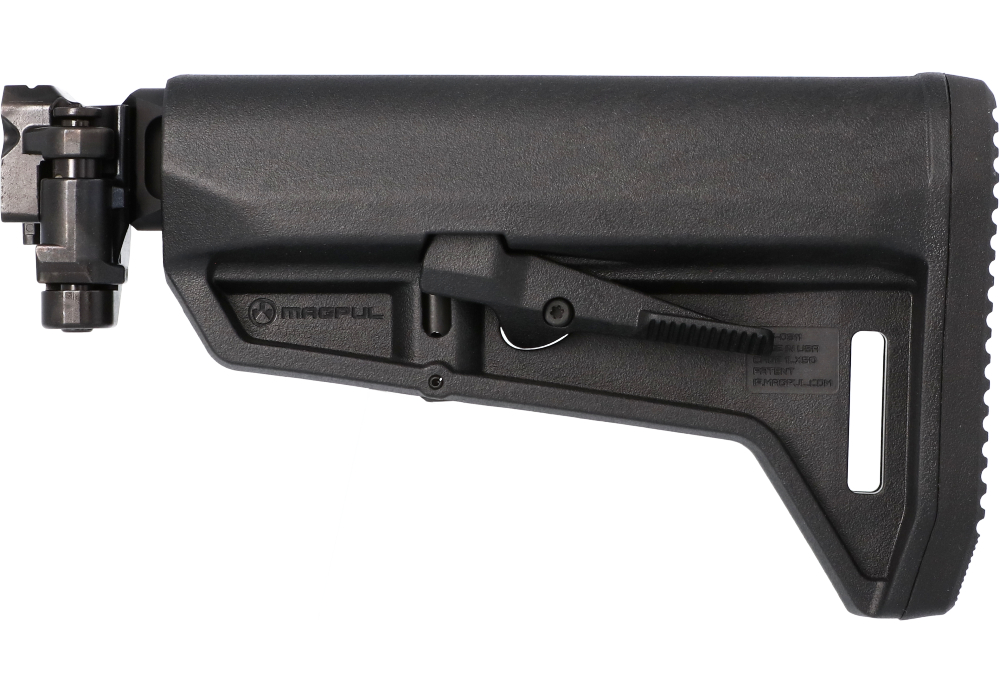
Folding braces for personal defense weapons are designed for owners who value a compact, adaptable setup without giving up the familiar support of a rear-mounted brace when the firearm is deployed. By allowing the brace to fold to the side, these assemblies can reduce the overall length of a compatible large-format pistol or pistol-caliber platform during storage and transport. That difference can be especially useful when a firearm needs to fit inside a discreet vehicle case, a standard range bag, or a secure storage compartment. When extended, a well-designed brace should provide a stable, confidence-inspiring point of contact and a solid lock-up, while the folded position helps keep the setup streamlined between uses. Buyers should begin by confirming the firearm’s exact rear interface, since folding braces may be designed for a Picatinny rail, a proprietary mounting system, or another platform-specific attachment point. Compatibility involves more than simply matching rail dimensions; the brace must clear the receiver, charging handle, safety controls, ejection path, and any installed accessories throughout its range of movement. It is also important to verify whether the chosen assembly is intended for the firearm’s configuration and whether installation requires a specific adapter or armorer-level fitting. A brace that is properly matched to the host platform should fold cleanly, remain secure in both positions, and avoid unnecessary movement during handling. For owners who spend time moving between a secure storage area, a vehicle, and the range, that balance of compactness and accessibility can make a noticeable difference. During the warmer months, a folded configuration can simplify transport on outdoor trips and at busy range facilities; as the weather turns cooler, it can make secure storage in a vehicle case or home safe more efficient without making the firearm difficult to prepare for lawful use.
Construction and interface details deserve close attention when comparing folding braces for personal defense weapons. Polymer structures can offer a lighter feel and may suit users who prioritize reduced weight, while aluminum components often appeal to those looking for a more substantial frame and long-term rigidity. Some folding mechanisms use a steel locking component paired with an aluminum or polymer frame, combining a durable hinge area with manageable overall weight. The most important feature is not a single material, but the quality of the hinge, latch, and mounting connection. A properly engineered mechanism should resist unwanted movement, maintain a secure extended position, and fold deliberately rather than loosely swinging under its own weight. Look for clear information about locking positions, adjustment options, sling compatibility, and whether the brace can be installed without interfering with the firearm’s controls. Integrated quick-detach sling points may be useful for owners who prefer a two-point or single-point sling, but sling placement should be checked carefully so it does not press against the folding joint or obstruct operation. The folded dimensions are equally important: measure the complete firearm with its optic, light, suppressor, magazine, and other accessories installed rather than relying only on the brace’s listed length. A setup that fits neatly in a case at the workbench may require a different arrangement once an optic or extended control is added. Before purchasing, review manufacturer specifications, confirm the mounting pattern, and consider whether the brace’s shape complements the way the firearm is stored and carried. Laws and regulations concerning firearm configurations, stabilizing braces, transportation, and use can change and may vary by jurisdiction, so responsible owners should consult current federal, state, and local requirements and obtain qualified legal guidance when needed.
These accessories can be a practical choice for experienced owners who are refining a compact platform for lawful defensive preparedness, range use, training, or transport. They may also be considered as a gift for a knowledgeable adult firearm owner, particularly when the recipient already has a compatible platform and has expressed interest in improving its storage profile. A brace is not a universal upgrade, however, and gifting one without confirming the recipient’s firearm model, mounting system, and local requirements can create an avoidable compatibility problem. The most useful purchase is usually the one that fits the owner’s established setup, preferred sling arrangement, and storage method rather than the one with the longest feature list. After installation, inspect the attachment points and folding mechanism, confirm that the brace locks firmly in the intended position, and cycle the firearm’s controls with the firearm unloaded and pointed in a safe direction. Practice folding and extending the brace only in a controlled environment, keeping fingers clear of the hinge and checking that accessories do not catch on the frame. Store the firearm and brace securely, separate from unauthorized users, and follow safe handling practices every time. Owners interested in a similar solution for a different range-focused setup can also explore Folding Braces for Target Shooting. With careful platform matching, a dependable locking mechanism, and attention to storage and transport requirements, folding braces can help create a compact, organized configuration that is easier to manage from the safe to the range and back again.