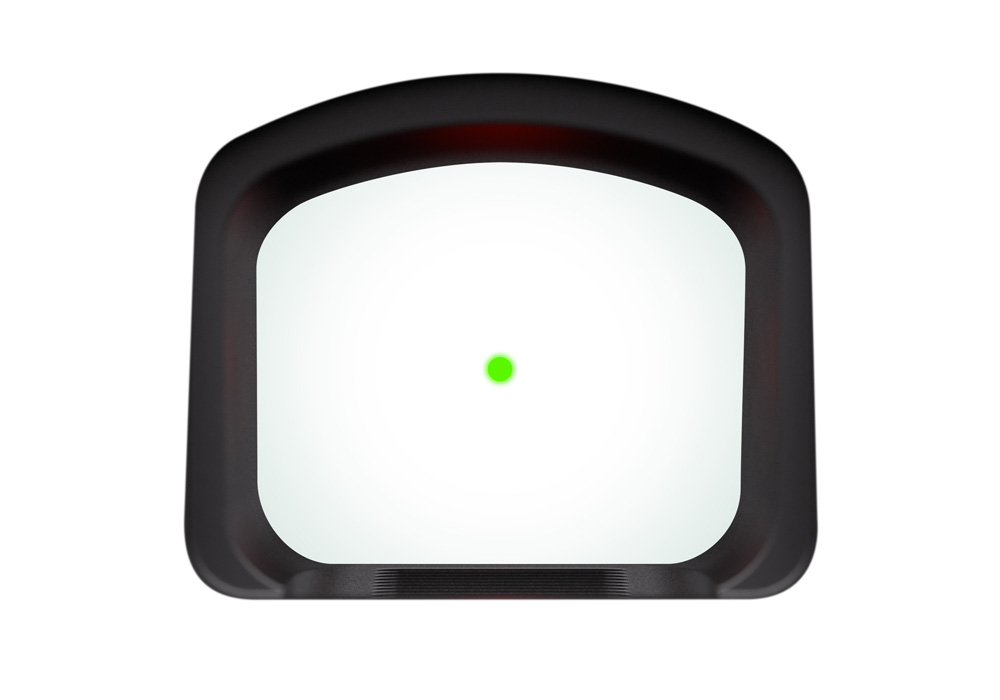
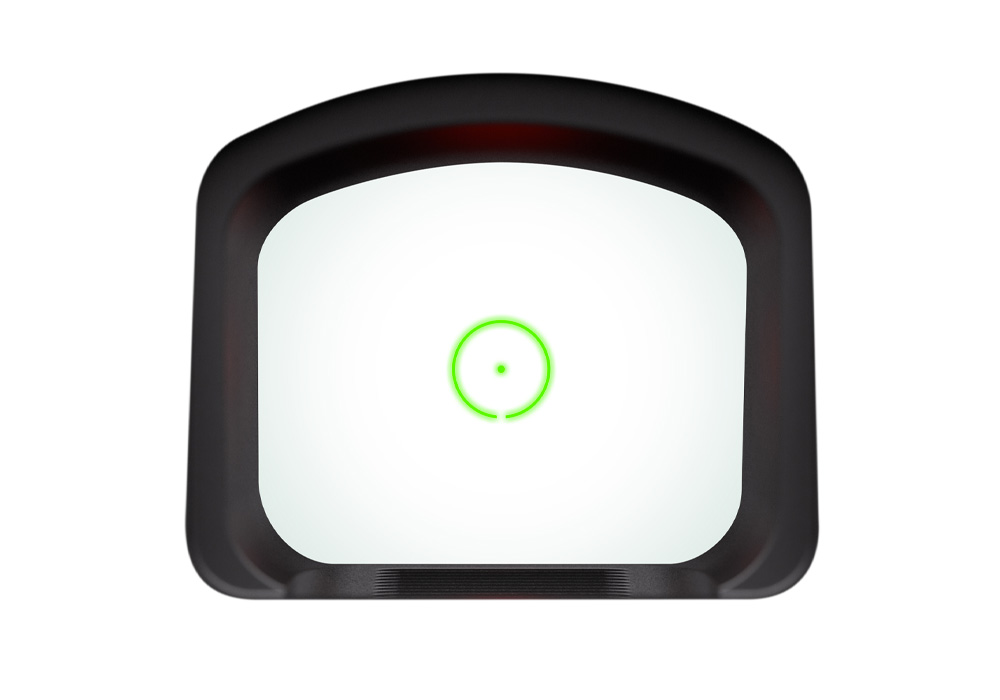
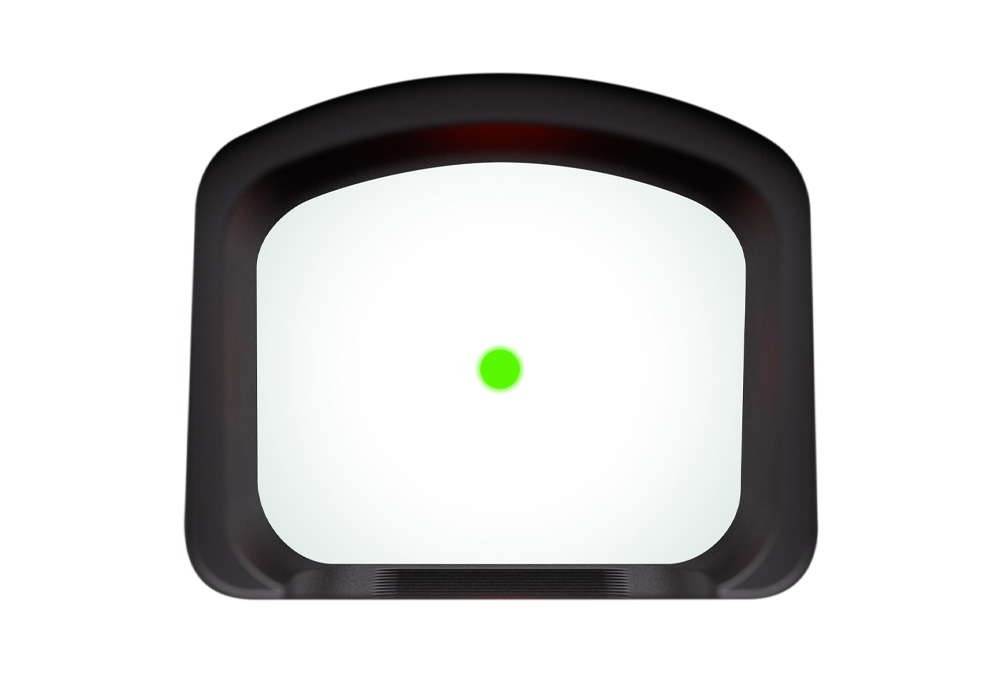
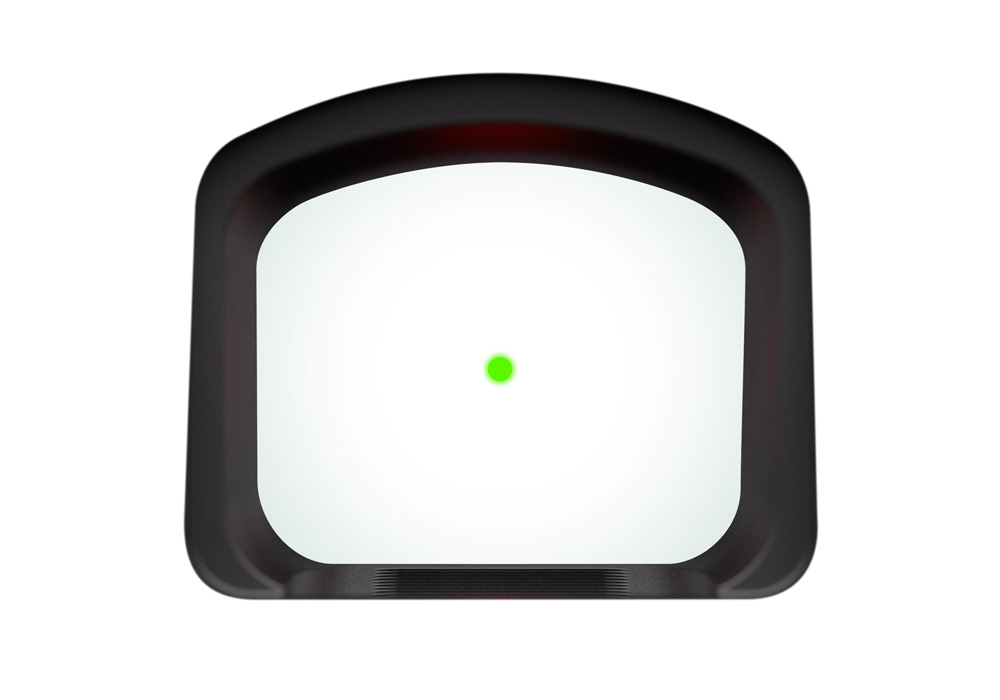
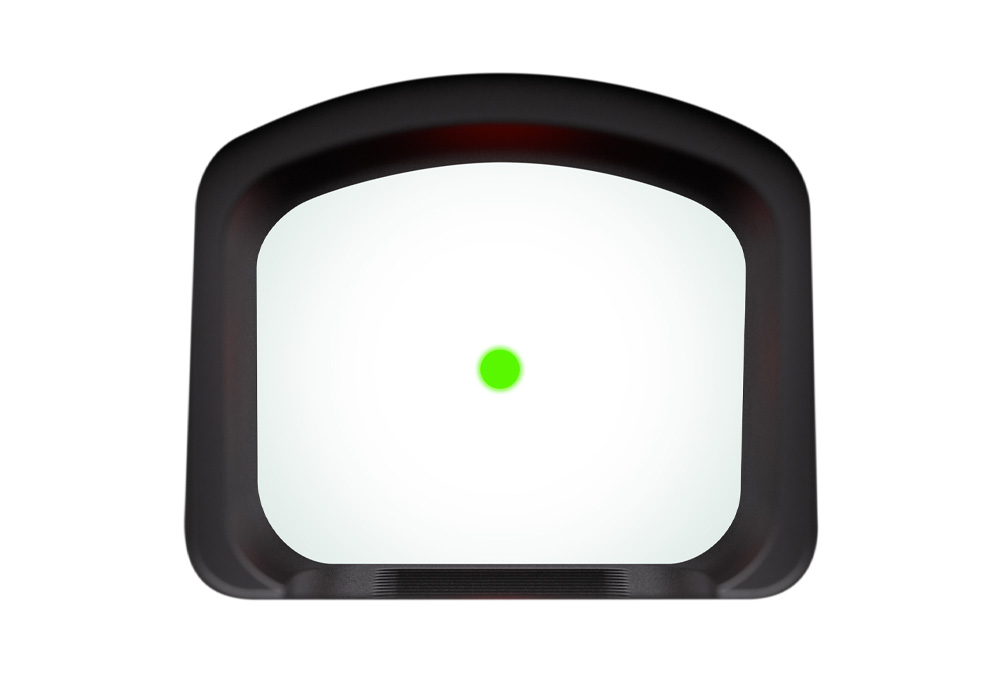
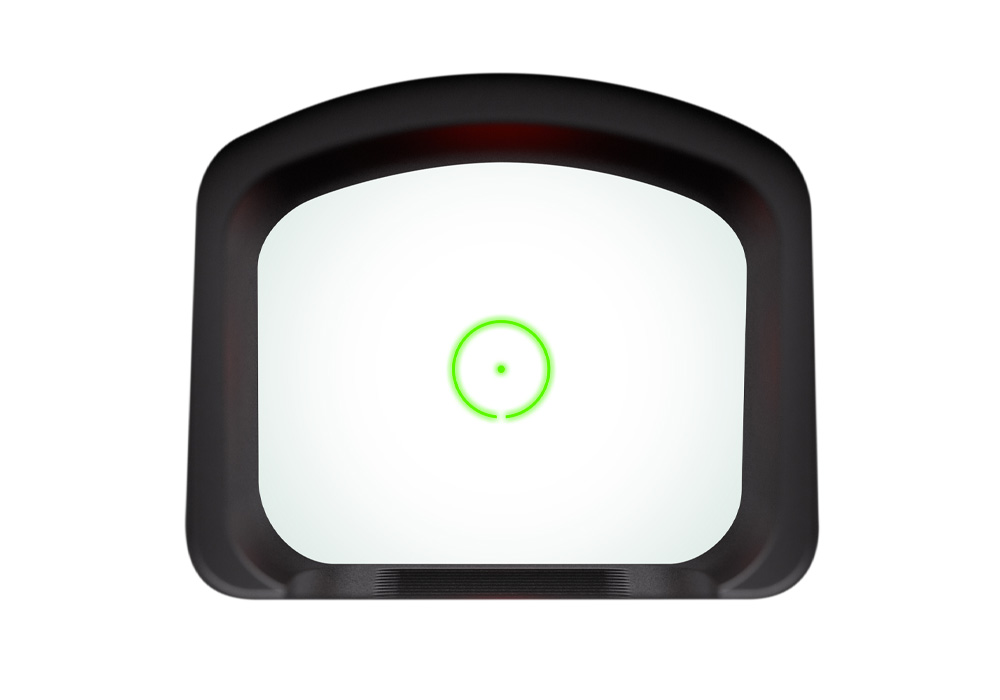
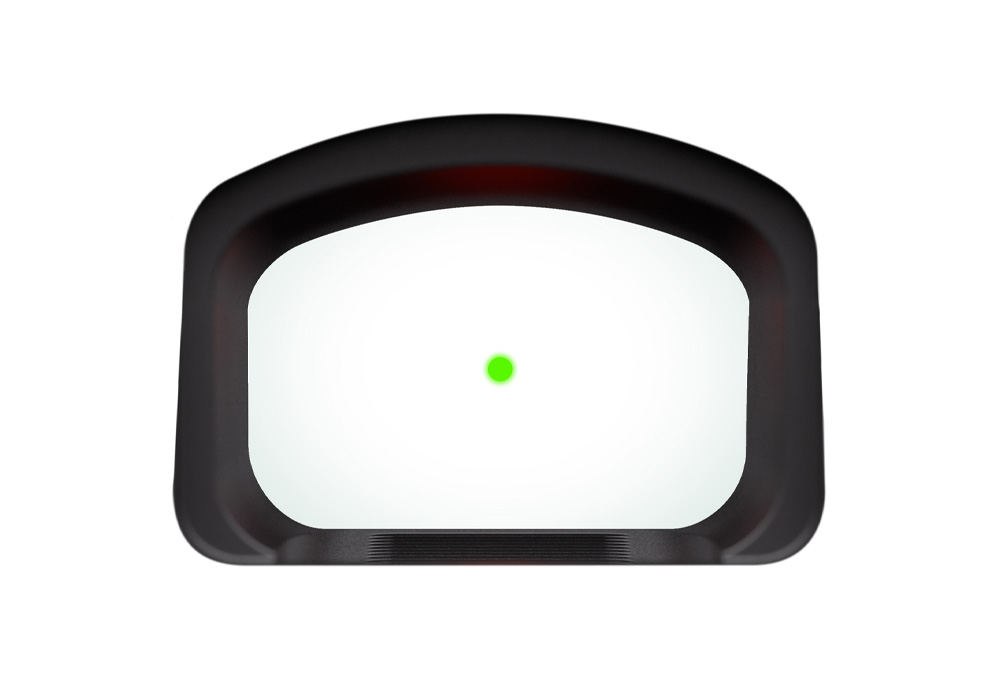
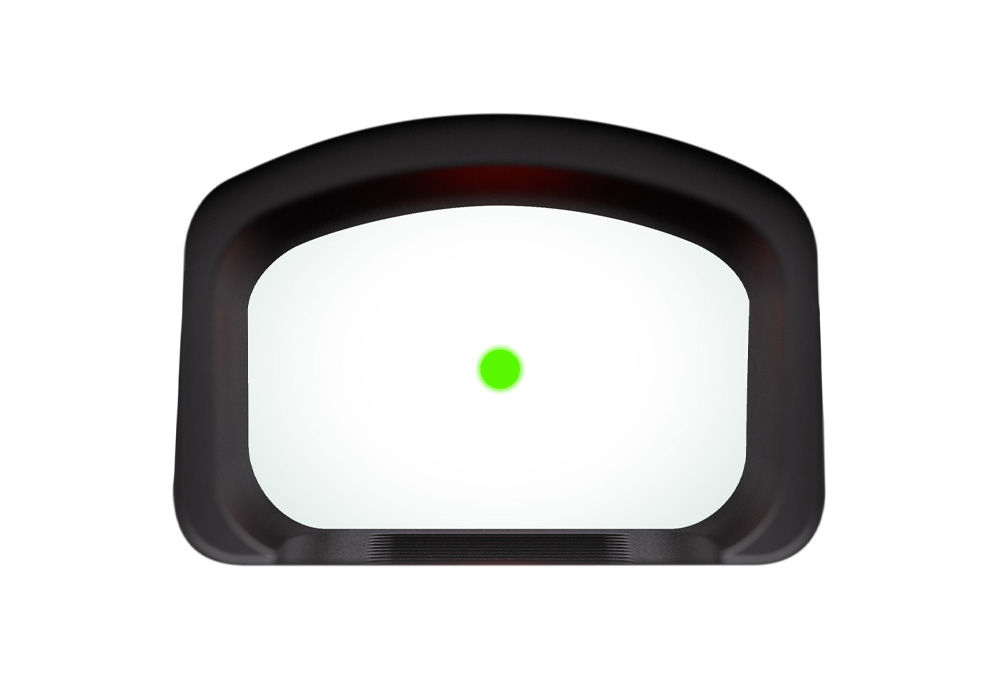
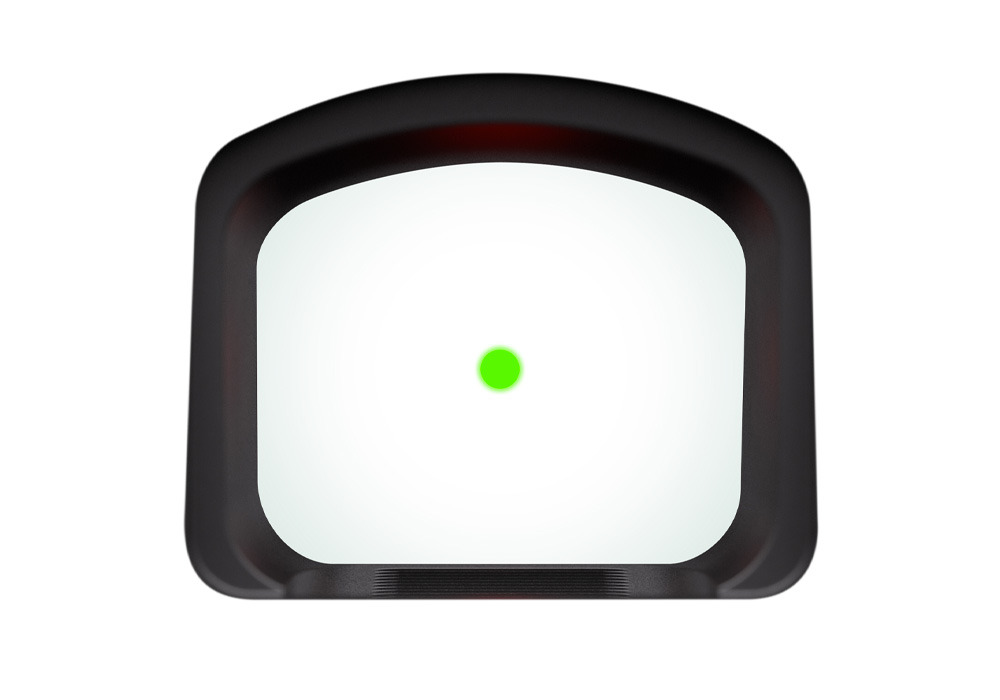
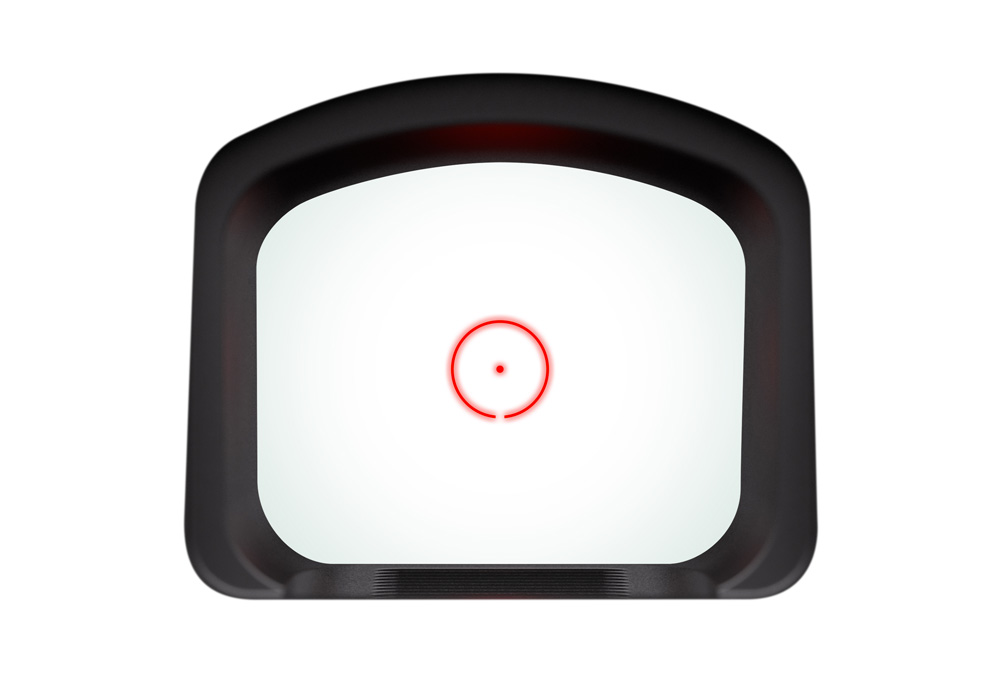
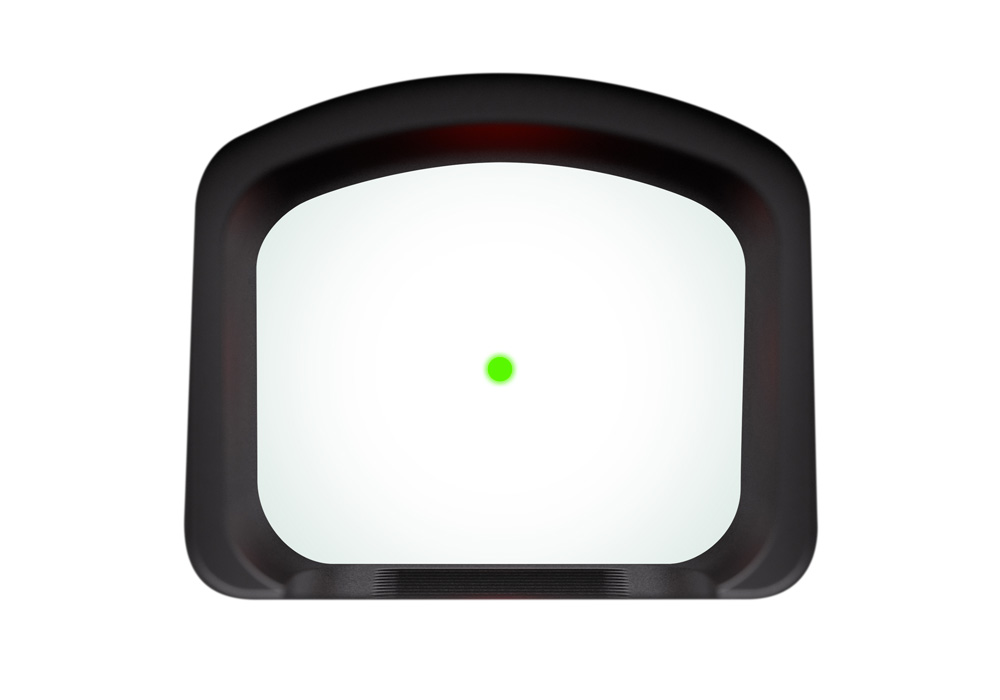
Green circle dot reflex sights pair an illuminated green center dot with a surrounding reference ring, giving the shooter two visual elements within a single aiming pattern. The center dot provides a defined aiming reference, while the larger circle can be easier to locate as the sight comes into view. Most reflex sights offer an unmagnified view, projecting the reticle onto a coated lens rather than casting a visible aiming point onto the target. This arrangement supports viewing with both eyes open, although comfort and clarity depend on the individual shooter, the optic’s position, and the surrounding light. Green illumination can appear especially distinct to some eyes, but it is not universally clearer than red, and reticle color alone does not determine how well a sight performs. A useful comparison considers the sharpness of the center dot, the apparent thickness of the ring, the viewing window, and the range of brightness adjustment. Dot and circle dimensions are commonly expressed in minutes of angle, or MOA, an angular measurement that describes how much of the target the reticle covers at a given distance. A smaller center dot obscures less of a small aiming mark, while a larger reference circle occupies more of the window and provides a broader visual cue. The outer ring is not automatically a measure of shot pattern or a calibrated distance reference; those functions require explicit support in the optic’s documentation. Some designs offer selectable patterns, including a dot alone or a circle-dot combination, while others use a fixed pattern. Those differences matter for recreational target shooting, organized competition, and other lawful sporting applications where personal preference and equipment rules shape the choice. On a paper target with a fine central scoring area, a clean dot may be the most noticeable feature; against a visually busy range background, the surrounding ring may be easier to distinguish. Neither experience is universal, which makes a comfortable, clearly defined sight picture more meaningful than a color preference by itself.
Fit is just as important as reticle design when comparing green circle dot reflex sights. A compact handgun optic and a larger rail-mounted sight may share the same general aiming pattern without sharing mounting dimensions, weight, or intended platforms. The mounting footprint, required plate, compatible fasteners, and clearance around the housing all need to match the firearm and the manufacturer’s specifications. Similar-looking screw holes do not establish compatibility, and a mounting plate can change the sight’s overall height. For handgun applications, Circle Dot Reflex Sights for Pistols brings the focus to that platform, where slide fit, optic dimensions, and sight height deserve particular attention. The relationship between the optic and existing iron sights also varies; a low housing does not guarantee that the iron sights will remain visible through the window. Rail-mounted applications introduce their own considerations, including mount interface, rail space, and the height needed for a comfortable viewing position. Housing materials and construction influence weight and durability, with aluminum commonly used to provide structural strength without excessive bulk. Protective finishes help resist surface wear, but neither a metal housing nor a rugged appearance establishes a particular impact-resistance rating. Published testing, recoil compatibility, and warranty terms offer more concrete information. Open-emitter designs leave the light source and its path to the viewing lens exposed, often allowing a relatively compact housing. Enclosed-emitter designs surround that optical path, helping keep lint, dust, and other debris away from the emitter, though their exterior lenses still need attention. Neither format eliminates cleaning or guarantees a wider usable view. Window dimensions, housing shape, lens coatings, and the shooter’s visual perception all contribute to the experience. A larger window can feel less confined, while a smaller housing may better suit a compact platform or an existing storage arrangement. For someone choosing a sight as a gift for an experienced target shooter, confirmed mounting compatibility and known reticle preferences are far more useful than selecting by appearance alone.
Everyday ownership also depends on controls, power management, and straightforward care. Brightness settings should provide enough adjustment for the places where the sight will be used, including ranges with subdued overhead lighting and lanes with brightly illuminated targets. Excessive brightness can make a dot appear larger or less sharply defined, so a stronger setting is not always a clearer one. Automatic adjustment can be convenient, while manual controls let the user select a consistent level; the usefulness of either approach depends on how the particular system responds and how easily its buttons can be reached. People with astigmatism may perceive a streak, flare, or irregular shape rather than a perfectly round dot, and green illumination does not reliably resolve that effect. When possible, viewing a reticle firsthand provides better insight than relying on photographs, which cannot reproduce another person’s vision. Battery type, compartment access, and the conditions behind a stated runtime are equally practical comparison points. Runtime can vary with brightness, operating mode, and usage, and motion activation or automatic shutoff should be evaluated as model-dependent features rather than assumed characteristics of every green circle dot sight. A side- or top-access battery compartment may allow replacement without removing the optic, but that convenience and any required verification afterward depend on the design. For care, follow the manufacturer’s directions, remove loose particles before wiping optical surfaces, and use lens-safe materials instead of abrasive cloths or harsh household cleaners. Handle and inspect the sight only with the firearm unloaded and secured according to its safety instructions. Periodic checks for loose mounting hardware, obstructed lenses, and normal illumination help keep routine maintenance manageable; use only the specified hardware and tightening values, or seek qualified installation assistance. Protective covers and suitable storage can reduce unnecessary contact with the lens and controls between range visits. The most suitable green circle dot reflex sight balances a legible reticle, verified fit, durable construction, and maintenance requirements its owner can comfortably manage. Those qualities provide a sound basis for comparing optics without assuming that one window size, emitter format, or green aiming pattern will suit every shooter.