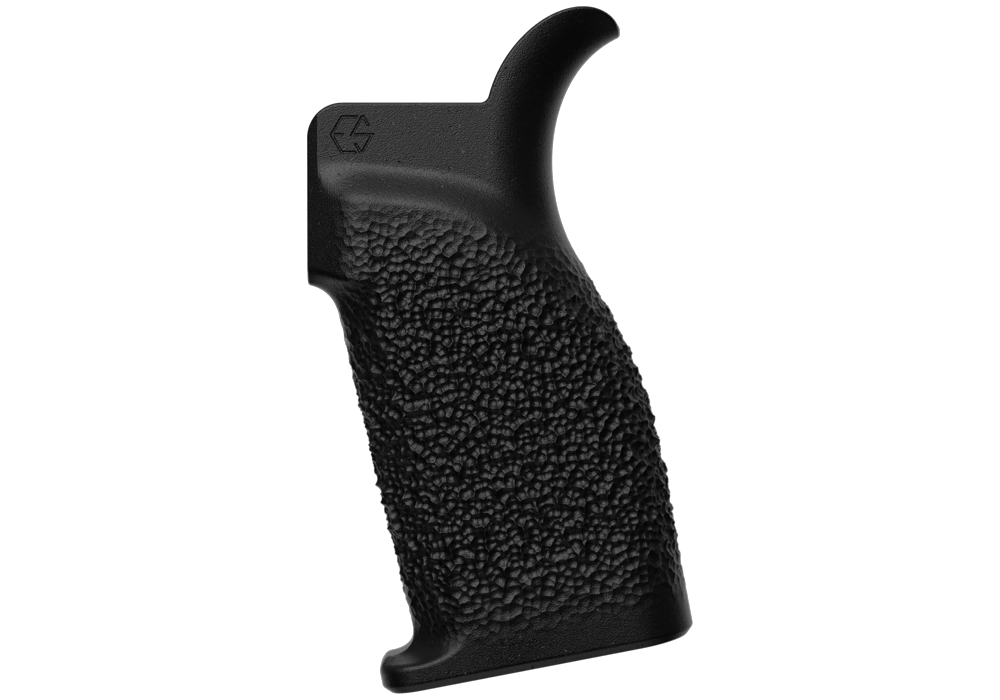
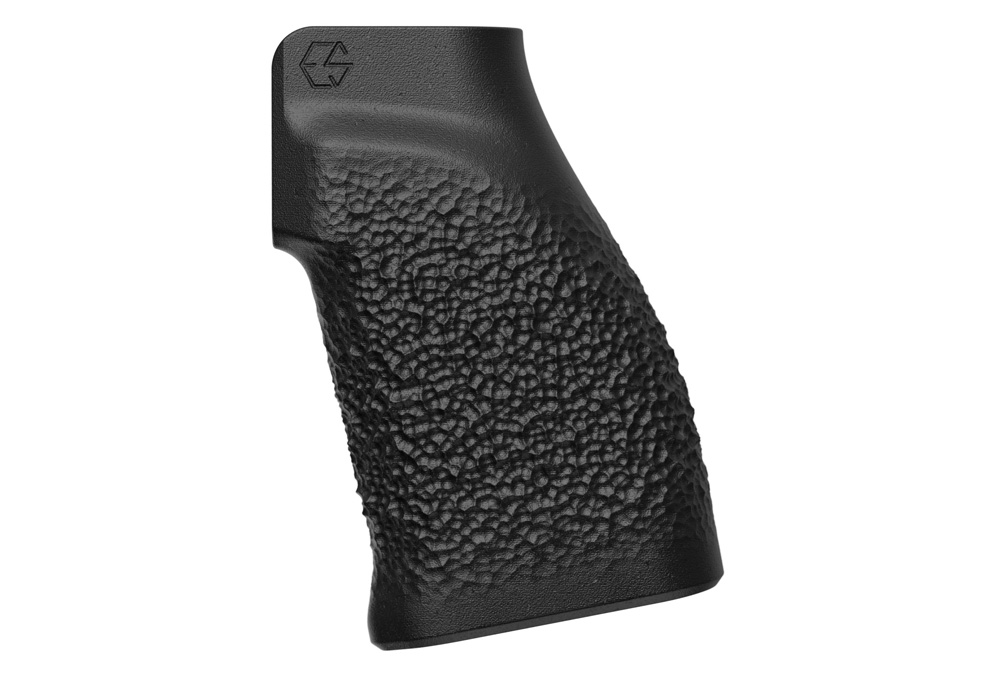
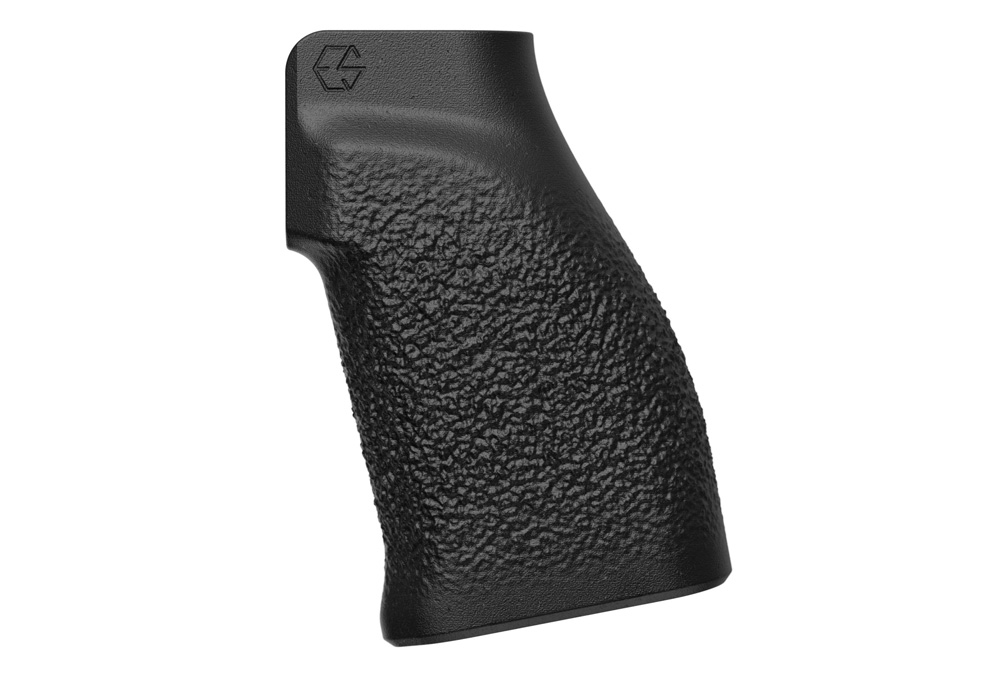
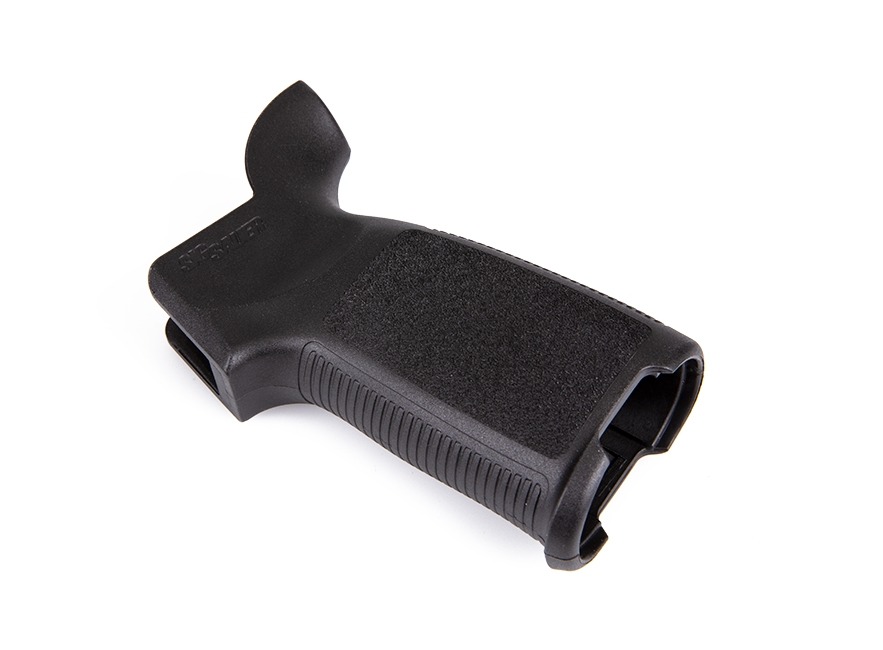
Grip design is the combination of shape, size, texture, and material that determines how a firearm’s gripping surface fits the hand. These elements work together to influence comfort, traction, and the relationship between the palm, fingers, and surrounding controls. A grip can look understated yet feel distinctly different because of a narrower profile, a fuller backstrap, or a change in surface pattern. The most useful distinctions are often tactile: fine stippling feels different from pronounced checkering, rounded edges distribute contact differently from sharply defined contours, and a smooth section can balance a more textured area elsewhere. Firearm grip designs apply these ergonomic principles within the dimensions and attachment requirements of a particular platform, so visual similarity alone does not establish compatibility. Grip panels typically form the exterior gripping surfaces, while a grip module can incorporate a larger portion of the firearm’s frame structure. Neither category is universally interchangeable. Within a compatible configuration, differences in circumference, front-to-back dimensions, and contour can accommodate different hand proportions without assuming that every person with similarly sized hands prefers the same feel. Long fingers, a broad palm, or a preference for a less sculpted surface can each influence the appeal of a particular design. Finger grooves may feel comfortably defined to one person and restrictive to another; a straighter profile leaves more room for individual preference. Texture also involves a balance rather than a simple progression from mild to aggressive. Raised patterns offer more pronounced contact, while finer surfaces may feel less abrasive against skin or clothing. For someone spending an extended session at the range, a small pressure point can become more noticeable over time. For someone carrying a firearm in a compatible holster, the profile and exposed texture can affect everyday comfort. Grip designs bring these considerations together, offering different approaches to hand fit and surface feel without replacing the need for safe handling, proper instruction, and platform-specific compatibility.
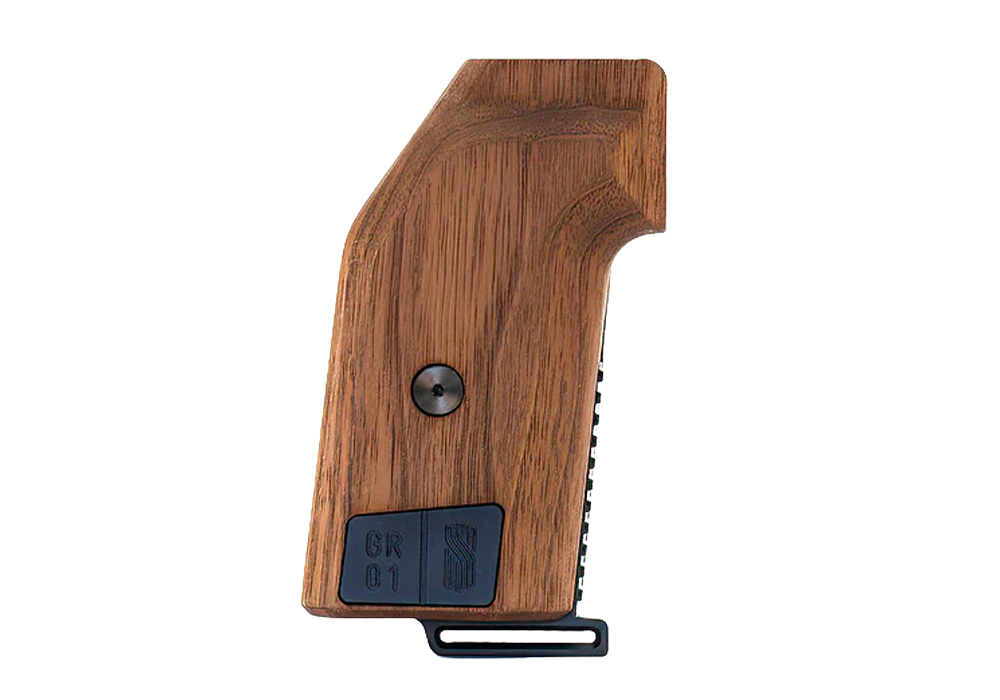
Materials give grip designs much of their character, both in the hand and through repeated use. Polymer allows complex contours and integrated texture without the weight of many metal alternatives. Its surface can range from relatively smooth to deeply patterned, with the formulation and construction influencing stiffness, wear resistance, and response to cleaning products. Aluminum offers a rigid feel and lends itself to precisely defined machining, including grooves, checkering, and geometric patterns. Protective finishes can influence its appearance and resistance to surface wear, though edges and high-contact areas may develop visible marks with use. Wood brings natural grain, tonal variation, and a familiar tactile quality; its long-term appearance depends on the species, protective finish, handling, and care. Composite materials can combine layered visual patterns with firm, textured surfaces, while rubber or other elastomeric materials provide a more yielding feel. A softer surface is not automatically more comfortable, just as a harder surface is not automatically less forgiving. Contour, thickness, and the placement of texture remain important regardless of material. Durability also extends beyond the outer face. Attachment points, panel edges, and the fit between adjoining surfaces contribute to how well a grip holds its shape and remains secure over time. A clean seam and properly matched dimensions matter more than a decorative finish alone. In everyday use, fine dust, skin oils, and residue can collect in recessed patterns, while a raised texture may show wear at its highest points. Care should follow the manufacturer’s recommendations because a cleaner suitable for one material or finish may be unsuitable for another. Routine attention to surface condition, fit, and attachment hardware helps distinguish ordinary cosmetic wear from a concern that warrants professional inspection. Any inspection or maintenance belongs in a safe setting with the firearm unloaded. A well-chosen grip design should suit both the owner’s preferences and the level of care appropriate to its material, whether the desired appearance is understated, richly grained, or defined by crisp machining.
Choosing among grip designs is ultimately about matching a compatible product to an actual use rather than choosing by appearance alone. Recreational range users may prioritize a contour that remains comfortable through repeated practice, while sport shooters may prefer a consistent surface feel across regular training sessions. People selecting grips for lawful everyday carry often give additional attention to bulk, contact with clothing, and compatibility with their existing holster. Collectors and enthusiasts may value the visual relationship between the grip and the rest of the firearm, especially when natural grain, contrasting finishes, or a distinctive texture complements its overall character. Those preferences can overlap: a visually striking grip can still have a restrained profile, and a plain-looking design can offer carefully considered ergonomics. Where separate panels are appropriate, coordinated Grip Sets provide a useful way to consider matching surfaces together, with compatibility determined by the stated fitment rather than the collection name. Relevant details can include the exact firearm configuration, attachment arrangement, panel thickness, and clearance around surrounding components. A grip that fits one version of a platform may not fit another, even when the two look closely related. Manufacturer specifications are the appropriate reference, and installation requirements vary by design; professional assistance is sensible when fit or attachment is uncertain. Grip accessories can also be thoughtful gifts for responsible adult firearm owners when the recipient’s exact platform and preferences are known. Familiarity with a favorite material or texture is more useful than guessing from hand size or choosing a dramatic pattern solely for its appearance. The lasting appeal of a grip comes from the combination of compatible fit, appropriate construction, and a surface the owner enjoys handling. From subtle pebbling that feels almost understated at first contact to distinct checkering or the smooth sweep of a contoured panel, grip designs offer meaningful differences in both feel and finish. Those differences help turn a broad preference for comfort, durability, or visual character into a more precise match for the firearm and its owner.