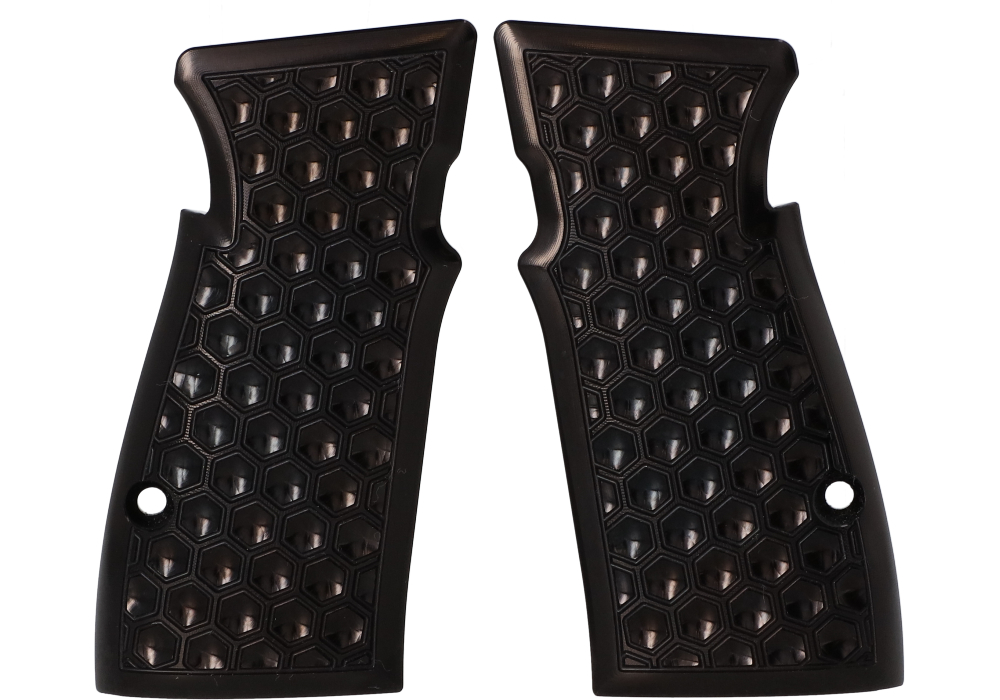
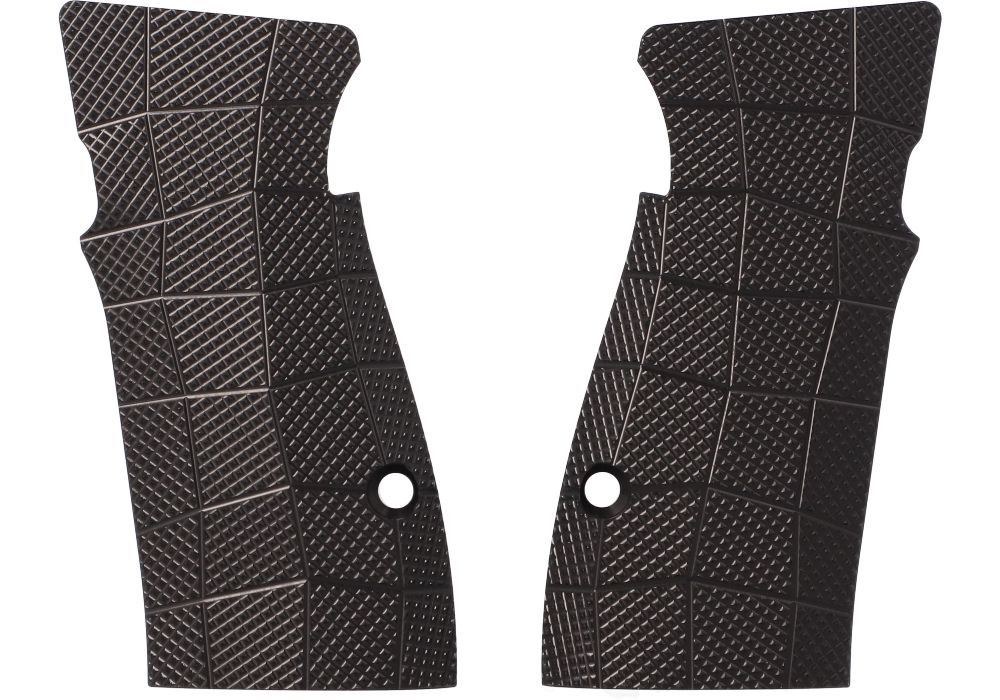
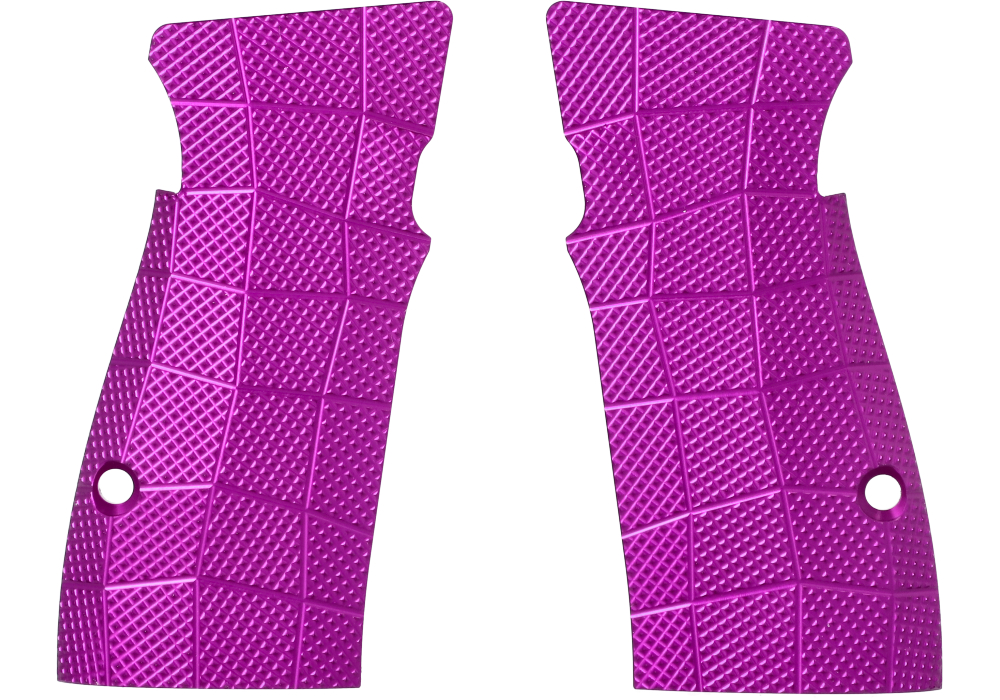
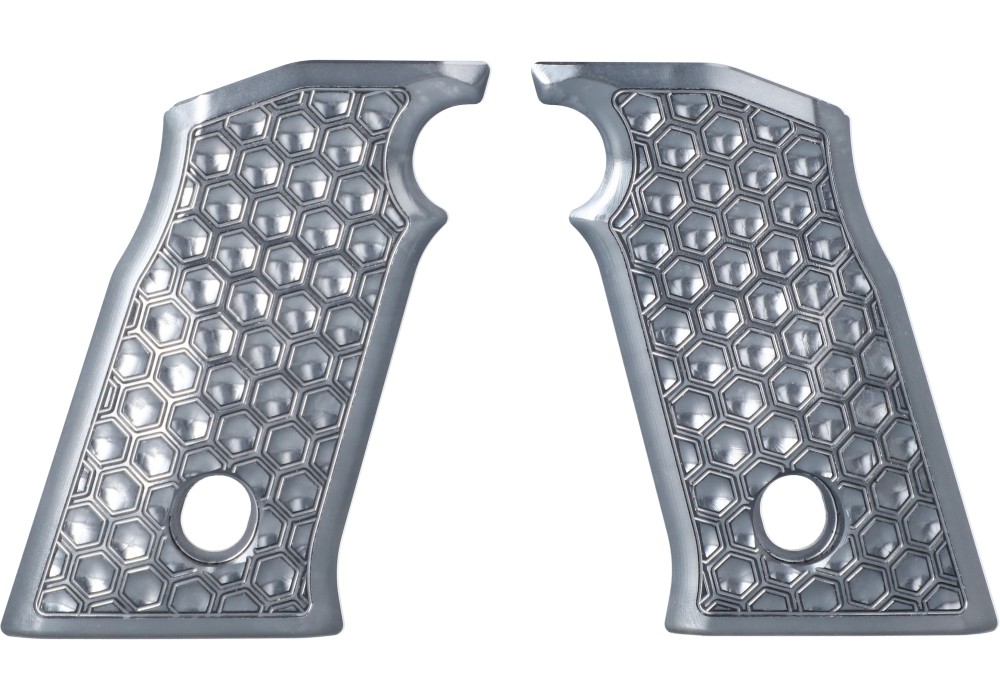
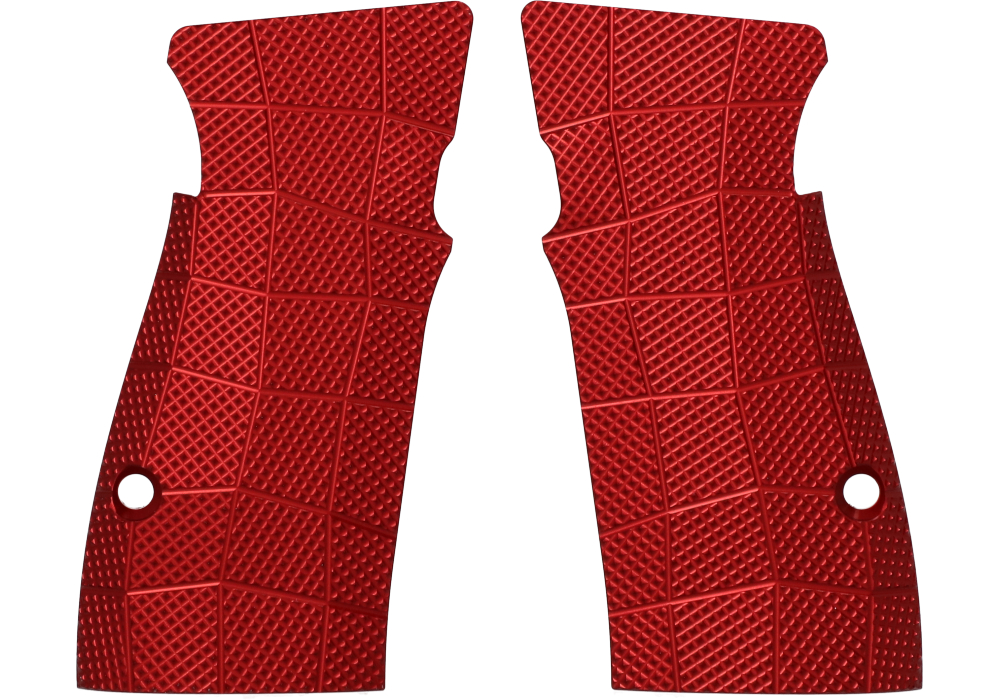
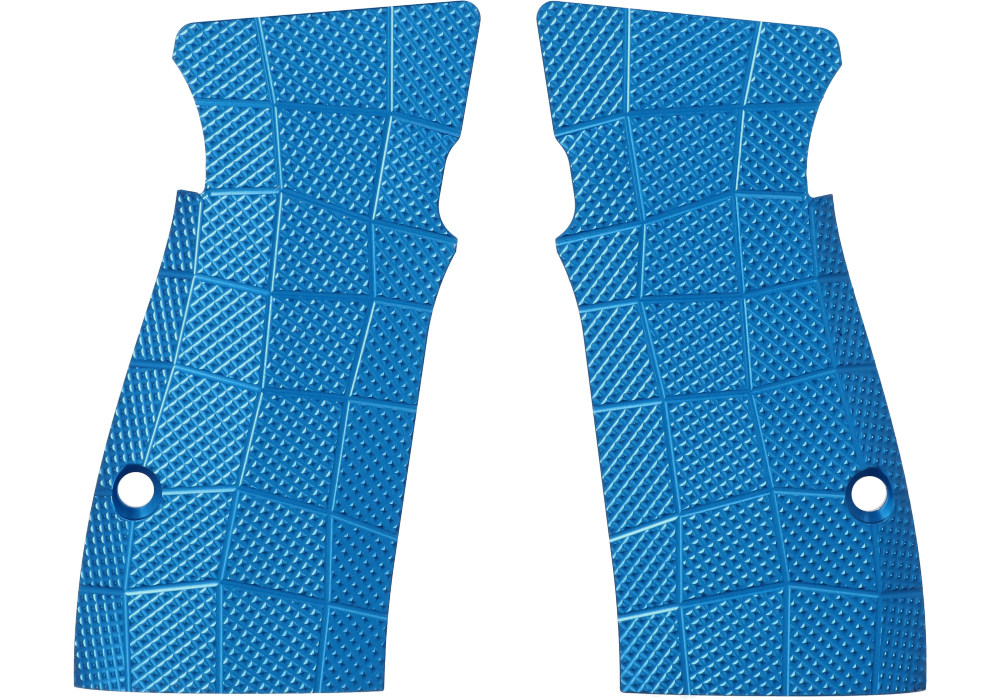
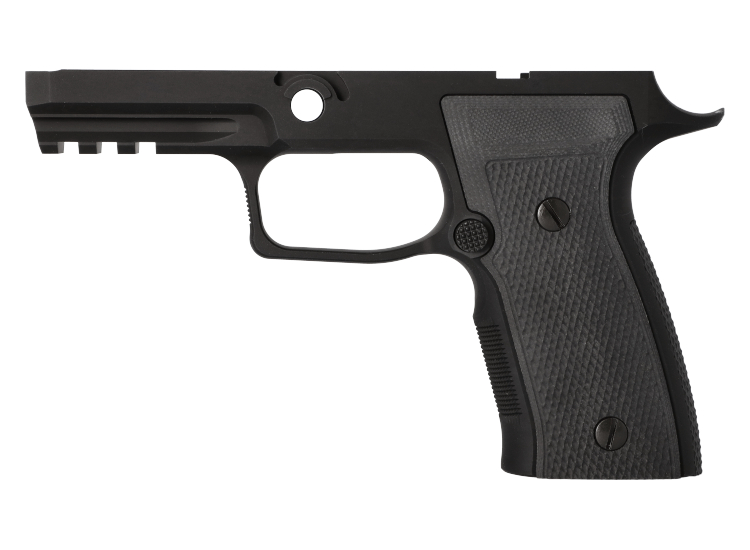
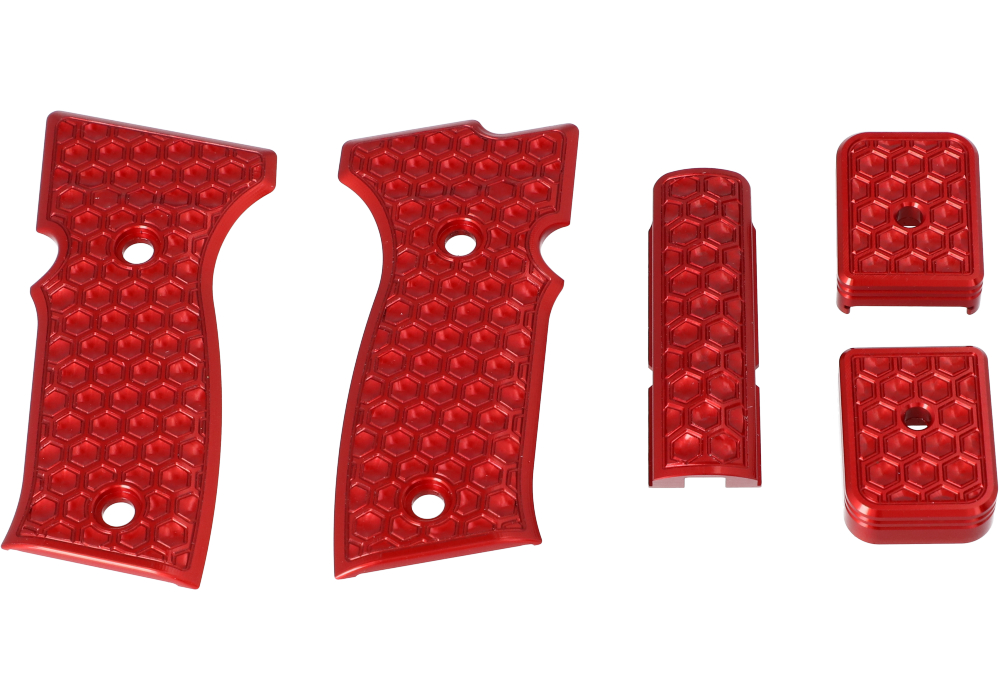
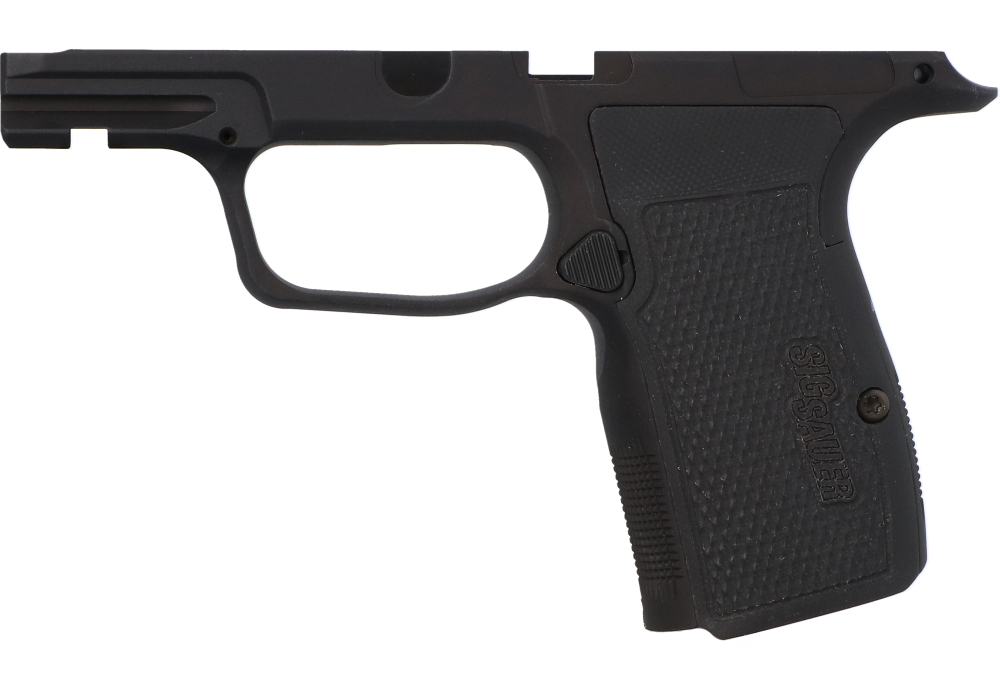
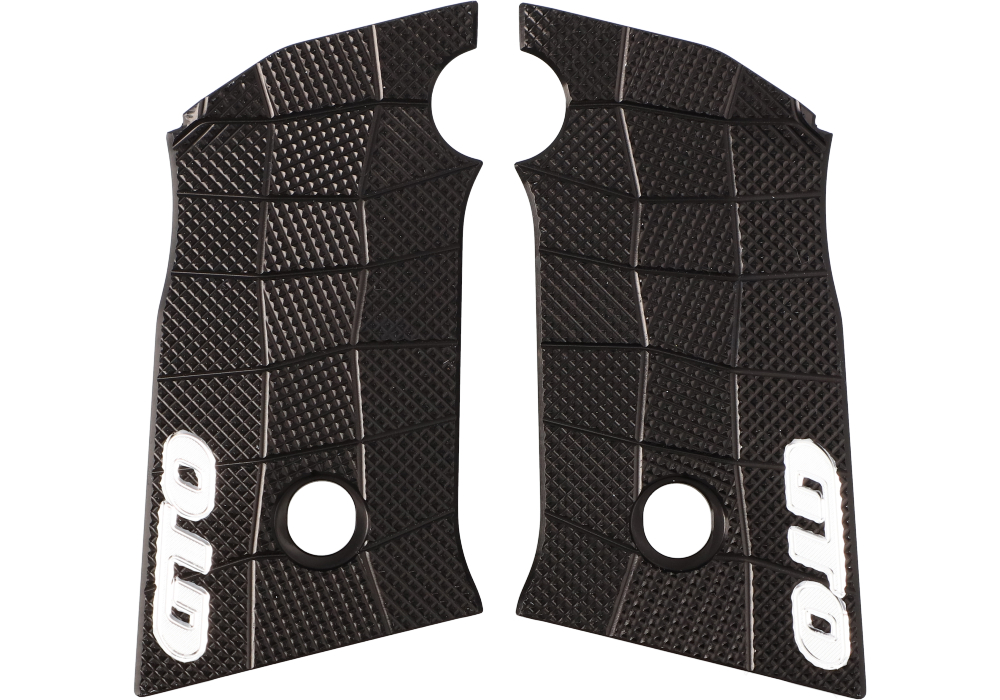
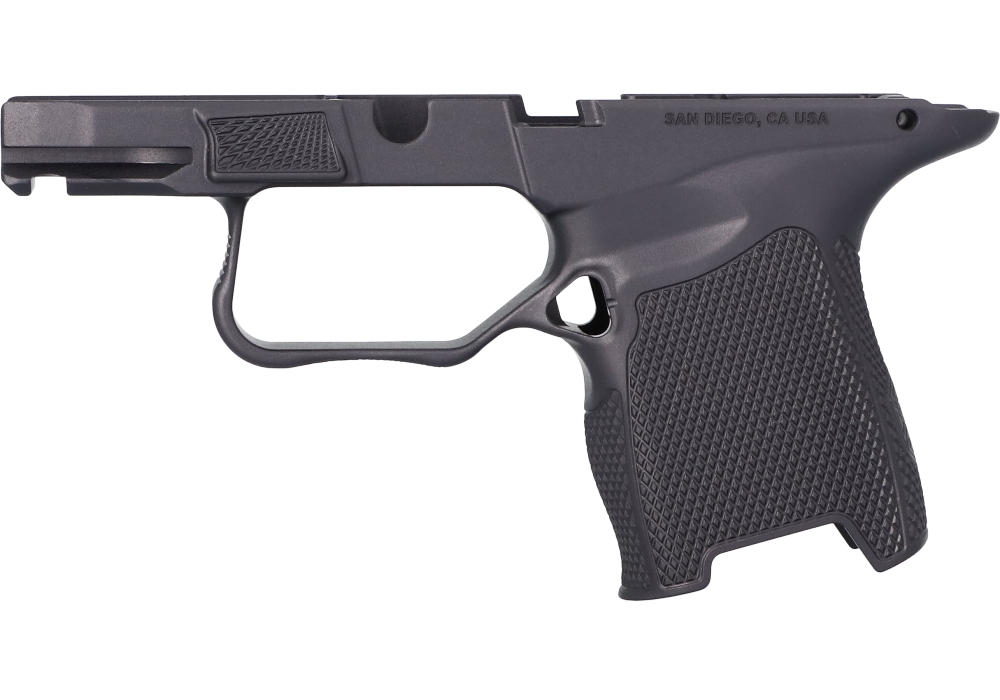
Metal grips are handgun grip components that use metal in the grip structure, the exterior contact surfaces, or both. Depending on the firearm’s design, the term can describe a metal grip module, replacement grip panels, or a grip assembly that combines a metal body with separate panels. These components serve different purposes, so metal grips should not be treated as interchangeable simply because they share a material or a similar outline. A grip module forms a substantial part of the handgun’s lower structure on compatible platforms, while grip panels attach to an existing frame and change the surfaces that contact the hand. For shoppers considering this category, the main distinctions are material, compatibility, dimensions, texture, and weight. Aluminum alloys offer a useful balance of rigidity and relatively low weight, while steel generally adds more weight within a comparable shape. Actual weight depends on the component’s dimensions and construction, not just the metal listed in its description. That difference can influence how a handgun balances in the hand and how comfortable it feels over a longer range session. Additional weight may change the sensation of recoil, but material alone does not determine comfort or shooting results. Grip shape, hand placement, firearm design, ammunition, and technique all contribute to the experience. Machined contours can provide defined edges, curved backstraps, and consistent contact surfaces, with finishes ranging from subdued matte treatments to more pronounced textures. Some designs combine a metal structure with panels of another material, allowing the supporting body and the gripping surface to serve separate roles. Shoppers exploring Metal Frame Grips can consider these structural differences alongside the feel and dimensions of the finished assembly. The appeal is not limited to appearance: a well-matched metal grip can offer a solid, stable interface for recreational shooting, supervised training, or other lawful uses. The most suitable choice is one that fits the intended firearm and feels comfortable in the owner’s hands, rather than one selected solely for its weight, finish, or visual resemblance to another grip.
Fit deserves close attention because two grips that look nearly identical can differ in mounting points, internal dimensions, control clearances, or compatibility with a particular firearm configuration. A model name by itself may not resolve every fit question; generation, frame size, and the manufacturer’s stated compatibility can also matter. Grip panels and complete grip modules have different attachment requirements, and compatibility with one configuration does not establish compatibility with another. Clear product specifications and the firearm manufacturer’s documentation provide a better basis for selection than photographs alone. Where installation or fit is uncertain, a qualified gunsmith can help assess whether a component is appropriate without forcing parts together or altering them to overcome a mismatch. Once compatibility is established, hand fit becomes the central consideration. Grip width, front-to-back depth, backstrap curvature, and the transition beneath the trigger guard all affect where the hand settles. A broad, squared profile can feel reassuring to one shooter and cumbersome to another, while a slimmer contour may be easier to grasp but provide less surface contact for larger hands. Texture is equally personal. Fine checkering or shallow machining can provide traction without a particularly abrasive feel; more pronounced patterns create a stronger tactile reference but may become uncomfortable during repeated practice or rub against clothing in lawful carry use. The edges around panel seams and mounting hardware also deserve consideration, especially where the palm rests. A grip that feels comfortable during a brief inspection may feel different after an extended practice session. Evaluating the feel on a verified unloaded firearm in an appropriate setting offers more useful information than judging its appearance alone. Normal access to controls, a natural reach, and an unobstructed fit with compatible equipment all remain relevant. Metal grips are not a substitute for sound technique or safe handling, and greater weight or sharper texture is not automatically better. Comfort, compatibility, and repeatable hand placement are more meaningful considerations than an aggressive appearance.
Durability and care depend on the specific metal, surface treatment, and construction of the grip. Aluminum often receives an anodized finish, while steel may use a protective coating or another treatment intended to resist corrosion and surface wear. These finishes can improve resistance to everyday handling, but no finish eliminates the effects of abrasion, perspiration, residue, or unsuitable cleaning chemicals. Holster contact and repeated handling may gradually polish raised edges or leave visible marks on frequently touched surfaces. Such cosmetic wear does not necessarily indicate a functional problem, though cracks, looseness, damaged mounting hardware, or movement between fitted components warrant professional attention before further use. Routine care should follow the component manufacturer’s recommendations, particularly when a grip combines metal with separate panels, adhesives, or coated hardware. A soft cloth and an approved cleaning method are generally preferable to harsh abrasives that can alter the finish or soften a carefully defined texture. Cleaning products suitable for one part of a firearm are not necessarily appropriate for every grip coating, so compatibility matters here as well. Any inspection or maintenance should take place with the firearm verified unloaded and ammunition kept separate. Careful storage also helps protect the gripping surfaces from unnecessary contact with loose tools or other hard objects. For frequent range visitors, durability may mean a grip that remains comfortable through repeated practice and is straightforward to keep clean. For a firearm enthusiast who values fit and finish, it may mean neatly matched panels, consistent machining, and a surface treatment that complements the firearm without sacrificing practical comfort. Those considering a grip as a gift should know the recipient’s exact firearm configuration and preferences, since dimensions and texture are highly individual. A familiar contour with a different material can still change balance and feel substantially. Metal grips are best understood as purposeful components with distinct structural and ergonomic characteristics, not universal upgrades. Matching those characteristics to the firearm, the owner’s hands, and the intended use helps keep the choice grounded in everyday comfort, dependable fit, and lasting care.