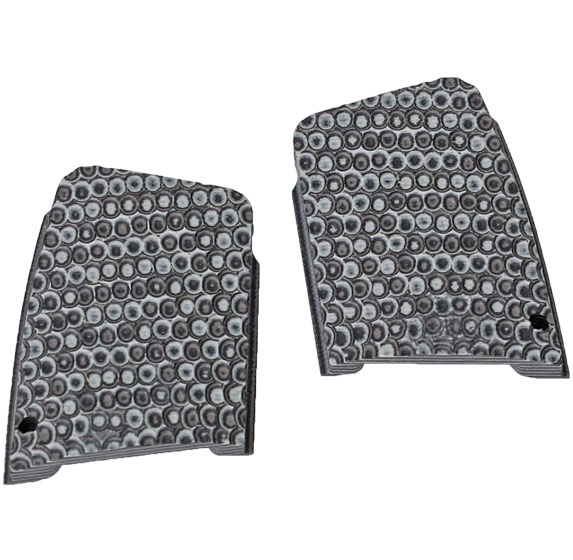
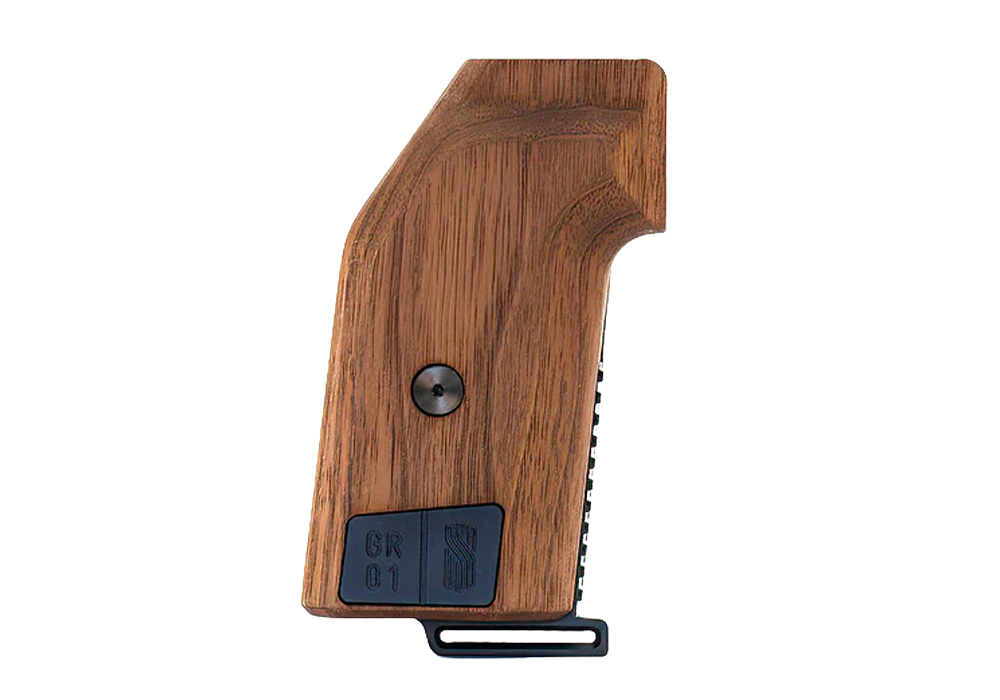
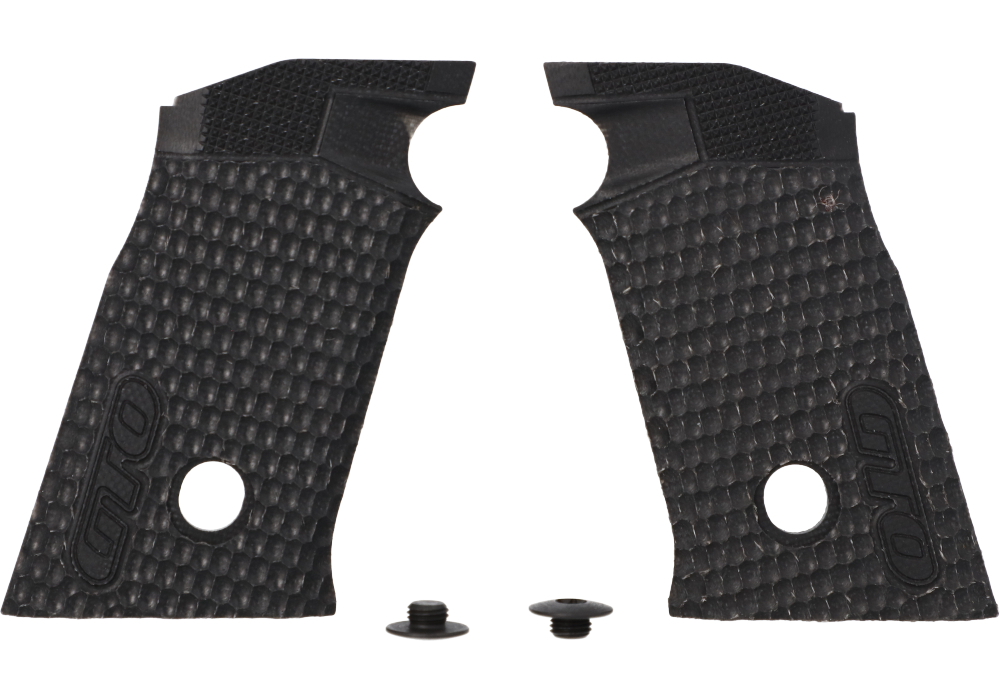
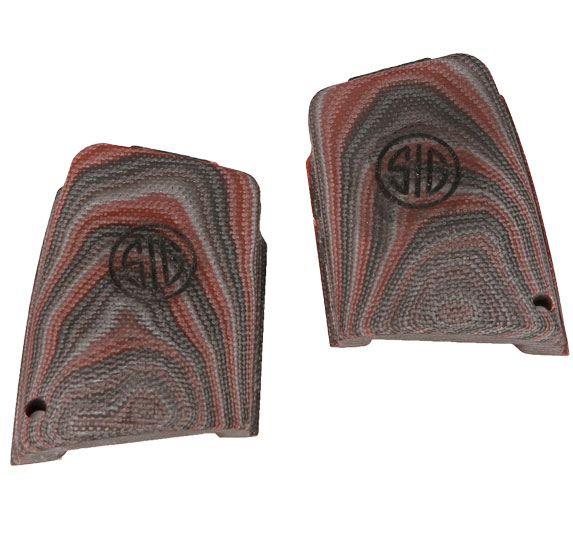
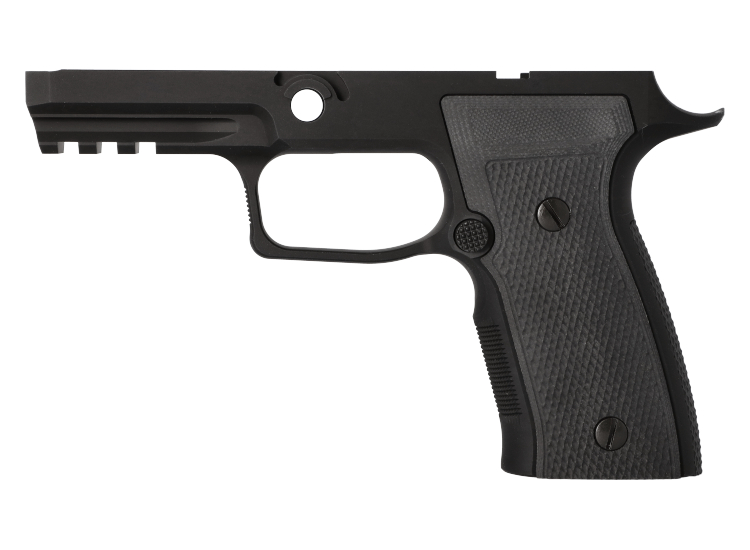
Grip handles for firearms are the components and surfaces that connect the shooter’s hand to the firearm, shaping how it feels, sits in the palm, and responds during ordinary range use. Depending on the firearm’s design, that contact surface may come from replaceable grip panels, a grip module, or another compatible grip component. Their purpose is more specific than that of a handle on a tool or a pull on a cabinet: firearm grips must suit both the firearm’s attachment system and the user’s hand without interfering with controls or safe operation. A comfortable grip fills the hand without forcing the fingers into an awkward position, while its contours help establish a consistent hold. Width, front-to-back depth, palm swell, and surface texture all contribute to that fit. Someone with smaller hands may prefer a slimmer profile that leaves controls within comfortable reach, while someone with larger hands may appreciate additional support through the palm. Finger grooves can feel natural when they align with the hand, but a smoother contour offers more flexibility when they do not. Texture matters just as much as shape. A pronounced pattern can provide a secure contact surface, although a less aggressive finish may be more comfortable through an extended practice session or where the grip rests against clothing. These details make grip handles relevant to recreational shooters, competitive participants, and owners seeking a better match between their equipment and their hands. Compatibility remains the starting point: similar-looking grips are not necessarily interchangeable, and the firearm’s exact configuration determines which attachment points, dimensions, and clearances are appropriate. A grip that feels good in isolation still needs to fit correctly once installed. For a shopper comparing options, the useful distinction is not simply large versus small or smooth versus textured, but how the entire shape supports a relaxed, repeatable hold without unnecessary squeezing or repositioning.
Materials give grip handles much of their character, affecting weight, surface feel, maintenance, and resistance to everyday wear. Polymer can offer a relatively light construction with texture formed directly into the surface, while rubber can provide a more compliant feel where the hand contacts the grip. Wood brings visible grain and a distinct tactile quality, though its finish and exposure to moisture deserve consideration. Metal offers a firm, rigid contact surface and can support precisely defined contours or machined patterns. For shoppers interested in that construction, Metal Grips provide a related category to explore alongside other material choices. None of these materials guarantees a better fit on its own; the shape, finish, and compatibility of the component remain essential. Two grips with similar dimensions can feel noticeably different when one has rounded edges and another has sharply defined checkering. Likewise, a deeply textured surface may feel secure during brief handling but become distracting after a longer session. The balance between traction and comfort deserves attention at the points where the fingertips, heel of the hand, and web between the thumb and index finger meet the grip. A well-considered contour avoids concentrated pressure while allowing the hand to settle naturally into place. Durability also involves more than the visible outer surface. Attachment areas, screw seats, and edges experience repeated handling, so their condition matters alongside the material itself. Protective finishes can help limit surface wear, but their performance depends on the finish type, cleaning methods, and use. Scratches, softened texture, or changes in appearance may be cosmetic; cracks, deformation, or movement at an attachment point warrant closer evaluation. Weight is another practical consideration, particularly for owners who handle their equipment for extended periods. A heavier grip can change the firearm’s overall feel, while a lighter one may preserve a familiar balance. Neither is universally preferable, and differences are most meaningful when considered as part of the complete firearm rather than as isolated specifications.
Grip handles are useful where personal fit and consistent handling matter, whether the setting is a supervised range session, organized sport shooting, or routine familiarization with personal equipment. A recreational shooter who notices a pressure point after several strings of fire may value a different contour more than a more prominent texture. A participant who practices regularly may prioritize a surface that remains comfortable through repeated handling and is easy to keep clean. An owner choosing a grip for equipment carried in accordance with applicable laws may also consider how its edges and finish interact with a holster and clothing. These are practical differences rather than promises of improved results: a grip can support comfortable handling, but it does not replace sound instruction, safe practices, or experience. Care should follow the component and firearm manufacturers’ recommendations, especially when cleaning products could affect rubber, polymer, wood finishes, or protective coatings. After the firearm has been safely unloaded and checked according to its instructions, routine inspection can identify trapped debris, surface damage, or loosening at attachment points. Gentle cleaning methods are often appropriate, but material-specific guidance should determine which products and tools are suitable. Abrasive scrubbing and incompatible solvents can alter texture or damage a finish, undermining the qualities that attracted the shopper in the first place. Installation requirements also vary, and uncertain fit, alignment, or fastening is a reason to consult a qualified gunsmith rather than force a component into place. For a gift recipient, grip handles are a particularly personal accessory: knowing the firearm’s exact configuration is necessary, and understanding the recipient’s preferences for thickness, texture, and material helps narrow the choice. A familiar profile may be more welcome than a dramatic change in shape. The strongest selection brings together verified compatibility, comfortable contours, appropriate materials, and manageable care requirements, creating a hand-contact surface that suits the owner’s normal use and remains dependable through repeated handling.