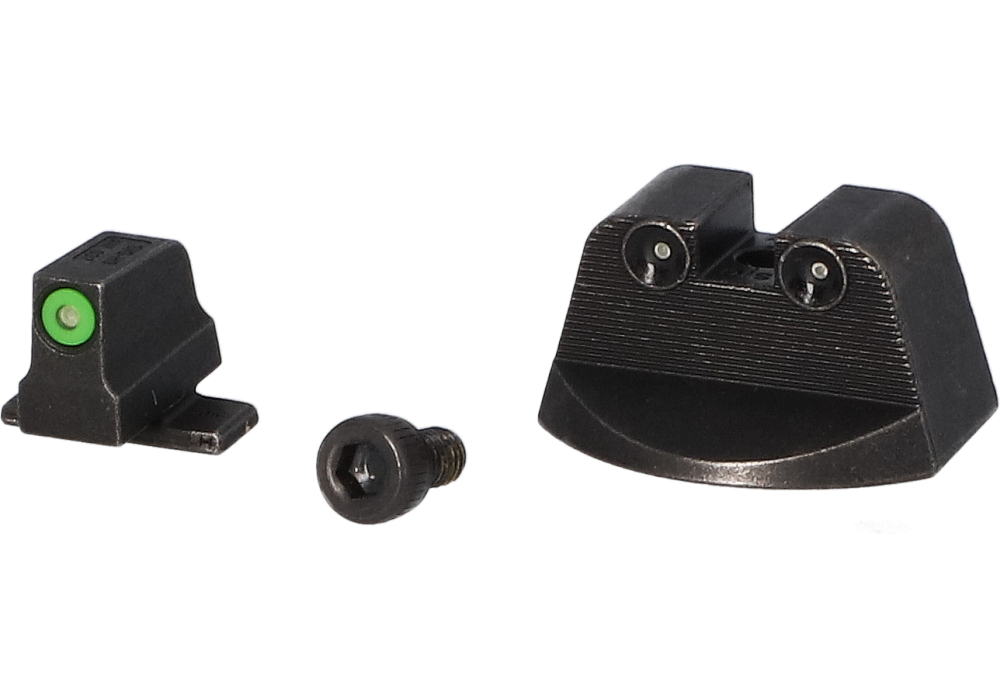
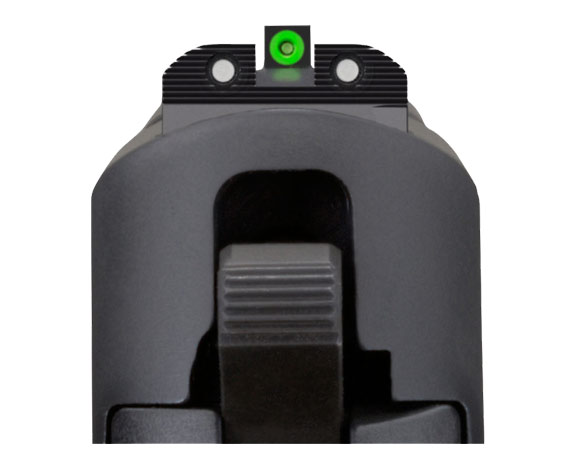
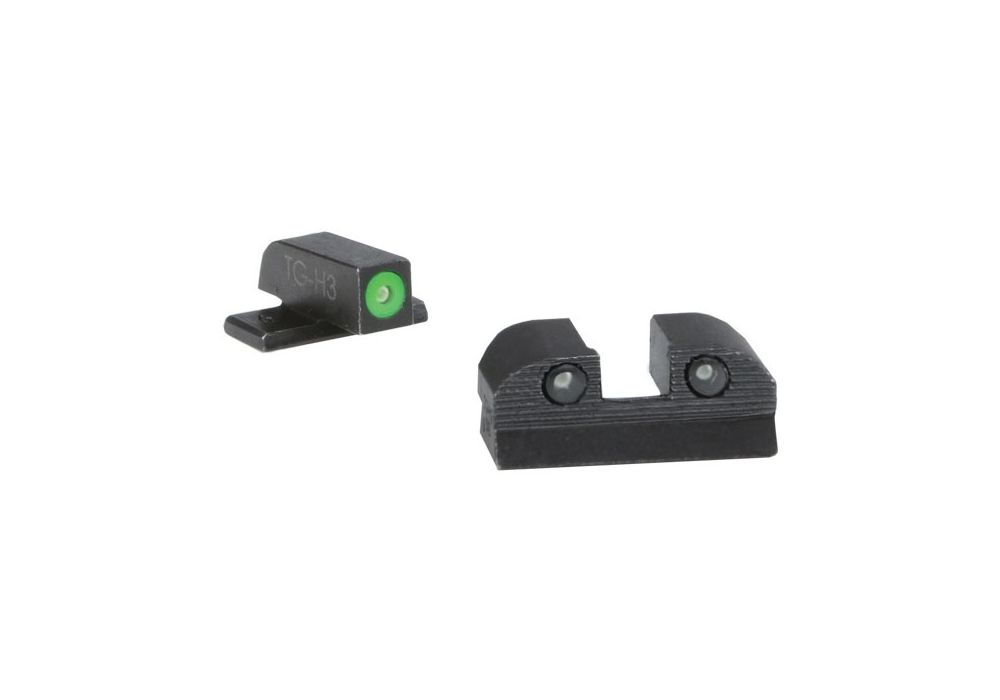
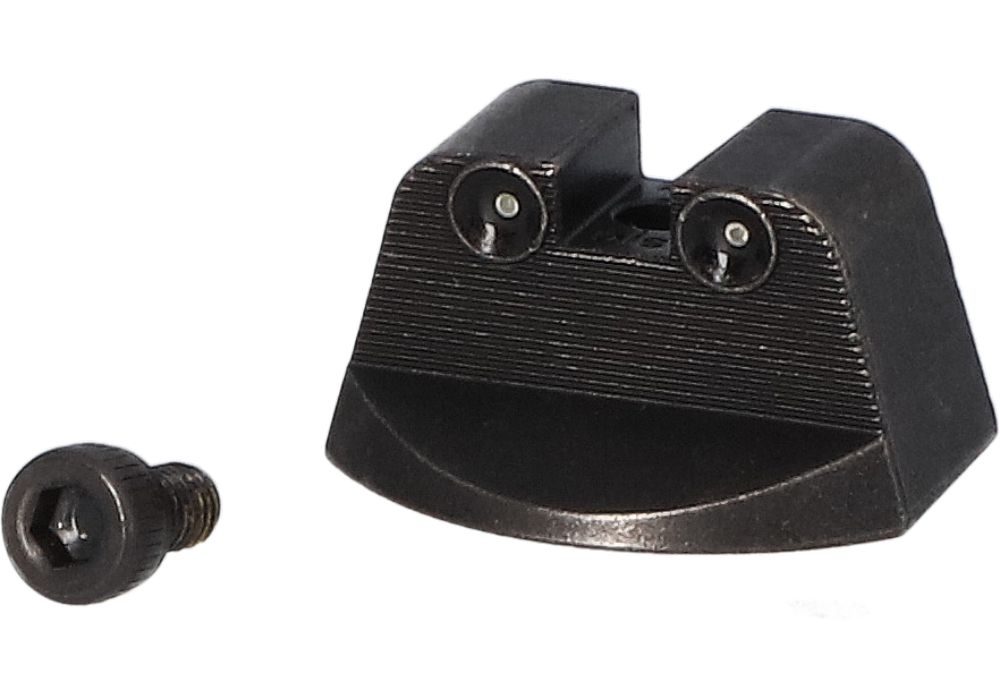
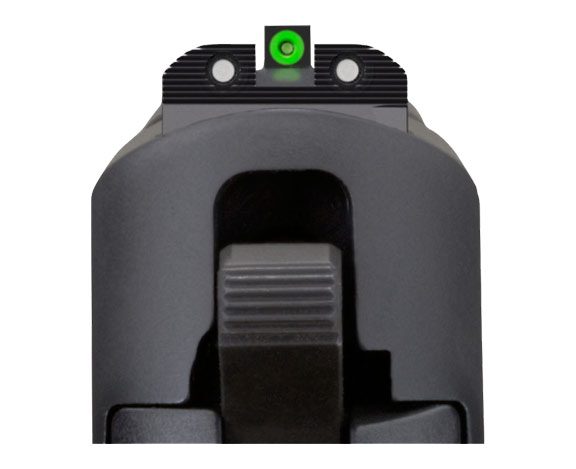
Gun night sight kits typically pair compatible front and rear sights to help keep a handgun’s sight picture visible when ambient light is limited. Unlike a plain black sight that can blend into a dark background, a night sight incorporates illuminated reference points, often alongside a contrasting ring or outline for daylight visibility. The defining feature of a tritium night sight is a sealed light source that glows without batteries or prior exposure to light. A phosphor coating inside the vial produces the visible glow, giving the shooter a reference for aligning the front and rear sights. Fiber-optic sights work differently: they gather available light through a light-transmitting rod, so their brightness depends on the surrounding illumination. A fiber-optic element alone does not provide the same self-illuminating performance in darkness as tritium. Some sight designs combine these technologies, while others use a photoluminescent marking that needs exposure to light before it glows. Those differences matter on a dim indoor range, where a bright front outline may be easy to see under overhead lighting but less distinct against an unlit background. Common sight pictures include three illuminated dots, a prominent front reference paired with a simpler rear, and other arrangements that emphasize front-sight visibility. Dot size, outline color, rear-notch width, and the amount of visible space around the front blade all influence how the sight picture looks to an individual shooter. A larger front reference can be easier to notice, while a narrower blade can leave more of a small target visible. Neither arrangement is universally better; familiarity, eyesight, and the intended shooting environment help define a useful balance. Night sights illuminate the aiming references, not the target, and they do not replace the illumination needed to positively identify a target and its surroundings. Their role is to support sight alignment when the target is adequately visible but the sights themselves are difficult to distinguish. A consistent sight picture across different lighting conditions is the central reason these kits appeal to handgun owners.
Fit is as important as the illumination technology, because a night sight kit must match the firearm’s precise sight interface and intended configuration. Handguns with similar model names can have different slide dimensions, sight cuts, or mounting arrangements, and an optic-ready slide may use a different rear-sight position than a conventional slide. A compatible kit accounts for those details rather than simply matching a broad handgun category. Front and rear sight heights also work together; changing one without considering the other can alter the relationship between the sight picture and point of impact. A matched set helps maintain the intended geometry, but compatibility and sight regulation should still be confirmed against the firearm and sight manufacturer’s specifications. Standard-height sights generally suit conventional iron-sight configurations, while taller sights may be appropriate for an optic-equipped handgun or a firearm fitted with a suppressor. Height alone does not guarantee a usable sight picture through an optic window or above a suppressor, since the complete setup determines clearance. Steel housings are common for their strength, and protective finishes help resist corrosion and everyday surface wear. Precision-machined mounting surfaces contribute to secure fit, while the illuminated elements need protection within the sight body. Recessed or shielded light sources can help limit direct contact during routine handling, although no sight should be treated as immune to damage. Exterior shape matters, too: rounded edges can reduce snagging on clothing, and a subdued rear surface can minimize distracting reflections. Those details are especially relevant for a handgun that spends time in a holster or is handled frequently during supervised training. The word kit usually indicates coordinated components, but its contents vary. Some sets contain only front and rear sights; others may include mounting hardware or installation accessories. Tools should not be assumed to be included, and the presence of accessories does not establish compatibility with every slide. Installation requirements depend on the sight interface and firearm design. Professional fitting by a qualified gunsmith is appropriate when specialized tools, precise alignment, or manufacturer-specified procedures are involved, helping protect both the slide and the sight’s sealed illumination components.
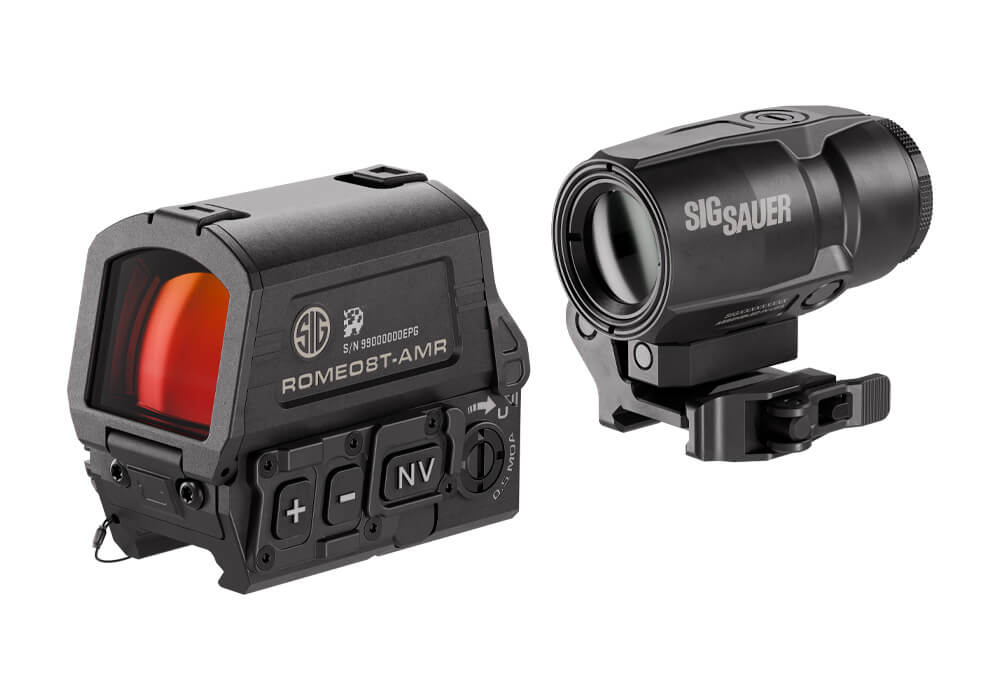
In everyday use, gun night sight kits serve owners who want a recognizable aiming reference for range practice, lawful concealed carry, or a defensive handgun, with preferences shaped by the way the firearm is configured. A shooter who uses iron sights exclusively may favor a clearly defined front blade and an uncluttered rear notch. Someone with a slide-mounted optic may prefer night sights that remain accessible as a secondary aiming reference without occupying too much of the optic’s viewing window. Whether that arrangement offers a lower sight picture or a more centered alignment depends on sight height, optic dimensions, and the mounting system; an advertised height is not a universal guarantee. Eyesight and contrast sensitivity also affect preferences, so the brightest-looking outline under strong lighting may not be the easiest option to distinguish in every setting. Owners replacing worn factory sights may value a similar sight picture, while those changing configurations may want a different balance between visible front emphasis and rear detail. Preferences for front-sight contrast, rear-notch shape, and overall height also apply when comparing Pistol Night Sights for a handgun’s intended role. Care is generally straightforward but should follow the manufacturer’s directions. Keeping the exterior free of lint, oil residue, and cleaning deposits helps preserve contrast and leaves the sight picture unobstructed. Cleaning chemicals, abrasive tools, and prolonged solvent exposure can affect finishes, colored outlines, or other components, so compatible cleaning materials matter. Sealed tritium elements are not user-serviceable and should not be opened or altered. Their glow gradually diminishes over time, making the stated service life and warranty useful details to review rather than assuming permanent brightness. A loose sight, damaged housing, or noticeably changed illumination calls for inspection by a qualified professional. Holster fit deserves attention after a sight change as well, particularly with taller configurations that need additional clearance. For a gift recipient who enjoys handgun training or maintains a carefully chosen carry setup, a night sight kit can be a practical accessory when the exact firearm configuration and preferred sight picture are already known. The most useful selection brings together dependable construction, appropriate illumination, compatible dimensions, and a familiar aiming reference, rather than relying on brightness alone.