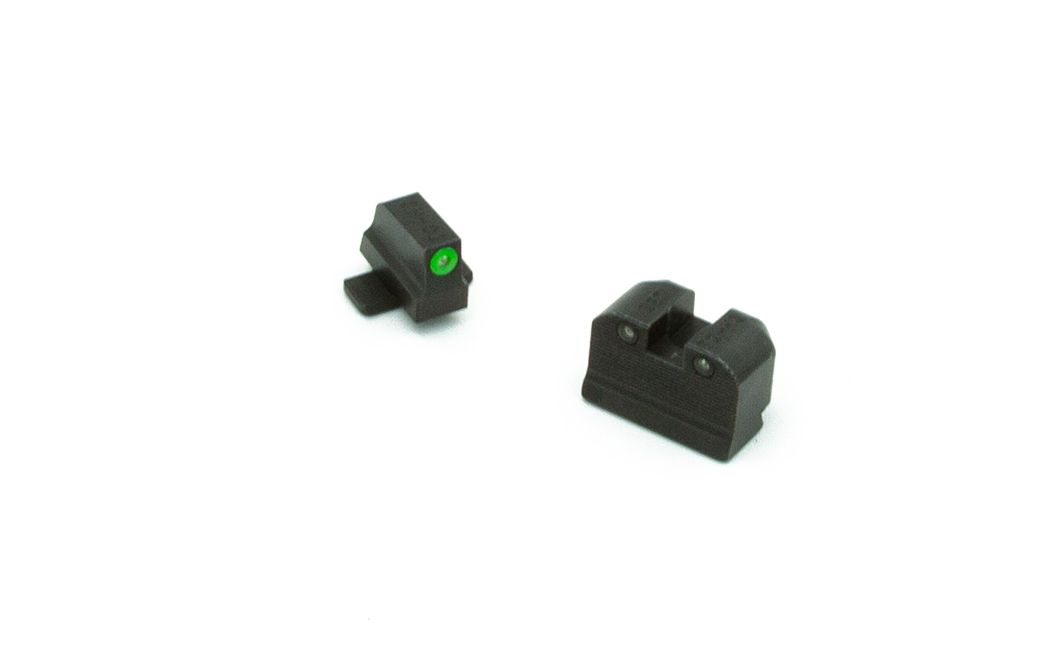
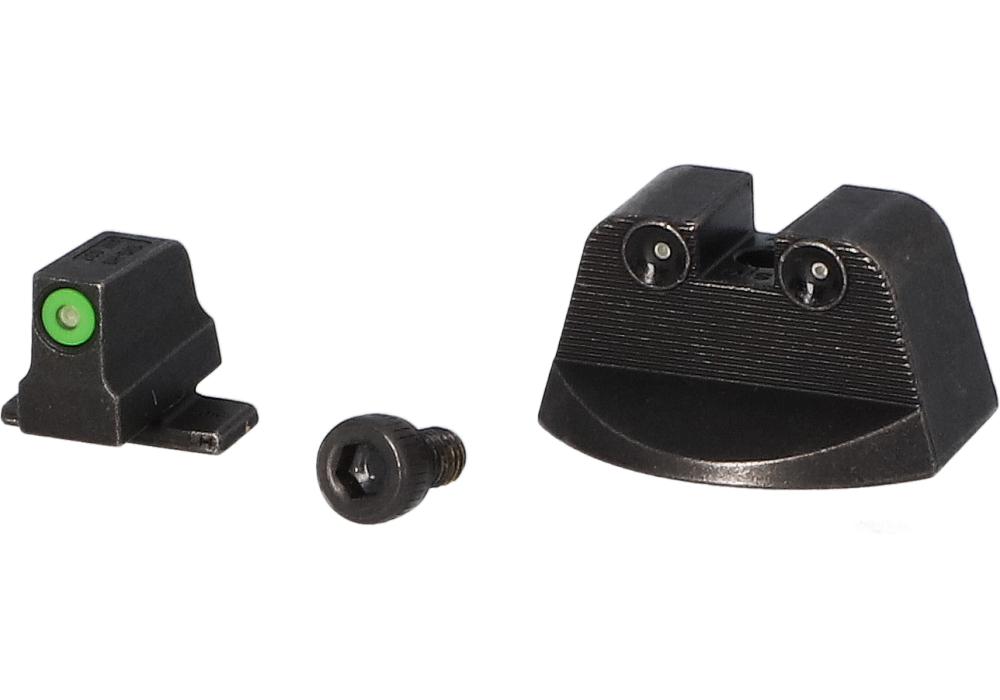
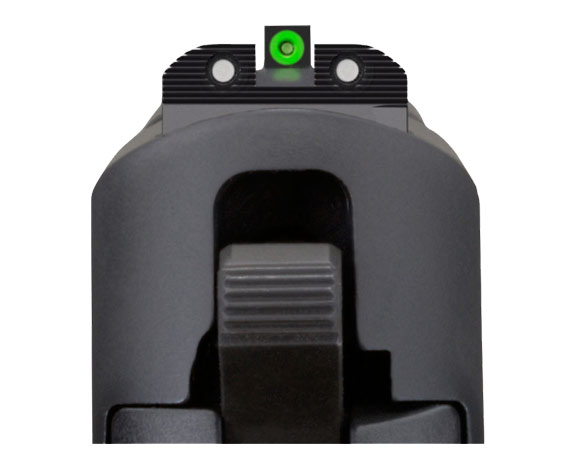
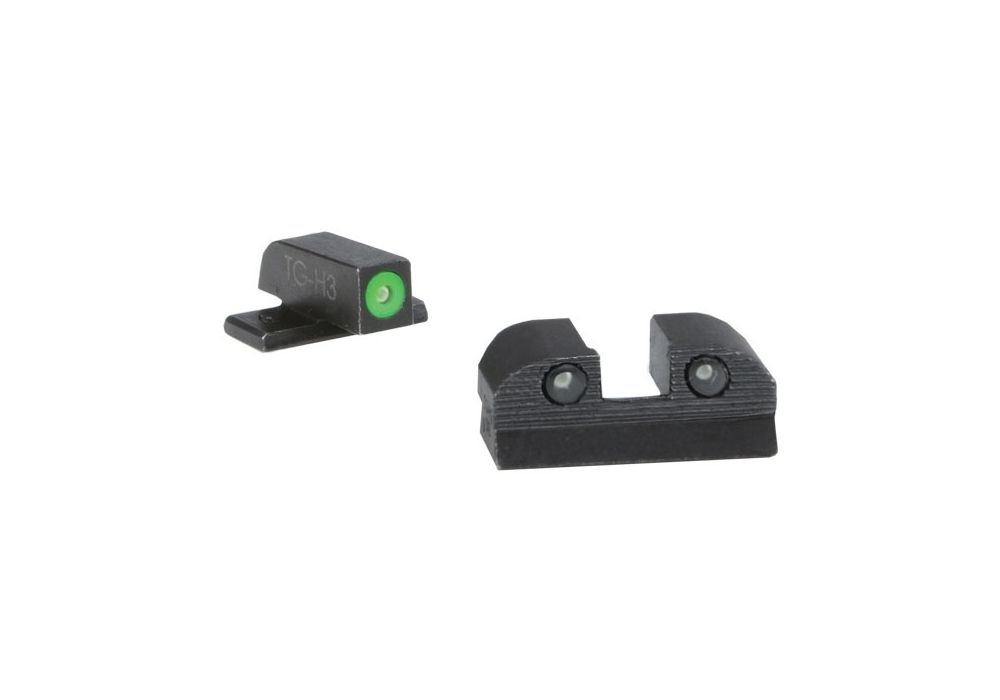
Front sight kits provide a practical way to update the aiming reference on a compatible pistol, rifle, carbine, rimfire firearm, or shotgun. Depending on the intended use, a kit may include a replacement front post, bead, mounting hardware, a retaining screw, or an illumination element such as a fiber-optic rod or tritium insert. The right front sight can help the eye find the aiming point more naturally, whether the firearm is used for range practice, competition, field applications, home readiness, or recreational shooting. Fiber-optic front sights gather available ambient light and concentrate it into a bright red, green, or orange aiming point, making them especially useful during daytime sessions and on covered ranges where the target area is well lit. Tritium or night-sight elements provide a soft, self-luminous reference in low-light conditions without batteries or external charging. Steel and match-style posts offer a crisp, durable profile, often with serrations or a matte finish designed to reduce distracting glare. Shotgun front sight kits may use a bead, snap-on component, or threaded replacement suited to a vented rib or existing bead port. Because firearms vary widely, compatibility remains the first consideration: confirm the exact model, generation, sight cut, barrel or rib configuration, mounting method, and required tools before selecting a kit. A front sight that looks similar to the original may still differ in height, width, base shape, thread pattern, or installation interface, and even a small difference can affect the relationship between the front and rear aiming references.
Sight picture and lighting conditions are central to choosing among front sight kit options. A bright fiber-optic element can stand out quickly when moving from a shaded firing line toward a sunlit target, while a subdued steel post may be preferred by shooters who want a precise, uncluttered reference for deliberate aiming. Tritium elements are intended for situations where ambient light is limited, but they do not replace a handheld light or safe target identification. A combination of illumination and durable metal construction can offer a balanced choice for users who practice in varied conditions throughout the year, from bright outdoor sessions as the weather warms to indoor practice and lower-light environments during the cooler months. Consider the firearm’s role, the shooter’s eyesight, the typical distance to the target, and whether speed or fine alignment is the priority. A wide, highly visible front element may be easy to locate during rapid presentations, while a narrower post can leave more of the target visible for careful aiming. For a complete sighting setup, many shooters compare a front sight kit with compatible Rear Sight Accessories so the height, profile, illumination color, and sight picture work together. Matching components can make the transition between the front and rear references feel more consistent, particularly when a firearm is used in different lighting or with different types of practice ammunition. Front sight kits can also be a thoughtful gift for a dedicated range shooter, a competitive participant preparing equipment for an upcoming season, or a family member who enjoys maintaining and personalizing a favorite firearm. The most useful gift is selected around the recipient’s exact firearm and preferences rather than appearance alone, with fitment details and intended lighting conditions taking priority.
Before any inspection, installation, or adjustment, unload the firearm completely and remove all live ammunition from the work area. Open the action, verify the chamber and magazine or loading area are empty, and follow the firearm and sight manufacturer’s instructions. Some pistol front sights fit into a dovetail and are secured with a set screw or small fastener; others require a sight-pusher tool or careful fitting. Rifle and carbine sights may use a post, protective wings, a threaded base, or a folding assembly, while shotgun beads and rib-mounted components can involve different threads, clamps, magnets, or snap-on retainers. Proper tools help protect the finish and reduce the chance of damaging the sight, slide, barrel, rib, or fasteners. Threadlocker should only be used when specified and in the appropriate amount, since excess compound can complicate future maintenance. After installation, confirm that the sight is secure and that the firearm’s point of impact has been verified safely at the range. A change in front sight height can shift elevation, and a different profile can alter how the firearm aligns in the shooter’s normal sight picture. Allow time for deliberate confirmation rather than relying on appearance alone. With the correct fit and a clear understanding of the lighting conditions where it will be used, a front sight kit can refresh an aging sight picture, improve visibility, and support more confident, repeatable practice across a range of shooting applications.