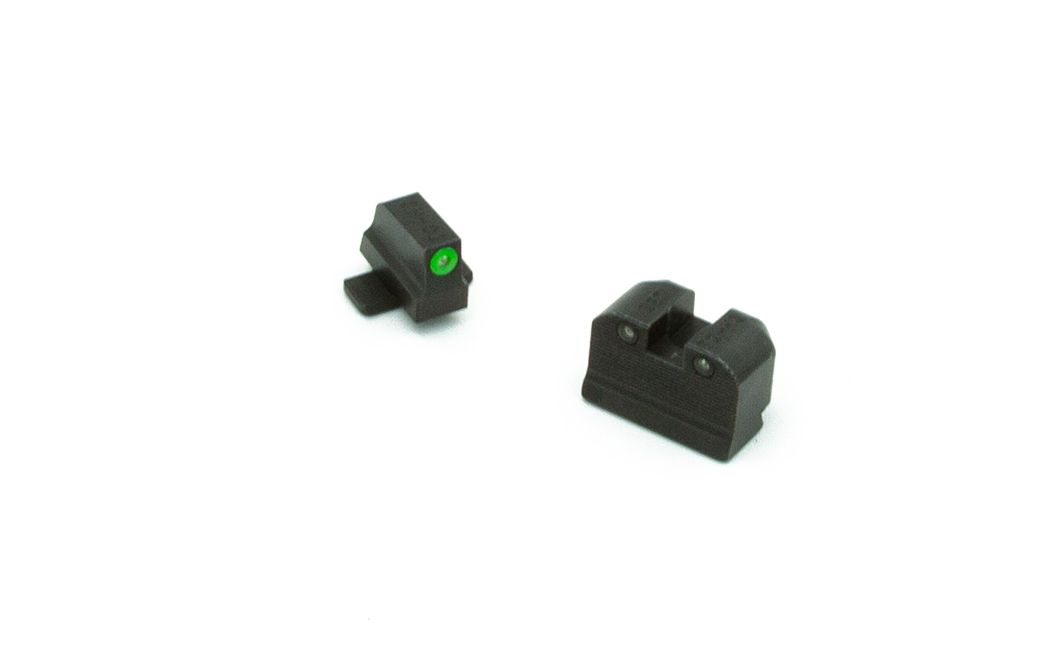
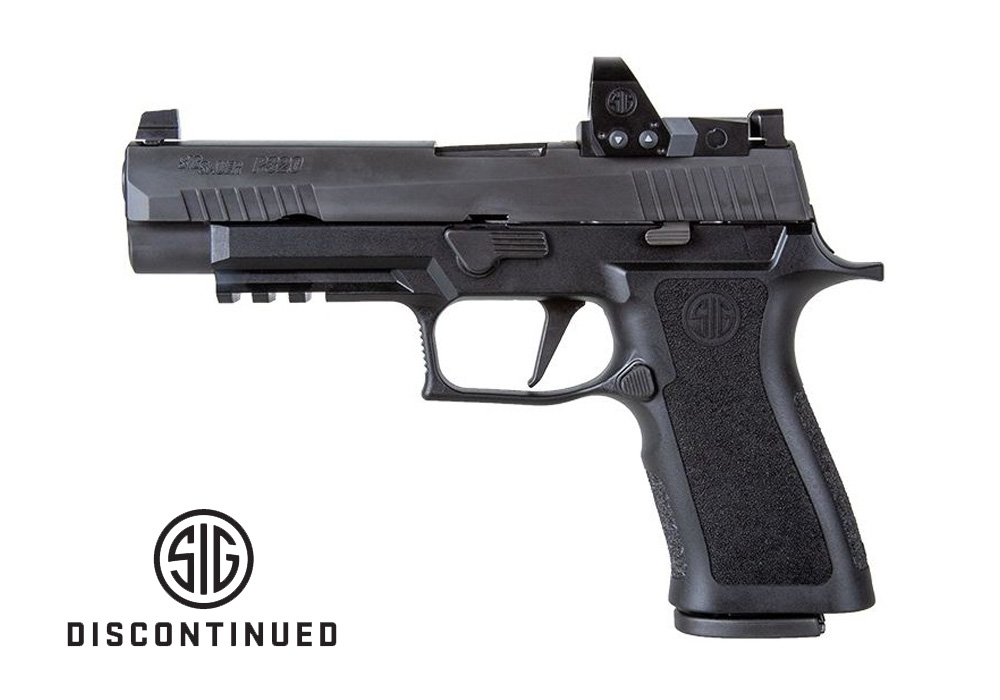
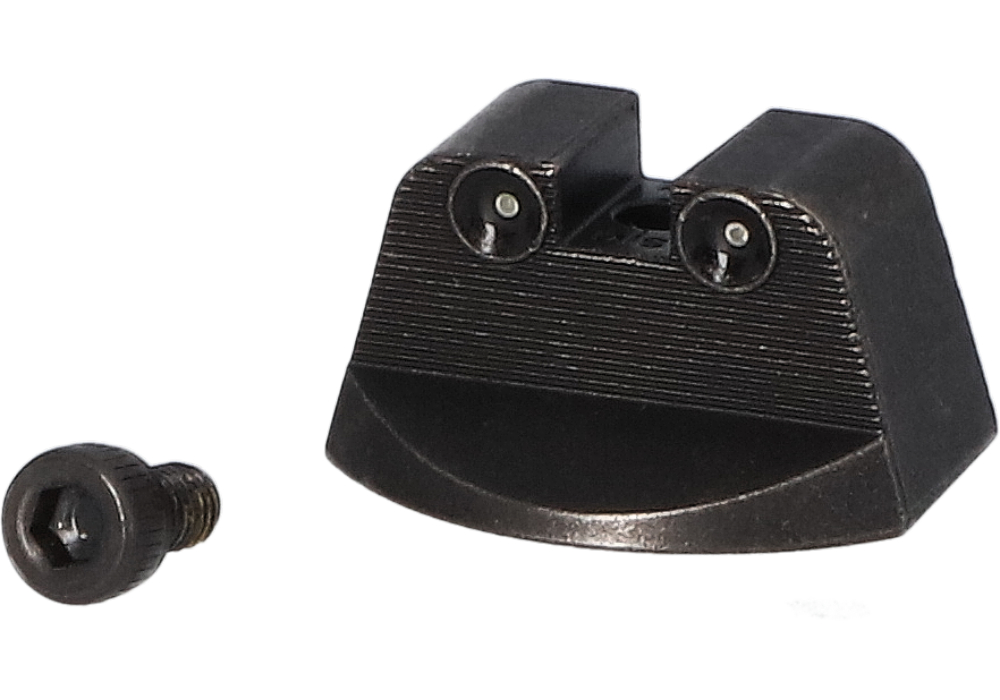
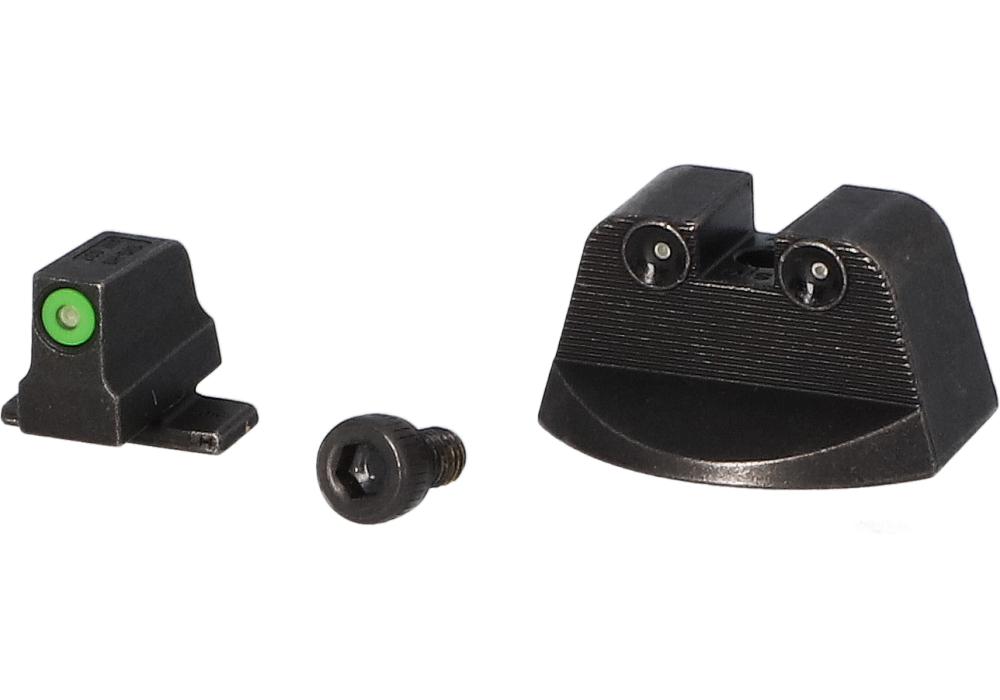
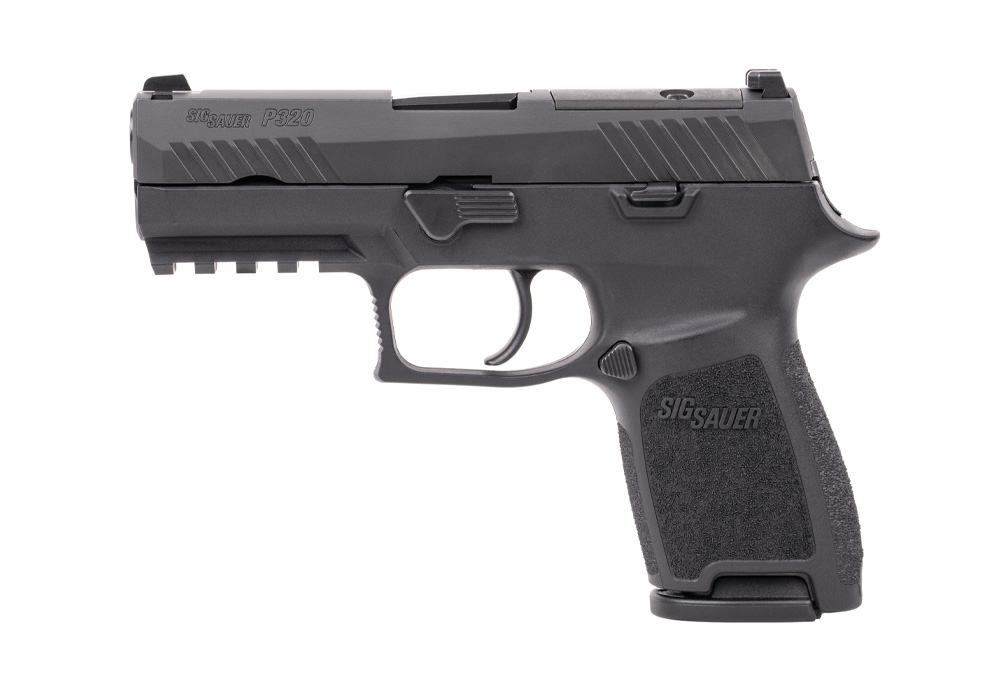
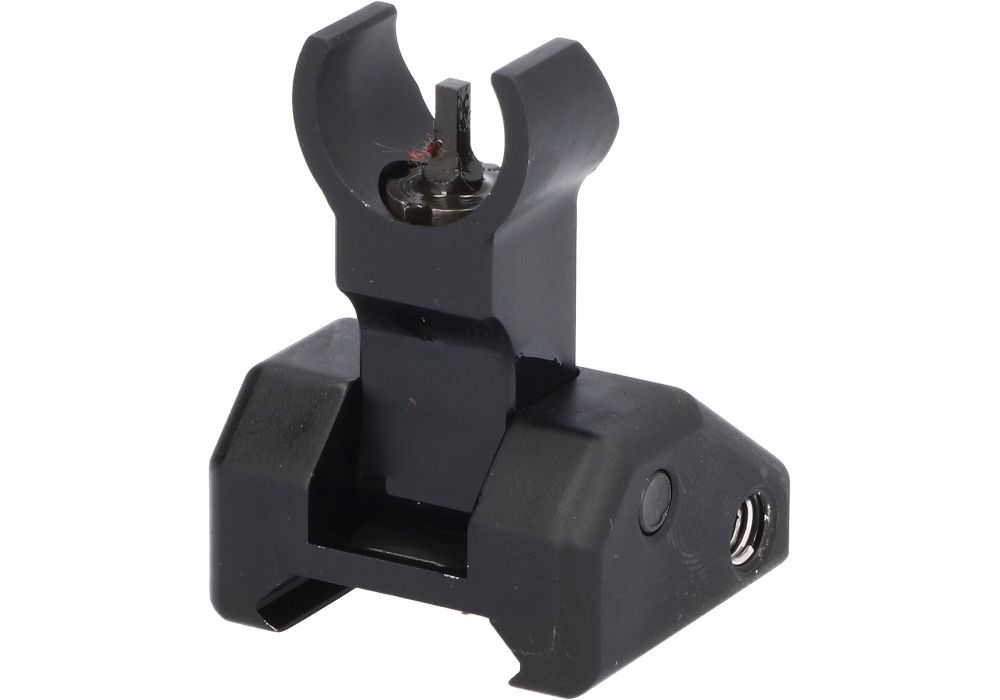
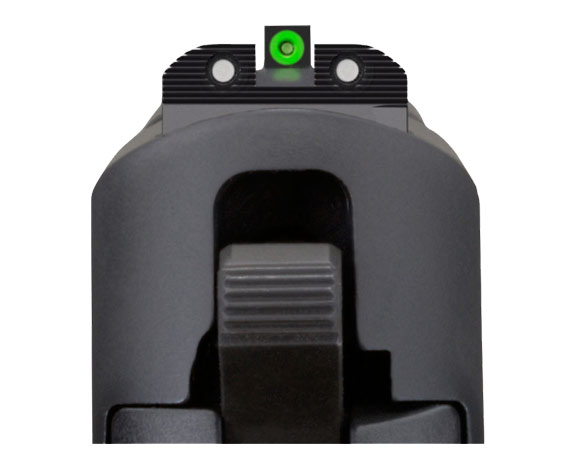
Front and rear sights form the fundamental mechanical aiming system on a firearm, giving the shooter a clear reference for directing the muzzle toward the intended point of aim. The front sight, positioned near the muzzle, is commonly shaped as a post, blade, or bead and serves as the primary visual focal point. The rear sight, located closer to the shooter, may use an open notch, a U-shaped or square notch, or a circular aperture to frame the front sight. When the sights are properly aligned, the top of the front sight is level with the upper edges of the rear notch, with equal light visible on both sides. This relationship creates a consistent sight picture and helps support repeatable accuracy from shot to shot. Front and rear sights are used across handguns, rifles, and other firearms by recreational range shooters, hunters, competitors, armed professionals, and responsible owners who prefer a dependable mechanical aiming system. Some shooters use iron sights as their primary aiming solution, while others install folding or fixed backup sights alongside a red dot or magnified optic. In either role, a well-matched sight set can provide a straightforward point of reference without relying on batteries, electronic controls, or complicated adjustments. During the cooler months, when a range session may begin beneath a gray sky and end as the light fades behind the berm, clear and familiar sight alignment can make practice feel more deliberate and controlled.
Choosing front and rear sights begins with firearm compatibility. Confirm the firearm model, sight cut or mounting pattern, rail dimensions, and the manufacturer’s recommended sight height before ordering. Handguns may use dovetail-mounted rear sights paired with a front blade or interchangeable front sight, while rifles may accept sights designed for a specific rail or front sight base. A small difference in height can change the point of impact, so front and rear sights should be selected as a coordinated set whenever possible. Shooters should also consider the intended use. Open sights with a bold post, bead, or contrasting finish can offer a fast, uncomplicated sight picture for general range work and practical shooting. Aperture or peep sights place the eye naturally behind a circular opening and can support precise alignment on rifles. Folding backup iron sights are useful when a primary optic occupies the main sight line, allowing the mechanical sights to remain lowered until needed. High-visibility inserts, fiber-optic elements, and illuminated options can make the aiming reference easier to distinguish against dark targets, shaded backgrounds, or changing outdoor light; however, visibility is not the same as accuracy, and the sight still needs to be correctly installed and zeroed. Adjustment range matters as well. A rear sight that can be moved for windage and a front sight that can be changed for elevation provide a practical way to bring the point of impact into alignment with the point of aim. For handgun owners comparing configurations, the selection of Pistol Rear Sights can help narrow the search to rear-sight options intended for that platform.
A complete sight setup should feel natural when the firearm is brought into a consistent shooting position. At the range, begin at a safe distance with a stable stance, use a clearly defined target, and confirm that every adjustment is made according to the sight manufacturer’s instructions. Small changes can produce noticeable movement on the target, so make one adjustment at a time and verify the result with careful groups rather than a single shot. Sight picture preferences vary: one shooter may favor a bright front dot that stands out against a plain rear notch, while another may prefer a clean black post and a narrow rear aperture for a more refined aiming reference. Eye protection and hearing protection should be worn during live-fire practice, and all installation, function checks, and zeroing should take place with the firearm unloaded until it is time to use it on the range. Front and rear sights can also make a thoughtful gift for a new firearm owner, a range companion who is refreshing an older setup, or an experienced shooter preparing a training firearm for a different role. Before giving any firearm accessory, confirm the recipient’s firearm model and sight configuration so the gift is useful rather than merely attractive. A properly fitted set can become part of the quiet rhythm of practice: the firm grip, the front sight settling into the rear notch, equal light on either side, and the target coming into focus as the shooter presses the trigger with control. As conditions shift from bright outdoor sessions to indoor lanes and low-light practice, selecting sights that match the firearm, the shooter’s eyes, and the intended application helps create a reliable mechanical aiming system for responsible use.