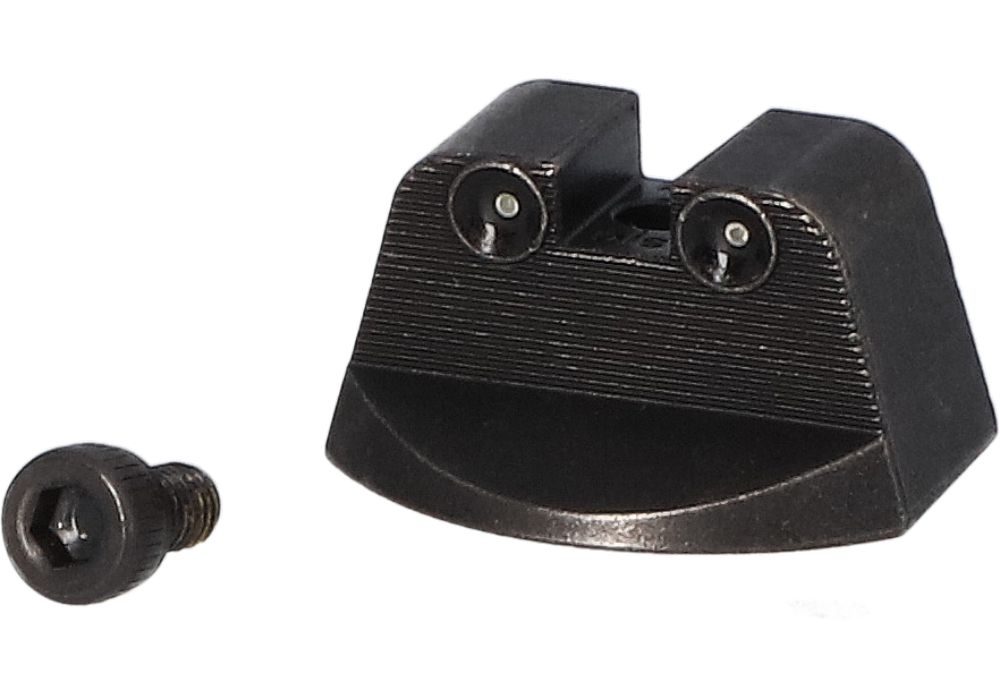
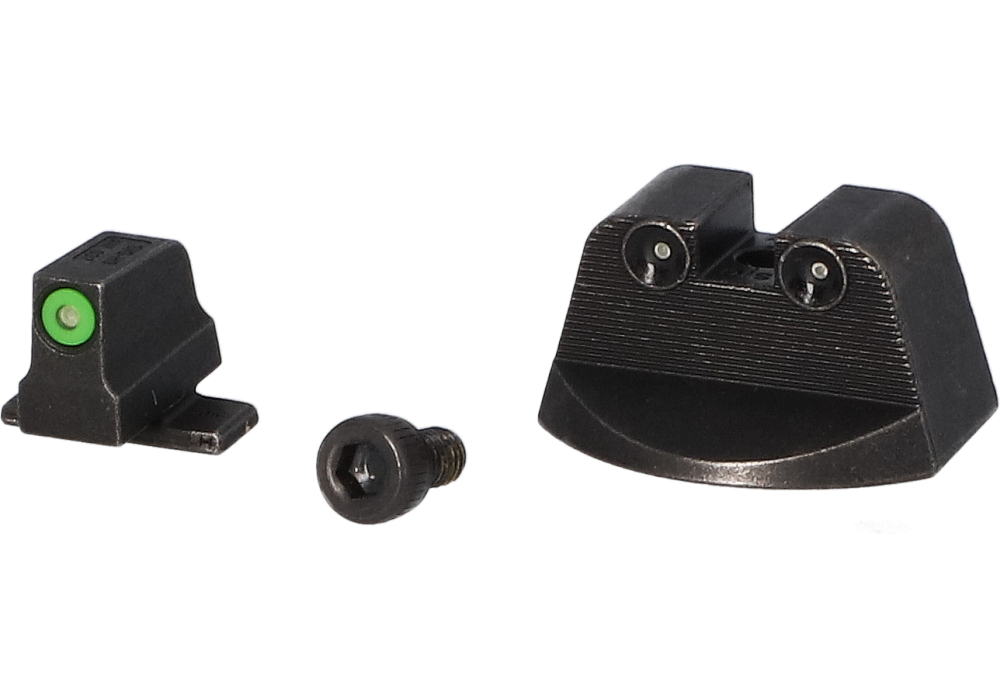
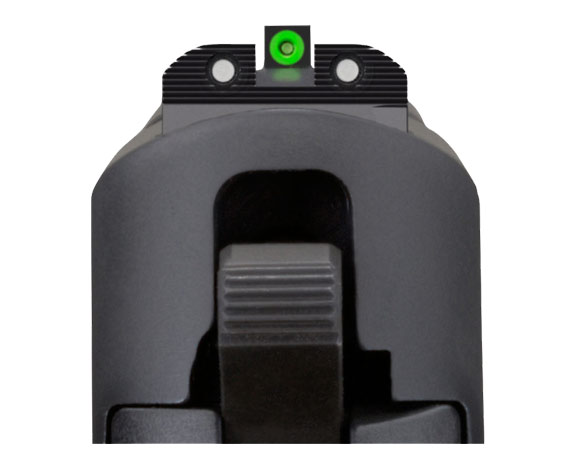
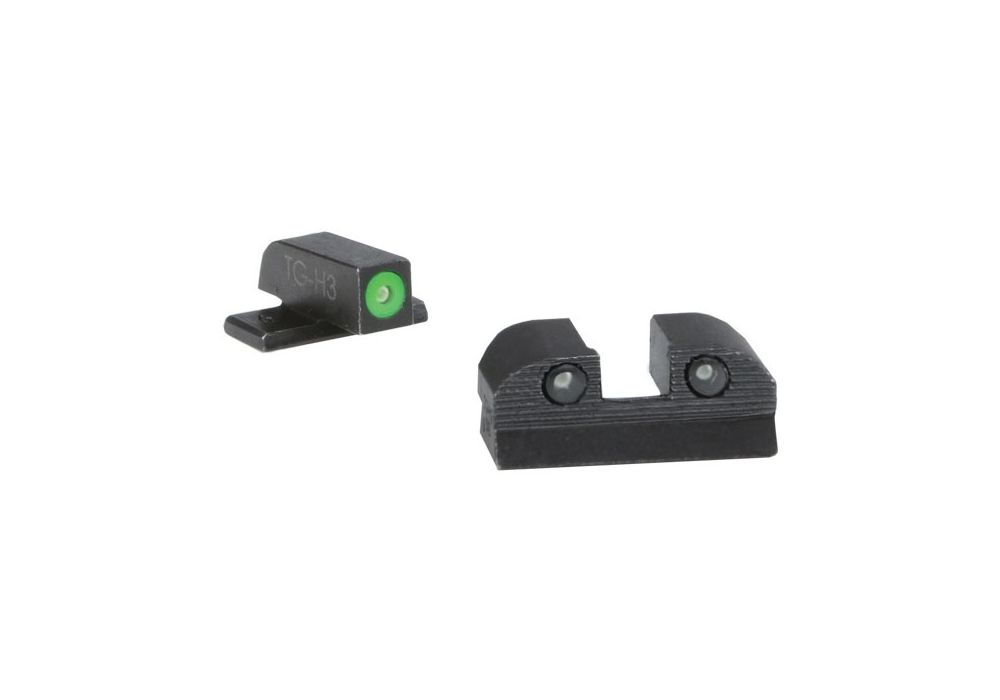
Pistol rear sights are mechanical aiming components positioned toward the back of a handgun’s slide, where they work with the front sight to provide a repeatable reference for alignment. Most use a notch that frames the front post, giving the shooter a way to judge horizontal alignment and the relationship between the tops of the sights. The shape and width of that notch influence how the sight picture looks: a wider opening leaves more visible space around the front post, while a narrower opening can suit shooters who prefer a more closely defined reference for deliberate target work. Square and rounded notches offer different visual presentations, and the best match depends partly on the front sight’s width and the shooter’s eyesight. Fixed rear sights generally have a straightforward profile without user-operated elevation or windage adjustment screws. On many dovetail-mounted designs, a qualified gunsmith can still shift the sight laterally to correct windage; “fixed” does not necessarily mean its installed position can never change. Adjustable rear sights provide controlled changes to windage, elevation, or both, depending on the design, and are especially relevant for recreational target shooting and organized competition. Shooters comparing these configurations can explore Adjustable Rear Sights For Black Pistols for a closer look at that category. Visual treatments also distinguish rear sights. A plain black rear face can keep attention on a contrasting front sight, while dots, outlines, or illuminated elements provide additional reference points. Tritium inserts emit their own light and can help the sights remain visible in dim surroundings. Fiber-optic elements gather ambient light rather than producing it, so their appearance depends on the lighting around them. Neither feature illuminates the target or replaces the need to identify it clearly. For range practice, competition, or carry, the useful comparison is not simply which rear sight looks brightest, but which presentation remains clear and consistent alongside the front sight.
Fit is central to choosing a pistol rear sight because mounting dimensions are not universal, even among handguns with similar slide shapes. The exact pistol model, slide configuration, and manufacturer’s compatibility information should determine the selection. A dovetail-mounted rear sight relies on the relationship between its base and the slide’s mounting slot, while other designs may use screws or a dedicated mounting arrangement. A sight that appears similar in a photograph can still have a different dovetail angle, base width, or installed height. The rear sight also needs to work with the front sight as a pair. Changing one component’s height can alter point of impact, and combining unrelated heights may produce a sight picture that looks aligned without placing shots where expected. For adjustable designs, the adjustment range must suit the intended combination rather than compensate for fundamentally mismatched parts. Standard-height sights serve many conventional sight arrangements, while taller designs may be appropriate for certain suppressor-equipped or optic-equipped pistols. A taller rear sight alone does not guarantee clearance above a suppressor or visibility through an optic window. The complete arrangement—including front sight height, optic mounting height, slide geometry, and suppressor dimensions—determines whether the iron sights can be seen and where they appear. Some shooters prefer an iron-sight reference lower in the optic window; others prefer a different relationship. Compatibility information matters more than a general height label. Materials deserve similar attention. Steel is common where strength and resistance to wear at the mounting surfaces are priorities. Aluminum can reduce component weight, though suitability depends on the design and intended use. Protective finishes help resist corrosion and surface wear, but they do not eliminate the need for care. Serrations or a matte rear face can reduce distracting reflections, while rounded edges and a compact profile can be useful on a pistol carried in a holster. Those details should be considered alongside holster clearance, secure mounting, and access to any adjustment features.
Durability in a rear sight involves more than a hard exterior. The mounting interface, adjustment mechanism, finish, and any illuminated inserts all contribute to how well the sight holds up through recoil, cleaning, transport, and repeated handling. A target shooter who frequently changes ammunition or shooting distance may value clearly defined adjustment clicks and a rear blade that stays securely positioned. Someone using the same pistol for regular practice and carry may prefer a less complex sight with protected edges and an uncluttered sight picture. Shooters with difficulty distinguishing small markings may benefit from stronger contrast, although larger or brighter rear references are not automatically easier for every set of eyes. A familiar front sight, viewed alongside the proposed rear-sight style, is often a better comparison than the rear component in isolation. Professional installation is particularly valuable when the sight uses a tight dovetail fit or contains sensitive inserts. A qualified gunsmith can assess the mounting arrangement, use appropriate equipment, and check that the sight is secure without damaging the slide, finish, or internal elements. After installation, confirming alignment and point of impact at a suitable range helps establish whether the complete sight system matches the pistol and its intended ammunition. Routine care should follow the sight and pistol manufacturers’ recommendations. A soft brush or cloth can remove residue from the notch and rear face, while approved cleaning products help avoid damage to coatings, adhesives, or light-gathering elements. Excess oil or stubborn residue around a fiber-optic element can interfere with its visibility. Tritium brightness gradually diminishes over time, so an older illuminated sight may need professional evaluation even when its exterior remains intact. Loose hardware, a shifted sight, or a damaged insert also warrants attention rather than continued use without inspection. For an experienced shooter receiving a rear sight as a gift, exact compatibility and preferred sight picture matter more than appearance alone. Across these uses, a well-matched rear sight supports a consistent visual reference without adding unnecessary complexity to the pistol.