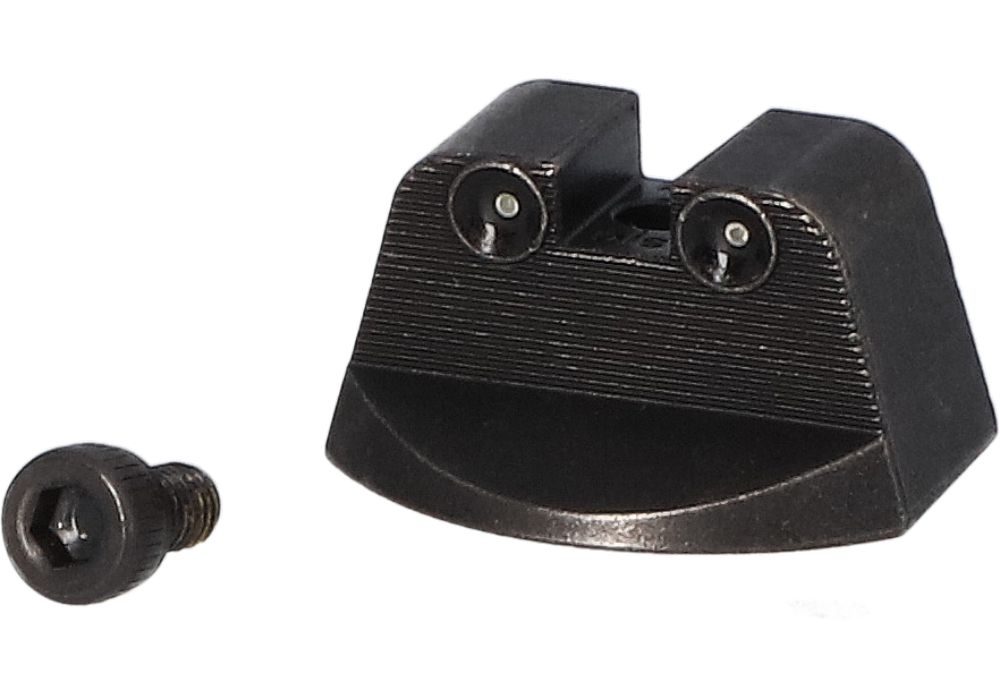
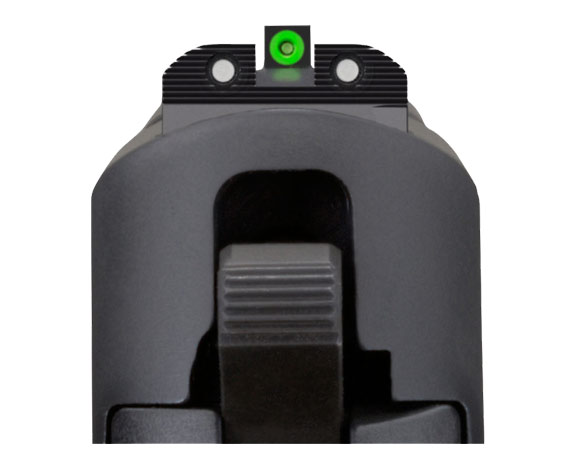
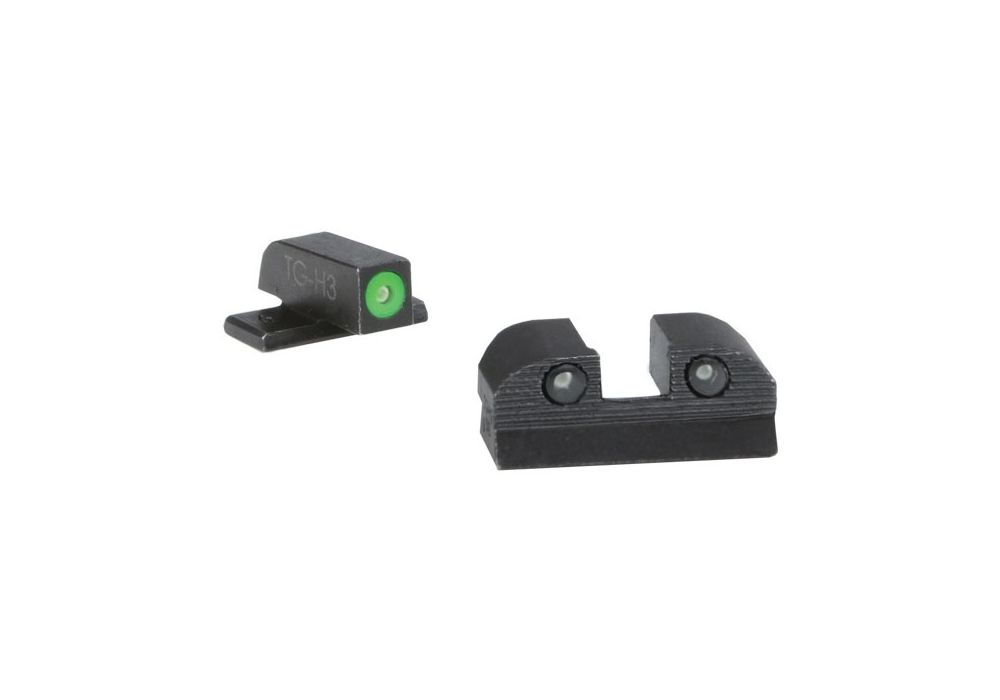
Black adjustable rear sights for pistols provide a dark rear aiming reference with a mechanism for changing windage, elevation, or both, depending on the design. Windage adjusts the horizontal setting, while elevation adjusts the vertical setting, helping align point of impact with the intended point of aim. That flexibility appeals to target shooters, recreational range users, and competitors who want a sight configuration suited to their pistol, ammunition, and shooting distance. Unlike a fixed rear sight, an adjustable assembly offers a way to refine the sight setting without relying solely on replacing components or shifting the entire sight in its mounting cut. A plain black rear blade also keeps the sight picture visually simple: the front sight sits within a dark notch, with visible space on either side and the top edges aligned. Matte finishes and serrated rear faces can reduce distracting reflections, although their effectiveness varies with lighting, surface texture, and finish quality. This uncluttered appearance can be especially useful against a light-colored paper target, where extra markings on the rear blade may compete with the front sight for attention. Notch dimensions influence that experience. A narrower notch can provide a more tightly framed view of the front sight, while a wider notch leaves more visible space around it and may feel less restrictive during quicker transitions between targets. Neither arrangement is universally better; front sight width, eyesight, and intended use all affect the result. A square notch offers a familiar reference, while other notch shapes create a different visual relationship with the front blade. The best match is a combination that stays easy to interpret without forcing the shooter to search for alignment. Black adjustable rear sights are particularly relevant for deliberate range practice and competition settings where a clear aiming reference and repeatable settings matter. They support a consistent sight picture, but they do not replace sound technique or guarantee smaller groups. Their value lies in giving an otherwise suitable pistol sight system a useful degree of refinement.
Fit is the first practical consideration because rear sights are not interchangeable simply because they share a similar outline or finish. The pistol’s slide cut, mounting dimensions, sight height, and required retention method determine whether an assembly belongs on a particular firearm. Even closely related pistol configurations can use different sight interfaces, so compatibility information should identify the applicable configuration rather than rely on appearance alone. Rear sight height also needs to work with the front sight; an adjustable mechanism has a limited range and cannot necessarily compensate for an unsuitable front blade. A compatible front sight completes the picture, so evaluating Black Adjustable Sights as a coordinated system matters more than matching their color. Clearance deserves attention as well, particularly when the pistol has an optic mounting arrangement or other components near the rear of the slide. For a holstered pistol, the sight’s height, corners, and overall profile can affect compatibility with the holster and comfort during handling. A broad target-style blade may suit a dedicated range pistol, while a more compact assembly may better suit a firearm that serves multiple purposes. Material and construction contribute to long-term durability. Steel is common in rear sight assemblies because it can provide a sturdy structure around the blade, mounting interface, and adjustment mechanism. Some designs use aluminum or a combination of materials, with the finished assembly’s durability depending on its construction and protective treatment rather than material alone. Black finishes vary in texture and resistance to surface wear or corrosion, and a dark appearance does not automatically indicate a particular level of protection. Clear adjustment references, secure retention, and a blade that remains stable during normal use are more meaningful considerations than cosmetic detail alone. Where a design includes indexed adjustments, distinct clicks can help track setting changes, but the amount of movement associated with each click depends on the sight. Professional fitting is a sensible choice when installation requires specialized tools or when mounting compatibility is uncertain.
Everyday care helps preserve both the sight picture and the mechanical condition of an adjustable rear assembly. Fine lint, dust, and residue can collect around the notch, serrations, and adjustment features, softening the crisp edges that make a black rear sight useful. Cleaning should follow the sight and firearm manufacturers’ recommendations, with attention to finish compatibility and protection of small moving parts. Harsh chemicals, abrasive scrubbing, or improvised tools can damage a surface or adjustment feature even when the sight itself feels substantial. After routine cleaning, the rear blade should remain clearly defined, and the assembly should show no unexpected movement or visibly loose components. Moisture and handling residue also deserve attention, particularly where finish wear exposes underlying metal. Protective care appropriate to the material can help limit corrosion, but heavy buildup around the sight face can attract debris or change its appearance under light. A rear sight is small, yet its position on the slide leaves it exposed to repeated handling and contact with cases or holsters. Durable construction and a sound mounting interface help it tolerate that use; neither eliminates the need for inspection. Changes in ammunition, shooting distance, or the front sight can also affect whether an established setting remains suitable. For a shooter alternating between deliberate paper-target practice and organized competition, a familiar, readable adjustment system can make those differences easier to manage. Keeping a record of established settings can support consistency, while confirmation at the range helps establish whether the sight configuration still suits the intended use. For gift buyers, compatibility is more important than surprise: knowing the recipient’s exact pistol configuration and preferred sight picture helps avoid choosing an attractive accessory that does not fit. Shooters who already favor a dark rear notch may appreciate the additional flexibility of an adjustable design, especially when their practice centers on repeatable aiming references. Across these uses, the strongest choice combines a compatible mounting interface, suitable blade and notch dimensions, practical adjustment features, and a finish that remains easy to read and maintain.