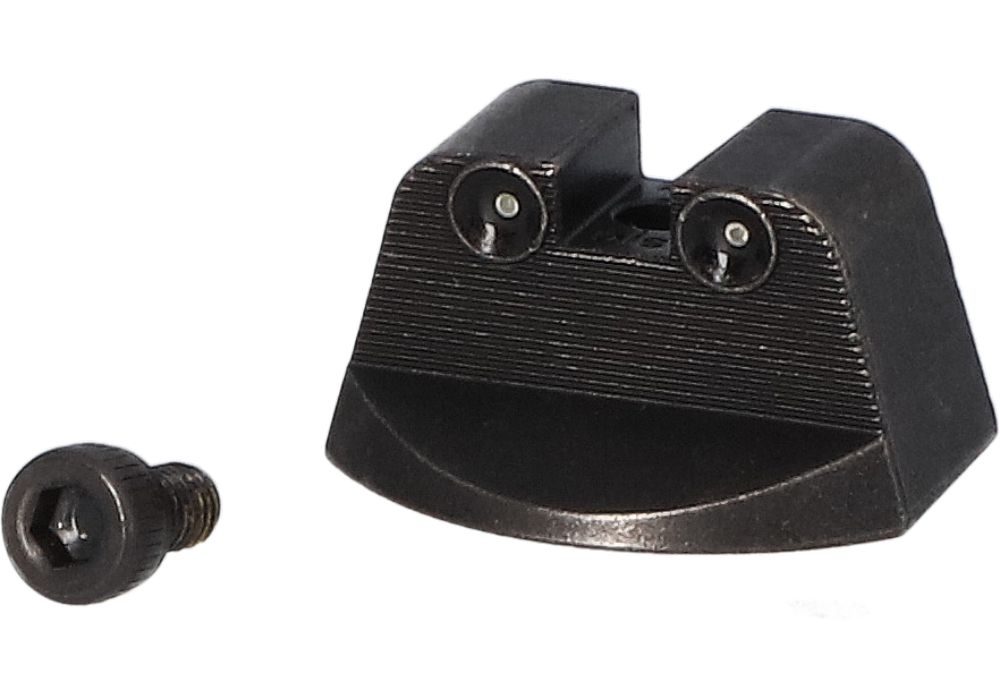
Rear sight accessories support the fit, adjustment, visibility, and protection of a firearm’s rear sight. Depending on the sight system, this category can include replacement blades, sight inserts, aperture components, compatible adjustment and installation tools, and protective covers. Each serves a different purpose: a replacement blade restores or changes the rear reference point, an aperture insert changes the opening viewed through, and a cover helps protect a compatible sight during storage or transport. The right choice depends on the firearm, the existing sight assembly, and the way the firearm is used. A handgun with a fixed rear notch has different requirements from a target rifle with an adjustable aperture sight, even when both are used at the same range. Notch width, blade shape, aperture size, and visible markings all influence how clearly the rear sight frames the front sight. Some shooters prefer a plain, dark rear surface that keeps attention on the front sight; others find contrasting references easier to distinguish. Fiber-optic elements gather surrounding light, while tritium elements provide their own illumination, so these features serve different visibility needs rather than functioning interchangeably. Neither replaces clear target identification or appropriate lighting. Sight height also matters because the front and rear sights function as a matched system, not as isolated components. A rear sight that looks similar to the original may have a different profile, mounting interface, or intended front-sight pairing. For range practice, organized competition, and maintaining a familiar firearm, useful rear sight accessories are those that preserve a clear sight picture and suit the existing setup without introducing unnecessary complexity. Small differences become noticeable during repeated use: a sharply defined notch, a surface that resists distracting reflections, or an adjustment feature that remains easy to recognize can affect how comfortable and consistent the sight feels. These details help distinguish an accessory that simply resembles the required part from one that genuinely suits the sight system.
Fit is the central consideration when comparing rear sight accessories, especially where several firearm variants share similar names or outward dimensions. Compatibility can depend on the exact model, slide or receiver configuration, sight generation, dovetail geometry, mounting pattern, and the design of the existing assembly. A similar silhouette is not proof of interchangeability. Replacement hardware also needs the correct thread specification and dimensions, while protective covers need enough clearance to sit securely without pressing against delicate sight components. Adjustable systems may use proprietary blades, screws, springs, or inserts, making the original manufacturer’s compatibility information particularly important. Materials influence both handling and long-term durability. Steel components can provide strong wear surfaces at mounting and adjustment points, while aluminum can reduce weight in appropriate designs. Polymer and flexible protective materials can help shield exposed surfaces from scuffs during storage and transport, although their suitability depends on the accessory’s intended role. Surface treatments contribute to corrosion resistance and can help reduce glare, but no finish eliminates the need for care. Clean edges, consistent machining, and well-defined markings are useful quality considerations because rear sight components are often small and closely fitted. Durability also involves retaining a secure fit through normal handling and repeated range use, rather than simply having a substantial appearance. Installation tools deserve the same attention to compatibility as the sight itself. A sight pusher or support fixture must suit the firearm and sight geometry; a universal description does not guarantee that every configuration is supported. Professional fitting is appropriate when the manufacturer specifies it or when the mounting arrangement requires specialized equipment. An accessory should not require improvised changes to an unrelated component just to appear compatible. For firearms with an electronic sight, rear sight height and placement may also affect the usable view through the optic. Shoppers considering the surrounding setup can explore Rifle Optics Accessories for related accessory categories, while keeping the requirements of the firearm, rear sight, and optic distinct.
Routine care helps rear sight accessories retain their usefulness without turning maintenance into a complicated project. Rear notches, apertures, and visible reference marks can collect lint, residue, and fine debris that make otherwise crisp edges harder to distinguish. Cleaning methods should follow the sight manufacturer’s recommendations, with particular attention to coatings, illumination elements, adhesives, and flexible cover materials. A cleaner suitable for a metal surface may not be suitable for every insert or protective accessory. Soft, nonabrasive cleaning materials are generally preferable where preserving the finish and keeping small openings clear are priorities. Covers serve a different role from cleaning supplies: they can help limit surface contact and contamination during transport or storage, but they must fit the intended configuration and must not obstruct the sight during use. A padded case can provide additional protection for the overall setup, particularly when a firearm travels alongside other range equipment. Periodic inspection can reveal a cracked insert, worn marking, damaged cover, or an unexpected change in fit before it becomes a distraction at the range. Any looseness or unexplained shift warrants attention from a qualified professional rather than an assumption that the sight remains correctly aligned. Intended use helps put these considerations in perspective. A recreational shooter may value a familiar, uncluttered rear reference, while a competitive target shooter may prioritize a clearly defined aperture or repeatable adjustment features permitted by the relevant rules. Someone maintaining an established setup may simply need a compatible component that preserves the original sight picture. Rear sight accessories can also be thoughtful gifts for an experienced firearm owner when the exact platform and preferences are known; guessing at fit or sight style is less useful than matching a documented requirement. Across these situations, the strongest choices combine confirmed compatibility, suitable materials, manageable care requirements, and a clear purpose. Attention to those practical details keeps the focus on dependable equipment rather than unnecessary changes.