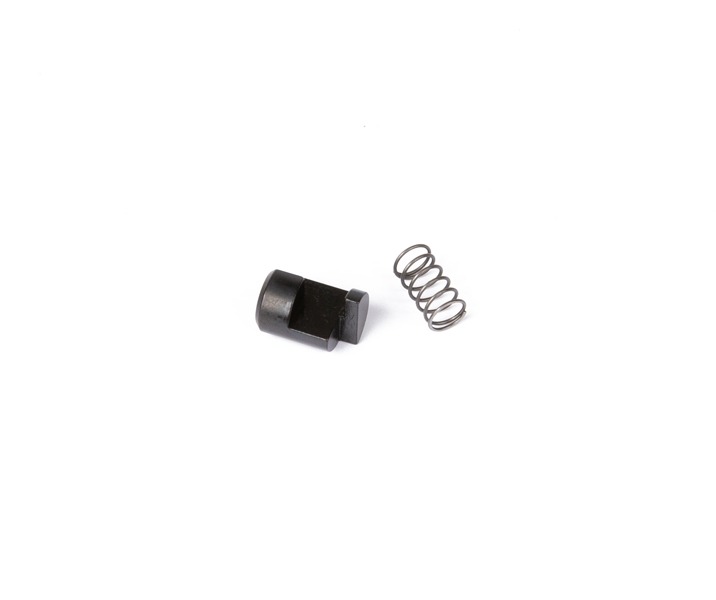
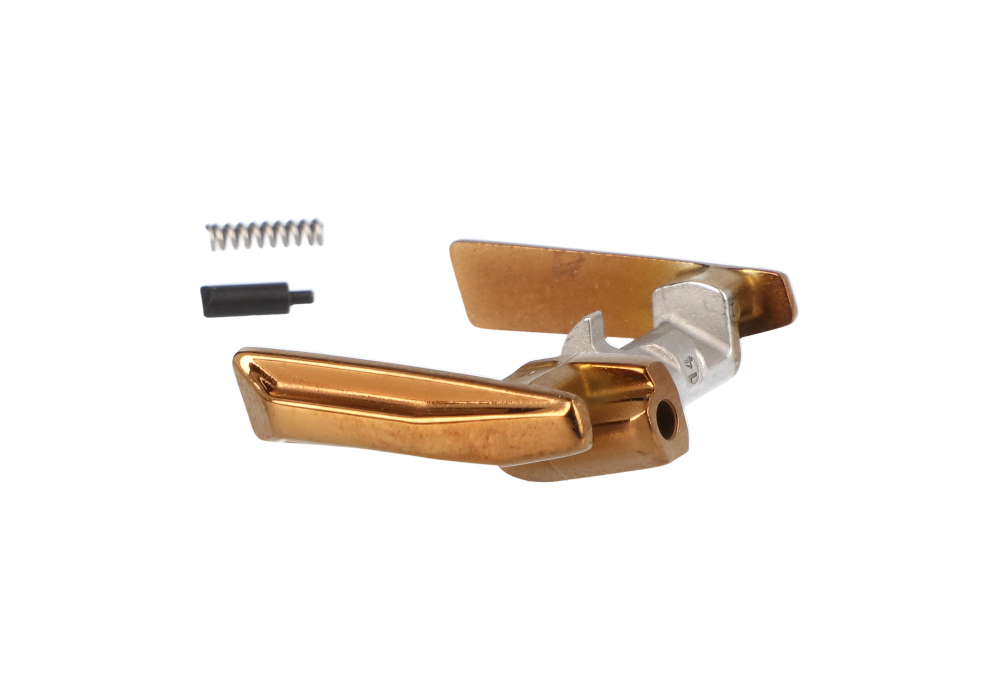
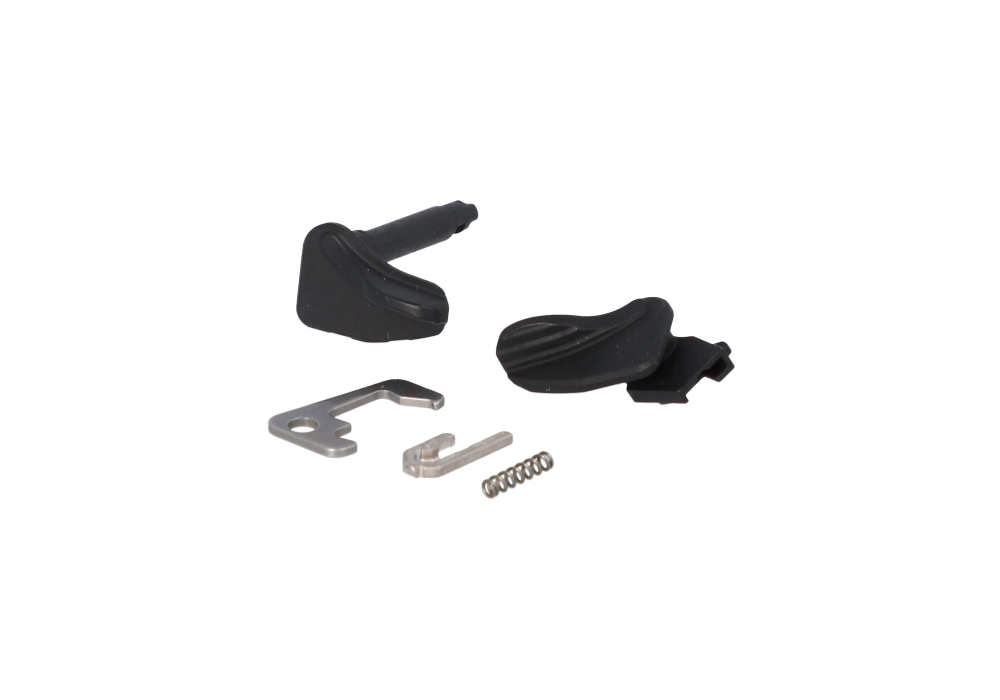
Gunsmithing safety spring kits bring together replacement springs for maintaining firearm safety mechanisms and associated controls. Depending on the application, a kit may contain components for one defined assembly or an assortment intended to support several service needs. The important distinction is that a safety spring kit is not simply a collection of small springs that look alike. Each component has a particular role within a mechanism, and its dimensions, shape, and working characteristics must match the firearm manufacturer’s specifications. A spring may help maintain pressure against a detent, support a control’s intended movement, or contribute to the operation of a safety assembly. Those functions depend on the correct relationship between the spring and the surrounding parts. Similar appearance does not establish interchangeability, even when two firearms belong to the same general family. Model, configuration, production changes, and assembly design can all affect compatibility. Useful kit descriptions identify the intended application and explain which components are included, allowing the contents to be checked against the actual service requirement. A broad assortment can suit a professional bench that supports multiple compatible assemblies, while a narrowly defined kit can simplify parts identification for a single maintenance task. Neither format is automatically the better choice; the value lies in a clear match between the components and their intended use. A safety spring kit also differs from a general spring assortment, which may include parts unrelated to safety controls. That distinction matters when comparing contents rather than relying on a category name alone. Manufacturer documentation and clearly labeled packaging provide a firmer basis for selection than photographs or assumptions about fit. For owners arranging professional service, an accurately identified kit helps keep the discussion focused on restoring the firearm’s intended operation rather than changing the character of its controls.
Materials and manufacturing quality influence how replacement springs perform through repeated use. Spring steel is common because suitable alloys and heat treatment allow a component to flex and return within its intended working range. Some applications use stainless steel or protective finishes, but the appropriate material depends on the original design and service requirements. A finish should not be treated as proof of compatibility, and a bright or dark surface says little by itself about spring strength, dimensional accuracy, or expected service life. Wire diameter, coil geometry, end configuration, and overall dimensions can all matter, as can characteristics that are not visible in a product image. A replacement that looks close may still be unsuitable for the assembly. Durability therefore starts with the correct specification rather than a general claim of greater strength. A stronger spring is not necessarily a better spring, particularly in a mechanism whose parts are intended to work together with defined resistance and movement. Wear, corrosion, distortion, and an uncertain service history are reasons for evaluation by a qualified gunsmith, not reasons to substitute a component by appearance. Care also extends to the way unused parts are stored. Small springs can be difficult to distinguish once separated from their labels, and loose components in the bottom of a toolbox are harder to identify with confidence. Separate compartments, retained packaging, and clear part references help preserve the connection between a component and its documented application. Storage that limits moisture and contact with incompatible chemicals supports the condition of both the parts and their packaging. Cleaning and lubrication requirements belong to the firearm manufacturer’s instructions, including any guidance specific to the assembly involved. Protective treatment is not a substitute for sound storage, and surface cleanliness cannot confirm that a spring remains within specification. Well-organized kits make these small components easier to account for, especially when several visually similar parts share a workbench.
These kits are relevant to professional gunsmiths, armorers, maintenance departments, and firearm owners coordinating work with a qualified service provider. At a professional bench, their usefulness often comes from organization as much as from the parts themselves: a labeled compartment can distinguish a documented replacement from an unidentified spring left beside another assembly. In a maintenance program, consistent part references and service records help connect replacement components with the firearms for which they are intended. For an individual owner, a kit can support a defined repair or scheduled service when the required parts have been confirmed. It is less useful as a speculative assortment chosen without knowing which mechanism needs attention. Whether considering a kit or individual Gun Safety Springs, the central considerations remain the same: documented compatibility, clearly described contents, appropriate materials, and a known service purpose. Packaging deserves attention here because a kit name does not necessarily explain every included component or establish that it covers an entire assembly. A set of replacement springs should not be assumed to contain every part necessary for a repair. Similarly, replacing a spring does not establish that the surrounding parts are serviceable or that a firearm’s safety functions have been verified. Inspection and function checks belong within the manufacturer’s prescribed service process and the scope of a qualified professional’s work. For households where firearm maintenance is shared with a trusted gunsmith, retaining the kit label and service documentation can be more useful than keeping unidentified spare parts. As a gift, this is a category best approached with the recipient’s exact requirements already confirmed; technical compatibility matters more than the apparent breadth of an assortment. The practical appeal of gunsmithing safety spring kits is straightforward: they group small, application-specific components in a format that can support orderly maintenance. Their proper role is to help maintain the firearm’s intended mechanical function, alongside professional judgment, accurate documentation, secure storage, and responsible handling. No replacement component removes the need to treat every firearm with the same care before, during, and after service.