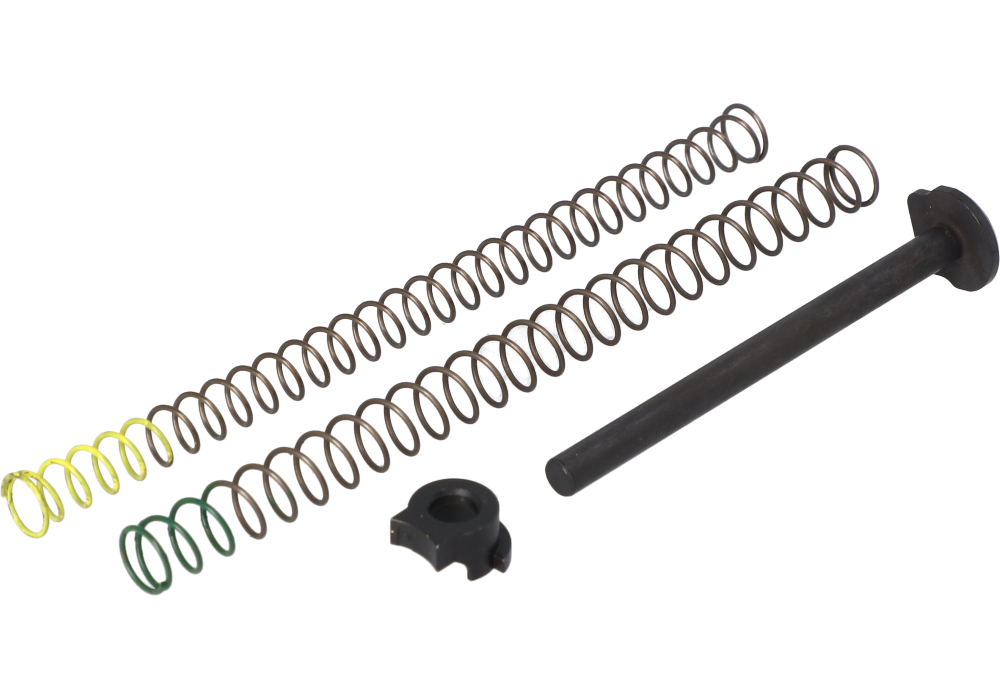
Heavy duty recoil spring guides are replacement or upgraded components for compatible semiautomatic pistols, designed to keep the recoil spring properly aligned as the slide cycles. A guide rod may look like a small part, but it works in a demanding environment: each shot sends the slide rearward, compresses the recoil spring, and then drives the slide forward to chamber the next cartridge. A rigid guide helps support that motion and can reduce flex, bowing, or spring binding compared with less substantial factory components. Many heavy duty guide rods are machined from stainless steel, hardened steel, or tungsten, with each material offering different characteristics in terms of weight, durability, corrosion resistance, and handling. Steel guide rods are valued for strength and long-term wear resistance, while tungsten versions add more reciprocating weight toward the front of the pistol. That added weight may help soften muzzle movement and make the pistol feel more settled during rapid strings, especially when paired with a slide-mounted optic or other accessories. These components are commonly considered by serious range shooters, defensive firearm owners, competitors, instructors, and anyone who puts substantial round counts through a specific handgun. They can also be a thoughtful gift for an experienced shooter who already knows the exact make, model, and configuration of their pistol, although a guide rod is not a universal accessory. Fit is essential, and a part intended for one handgun may not be compatible with another model, generation, barrel length, slide design, or recoil system. Before purchasing, confirm the manufacturer’s specifications and compare the guide rod’s dimensions, spring arrangement, and installation method with the firearm’s owner’s manual.
Spring weight is another important consideration. Standard-weight recoil springs are generally suited to ordinary factory ammunition and general-purpose range use, while heavier springs may be selected for certain setups using hotter defensive ammunition, compensators, suppressors, or slides carrying additional optic weight. A heavier spring can slow rearward slide movement and help control slide velocity, but it also requires enough energy from the ammunition to cycle the action reliably. Choosing a spring that is too heavy for the load may cause short-stroking, failures to feed, or difficulty manually operating the slide; choosing one that is too light can increase slide velocity and battering under some conditions. Ammunition, barrel length, slide mass, firing grip, and the pistol’s original recoil system all interact, so spring weight should be treated as part of a complete setup rather than an isolated performance upgrade. Some shooters maintain separate recoil spring assemblies for standard practice ammunition and warmer defensive loads, recording round counts and inspecting the spring for fatigue as part of routine maintenance. A heavy duty guide rod may also be useful when a shooter wants a more durable replacement for a worn or damaged component, but it should not be assumed that a metal guide rod automatically improves every pistol or every ammunition combination. Captured and non-captured systems have different installation and service procedures, and certain assemblies are built around a specific spring length, plug, or guide-rod geometry. For shooters comparing options, the most useful details include the material, overall length, spring rating, whether the assembly is captured, compatibility with the exact handgun configuration, and whether the manufacturer provides clear installation instructions. Those seeking a broader selection of tuned components can also review High Performance Recoil Spring Assemblies while matching the assembly to the intended use.
Installation and inspection deserve the same attention as selection. Always unload the firearm completely, remove the magazine, verify the chamber and follow the owner’s manual before disassembly. A recoil spring can remain under tension, so eye protection and a stable work surface are sensible precautions. After installation, confirm that the guide rod seats correctly, the spring remains centered, the slide moves smoothly through its full travel, and no part rubs against the barrel, frame, or slide. A function check should be performed according to the firearm manufacturer’s instructions, followed by controlled live-fire testing with the ammunition intended for regular use. Start with a small number of rounds and watch for failures to feed, failures to return to battery, unusual slide movement, changes in ejection, or signs of uneven spring wear. Heavy duty recoil spring guides are not a substitute for proper maintenance, sound grip technique, quality ammunition, or professional inspection when a pistol behaves unexpectedly. For a frequently used handgun, keeping a spare compatible spring assembly on hand can make maintenance more convenient and help preserve a consistent shooting feel through changing conditions during the warmer and cooler parts of the year. A knowledgeable shooter may appreciate the practical value of a properly matched guide rod as a maintenance upgrade, while a newer owner may benefit more from assistance selecting and installing the correct part. When fit, spring weight, ammunition, and intended use are considered together, a heavy duty recoil spring guide can provide a durable foundation for reliable cycling and a more controlled experience at the range or during responsible defensive preparation.