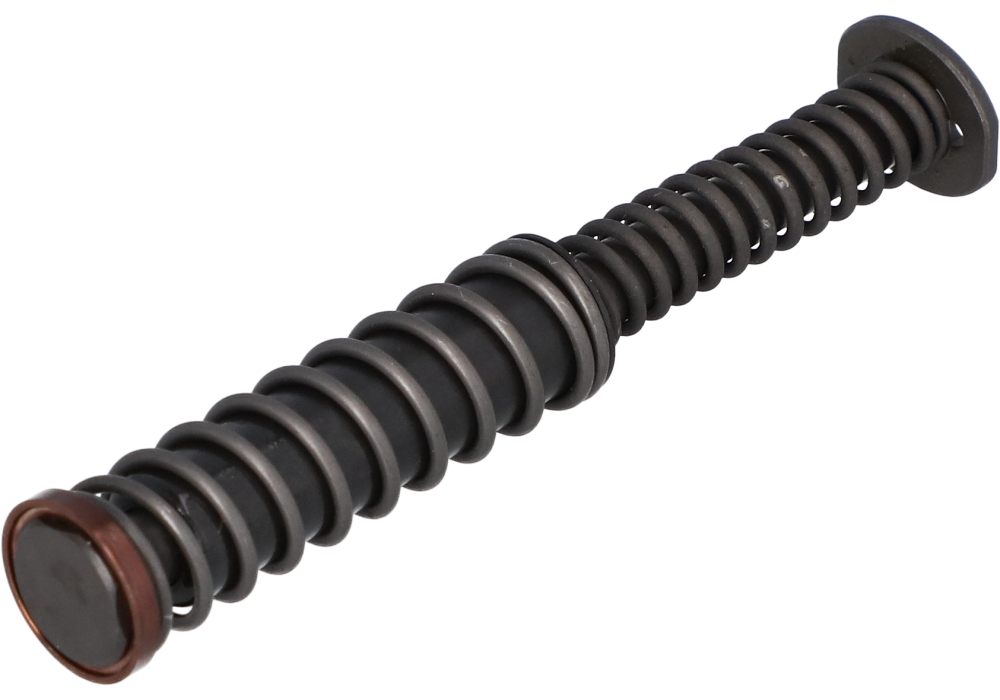
Aftermarket recoil spring guide assemblies are practical replacement components for shooters who want to fine-tune the way a compatible semi-automatic pistol cycles. The assembly typically combines a guide rod with a recoil spring, and some configurations may include additional spacers, bushings, or interchangeable springs intended for a particular handgun design. During firing, the slide moves rearward against spring tension, then returns forward to chamber the next cartridge. The guide assembly helps keep that movement aligned and controlled, which is why the correct fit, spring rate, and construction matter. A well-matched assembly can contribute to smoother cycling, more consistent slide movement, and a steadier feel during repeated fire, although results depend on the firearm, ammunition, shooter technique, and overall condition of the pistol. Many aftermarket recoil spring guide assemblies are selected as direct replacements for worn factory components, while others are chosen to support a specific setup, such as a pistol used with lighter target loads, heavier defensive ammunition, or a compensator. Shooters may also consider them when replacing a guide rod that shows visible wear, damage, bending, unusual rubbing, or signs of spring fatigue. Common material choices include stainless steel, aluminum, and tungsten, each with different characteristics related to weight, durability, corrosion resistance, and handling. A heavier guide rod can add weight toward the front of the pistol and may influence muzzle movement, while a lighter assembly can preserve a familiar balance. Neither approach is automatically best for every shooter, and the intended use of the handgun should guide the selection. For many owners, a properly fitted aftermarket recoil spring guide assembly is less about dramatic transformation and more about refining a familiar platform so it operates with a predictable, repeatable feel.
Compatibility should be the first consideration when shopping for an aftermarket recoil spring guide assembly. Confirm the exact make, model, generation, caliber, barrel length, and operating configuration of the pistol before placing an order, since components that appear similar may not be interchangeable. Some assemblies are designed for a specific frame or slide length, while others may be limited to certain barrel profiles or recoil systems. A spring’s weight is equally important. Spring rates that are too light or too heavy can affect slide velocity, feeding, extraction, lockup, and the shooter’s ability to diagnose normal operation from an actual malfunction. A setup that works well with one ammunition type may not behave the same way with another, particularly when comparing light training loads and full-power defensive loads. Shooters who use a compensator or other muzzle device should pay close attention to the manufacturer’s fitment guidance, because changes in gas management can alter how the slide cycles. When selecting between standard and extended capacity configurations, the recoil spring system should still be evaluated as part of the complete firearm rather than in isolation. Installation should be performed with the firearm unloaded and pointed in a safe direction, following the applicable owner’s manual and the component manufacturer’s instructions. After installation, function-check the pistol without ammunition, then test it carefully at a lawful, appropriate range with the ammunition intended for regular use. Watch for failures to return to battery, failures to feed or extract, unusual slide movement, spring binding, or contact marks that suggest an alignment problem. A qualified gunsmith can help verify fit and diagnose cycling concerns when the correct configuration is uncertain. Routine inspection also matters: recoil springs are wear items, and their service life can vary according to round count, ammunition, firing schedule, storage conditions, and the specific design of the pistol. Shooters looking for a more robust replacement option may also review Heavy Duty Recoil Spring Guides when their application calls for added durability or a particular spring arrangement.
These assemblies can appeal to a broad range of responsible firearm owners. A recreational shooter who spends cooler days practicing at the range may appreciate a smoother, more familiar recoil impulse over long sessions, while a concealed-carry owner may prioritize dependable function, compact fitment, and a spring rate that matches the ammunition carried for personal protection. Competitive shooters often pay close attention to cycling characteristics because rapid follow-up shots make small changes in timing and muzzle movement noticeable, but competition-focused tuning should always be validated with the exact pistol and ammunition used in practice and competition. A new handgun owner may choose an aftermarket recoil spring guide assembly as part of a carefully planned maintenance kit, especially after learning how recoil components influence the movement of the slide. It can also be a thoughtful gift for an experienced shooter who keeps spare wear parts on hand, provided the giver knows the recipient’s exact firearm model and configuration; a gift card or a confirmed-compatible component is generally more useful than a part selected by appearance alone. Before storage, travel, or an extended training session, inspect the guide rod and spring for corrosion, deformation, unusual compression, or debris, and keep the assembly lightly maintained according to the firearm and component instructions. Avoid mixing parts simply because they fit together physically, and do not assume that a heavier rod or stronger spring will solve every cycling issue. Ammunition, magazines, grip, lubrication, extractor condition, and shooter input can all affect performance. The most dependable approach is deliberate selection, careful installation, and structured testing. Whether the goal is to replace a tired factory assembly, support a demanding practice schedule, or tailor a pistol to a specific load, aftermarket recoil spring guide assemblies provide a useful way to maintain and fine-tune a compatible handgun while preserving attention to safe handling and reliable function.