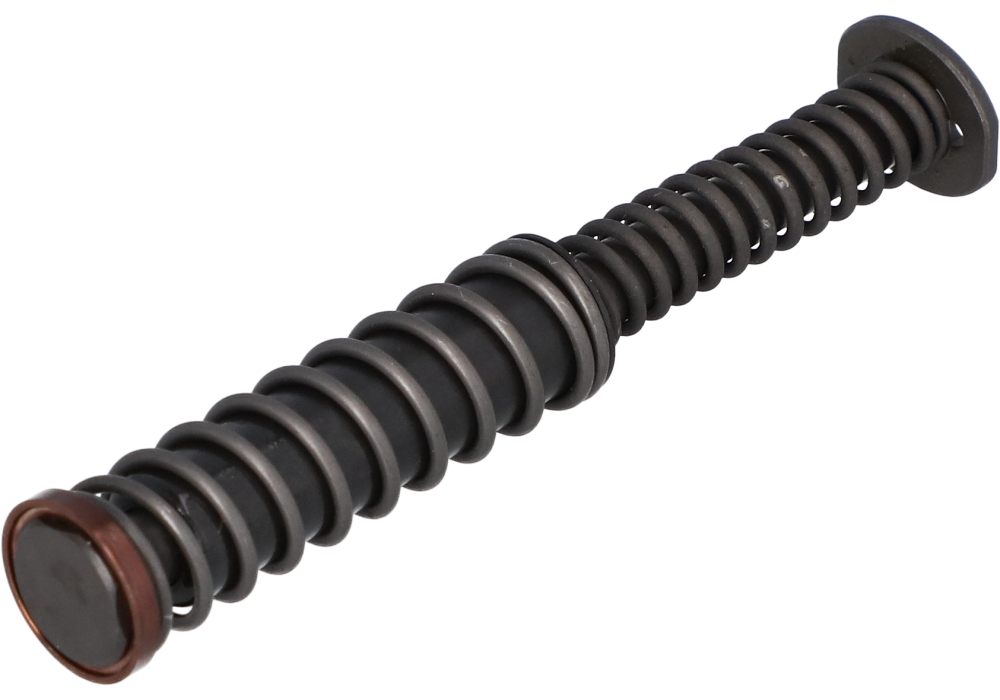
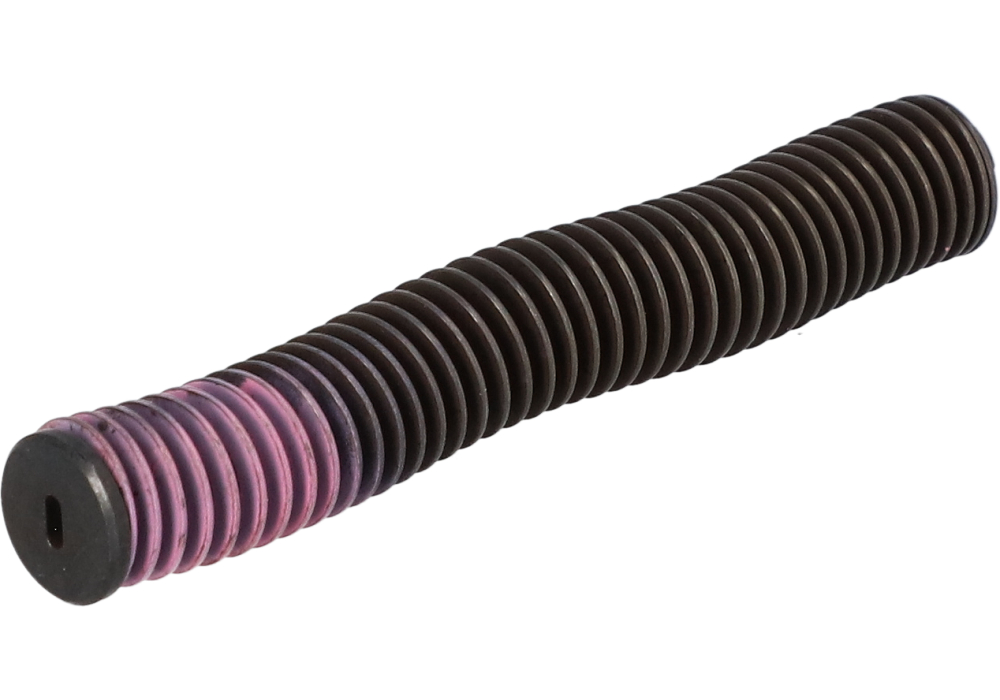
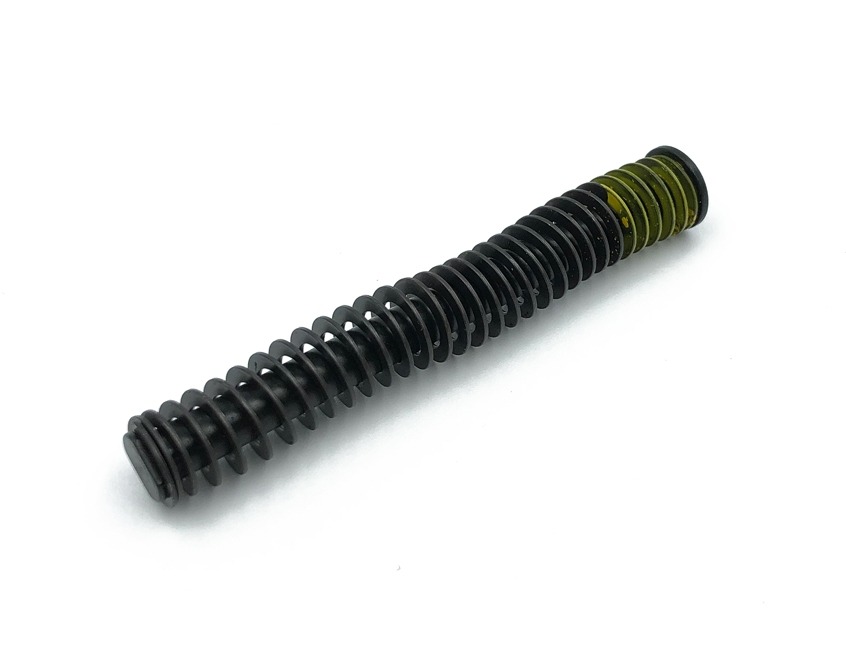
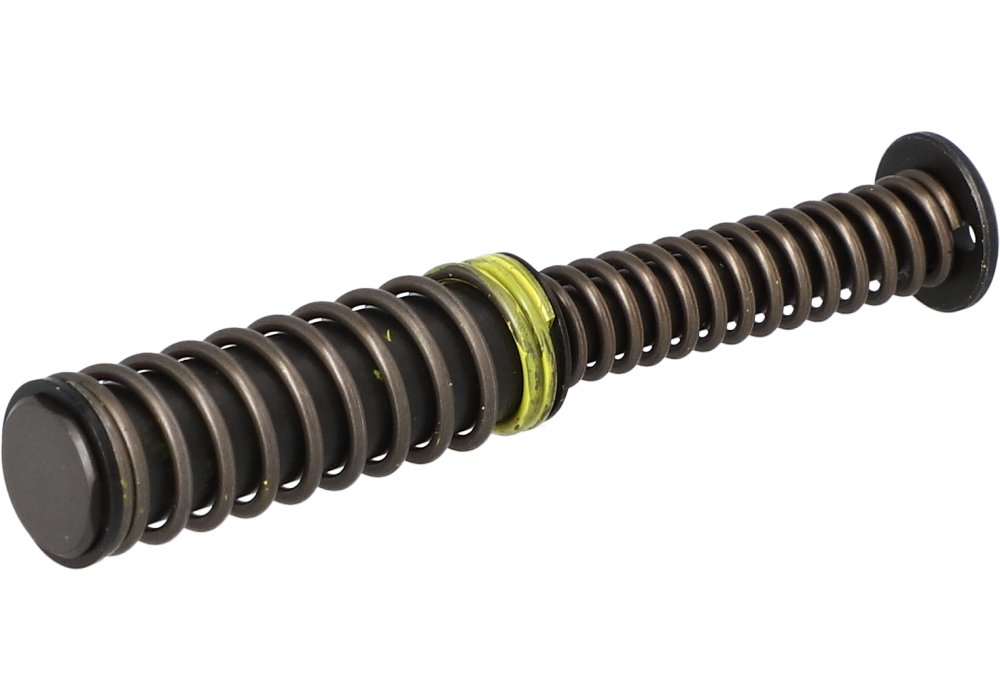
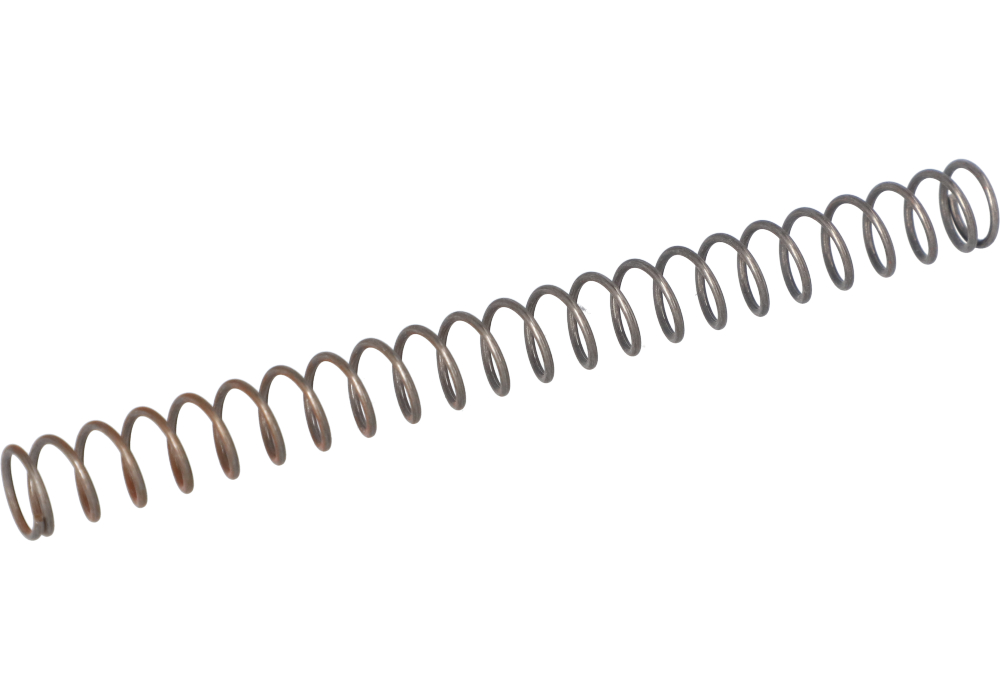
Recoil spring assemblies are critical firearm components that help manage the movement of the slide during cycling. When a shot is fired, the slide travels rearward against the resistance of the recoil spring, absorbing and controlling a portion of the operating force before the spring drives the slide forward again. This forward movement helps strip the next cartridge from the magazine, chamber it, and return the slide to battery. A properly matched recoil spring assembly supports reliable cycling, consistent slide movement, and predictable handling from the first shot through the end of a range session. Because the assembly works with the guide rod, slide, frame, barrel, ammunition, and magazine, selecting the correct configuration for the exact firearm model is essential. Differences in caliber, slide length, generation, operating system, and guide-rod design can affect compatibility, even when two assemblies appear similar at a glance. Some recoil spring assemblies use a single spring, while others use a dual-spring or captured configuration designed to manage slide velocity across a broader portion of the cycling stroke. A captured design can also make handling and installation more straightforward, since the spring and guide rod remain together as a unit. Before purchasing, confirm the firearm’s model designation and review the manufacturer’s specifications for the appropriate replacement part. Paying close attention to these details is especially important when replacing a worn assembly, keeping a frequently used firearm running reliably, or maintaining a defensive firearm that may sit ready for extended periods between practice sessions.
Recoil spring assemblies gradually lose tension through normal use, and their service life depends on the firearm, caliber, ammunition, shooting schedule, and operating conditions. A commonly cited replacement reference is approximately 5,000 rounds, but that figure should be treated as a general maintenance guideline rather than a universal rule. Some assemblies may require attention sooner, while others may remain serviceable longer when used under lighter conditions. Regular inspection can reveal signs that it is time to replace an assembly, including a noticeably harsh or sluggish cycling impulse, failures to return fully to battery, unusual guide-rod movement, spring deformation, visible wear, or changes in the way brass is ejected. Comparing the current spring with a new, correctly specified replacement can also help identify fatigue, although any recurring cycling issue deserves a complete inspection rather than an assumption that the spring is the only cause. Keep the assembly clean according to the firearm manufacturer’s instructions, use only suitable lubricant in the recommended locations, and avoid stretching, cutting, mixing, or improvising spring components. A replacement should be installed with the firearm completely unloaded, the magazine removed, and the chamber verified visually and physically. Owners who are unfamiliar with field-stripping or reassembly should consult the owner’s manual or seek help from a qualified gunsmith. For those building a practical maintenance collection, Recoil Spring Kits can provide a convenient way to keep the necessary spring and guide-rod components together for the appropriate firearm platform.
These parts are useful for a wide range of firearm owners, from someone preparing for a first trip to the range to an experienced shooter who keeps a dedicated maintenance kit in a range bag. A spare recoil spring assembly can be particularly valuable during extended practice, training classes, competition preparation, or travel to a remote range where finding the correct replacement may be difficult. It also makes a thoughtful and practical gift for a responsible firearm owner, especially when the recipient already knows the exact model and configuration they use. The best gift choice is based on compatibility rather than appearance: an assembly intended for a compact slide may not be correct for a full-size variant, and a part designed around one caliber or operating system should not be substituted for another without confirmation. During the cooler months, when indoor range visits and routine bench maintenance become part of many shooters’ schedules, replacing a tired recoil spring assembly is a simple way to refresh an important wear component before the next outing. Keep a new assembly sealed and protected from moisture until it is needed, and store used or replacement parts separately so that their condition and intended application remain clear. Whether the goal is routine preventive maintenance, a backup for a well-used firearm, or a carefully selected gift, the right recoil spring assembly helps preserve the operating relationship between the slide and frame while supporting smooth, dependable cycling.