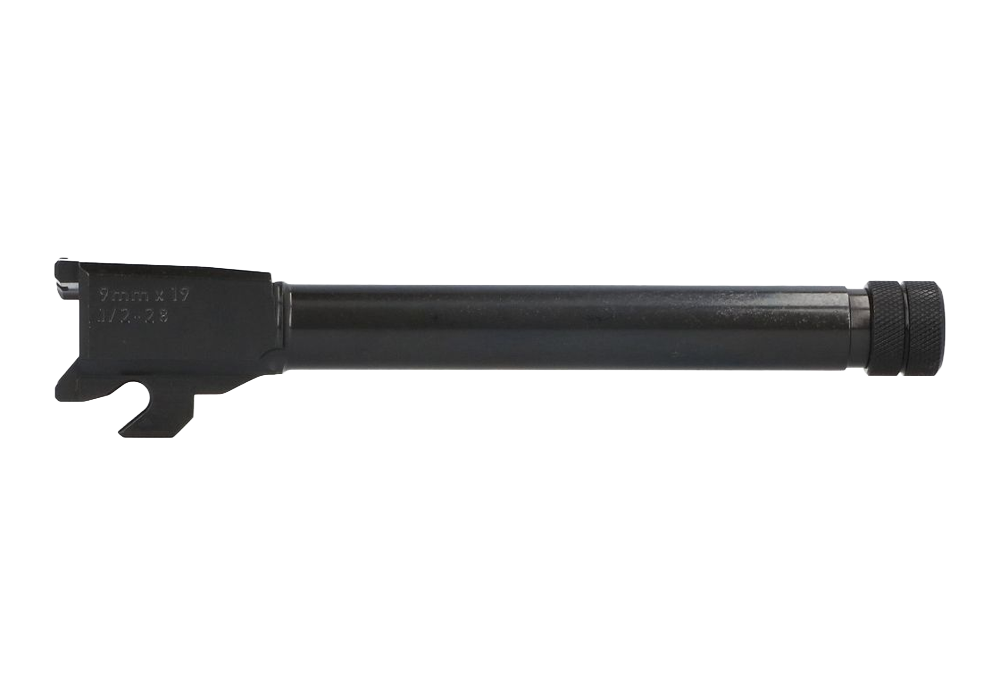
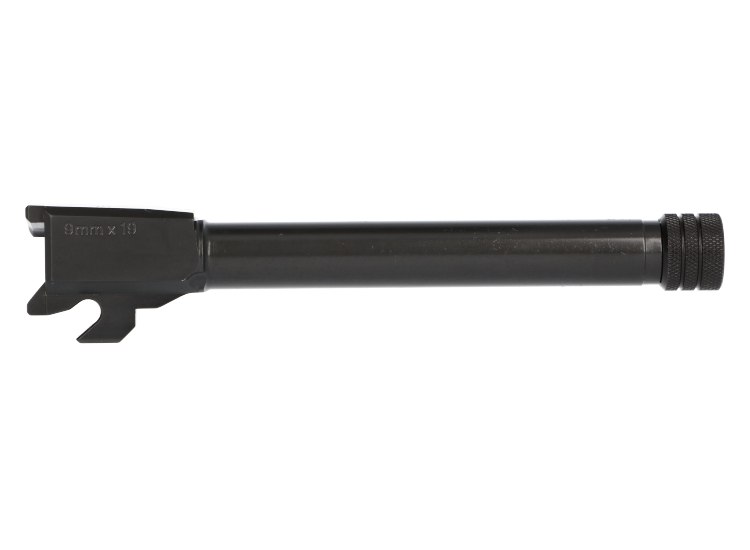
High-standard 9mm barrels are best evaluated by documented compatibility, sound materials, and consistent manufacturing tolerances—not by a quality label alone. A 9mm replacement barrel must match the firearm’s exact model, configuration, and chambering; the caliber marking by itself does not establish fit. Most barrels described as 9mm pistol barrels are intended for 9mm Luger, also called 9×19mm, but the manufacturer’s specifications remain the reference for the correct cartridge. Likewise, “match-grade” describes an emphasis on precision rather than a universal standard that guarantees compatibility or tighter groups. Historical rimfire target-pistol designs should not be assumed compatible with centerfire replacement barrels, and a 9mm barrel is not a universal conversion part for a pistol chambered in another caliber. These distinctions matter because a barrel works within a system: its chamber, exterior dimensions, locking surfaces, and muzzle profile must correspond with the firearm’s design. Two barrels can look nearly identical on a workbench while differing in ways that affect safe function. Model variations, slide lengths, and production revisions can also influence compatibility, so a familiar model name is only the starting point. For a shooter refreshing a well-used range pistol, a replacement that follows the original specifications may be more relevant than one advertised primarily for competition. For someone seeking a different barrel configuration, the important consideration is whether that configuration is expressly supported for the firearm. Factory specifications offer a useful baseline for assessing length, chambering, and intended fit, while aftermarket descriptions require the same attention to documentation. A barrel described as requiring fitting should be evaluated by a qualified gunsmith rather than treated as an interchangeable accessory. The strongest indicator of a suitable replacement is a clearly documented match between the barrel and the host firearm, supported by the manufacturer’s requirements for inspection and use. That approach keeps the focus on dependable function instead of appearance, broad compatibility claims, or terminology that sounds precise without explaining what it means.
Materials and construction help explain why some 9mm barrels are intended for routine recreational shooting while others emphasize demanding practice schedules or precision-oriented use. Common barrel materials include stainless steel and alloy steel, with performance depending on the specific alloy, heat treatment, machining, and surface treatment—not simply the material name. Stainless steel can offer useful corrosion resistance, but it still benefits from proper cleaning and protection. Certain finishes and treatments can improve resistance to surface wear or corrosion, although their benefits depend on the process and the conditions of use. Exterior color is not a reliable measure of hardness, accuracy, or service life. Inside the barrel, the chamber supports the cartridge case, while the bore and rifling guide the projectile. Consistent dimensions, appropriate surface finish, and a clean, undamaged muzzle crown all contribute to the barrel’s role in repeatable performance. Rifling style and twist rate are additional specifications, but their relevance should be considered alongside the manufacturer’s ammunition recommendations rather than isolated as shortcuts to better results. Accuracy also depends on ammunition consistency, sights, firearm condition, and the shooter’s technique. A carefully selected barrel cannot compensate for every source of variation. Length deserves similar context: a longer barrel can change the pistol’s overall dimensions and handling, but added length does not automatically produce better practical accuracy. Threaded barrels introduce another set of compatibility considerations, including thread specifications, muzzle clearance, and the requirements of any compatible muzzle accessory. Suppressed use requires a supported combination of firearm, barrel, and suppressor, with applicable laws and manufacturer instructions governing that combination. For target shooters working toward consistent groups, competitive participants seeking dependable equipment, and recreational shooters maintaining a familiar pistol, the most useful barrel is the one whose design suits the actual use. A durable, properly matched barrel supports repeatable practice without turning every range session into a search for equipment-related problems. Precision and reliability belong together; a claim of tighter tolerances is not meaningful unless the barrel also functions correctly within its intended platform.
Care and inspection help preserve the qualities that matter in a 9mm barrel over time. Routine maintenance addresses fouling, moisture, and residue using the cleaning methods and products recommended for the firearm and barrel. Excessive abrasion, unsuitable chemicals, or improvised tools can damage surfaces rather than improve them. The chamber, bore, muzzle, and relevant exterior contact surfaces deserve attention during normal maintenance, but unusual wear, visible damage, or changes in function call for professional evaluation. A replacement barrel should not be viewed as a cure for an unexplained firearm problem; other components may need inspection before the source can be identified. Before any cleaning or inspection, the firearm should be unloaded and handled according to its safety instructions, with ammunition kept separate from the work area. Proper storage also matters, particularly when a spare barrel is kept outside the firearm. A protective container can help prevent contact damage, while any corrosion protection should follow the manufacturer’s guidance. Original packaging and compatibility documentation are worth retaining because they help identify the barrel later and reduce confusion between similar-looking parts. For shoppers comparing replacement options, Factory Spec 9mm Barrels provides a related category for considering barrels described around original specification requirements. The relevant details remain the exact firearm fit, chambering, barrel length, finish, and intended configuration. Those same details are especially important when a barrel is being considered as a gift for an experienced shooter. Knowing that someone enjoys range practice is not enough to establish which barrel fits their pistol; an exact model identification and confirmation of the desired configuration make the choice more meaningful. A recreational shooter may value continuity with a familiar setup, while a competition participant may have equipment rules or established preferences to consider. Across these uses, lasting value comes from compatibility, appropriate construction, sensible maintenance, and clear documentation. A quality barrel is a functional component whose suitability depends on the firearm it serves, not a decorative upgrade or a promise of effortless precision.