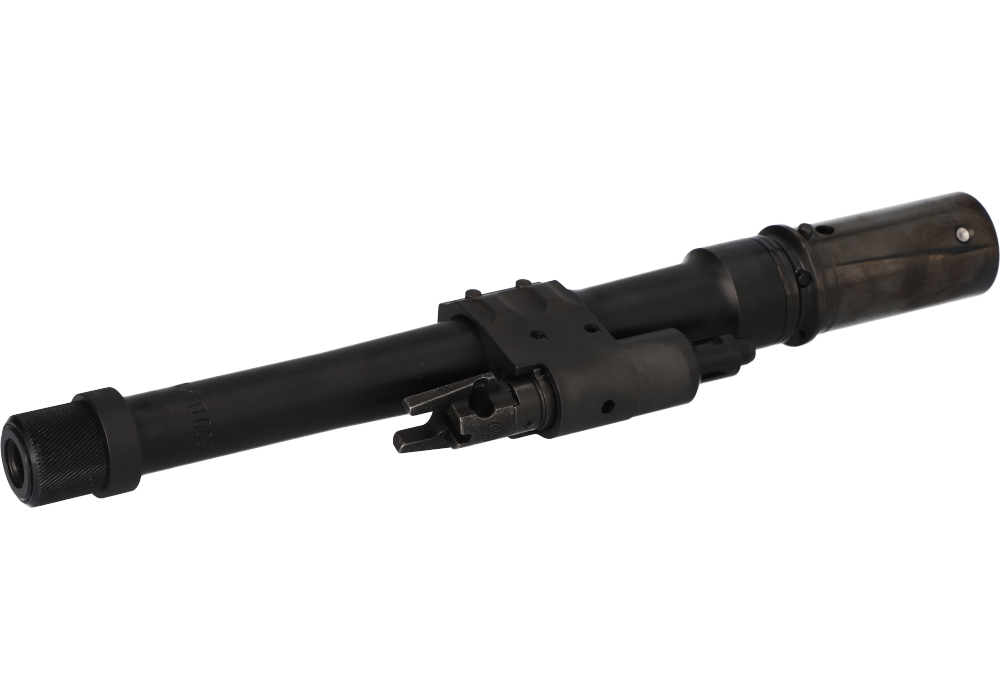
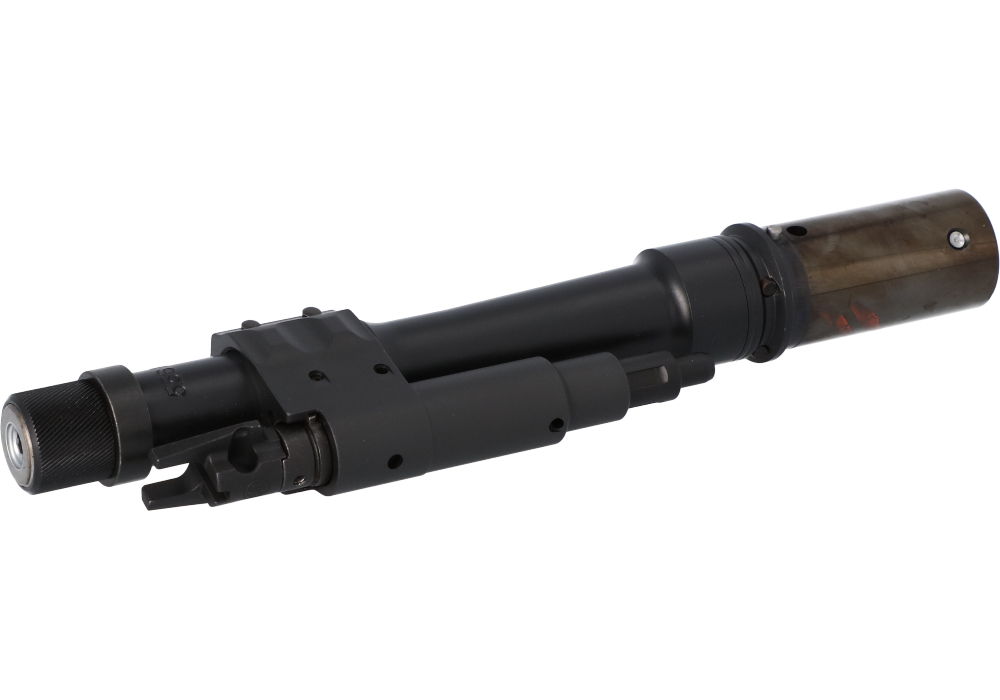
Military Style Rifle Barrel Assemblies are selected by builders and rifle owners who value the durable, practical design language associated with service rifles. These assemblies commonly emphasize rugged construction, straightforward maintenance, and compatibility with familiar rifle platforms. Depending on the configuration, a barrel assembly may include the barrel extension, gas block or front sight base, and other components intended to simplify installation around a particular upper receiver and handguard setup. Common materials include 4150 chrome-moly-vanadium steel, chosen for its ability to withstand heat and repeated firing, while chrome-lined bores and salt bath nitride treatments can provide additional resistance to corrosion, wear, and fouling. A government profile offers a balance between weight and durability, while a heavier SOCOM-style profile adds material in areas subject to greater heat and stress. Medium and match-oriented contours may appeal to builders who want a steadier sight picture or improved consistency without the weight of a fully heavy barrel. Finish, contour, bore treatment, and construction details all contribute to how a barrel assembly handles during range sessions, training, maintenance, and storage. For shoppers comparing military style rifle barrel assemblies, the most useful starting points are caliber, barrel length, twist rate, gas-system length, and the type of front-end components already planned for the rifle. A 5.56mm barrel with a 1:7-inch twist is a common choice for stabilizing a broad range of heavier projectiles, including 62-grain and 77-grain loads, while other twist rates may be better suited to different bullet weights and intended uses. Barrel length also affects the overall balance, sight radius, velocity, and maneuverability of the finished rifle. A compact configuration may be convenient in confined spaces, whereas a longer assembly can provide a more traditional handling feel and additional velocity. Always confirm that the selected assembly is compatible with the receiver, ammunition, handguard, muzzle device, and intended gas system before ordering.
A complete barrel assembly with a pre-installed front sight base or gas block can be a practical choice for a straightforward build, particularly when the owner wants to preserve a familiar service-rifle appearance. A fixed front sight base offers a recognizable profile and can pair naturally with a rear aperture sight, while a low-profile gas block may leave room for a free-float handguard and folding backup sights. Some assemblies are supplied in a more complete configuration, while others are stripped and require the builder to select and install the gas block, muzzle device, handguard, and related hardware separately. The distinction matters because installation may call for specialized tools, accurate torque settings, proper alignment, and careful attention to gas-system fit. On an assembly with a permanently attached muzzle device, the resulting overall length and future maintenance options should be reviewed before purchase. Builders should also verify gas-block journal dimensions, barrel nut requirements, feed-ramp style, thread pattern, and whether the assembly is intended for a carbine-, mid-length-, or rifle-length gas system. Headspace must be checked whenever a barrel is installed with a bolt, and professional gunsmith inspection is a sensible step for anyone who does not already have the appropriate gauges and experience. These details can seem small on a workbench, yet they determine whether the finished rifle cycles reliably and whether the handguard, sights, and muzzle components fit as expected. As the weather warms or during the cooler months, many owners use range time to evaluate a new configuration gradually, beginning with a careful inspection and controlled function testing rather than changing several variables at once. Keeping notes on ammunition, point of impact, sight settings, and cleaning intervals can make it easier to understand how a barrel assembly performs over time.
Military style rifle barrel assemblies can suit a range of lawful ownership and sporting projects, including replacement builds, restoration-inspired configurations, training rifles, and practical upgrades for an existing platform. They may also be a thoughtful gift for an experienced enthusiast who has already identified the correct caliber, length, profile, and receiver pattern for a project. Because fitment is highly specific, a barrel assembly is best given as a coordinated purchase or with the recipient’s exact build specifications in hand; a gift card or permission to select the configuration may be more useful than guessing. The recipient should be legally eligible to possess the item, and all sales, transfers, installation, transportation, and use should follow applicable federal, state, and local requirements. Buyers should also consider how the rifle will be used and carried. A lighter government-profile assembly may be comfortable for extended range sessions and general-purpose practice, while a heavier profile can make sense for users who prioritize heat management and a stable firing platform. Chrome lining and nitride finishes are valued by owners who want easier upkeep and strong resistance to environmental exposure, though every barrel still benefits from proper cleaning, light protective lubrication where appropriate, and dry, secure storage. For related configurations and a broader selection of components, explore AR Barrel Assemblies. Careful comparison of specifications helps ensure that the finished rifle has the intended appearance, balance, sighting arrangement, and operating characteristics, turning a collection of compatible parts into a dependable and well-considered build.