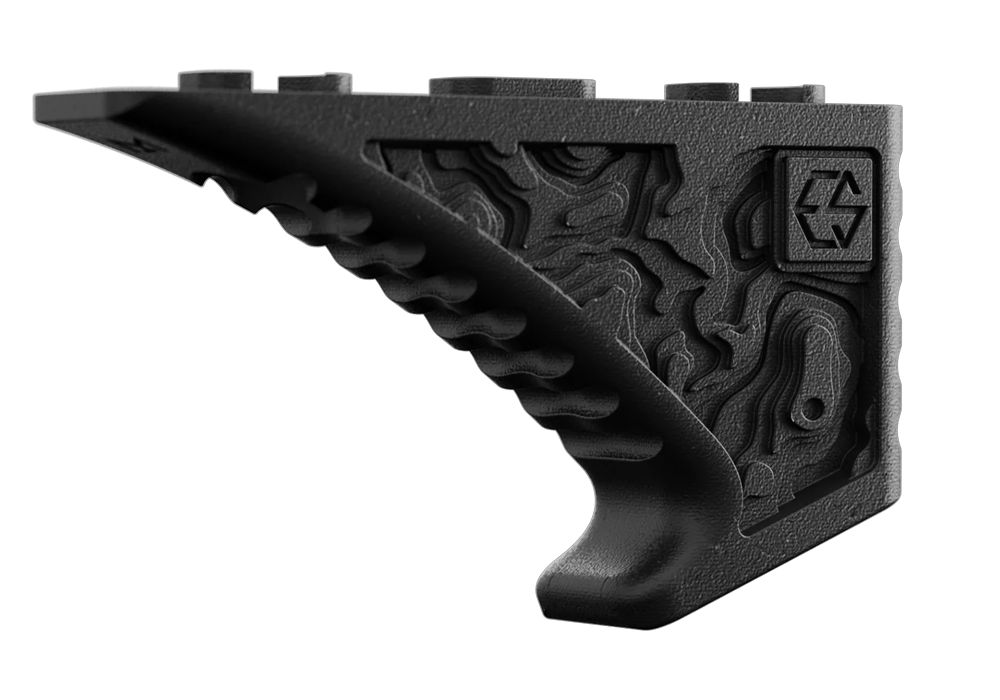
M-LOK forward grips give a compatible rifle or carbine handguard a more defined support-hand position, helping the shooter establish a consistent hold without relying solely on the bare rail or handguard surface. In this category, the term “forward grip” can include angled foregrips, vertical foregrips, hand stops, and compact finger stops, each offering a different balance of control, comfort, and profile. Angled foregrips place the support hand in a more natural, slightly canted position that can reduce wrist strain during longer practice sessions and support modern thumb-forward shooting techniques. Vertical foregrips provide a more pronounced handle, allowing the support hand to pull the firearm firmly into the shoulder and assist with controlled movement or close-quarters manipulation. Hand stops and finger stops take a minimalist approach: they offer a repeatable indexing point while adding very little bulk, making them useful for shooters who prefer to keep the front end streamlined. When comparing M-LOK forward grips, start by confirming that the grip is designed for direct attachment to an M-LOK-compatible handguard and that the mounting hardware is appropriate for the rail’s construction. A secure fit matters as much as the shape of the grip; the accessory should remain firmly positioned under normal handling and should not interfere with the muzzle device, sling hardware, light, laser, or other equipment. It is also worth considering the grip’s height, texture, edge profile, and overall footprint. A compact design may be ideal for a lightweight setup carried during range practice or field use, while a larger grip can provide more surface area for shooters who prefer a strong, deliberate purchase. Polymer options are often valued for their light weight and comfortable feel, while aluminum construction may appeal to those looking for a rigid, substantial interface. Neither material is automatically right for every setup, so the best choice depends on the rifle’s balance, the shooter’s hand size, the intended use, and personal preference.
The most useful way to choose among MLOK forward grips is to picture how the firearm will actually be held. A shooter who keeps the support hand high and forward may prefer an angled grip or short hand stop that reinforces a thumb-forward position without taking up much rail space. Someone who likes to wrap the hand around a defined handle may be more comfortable with a vertical option, particularly when moving between ready positions or working through structured drills. A low-profile stop can also serve as a tactile reference point, letting the shooter find the same location by feel when visual attention is focused downrange. During a long range session, small details become noticeable: a sharp corner can rub against the palm, an overly aggressive texture can become uncomfortable, and a grip that extends too far may catch on a sling or equipment. Look for a design that complements the handguard rather than dominating it. Rail placement is another practical consideration. Mounting farther forward can create leverage and a stretched support-hand position, while a more rearward location may feel faster and more compact. Many shooters begin with the grip positioned near a familiar indexing point, then adjust it in small increments until the rifle settles naturally into the shoulder and the elbows remain relaxed. Installation should follow the accessory maker’s instructions, with the firearm unloaded, pointed in a safe direction, and cleared before any work begins. After installation, check that the grip does not shift, contact the barrel or gas system, obstruct controls, or create an unexpected snag point. Responsible ownership also means following all applicable laws and range requirements, storing firearms securely, and practicing with appropriate eye and ear protection. For shoppers building out a complete compatible handguard setup, additional mounting solutions and rail accessories can be found in MLOK Accessories.
M-LOK forward grips can be a thoughtful addition for a new owner, an experienced range enthusiast, or anyone refining a rifle’s fit and handling characteristics. They may also make a practical gift for a shooter who has already selected a compatible handguard but has not yet settled on a preferred support-hand position. Because comfort and technique vary so much, gift shoppers should pay attention to broad preferences rather than guessing at a highly specialized configuration. A person who favors a lightweight, uncluttered rifle may appreciate a small hand stop or compact angled design, while someone who enjoys hands-on training may prefer the positive purchase of a vertical grip. If the accessory is being purchased for another person, checking the handguard pattern, preferred material, and general grip style can prevent compatibility surprises. These accessories are useful across a range of settings, from routine bench work and zeroing sessions to structured carbine practice and lawful field applications where a stable, repeatable hold is important. As the weather warms, a textured grip can help maintain a dependable purchase during outdoor practice, while during the cooler months a defined indexing point can make it easier to establish the same hand placement when wearing gloves. The right choice should feel natural almost immediately: the support hand finds its place, the rifle balances comfortably, and the shooter can transition between positions without fighting the equipment. Browse the available M-LOK forward grips with those fundamentals in mind, comparing attachment method, profile, texture, material, and intended handling style before making a selection. A well-matched grip does not replace safe technique or regular practice, but it can make a familiar rifle feel more settled, controlled, and personally fitted.