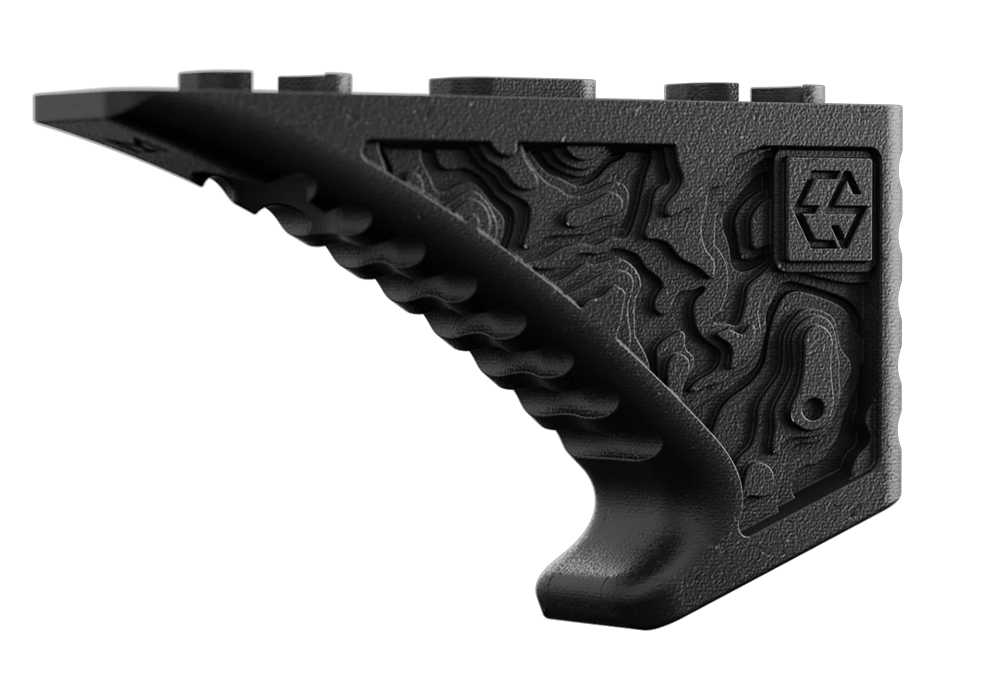
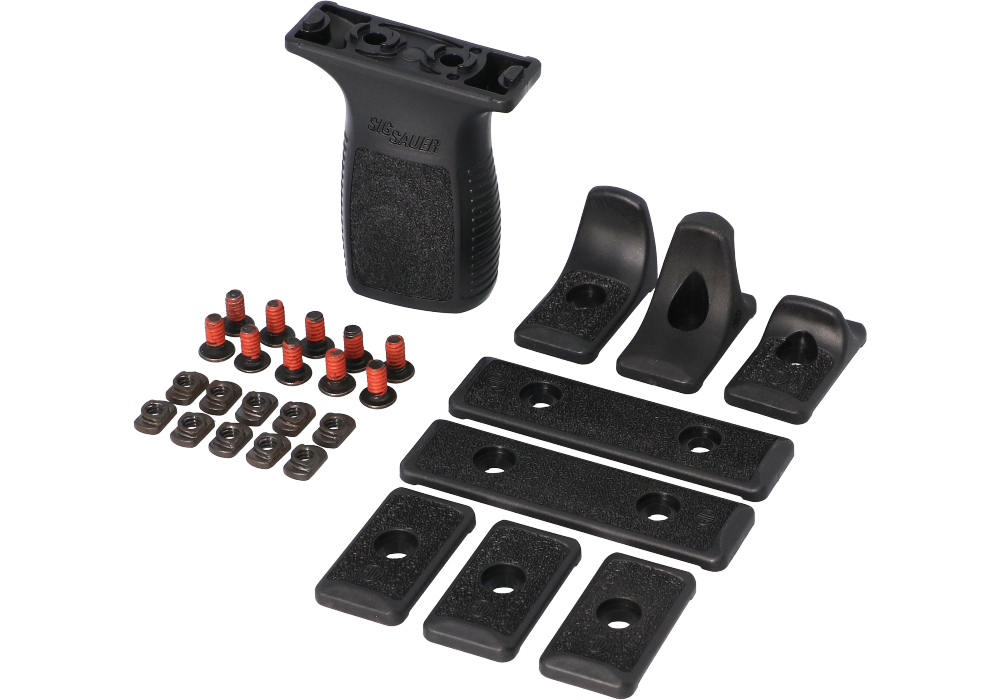
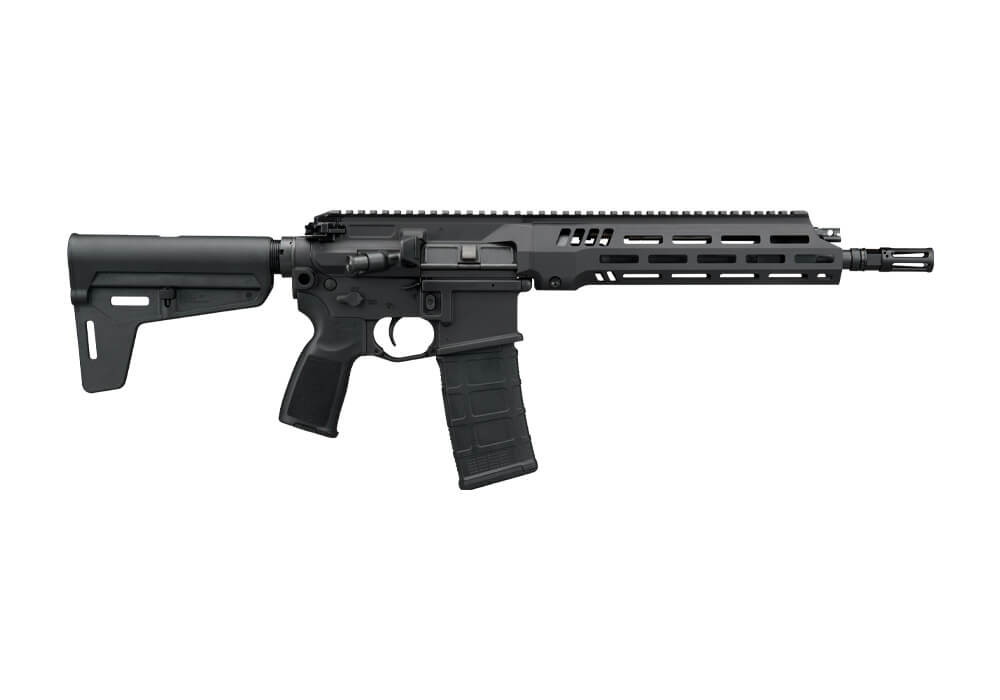
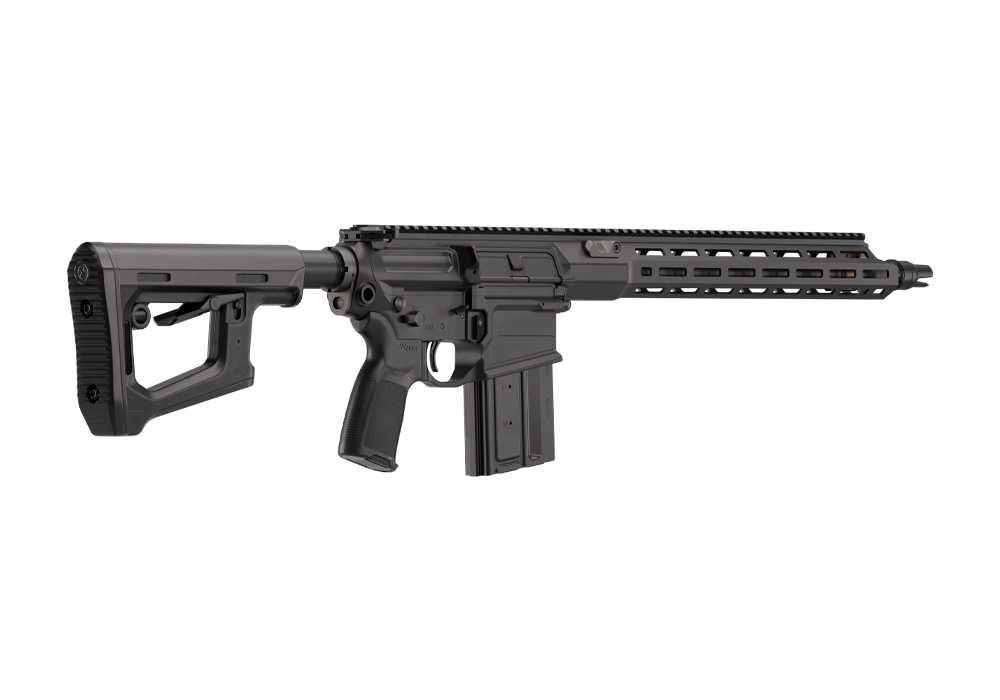
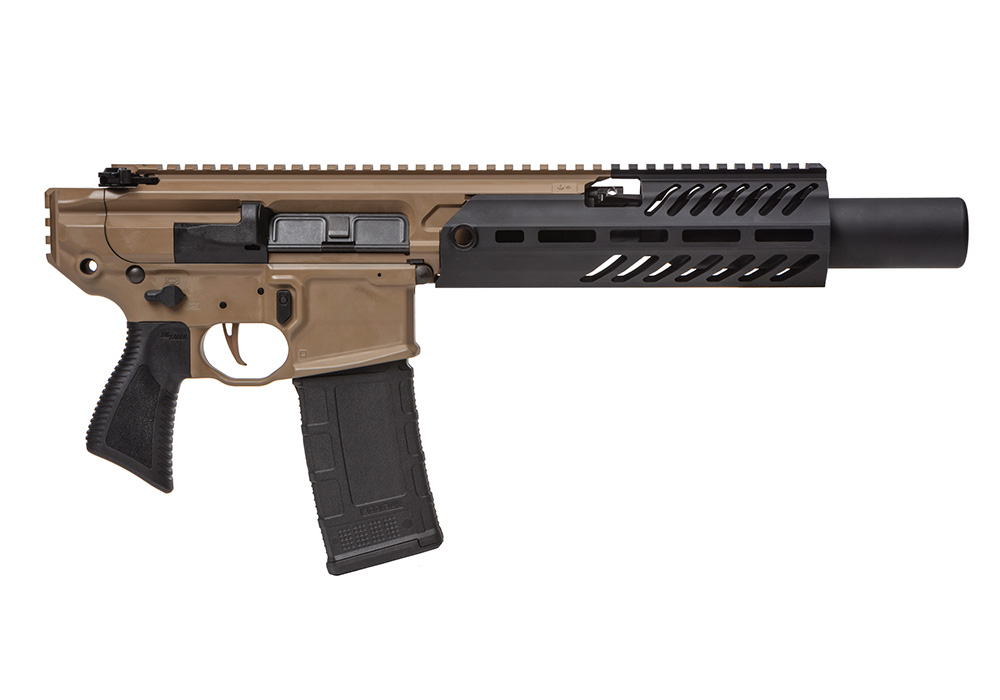
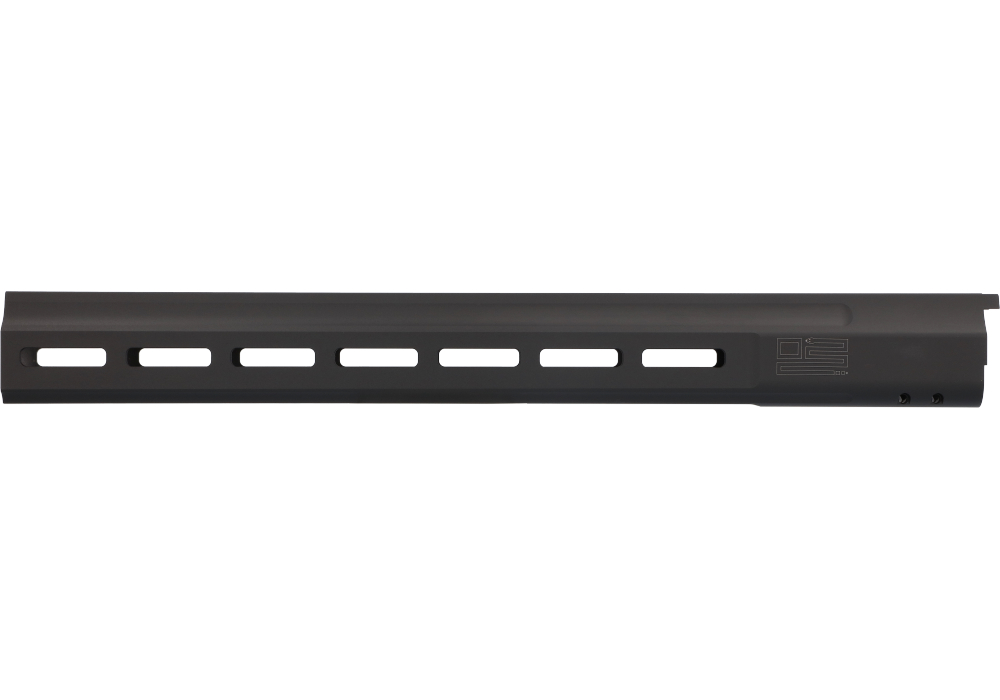
M-LOK grips are support-hand accessories designed for compatible slotted handguards on rifles and carbines. The category includes vertical foregrips, angled foregrips, and compact hand stops, each offering a different shape and amount of contact beneath the handguard. Unlike accessories that require a separate section of Picatinny rail, grips with a native M-LOK interface connect directly to compatible slots, helping keep the attachment compact. Their appeal starts with ergonomics: a comfortable place for the support hand, a recognizable contact point, and a shape that suits the person handling the firearm. A vertical foregrip extends farther below the handguard and provides a distinct gripping surface. An angled foregrip presents a sloped surface that some users find more comfortable for their wrist. A hand stop occupies less space and serves primarily as a reference point rather than a full handle. None of these shapes is universally better; hand size, reach, existing handguard dimensions, and personal preferences all influence how a grip feels. Someone with larger hands may appreciate a broader contact surface, while another person may prefer a short, unobtrusive accessory that preserves the handguard’s slim profile. Texture also changes the experience. Pronounced patterns can feel secure through gloves but abrasive against bare skin, while smoother contours may be more comfortable during extended handling. Rounded edges, finger clearance, and the transition between the grip and handguard deserve attention alongside the overall silhouette. For recreational target shooters and lawful firearm owners who value a comfortable setup, these small details can matter more than a dramatic appearance. A grip is not a substitute for safe handling or instruction, and its shape alone does not guarantee improved shooting results. Its most useful role is often straightforward: providing a contact surface that feels consistent and comfortable without introducing unnecessary bulk. Comparing the major grip styles offers a clearer picture of the category than treating every accessory beneath a handguard as interchangeable.
Materials influence a grip’s weight, rigidity, surface feel, and long-term appearance. Reinforced polymer is common because it can provide complex contours and molded texture in a relatively lightweight form. Polymer grips can suit owners who prefer less additional weight at the front of a firearm, although material formulation and construction quality vary. Machined aluminum offers a rigid structure and can accommodate precisely defined edges, compact profiles, and durable surface treatments. It is not automatically the heavier choice in every comparison; dimensions and construction can matter as much as the material itself. Aluminum finishes may show scuffs along exposed edges, while polymer surfaces can develop polished patches where hands repeatedly contact the same area. Those cosmetic changes do not necessarily indicate a functional problem, but cracks, distortion, damaged hardware, or movement at the attachment deserve professional attention. Texture deserves a close look here, too. A pattern that feels comfortable for a brief inspection may feel quite different through a full range session, especially where the palm meets a sharp ridge or pronounced finger groove. Fit involves more than matching the M-LOK name on two components. The handguard must provide a compatible interface and sufficient room for the accessory and its specified mounting hardware, without interference with internal components or neighboring accessories. Slot placement, the grip’s footprint, and the surrounding layout can affect whether the combination is suitable. Manufacturer compatibility information is more reliable than judging fit from a photograph, and a qualified gunsmith can assess uncertain combinations. The same relationship matters when comparing MLOK Rails, since the attachment system is only one part of the overall fit. A slim grip still needs appropriate clearance, and a substantial grip does not necessarily require an oversized mounting platform. Evaluating the complete combination helps distinguish a genuinely compatible accessory from one that merely looks proportionate in a product image.
Durability is partly a matter of construction and partly a matter of care. Grips encounter skin oils, dust, cleaning residue, and abrasion from routine handling, range bags, and storage. A surface that is easy to wipe clean can be more practical than deeply recessed texture for an owner who prefers simple upkeep, while a more pronounced pattern may require extra attention to keep debris from accumulating. Manufacturer care instructions should govern which cleaners are suitable for polymer, coatings, and mounting hardware; a solvent intended for another firearm component may not be appropriate for a grip’s finish. Inspection and cleaning belong on an unloaded firearm, with ammunition kept separate. Routine checks can reveal cracks, unusual wear, or changes in fit before the accessory returns to use, and damaged parts warrant assessment rather than improvised repairs. The intended setting also shapes what feels practical. For casual range visits, a comfortable profile and uncomplicated upkeep may be the priorities. For longer organized target sessions, small pressure points and excess bulk can become more noticeable. When the firearm travels in a fitted case, the grip’s overall dimensions can affect clearance around the handguard. These everyday considerations give the category relevance beyond appearance alone. Legal compatibility matters as well: vertical foregrips can have different legal implications depending on a firearm’s classification and configuration, particularly with pistols. Applicable federal, state, and local requirements should be verified before any accessory is installed, and another grip style should not be assumed to resolve every legal concern. As a gift for a lawful firearm owner, an M-LOK grip is most thoughtful when the recipient’s compatible platform and preferences are already known. Grip shape is personal, much like the feel of a familiar tool handle, so matching an established preference is more useful than choosing by looks alone. Across the category, suitable materials, comfortable contours, confirmed compatibility, and straightforward care provide a sound basis for comparing accessories intended for responsible recreational use.