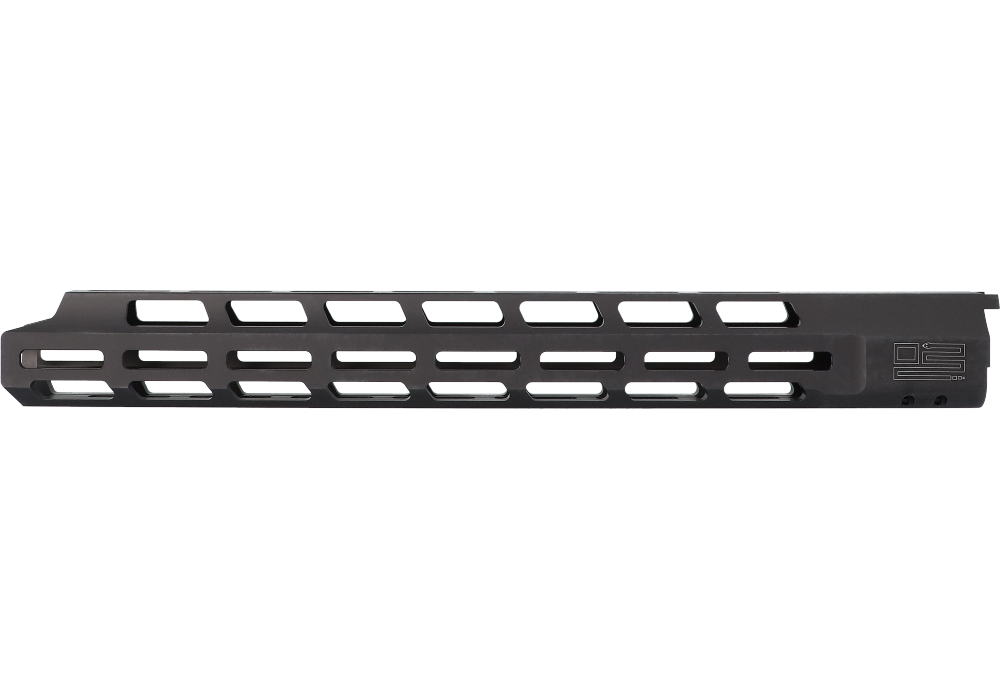
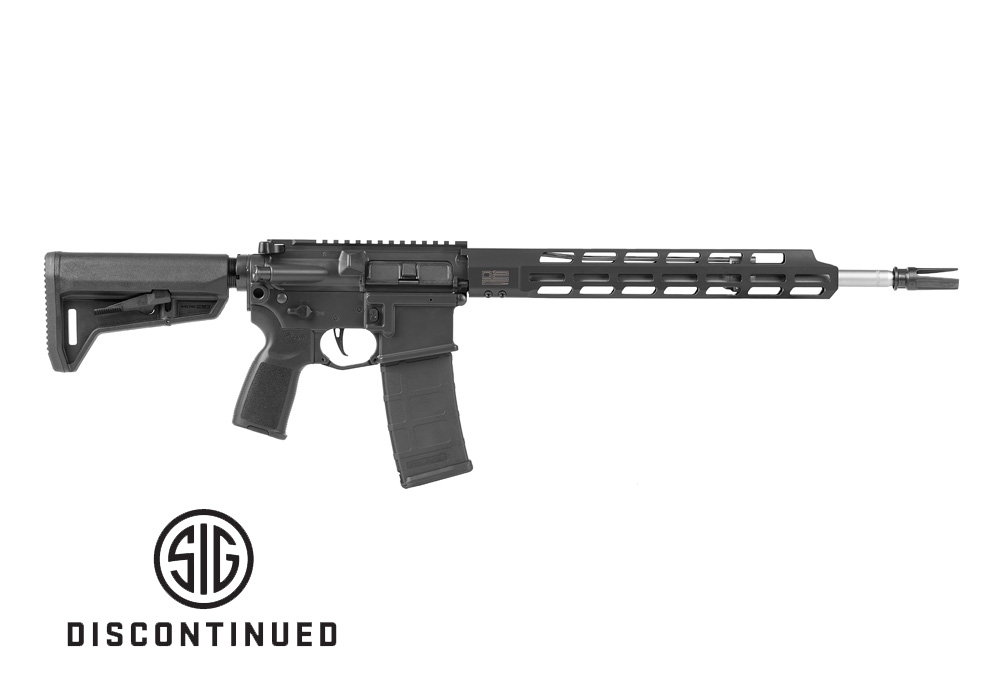
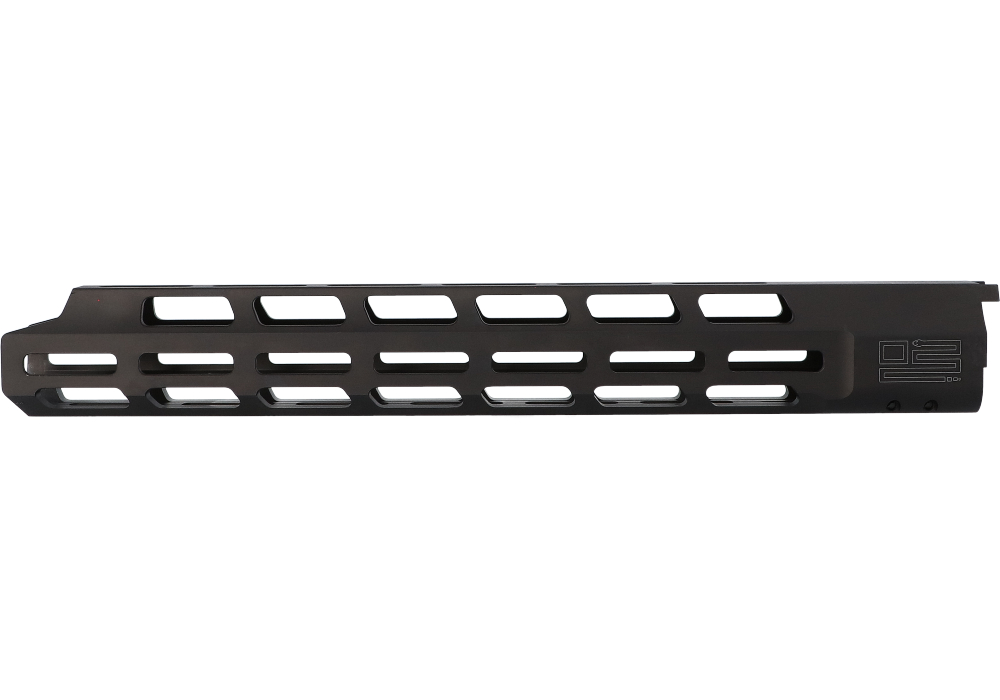
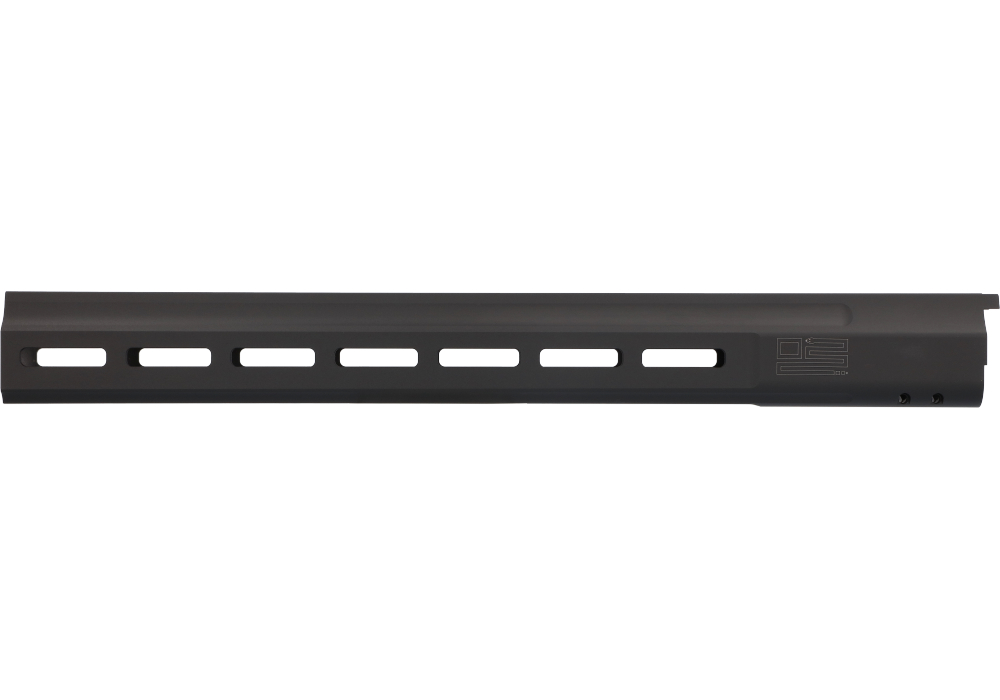
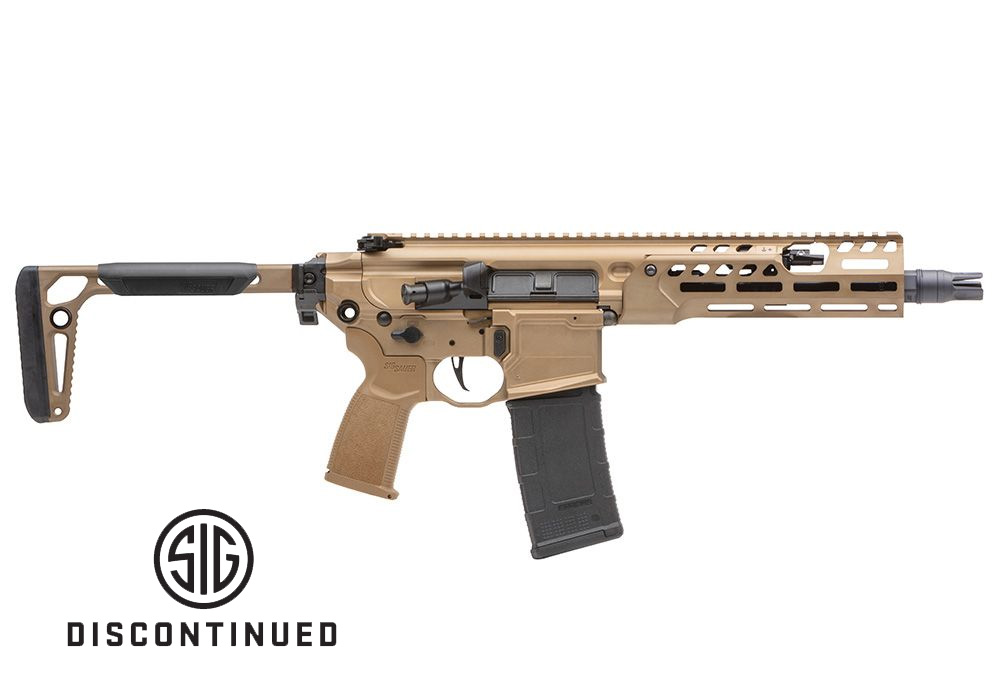
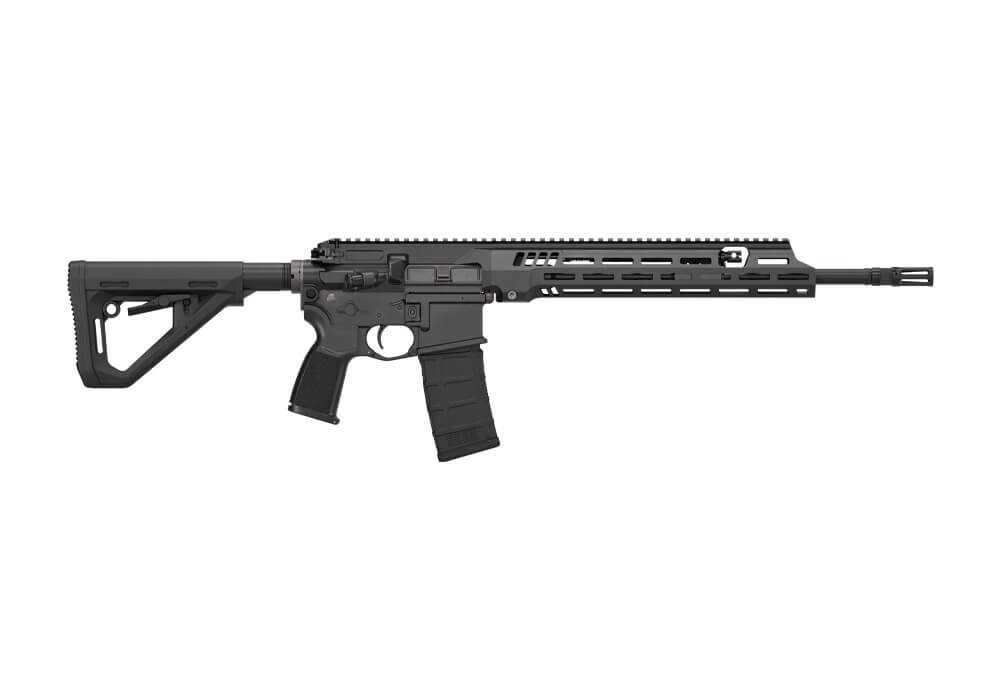
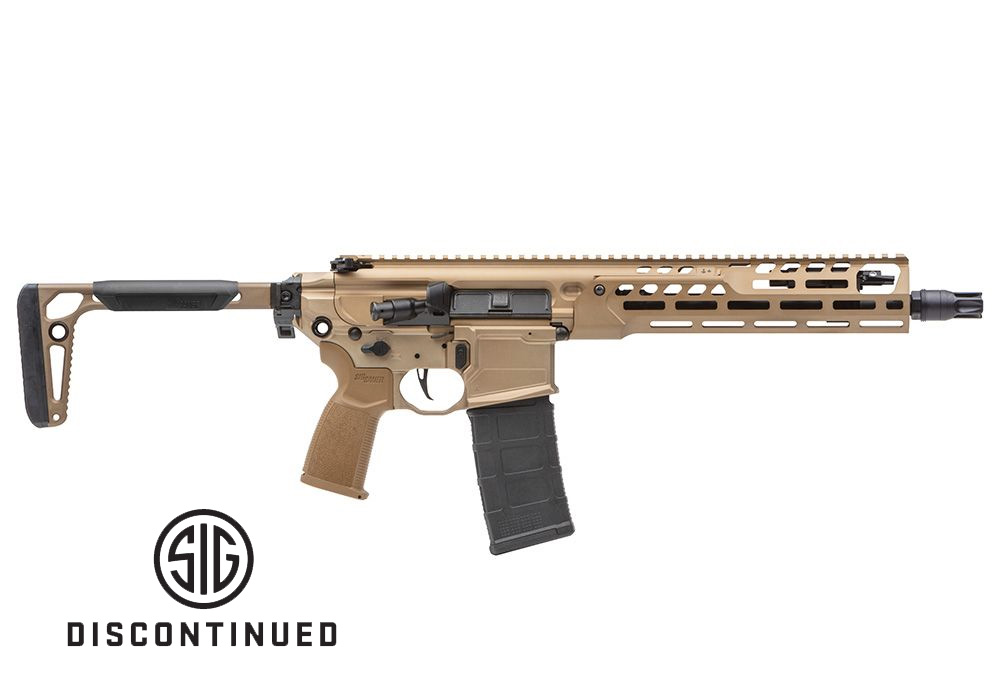
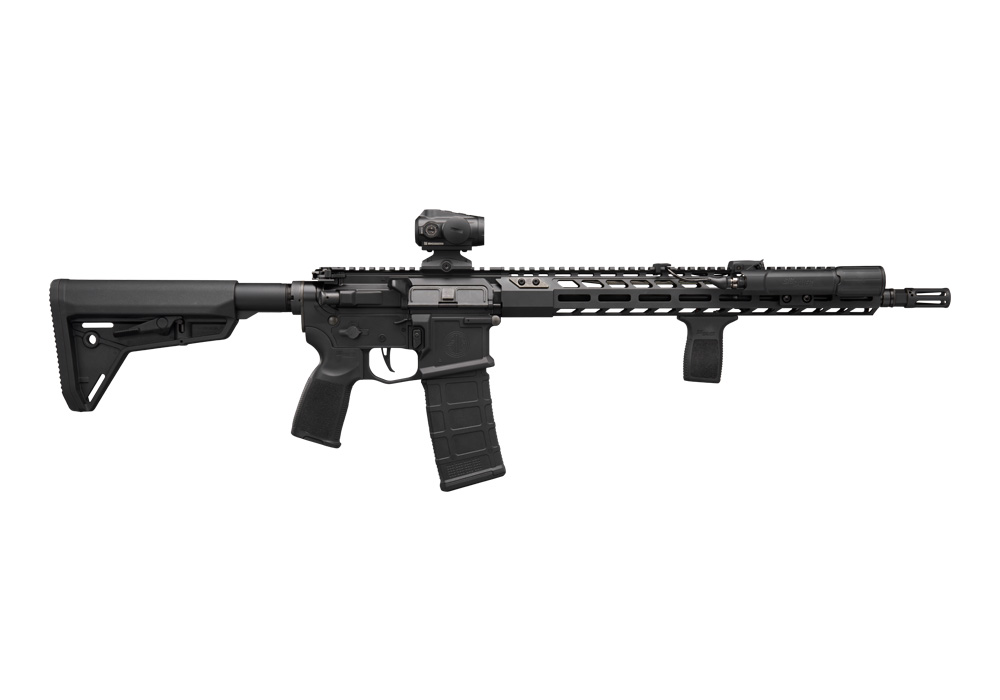
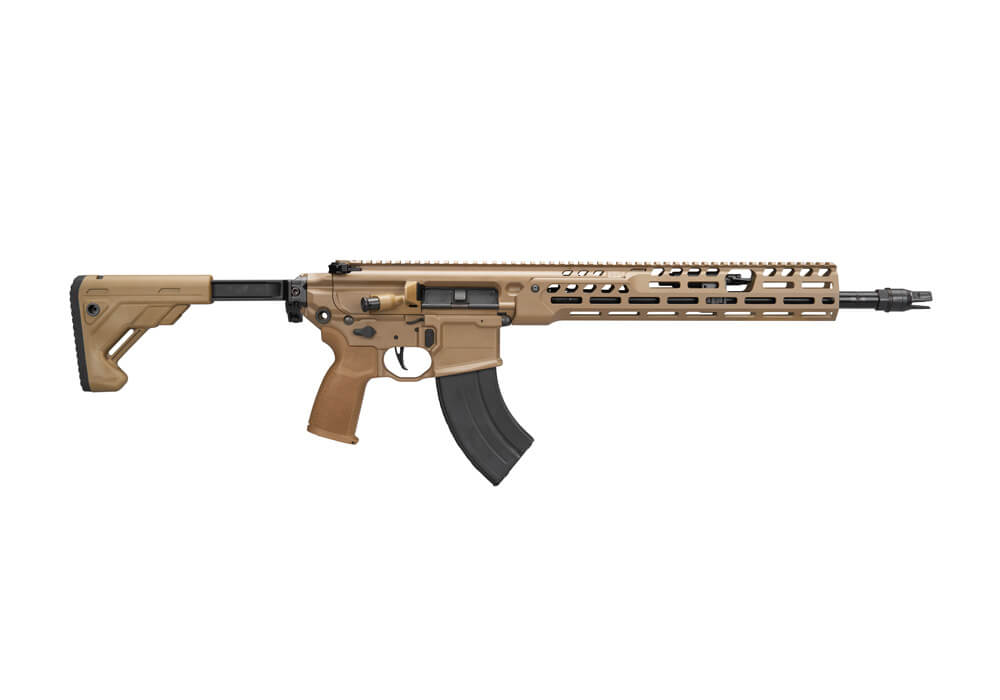
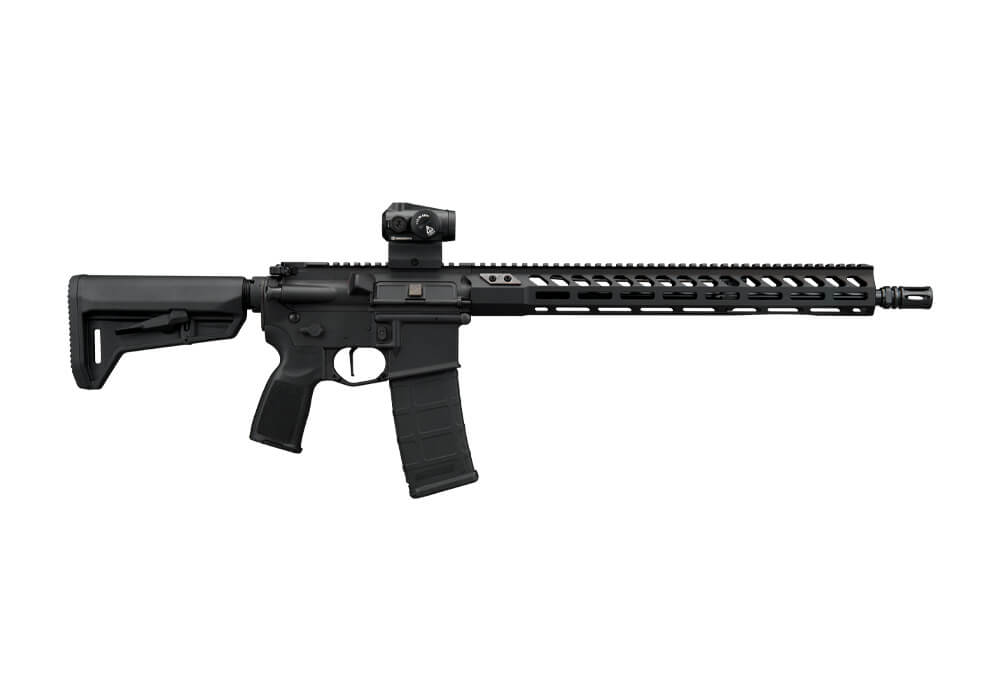
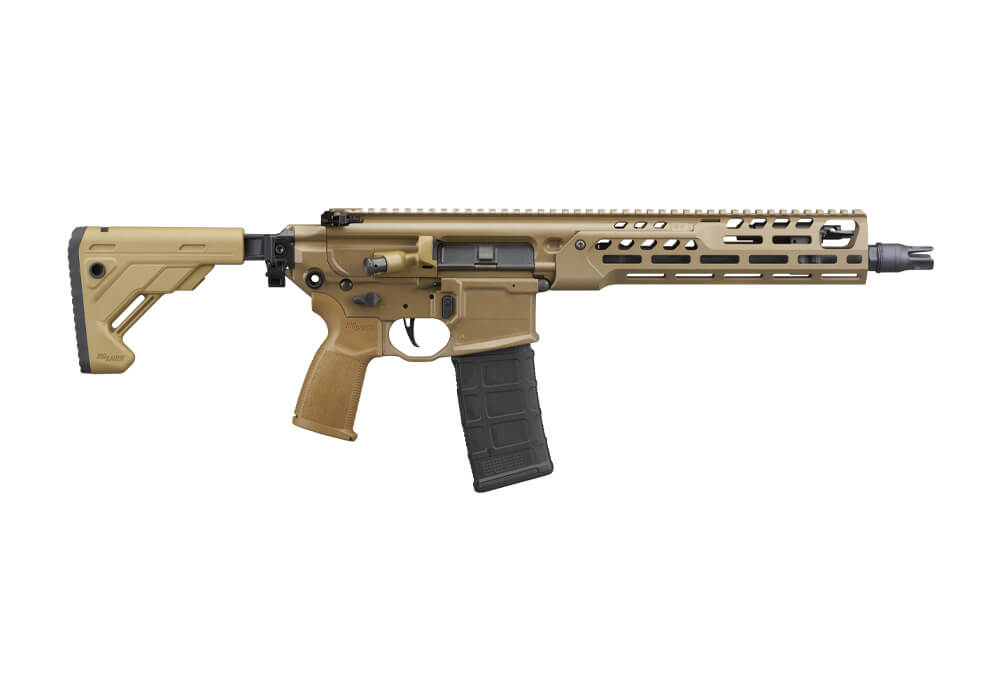
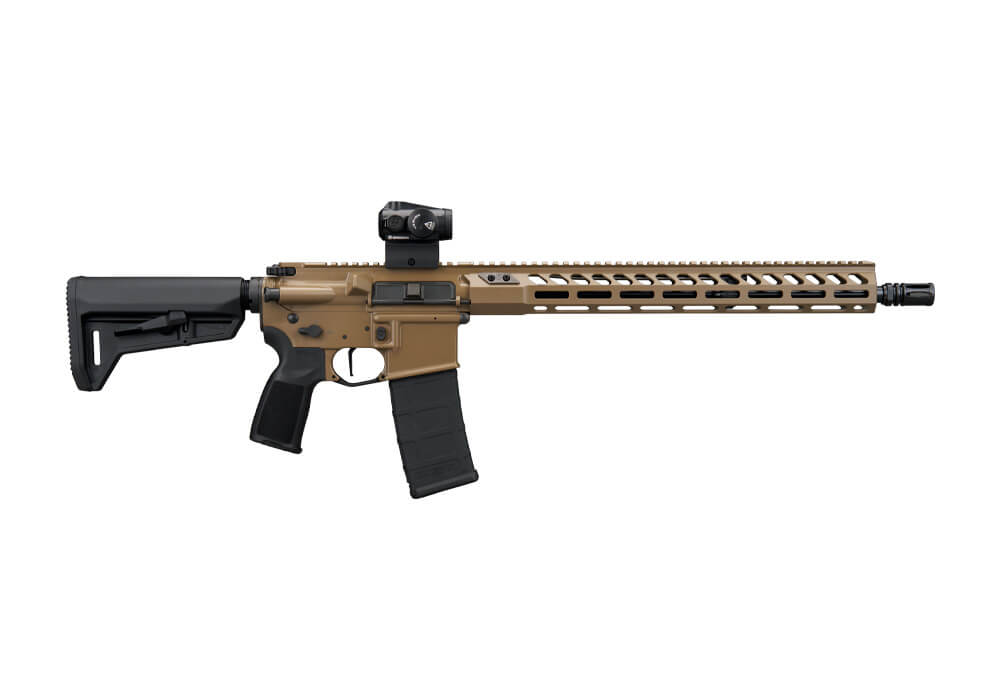
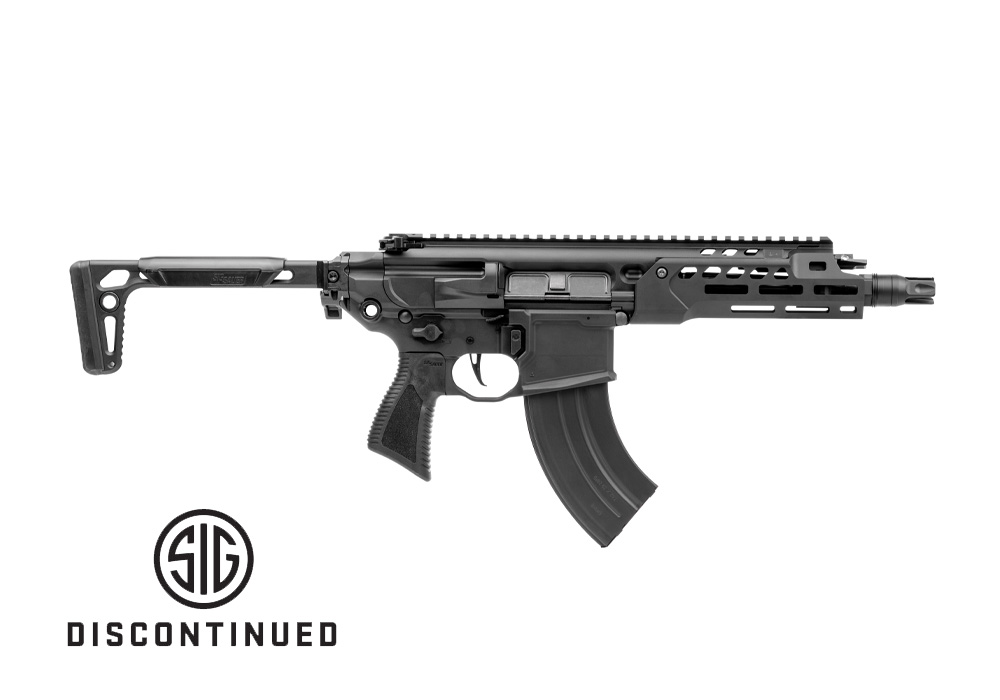
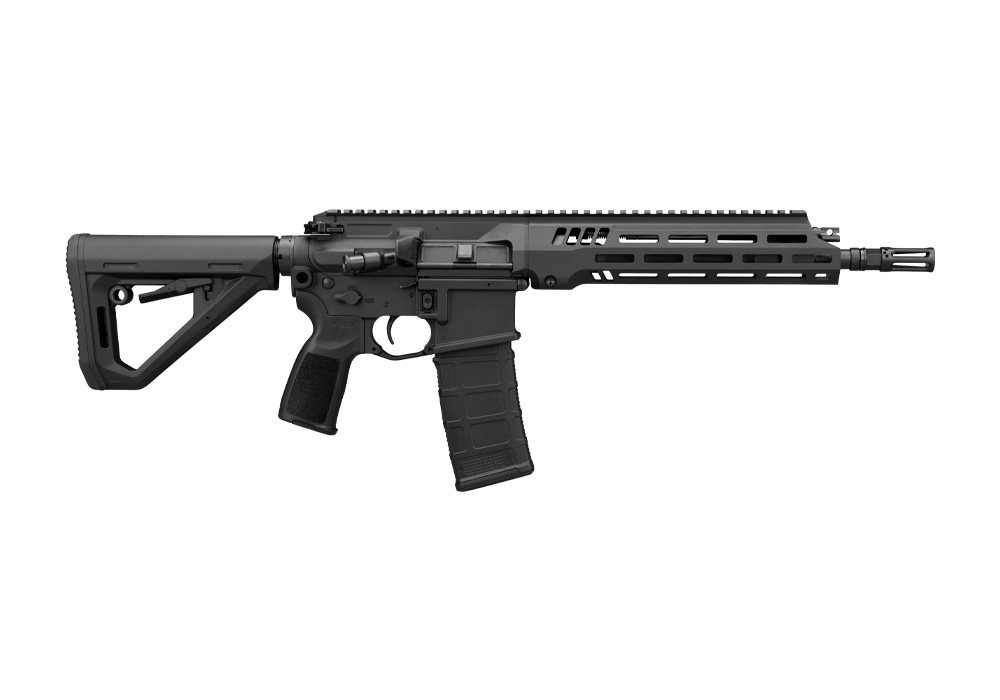
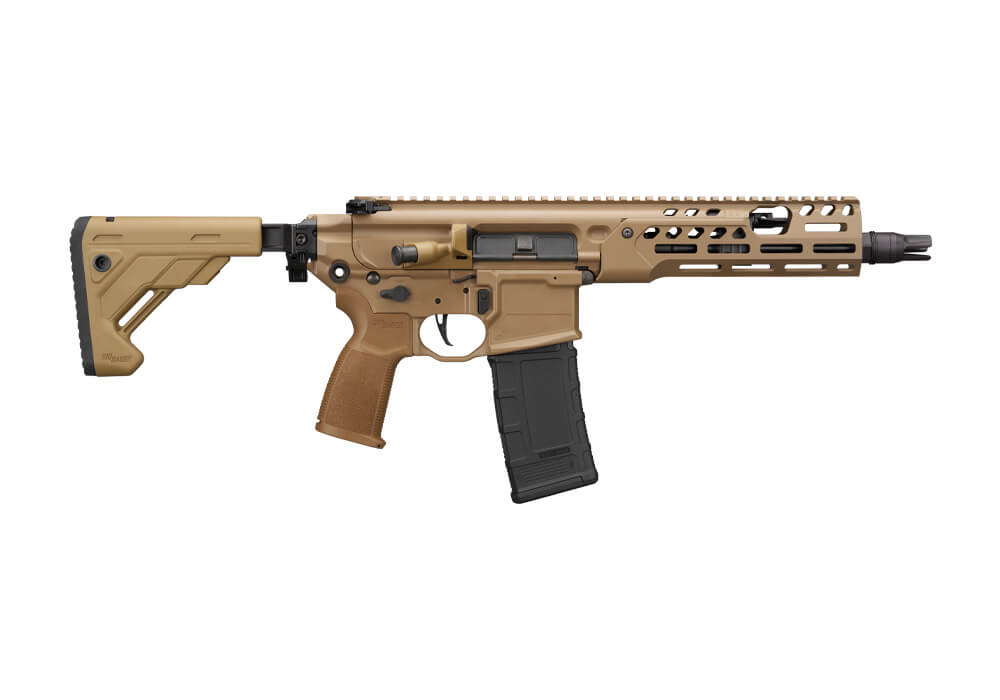
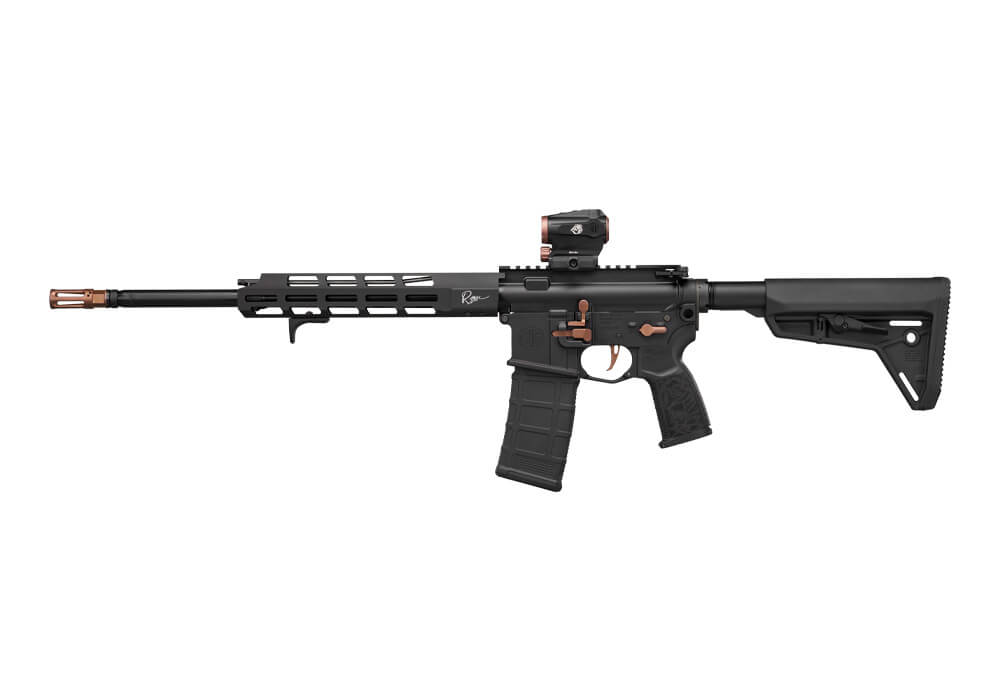
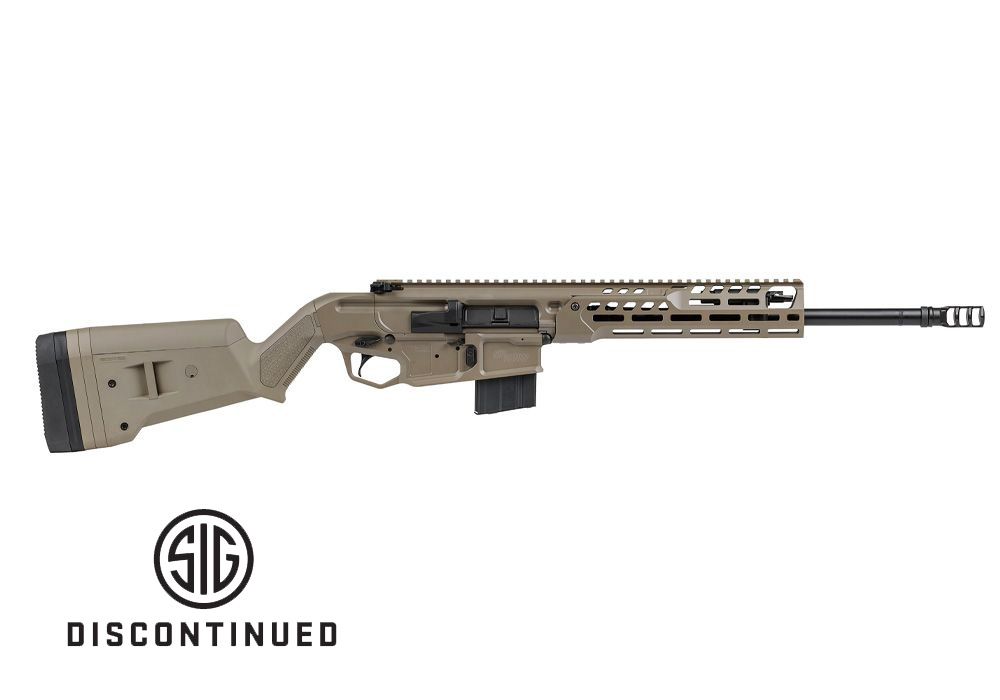
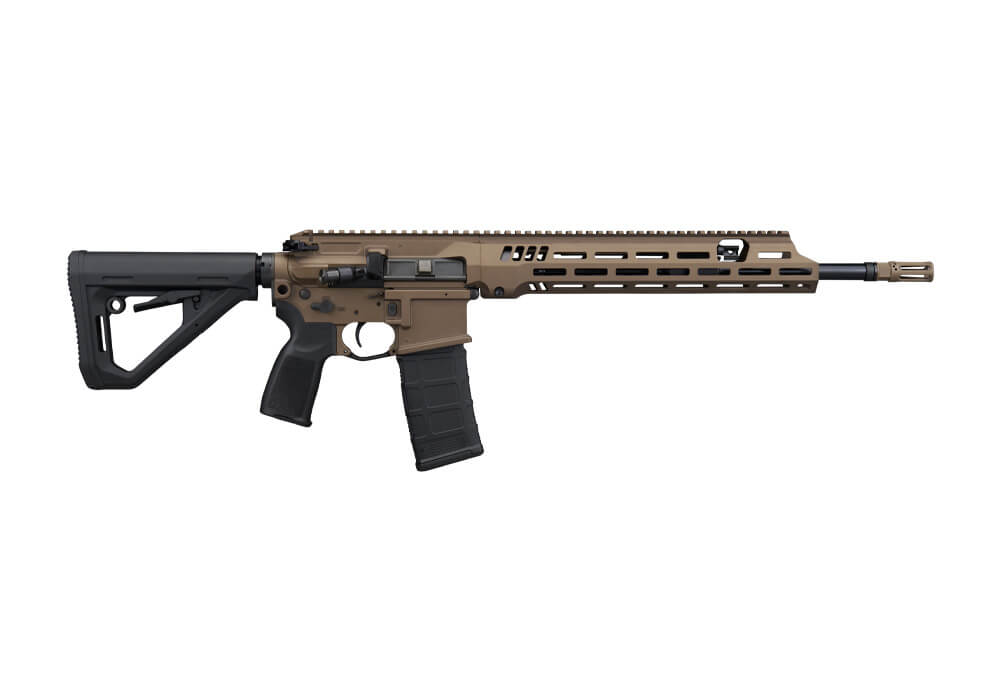
M-LOK handguard semi-automatic rifles feature a fore-end with standardized slots that accept compatible accessories without requiring raised rail sections along every surface. The handguard surrounds part of the barrel and provides a gripping surface, while the M-LOK interface offers attachment points within its recessed openings. This approach leaves much of the exterior relatively smooth, giving these rifles a different feel from designs covered in continuous rails. M-LOK describes the accessory interface, not the rifle’s operating system, caliber, or overall dimensions; a semi-automatic rifle fires one round with each separate trigger pull. Within this category, differences in handguard construction, profile, and length can be just as noticeable as differences elsewhere on the rifle. Aluminum is common because it combines relatively low weight with structural rigidity, and machined openings can reduce bulk while allowing airflow around the barrel. Some designs have an uninterrupted top rail, while others use shorter rail sections or different upper profiles. Neither the presence of slots nor a similar exterior shape establishes that two handguards are interchangeable. For everyday handling, the details are tangible: a rounded underside feels different in the palm than a flatter, more angular profile, and a narrow fore-end presents a different grip circumference than a wider one. Smoothly finished edges, consistent surface texture, and comfortable transitions between surfaces contribute to how the rifle feels during lawful sporting use. A lightweight appearance does not tell the whole story, either. Wall thickness, attachment design, material specification, and the weight of the complete rifle all matter. The handguard also should not be mistaken for a heat shield that remains comfortable indefinitely; it can become hot during firing. These characteristics give M-LOK-equipped rifles their appeal as adaptable sporting firearms, with a relatively uncluttered exterior and room for compatible equipment where the manufacturer permits it.
Fit is a defining consideration because an M-LOK interface standardizes accessory attachment, not the connection between every handguard and every rifle. Receiver geometry, barrel profile, operating components, and the manufacturer’s mounting arrangement influence compatibility. Handguard length is another separate measurement: two rifles with similar barrel lengths can have noticeably different amounts of fore-end coverage and exposed barrel. Manufacturer specifications provide the relevant reference for those relationships, rather than appearance alone. Free-floating handguards are supported without contacting the barrel along their length, while other configurations use different support arrangements. That distinction describes construction, but it is not a standalone promise of precision, reliability, or suitability for a particular activity. The complete firearm, ammunition compatibility, maintenance, and the individual shooter remain relevant. Material and finish deserve equally close attention. Aluminum alloys and surface treatments vary, and a dark exterior does not identify a particular alloy or protective process. Anodized finishes are common on aluminum handguards and help resist surface wear and corrosion, though contact with hard objects can still leave marks. The edges of slots, the underside of the fore-end, and areas that touch a rest or carrying case often show ordinary use first. A uniform finish and cleanly machined openings contribute to the overall quality of the assembly, while visible cracks, distortion, or movement warrant professional inspection. Care generally centers on the firearm manufacturer’s instructions, including approved cleaning products and inspection intervals. Before cleaning or inspection, the rifle should be unloaded and verified clear, with ammunition kept away from the work area. Residue can collect around openings and attachment points, and aggressive chemicals or abrasive tools may damage protective finishes. A soft cloth and manufacturer-approved cleaning materials are preferable to improvised treatments. Any looseness, damaged hardware, or uncertainty about the handguard’s attachment belongs with a qualified gunsmith rather than an improvised repair. Proper care preserves both the finish and the condition of the underlying assembly.
For recreational target shooters and owners who value a straightforward, modular layout, these rifles offer a balance of familiar handling surfaces and flexible accessory compatibility. A range session at a bench highlights different qualities than carrying a cased rifle between storage and a shooting facility: the underside’s shape affects how it rests on an approved support, while overall dimensions influence case fit and transport convenience. Comfort also depends on the relationship between the fore-end, stock, and grip, not simply on how slim the handguard looks in a photograph. The most useful product descriptions distinguish the handguard’s length and material from the rifle’s overall length and weight, since those measurements answer different questions. Accessory compatibility is similarly specific. An M-LOK designation indicates the interface type, but a compatible accessory still needs adequate clearance and approval for the particular application. An uncluttered handguard can remain useful without equipment attached to every opening; its shape, finish, and secure fit are important on their own. For a related category centered on exterior finish and this attachment system, Black Tactical Rifles With Mlok Handguard provides a narrower browsing theme. Color is an appearance preference rather than evidence of a different operating system or a particular level of durability. Intended use, lawful ownership requirements, and the manufacturer’s specifications remain more meaningful distinctions. Experienced firearm owners may appreciate this category for sporting use, while someone considering a firearm as a gift should account for the recipient’s preferences, eligibility, secure storage arrangements, and applicable transfer laws. A firearm is a highly individual choice, and the correct fit involves more than an accessory interface. Responsible ownership includes appropriate instruction, eye and hearing protection during shooting, secure storage against unauthorized access, and maintenance according to the manual. Viewed as a complete package, an M-LOK handguard semi-automatic rifle is best understood through its construction, compatibility, handling, and intended lawful purpose—not through the number of accessories its fore-end can carry.