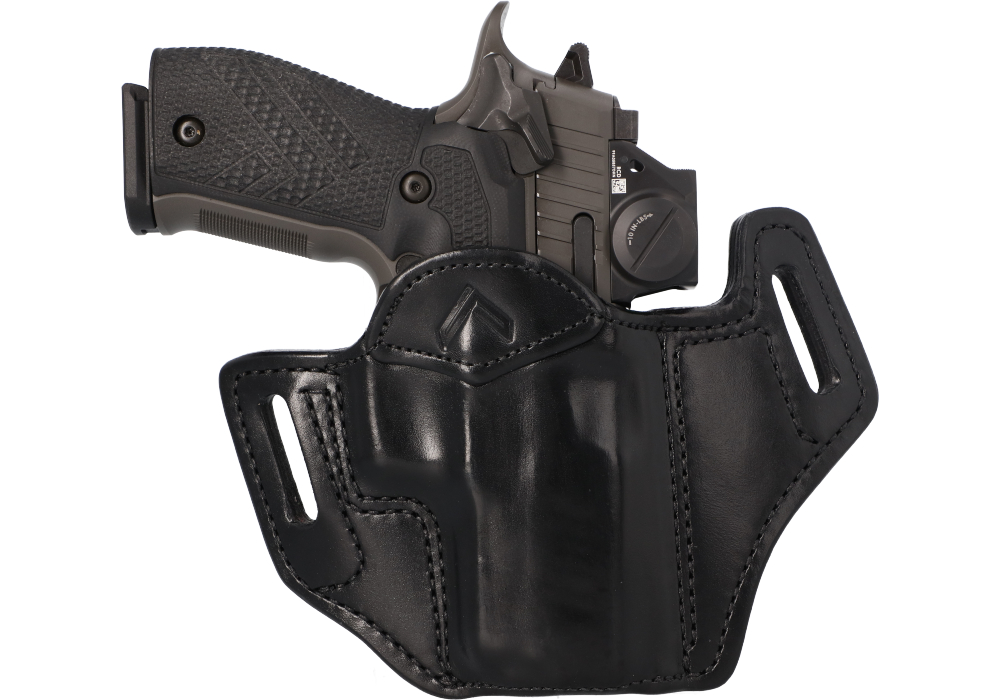
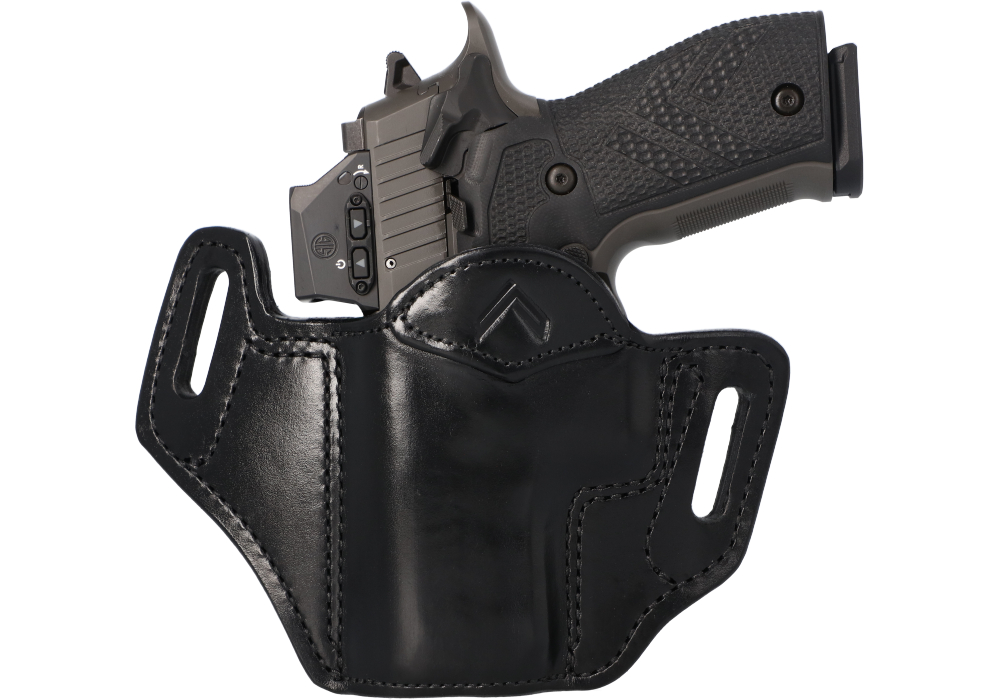
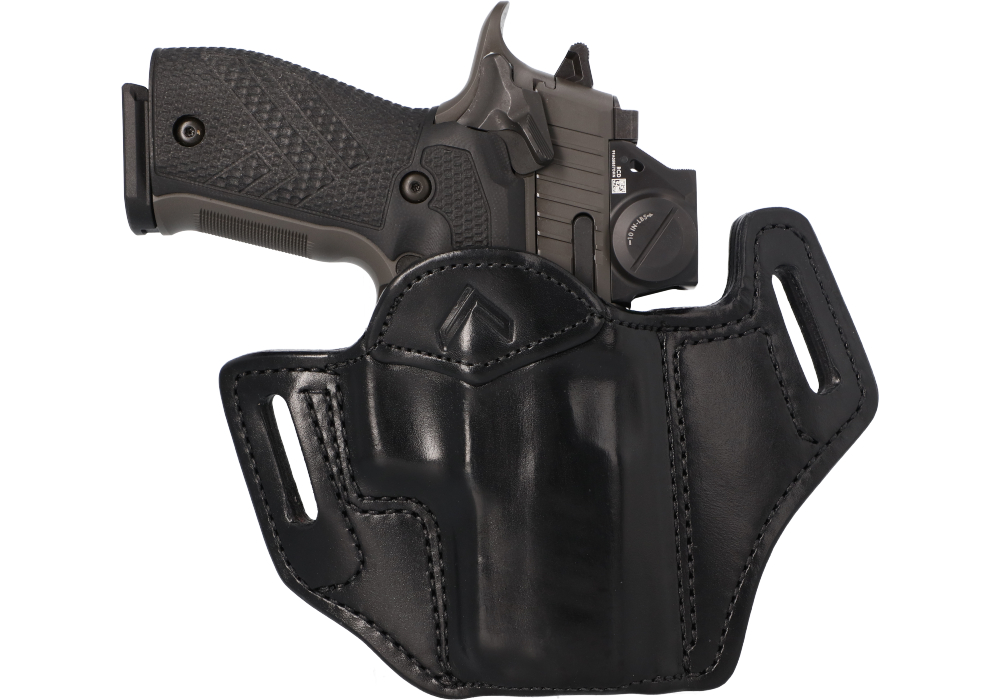
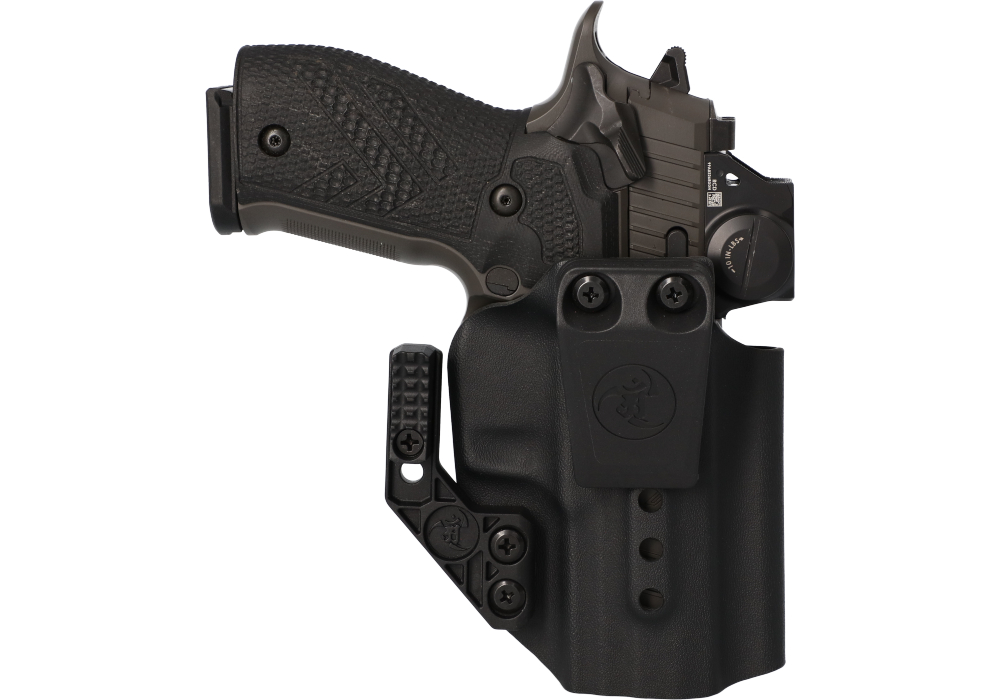
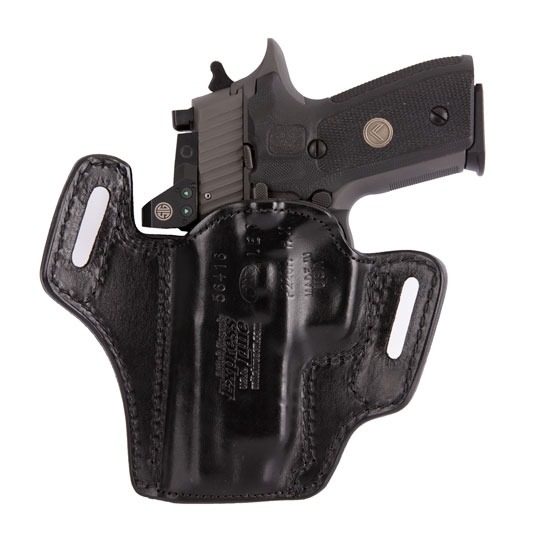
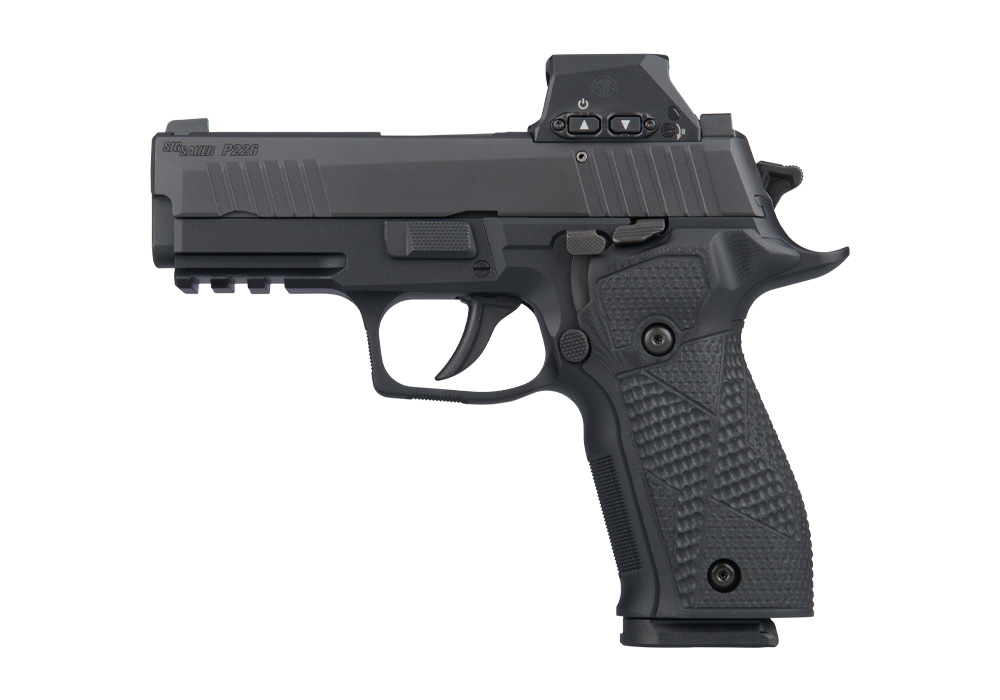
P226-XCarry Legion holsters are designed for owners who want a dependable way to carry, transport, or use a P226-XCarry Legion pistol while keeping the firearm properly positioned and protected. Choosing the right holster starts with an exact fit. The X-Carry Legion configuration has distinctive geometry, including an extended beavertail, a deeply undercut trigger guard, a full-length 1913 accessory rail, and broad ambidextrous controls. Because of these features, a holster made for a standard legacy P226 or a different P229 configuration may not provide the secure fit, complete trigger coverage, or consistent retention expected from a dedicated option. A holster should hold the pistol firmly without placing pressure on the controls, allow a smooth and deliberate draw, and return the firearm to the same position each time it is reholstered. The trigger guard should remain fully covered, and the fit should be checked with the pistol unloaded before regular use. Owners shopping for P226-XCarry Legion holsters may find inside-the-waistband, outside-the-waistband, appendix, leather, hybrid, and molded polymer designs, each offering a different balance of concealment, access, comfort, and durability. Inside-the-waistband styles can work well for discreet everyday carry under an untucked shirt, jacket, or overshirt, while outside-the-waistband holsters often provide easier access and a more open feel for range sessions, training, duty-style use, or concealed carry beneath a longer outer layer. Appendix carry designs commonly use a concealment claw or a similar feature to draw the grip closer to the body, while adjustable cant allows the angle to be tuned for the wearer’s preferred draw stroke. The best choice depends on body shape, clothing, belt construction, hand dominance, carry position, and the amount of time the holster will be worn.
Accessory compatibility deserves careful attention when comparing P226-XCarry Legion holsters. If the pistol is equipped with a slide-mounted red dot sight, the holster should have an optic cut that provides adequate clearance without interfering with retention or the draw. A light-bearing configuration also requires a holster molded for the specific weapon light, not merely a general opening intended to fit several accessories. Even lights with similar profiles can differ in length, switch placement, and contact points, so the exact pistol-and-light combination should be confirmed before purchase. The same care applies to suppressor-height sights, threaded-barrel configurations, and other modifications that may change the profile of the slide or front of the firearm. Retention may be passive, using the shape and tension of the holster body, or adjustable, allowing the user to fine-tune the amount of holding force. A secure holster should not allow the pistol to shift, rotate, or fall out during ordinary movement, yet it should not require excessive force to draw. Belt attachment is equally important: clips, loops, paddles, quick-release systems, and competition-style mounts each serve different purposes, and the attachment should match the belt’s width and stiffness. For concealed carry, a stable attachment point helps prevent printing and keeps the grip from tilting outward. For range or competition use, a more open design may make access faster and allow the wearer to practice repeated draws under controlled conditions. Leather can offer a traditional appearance and a gradually personalized feel, while molded polymer and hybrid constructions are often selected for their resistance to moisture, consistent shape, and straightforward maintenance. During the cooler months, heavier clothing can make an OWB setup easier to conceal, while lighter layers may favor an IWB or appendix arrangement with a slim profile. Regardless of season, inspect the holster regularly for loose hardware, worn attachment points, cracked material, or changes in retention.
A holster can be a practical addition for someone purchasing or receiving a P226-XCarry, particularly when the recipient already knows how and where they intend to carry it. It is also a useful gift for an experienced shooter who spends time at the range, attends structured training, or is refining a preferred everyday-carry setup. Since fit depends on details such as hand orientation, carry position, optic use, weapon-light selection, and belt style, a gift purchaser should confirm those specifications rather than relying on a general P226 label. For a new owner, a dedicated holster can help establish consistent habits from the beginning: keep the firearm unloaded while checking fit, verify that the trigger guard is covered, practice safe reholstering without forcing the pistol, and follow all applicable laws and range or training rules. A quality holster should support the way the owner actually lives. Someone who walks through a long workday may value a smooth interior edge, breathable backing, and a secure clip that stays in place when sitting or getting in and out of a vehicle. A recreational shooter may prioritize adjustable retention, an optic-ready opening, or a quick-release attachment for moving between the range and storage. A person who spends time outdoors may look for materials and hardware that tolerate dust, rain, and repeated cleaning, while a traditionalist may prefer the comfort and appearance of a well-finished leather design. Before carrying, the complete setup should be tested with the chosen belt and clothing, first while standing and then through ordinary movements such as sitting, bending, and walking. The pistol should remain stable, the holster should stay attached, and no part of the firearm should contact the trigger during normal use. Selecting P226-XCarry Legion holsters with these details in mind helps create a more comfortable, secure, and consistent setup for everyday carry, training, range practice, or thoughtful firearm-related gifting.