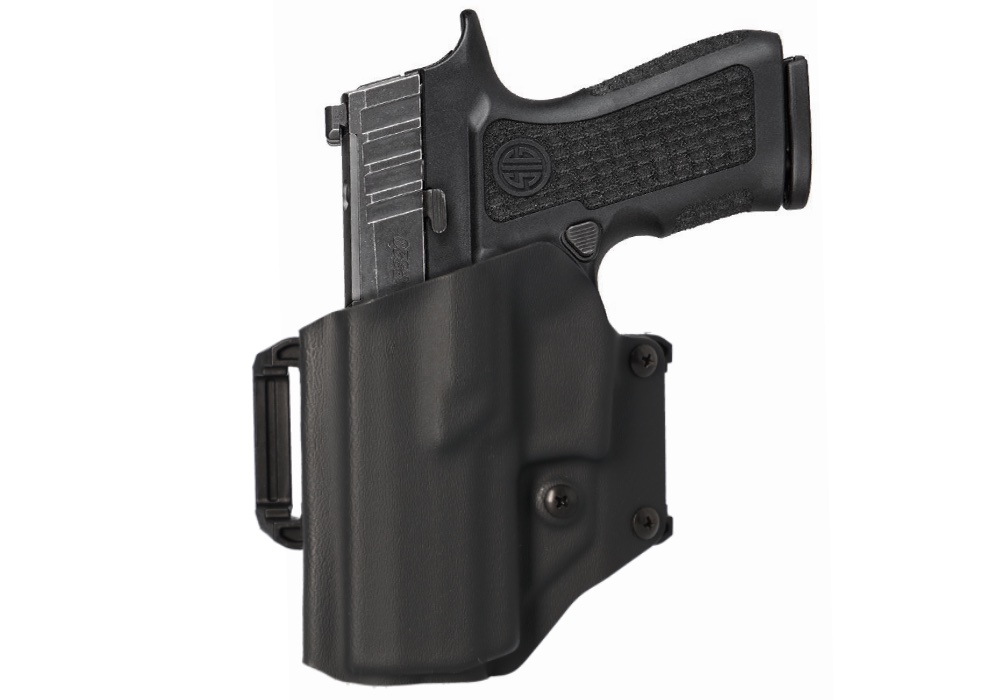
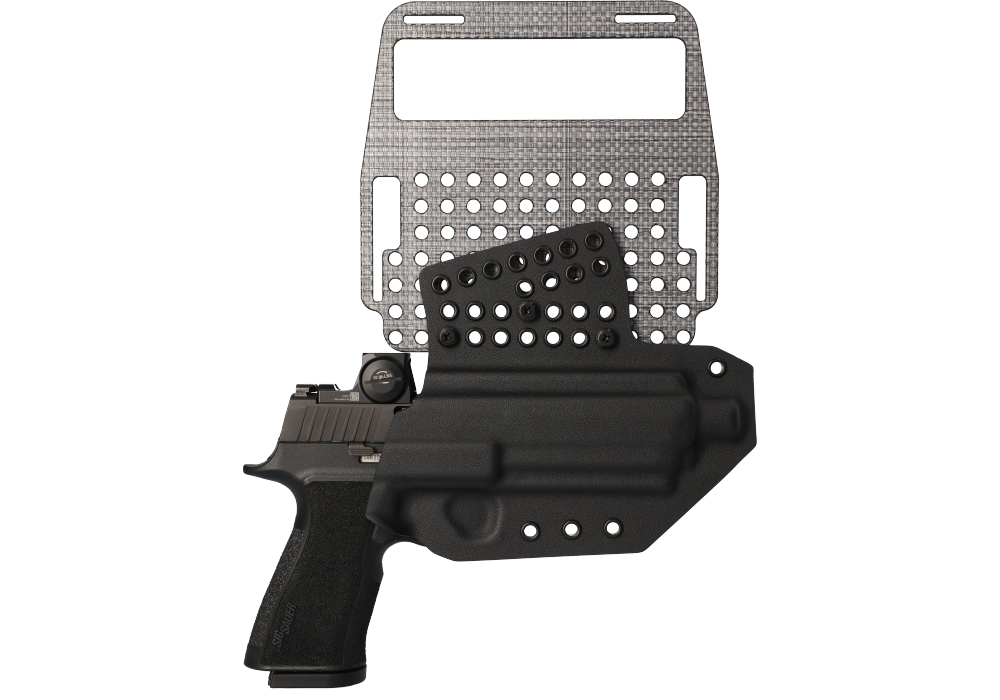
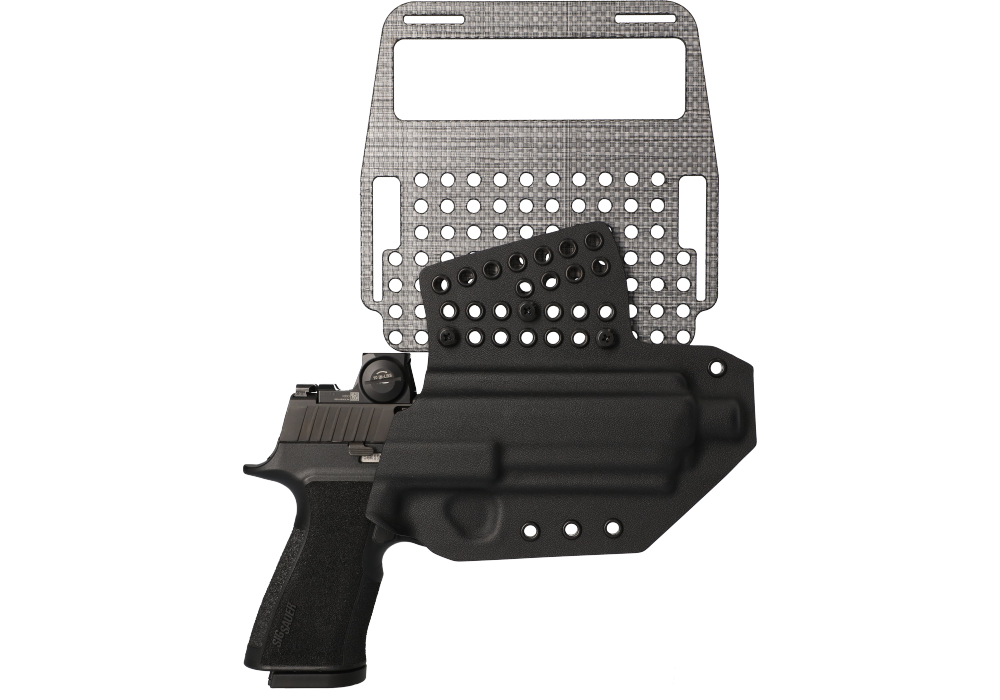
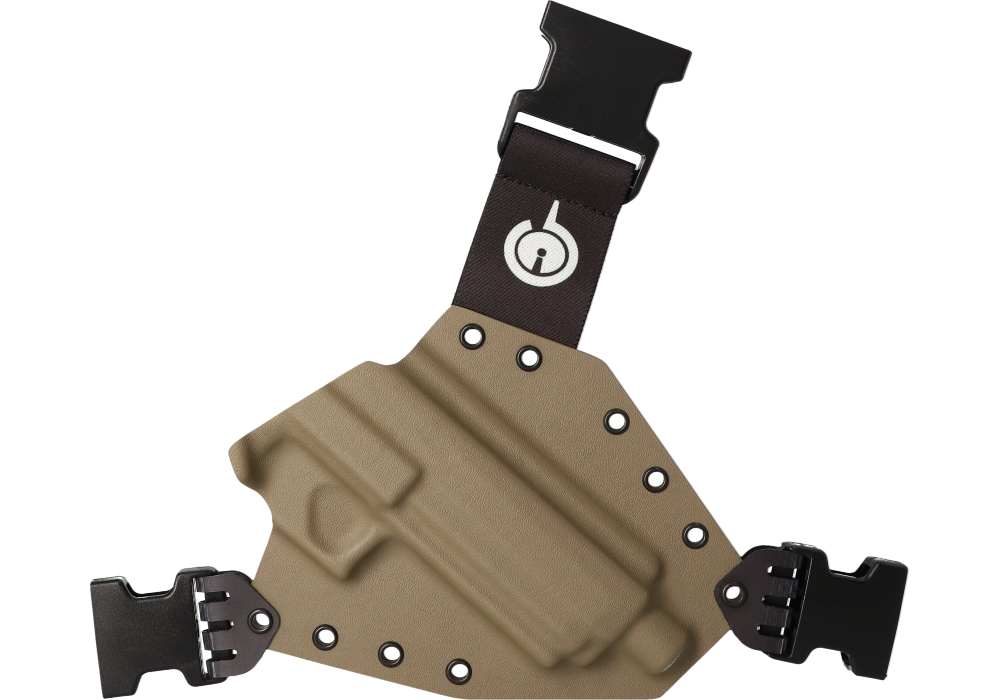
P320-XTEN OWB holsters provide a practical way to carry a full-size pistol outside the waistband while keeping the firearm accessible, supported, and protected during everyday movement. Unlike concealed-carry equipment designed to disappear beneath clothing, an outside-the-waistband holster is often chosen for its straightforward access, stable positioning, and ease of use on the range, during training, or as part of a duty-oriented setup. The larger frame and extended sight radius of the P320-XTEN make a properly fitted holster especially important. A good fit should hold the firearm securely without excessive movement, cover the trigger guard completely, and allow a smooth draw when the carrier has established a consistent grip. Retention is another central consideration. Depending on intended use, shoppers may prefer passive friction retention for a clean, uncomplicated presentation or an adjustable, active retention system for additional security during movement, outdoor work, training drills, or other situations where a holstered firearm may be exposed to more activity. Look closely at the holster’s listed compatibility before purchase, including whether it accommodates the specific configuration, optic, threaded barrel, or weapon light being used. Even small differences in slide profile, accessory fit, or sight height can affect how a firearm seats in the holster. A well-matched setup should feel deliberate rather than forced, with the pistol fully seated and the retention system operating as designed.
Comfort and stability matter just as much as basic fit, particularly when a full-size pistol will be worn for extended periods. OWB holsters may be positioned at the hip, behind the hip, or in a more forward cant depending on the wearer’s body type, clothing, training goals, and local requirements. A slight forward or rearward angle can change how naturally the hand reaches the grip, while ride height influences both draw mechanics and clearance from a belt or outer layer. During the cooler months, jackets, work shirts, and heavier layers can affect access and may place additional pressure against the holster, so it is worth checking that clothing does not interfere with the grip or retention controls. Belt compatibility is equally important. A sturdy belt with the correct width and attachment style helps prevent sagging, shifting, and unwanted movement, while a secure mounting system can make the difference between a holster that stays planted and one that requires constant adjustment. Materials also shape the experience. Polymer designs are often valued for their weather resistance, consistent form, and easy maintenance, while leather and hybrid constructions may appeal to those who prefer a traditional feel and a more molded fit over time. Regardless of material, inspect the holster periodically for cracks, loose hardware, damaged clips, worn attachment points, or changes in retention. Keeping the holster clean and free of grit helps preserve its function, especially after range sessions, dusty outdoor use, or exposure to rain and cold conditions.
A P320-XTEN OWB holster can be a thoughtful accessory for a new firearm owner, a frequent range visitor, a competitive shooter, or someone assembling a more complete training setup. It may also suit a recipient who already owns the pistol but has been relying on an improvised or uncomfortable carrying method; pairing the holster with a compatible belt, training ammunition, or safe storage equipment can make the gift feel useful rather than purely decorative. Before giving any firearm accessory, confirm the recipient’s exact configuration and preferences, since optic cuts, light-bearing designs, retention features, and mounting systems are highly personal choices. Shoppers comparing this category with holsters for more compact pistols may also find it helpful to browse P365XL OWB Holsters to see how frame size and carry purpose influence outside-the-waistband design. Whichever configuration is selected, responsible use begins with following all applicable federal, state, and local laws, as well as the firearm manufacturer’s safety guidance and the holster maker’s installation instructions. Practice should begin slowly with an unloaded firearm in a safe environment, confirming that the pistol seats fully, the retention system releases as intended, and the draw and reholstering motion remain controlled. Regular dry practice, conducted only after verifying the firearm is unloaded and ammunition is stored separately, can help build consistency without rushing. On the range, live-fire training can add movement, outerwear, and realistic belt positioning in a controlled setting. With the right fit and careful setup, a P320-XTEN OWB holster becomes a dependable part of a carry system—one that supports confident handling through changing routines, cooler weather, and the everyday demands of responsible ownership.