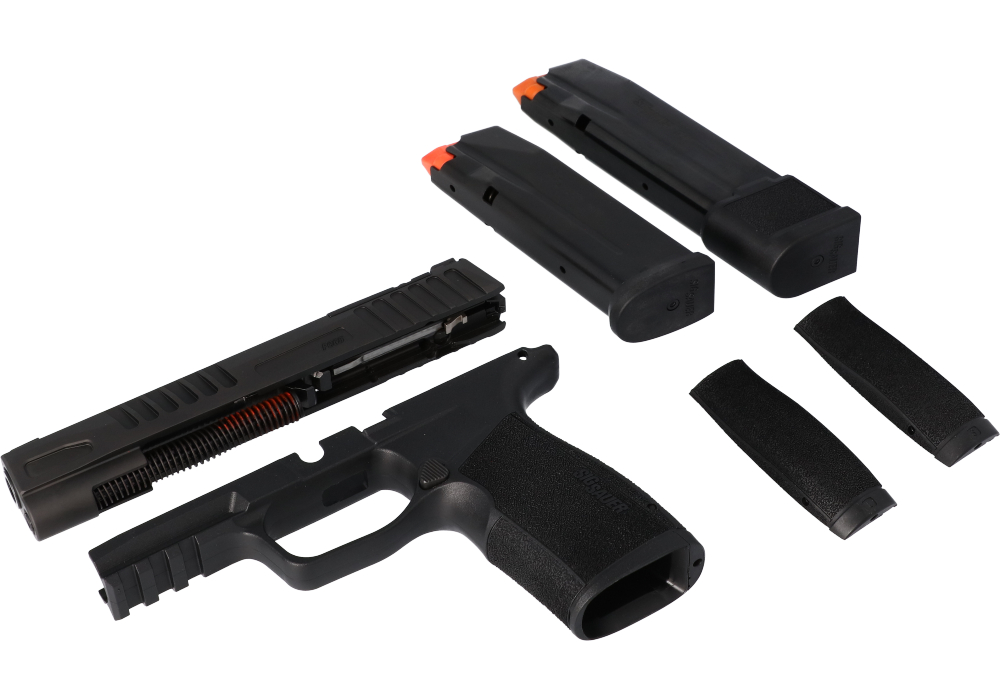
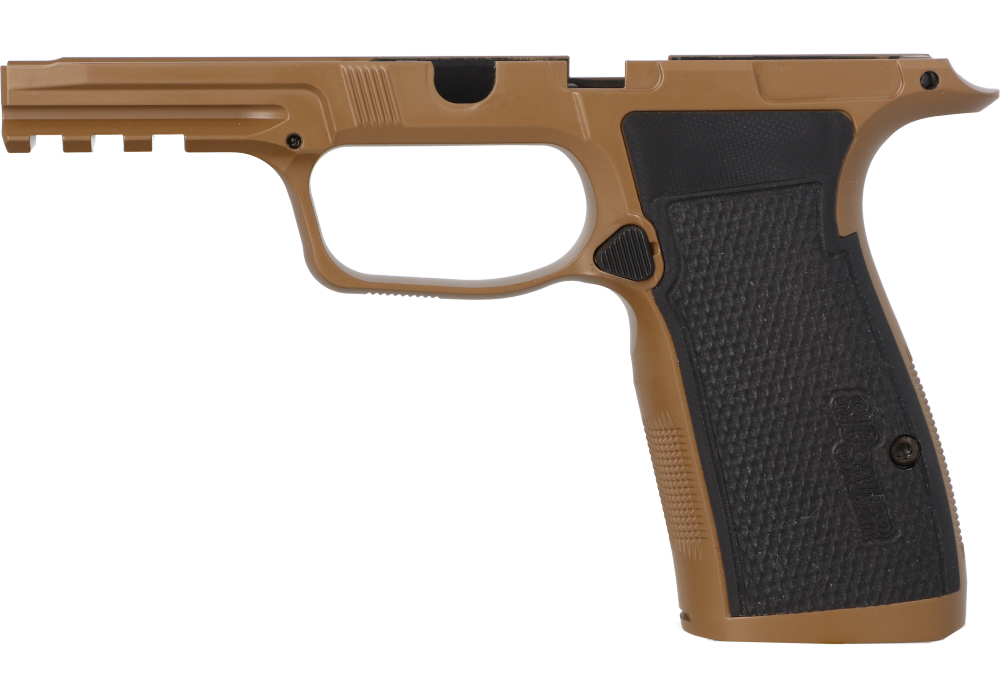
P365 upgrades include grip modules, sighting accessories, trigger-related components, magazines, holsters, and maintenance accessories that support a more personal fit between the pistol and its owner. Across these categories, the most useful distinction is not simply appearance, but how a component suits the pistol’s configuration and intended use. An owner who spends most of their time at an indoor range may value a clearly defined sight picture and a grip surface that remains comfortable through repeated practice. Someone selecting accessories for lawful everyday carry may place greater emphasis on secure retention, unobtrusive contours, and comfort against clothing. These priorities can overlap, but an accessory that feels right at the shooting bench may not be equally comfortable when worn for several hours. Grip shape, surface texture, and the relationship between the hand and controls all contribute to that difference. A textured surface can offer a more defined contact point, while a smoother contour may feel less abrasive against the body. Neither characteristic tells the whole story without considering hand size, finger reach, and the way the pistol sits in its holster. Sighting accessories also deserve attention as part of the complete setup, with visibility, dimensions, and compatibility carrying more weight than appearance alone. Optical sights introduce additional considerations, including mounting requirements, battery care, and clearance within an existing carry arrangement. Magazines and related accessories require equally careful matching to the pistol’s configuration and applicable legal requirements. P365 upgrades are therefore best understood as a group of complementary product categories rather than a single universal package. Their relevance comes from the details: a comfortable point of contact, an appropriate sighting arrangement, a secure holster fit, or a maintenance accessory suited to routine care. A coherent setup preserves the qualities an owner already appreciates while addressing a clearly identified preference, without assuming that every component needs to change.
Compatibility is central to selecting P365 accessories because a shared platform name does not mean every component fits every configuration. Differences in slide dimensions, grip geometry, mounting interfaces, and installed accessories can affect whether parts work together as intended. Product specifications and manufacturer compatibility information are essential references, particularly when an existing pistol already includes changes from its original configuration. A holster, for example, must accommodate the actual pistol and accessory combination, not merely a broadly similar outline. Secure retention, proper coverage of the trigger area, and compatibility with the intended belt or attachment system are important considerations for carry equipment. Materials influence comfort and service life as well. Polymer components can provide shaped contours and textured contact surfaces, while metal components may use protective finishes intended to resist wear and corrosion. The material name alone does not establish quality; finish consistency, dimensional accuracy, and the suitability of the design for its intended role matter just as much. Edges that contact the hand or clothing should feel appropriate for prolonged use, and surfaces exposed to regular handling should tolerate care consistent with the manufacturer’s instructions. Small details become noticeable over time: a rough contact point during a long range session, a prominent contour beneath a cover garment, or a finish that needs more attention after frequent handling. Trigger-related accessories bring another set of considerations because they interact with essential operating and safety functions. The P365 Trigger Enhancements category provides a focused place to consider these components, with compatibility and manufacturer guidance remaining central to any selection. Trigger shape and contact surface can influence subjective comfort, but appearance and advertised feel are not substitutes for proper fit or professional evaluation. Components affecting operating or safety functions warrant attention from a qualified professional, with all original safety features preserved. Accessories work best as parts of a compatible system, rather than isolated purchases selected without regard to the rest of the pistol.
Durability and care help determine whether an upgrade remains useful beyond its first few range visits. Frequent handling exposes contact surfaces to perspiration, skin oils, lint, and ordinary abrasion, while regular practice introduces residue that requires appropriate cleaning. Protective finishes and durable materials still need routine inspection and care; they do not eliminate the need to follow the pistol and accessory manufacturers’ maintenance instructions. Cleaning solutions, lubricants, brushes, and cloths should be suitable for the surfaces involved, especially where polymer, coated metal, and optical lenses are present in the same setup. An optical lens calls for different care than a textured grip, and an aggressive cleaning method can harm a surface that otherwise tolerates regular use well. Inspection is also an opportunity to notice unusual wear, damage, or changes in fit before they become larger concerns. Any questionable condition belongs with the manufacturer or a qualified professional rather than an improvised repair. For owners who practice regularly, a well-chosen accessory can support a familiar, comfortable setup across repeated visits, while suitable storage and transport accessories help protect equipment between outings. Gift selection calls for the same attention to detail. A firearm owner’s preferred grip feel, holster arrangement, and sighting setup can be highly personal, and the exact configuration matters more than a general interest in the platform. Maintenance and storage accessories may be appropriate when their suitability is known, while configuration-specific components require a clear understanding of the recipient’s equipment and preferences. Safe, secure storage remains important regardless of which upgrades are selected, particularly in households where other people could gain access. Ultimately, the strongest reason to choose a P365 upgrade is a practical one that can be described plainly: better personal comfort, a compatible replacement, clearer visibility for the individual user, or equipment that supports consistent care. Thoughtful selection keeps those needs in focus and treats fit, durability, and responsible ownership as lasting priorities rather than afterthoughts.