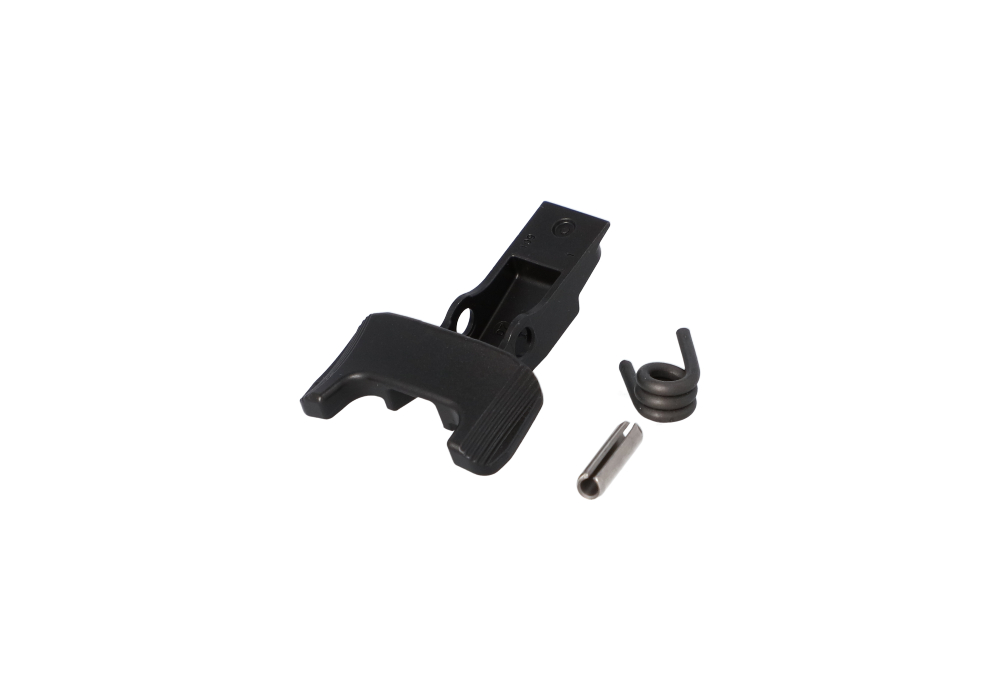
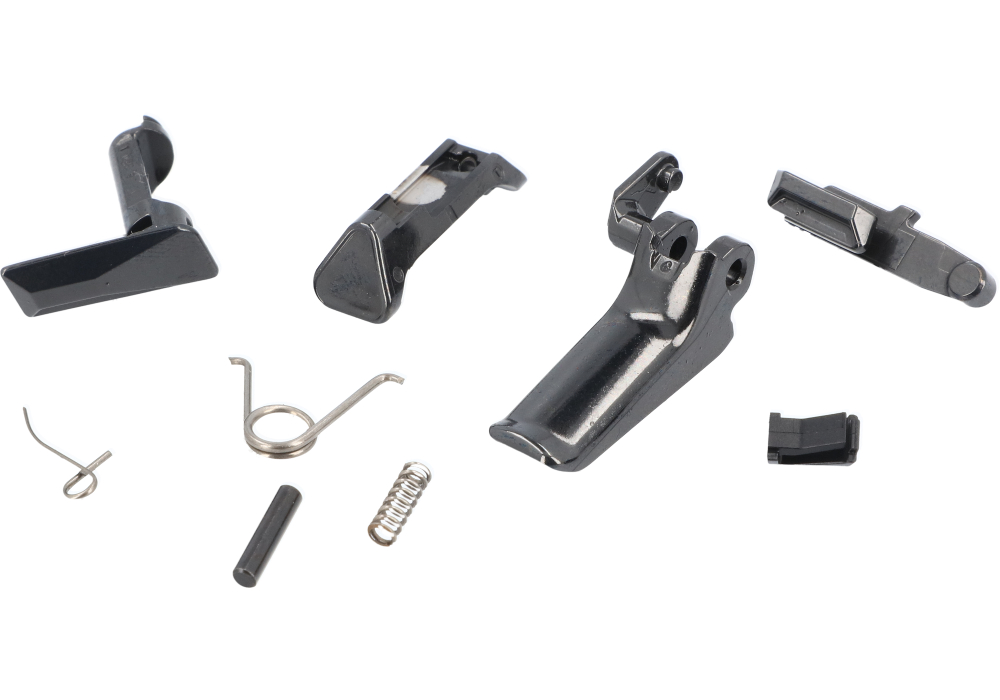
Pistol release springs provide the tension that helps a pistol’s magazine catch remain engaged until the release control is pressed. Commonly called magazine catch springs or magazine release springs, these small components support secure magazine retention and the return of the release mechanism to its resting position. The catch engages the magazine; the spring supplies the tension the mechanism needs to function as designed. Although the part is small, its fit and condition matter to the feel and operation of a frequently used control. A magazine release spring serves a different purpose from a recoil spring, trigger spring, or slide catch spring, so those terms should not be treated as interchangeable when selecting a replacement. For shoppers comparing terminology, Magazine Release Springs identifies the same general component category more precisely. These parts are relevant to owners maintaining a pistol, qualified armorers servicing firearms, and recreational shooters keeping an established maintenance routine. Their value is practical rather than cosmetic: the correct replacement supports the original relationship between the magazine catch, release control, and surrounding frame or grip assembly. During ordinary handling, a release button should behave consistently with the pistol manufacturer’s specifications, but its feel alone cannot establish whether the mechanism is in serviceable condition. A spring is only one part of that assembly, and concerns involving magazine retention can also involve the catch, magazine, or other mating surfaces. That distinction matters when shopping because replacing a spring is not a universal remedy for every magazine-related issue. Product descriptions should identify the component’s intended role and compatible platform clearly enough to distinguish it from similarly named parts. A clear description, an exact compatibility statement, and a reference to the manufacturer’s specifications are more useful than broad promises about smoother handling or improved reliability. For an owner seeking a routine replacement, the strongest starting point is the part specified for the pistol’s original configuration, rather than an assumption based on appearance.
Fit is the central consideration when comparing pistol release springs. Two springs can look nearly identical in a photograph yet differ in length, wire diameter, coil shape, bend geometry, or the way their ends engage the release assembly. Depending on the design, the component may use a coil or a formed-wire shape, and each configuration depends on the space and contact points within its intended mechanism. Compatibility can vary between pistol families, frame sizes, generations, and release assemblies, even where the controls appear similar from the outside. A shared caliber or a familiar-looking button is not sufficient evidence that a spring belongs in a particular pistol. The most useful product information connects the replacement to the exact firearm configuration and identifies any relevant exceptions. Material also deserves attention, although the material name alone does not establish suitability. Spring steel and stainless steel are common materials in small firearm springs; their properties depend on the alloy, forming process, heat treatment, and intended application. Where a finish or protective treatment is specified, it may contribute to resistance against surface corrosion, but it does not eliminate the need for proper care. Durability comes from the combination of appropriate material, consistent manufacturing, correct geometry, and use within the component’s design limits. A heavier-feeling release is not automatically more dependable, and a lighter-feeling release is not automatically better suited to every owner. Descriptions of spring strength should be understood in relation to the manufacturer’s requirements, not as a simple ranking of quality. For routine maintenance, preserving the specified configuration offers a clearer basis for selection than pursuing a different button feel. This is especially relevant when a pistol has previously received replacement controls or other service work, since its present assembly may require confirmation by a qualified armorer. A careful match helps avoid the frustration of receiving a tiny, apparently familiar component that does not belong in the mechanism it was purchased to support.
Care and long-term serviceability are equally important considerations for magazine release springs. Repeated use, contamination, corrosion, and damage can affect small mechanical parts, but there is no single replacement interval that applies to every pistol or every owner. Manufacturer guidance, usage history, and professional inspection provide a more dependable basis for maintenance decisions than a universal round-count claim. An owner who practices regularly may keep detailed service records, while an occasional range visitor may need a reminder to include the release mechanism in routine condition checks. In either case, a change in control behavior or uncertainty about magazine retention warrants attention from a qualified professional before further use. Replacement springs should not be presented as a shortcut around diagnosing wear elsewhere in the assembly. Routine care should follow the firearm manufacturer’s instructions for cleaning products, lubrication, handling, and storage; more lubricant is not necessarily better for a small mechanism that can collect residue and lint. Any inspection or servicing should begin with the firearm unloaded and ammunition kept away from the work area. Installation and evaluation are best left to a qualified armorer when the owner lacks the appropriate training or when the mechanism’s condition is uncertain. For an uninstalled spare, labeled packaging helps protect the part and preserve the compatibility information that can be difficult to reconstruct later. A small spring loose among unrelated components is easy to confuse with another, particularly when several firearms share a maintenance kit. Keeping the original part identification with the replacement is a simple organizational habit that supports future service. As a purchase for another firearm owner, this category calls for confirmed compatibility rather than guesswork; the recipient’s exact configuration matters far more than the general type of pistol they enjoy shooting. Whether intended for scheduled service, professional maintenance, or a clearly identified spare, pistol release springs are precision replacement components. Accurate fit information, documented specifications, appropriate care, and sound assessment of the complete release assembly give shoppers a practical foundation for choosing them.