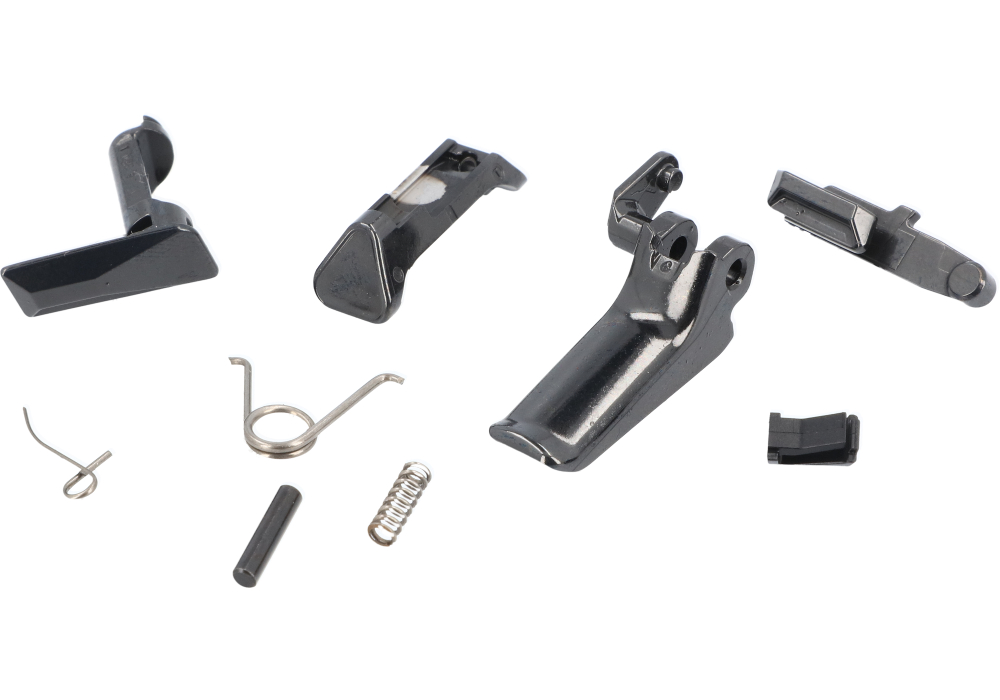
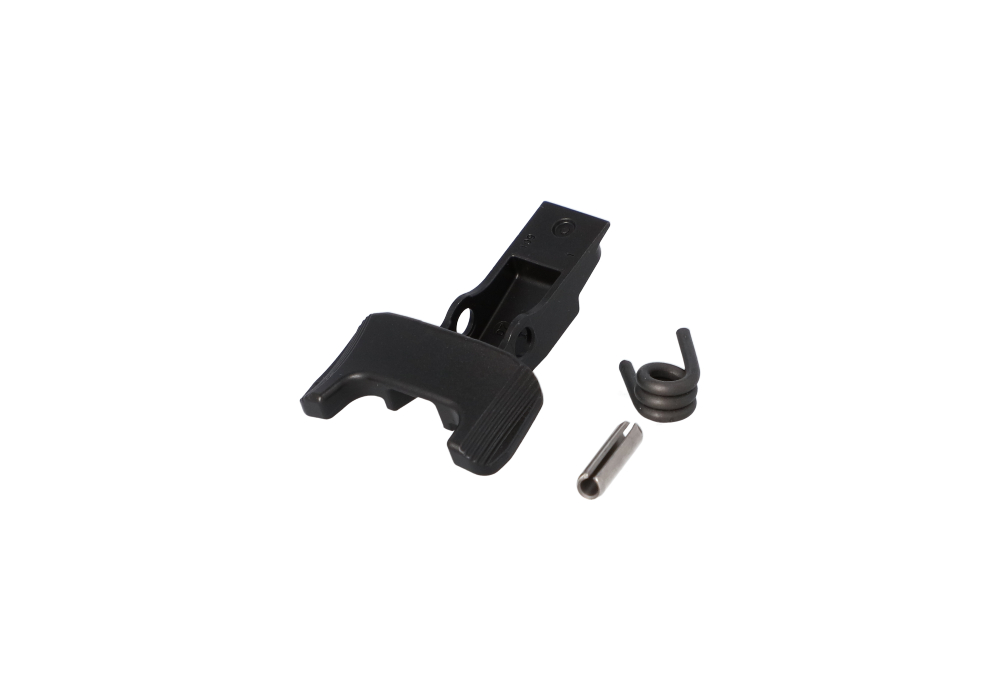
Magazine release springs provide the spring force that helps a firearm’s magazine catch remain engaged and return to its resting position after the release control is pressed. The catch engages the magazine’s retention notch; the spring supports that engagement by biasing the mechanism toward its normal position. Although small, this component plays a role in how the magazine release feels and how consistently the catch returns. Depending on the firearm’s design, pressing the release compresses or flexes the spring as the catch moves out of engagement. Releasing the control allows the mechanism to return. Magazine release springs are therefore replacement components for a specific mechanical assembly, not universal accessories selected by appearance alone. Some rifle designs use a coil spring around part of the magazine catch shaft, while pistol designs may use compact coil springs, formed-wire springs, or other configurations within the frame or release assembly. Each arrangement depends on particular dimensions, contact points, and working clearances. Two springs that look nearly identical on a workbench can differ in wire diameter, length, end shape, or the force they exert through their working movement. Those differences matter when matching a replacement to the firearm model and the installed catch assembly. Compatibility may also depend on the model generation, frame configuration, or whether the release mechanism remains in its original configuration. A spring intended for one assembly should not be assumed suitable for another simply because it fits into the same general space. For owners maintaining a familiar range pistol, replacing a worn component is about preserving the expected feel and function of the existing mechanism. For a gunsmith servicing several firearm platforms, accurate part identification helps distinguish a correct replacement from a superficially similar spring. In either setting, the useful starting point is the component’s specified application: the firearm and assembly it is designed to serve.
Material quality and spring geometry work together to determine how a magazine release spring responds under repeated movement. Spring steel and stainless spring alloys are common choices for small mechanical springs, though the material and finish depend on the component’s specifications. The metal must flex within its intended working range and return without taking a permanent set. Wire thickness, coil spacing, formed bends, and heat treatment all influence that behavior. Corrosion resistance is another consideration, particularly for components exposed to handling residue, moisture, or cleaning products, but no finish eliminates the need for appropriate care. A clean, correctly fitted spring also relies on the surrounding mechanism being in sound condition. Rough contact surfaces, debris around the catch, or wear elsewhere in the assembly can affect release feel even when the spring itself is serviceable. This is why spring selection involves more than choosing a lighter or heavier feel. The force felt at the button reflects the spring, the release geometry, friction, and the engagement between the catch and magazine. Too little return force may leave the mechanism without the engagement behavior the design requires; excessive force can produce a stiff control without resolving an underlying fit issue. Original-specification replacement springs are generally intended to maintain the assembly’s designed operating characteristics. Any alternative specification needs to be evaluated for compatibility with the complete mechanism rather than treated as an isolated change. Pistol owners comparing related replacement components can also explore Magazine Catch Spring Kits for Pistols, with fit determined by the listed firearm model and assembly requirements. A kit designation does not establish what every package contains, so the component description remains important when distinguishing a spring from a catch, button, or complete assembly. Useful product details include the intended platform, spring configuration, material information when specified, and any compatibility limitations. These details give a more dependable basis for selection than color, apparent size, or a general claim about release feel.
Magazine release springs suit firearm owners, shooting enthusiasts, armorers, and qualified gunsmiths who need replacement components for routine maintenance or repair. Their value is easiest to appreciate in ordinary use: a familiar button that returns consistently after magazine removal, a catch that engages as intended when a compatible magazine is seated, and a control that does not feel gritty or sluggish. Repeated range sessions can reveal changes in that familiar feel, but a change should not automatically be attributed to the spring. A worn catch, damaged magazine notch, contamination, or an incorrectly matched component can create similar symptoms. Sound maintenance treats the spring as one part of the complete retention system. Visible corrosion, distortion, broken sections, or a noticeable change in return behavior warrant evaluation rather than improvised reshaping. Stretching a coil, bending a formed-wire spring, or removing material changes the component’s geometry and can undermine its intended function. Replacement with the correct specification is a more appropriate maintenance approach than attempting to restore an uncertain spring through modification. Inspection and service belong in the context of an unloaded firearm, following the firearm manufacturer’s safety and maintenance instructions, with ammunition kept separate from the work area. Small springs can be difficult to handle and easy to misplace, making a clean, organized work surface useful whenever an assembly is serviced. Cleaning products and lubricants should also be compatible with the firearm’s materials and applied according to its maintenance requirements; excess residue can attract debris around closely fitted parts. For components kept on hand for future maintenance, labeled packaging helps preserve model identification, while protected storage limits corrosion and physical damage. There is no single replacement interval that applies to every magazine release spring because designs, use patterns, and service requirements differ. The relevant measures are condition, correct fit, and operation within the complete assembly. When the source of a problem is unclear, evaluation by a qualified gunsmith can separate a spring issue from wear or damage elsewhere. Properly matched magazine release springs support the familiar, consistent operation owners expect from a well-maintained firearm without substituting for inspection of the catch, magazine, and surrounding components.