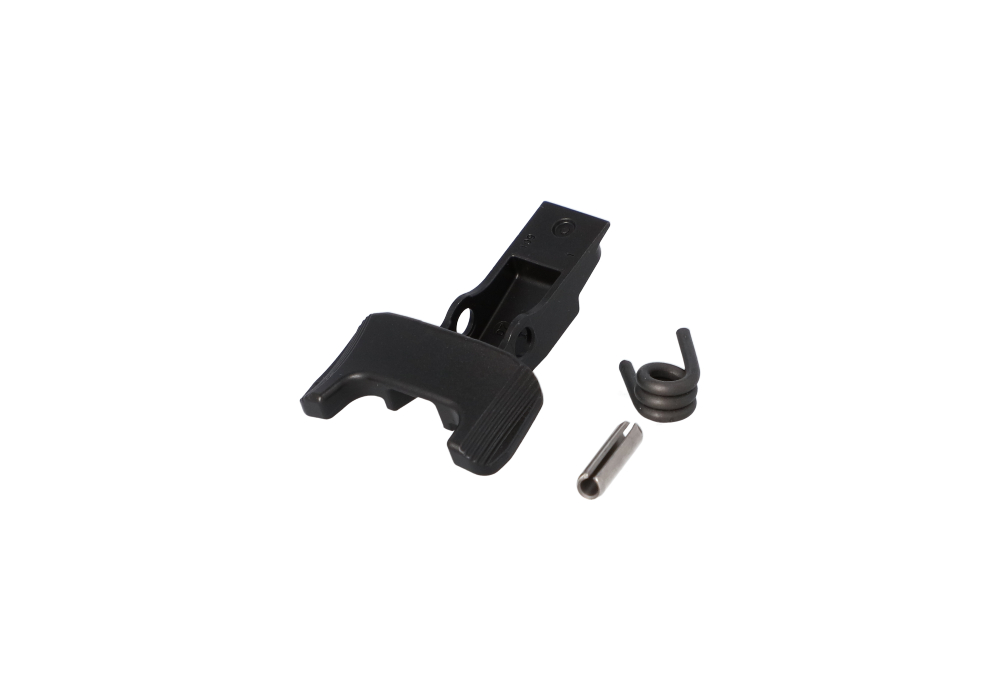
Magazine catch spring kits for pistols contain replacement springs that support the operation of the magazine catch, the component that holds a magazine in the pistol’s frame or grip. The spring provides tension that helps the catch remain in its intended position and return after the magazine release is pressed. Although small, this component plays a distinct role in the magazine retention system: the catch engages the magazine, while the spring supplies the force that supports that engagement. These kits are relevant to routine maintenance, replacement of a worn or damaged spring, and service work involving compatible magazine catch assemblies. They are not interchangeable across all pistols, and a similar appearance does not establish a correct fit. Compatibility can depend on the pistol’s model, generation, frame configuration, and magazine catch design. Some systems use a shaped wire spring, while others use a coil or another spring form, with dimensions and contact points specific to the assembly. Even within a related pistol family, revisions to the frame or release mechanism can affect which spring belongs in the firearm. Magazine catch springs should also be distinguished from magazine springs, which sit inside the magazine and apply force beneath the follower. The two serve different functions and are not substitutes for one another. A useful product description identifies the intended application and explains what the kit contains, rather than relying on a broad reference to pistol compatibility. For an owner arranging service, having the exact firearm designation and any relevant configuration details helps a qualified professional confirm the appropriate replacement. The goal is a spring that matches the intended mechanism and its specifications, not simply one that fits into the same space. Correct compatibility supports consistent operation without relying on guesses about dimensions, tension, or resemblance to the original part.
Materials and construction matter because a magazine catch spring works through repeated elastic movement in a confined space. Spring steel is common in firearm mechanisms, but the particular alloy, heat treatment, shape, and surface treatment depend on the design. Those details influence how a spring resists permanent deformation, wear, and corrosion over its service life. Wire thickness alone does not reveal whether a replacement is appropriate; the working length, bends, coil geometry, and relationship to nearby components can be just as important. A stronger-feeling spring is not automatically a better spring, and increased release resistance is not proof of improved reliability. The intended specification matters more than a general preference for heavier or lighter pressure. The condition of the surrounding assembly matters, too. Wear on the catch, an incompatible magazine, debris around the mechanism, or damage to the frame can produce symptoms that a replacement spring alone will not resolve. A change in release feel or inconsistent magazine retention therefore warrants assessment of the complete system rather than an assumption that one component is responsible. Care should follow the firearm manufacturer’s maintenance directions, with the pistol unloaded and ammunition kept separate before inspection or service. Cleaning products and lubricants should be appropriate for the firearm’s materials and finishes; excess residue can collect debris around small moving parts. Springs awaiting installation benefit from clean, dry storage in labeled packaging that preserves their identification and protects them from bending or surface damage. Small parts can look nearly identical on a workbench, making original packaging especially useful when several firearms are being serviced. Visible corrosion, distortion, or damage deserves professional evaluation rather than an attempt to reshape a spring by eye. Replacement work and subsequent function checks should follow the applicable service procedures, with a qualified gunsmith handling work beyond the owner’s training or the manufacturer’s recommended maintenance scope.
Magazine catch spring kits are relevant to recreational shooters, competitive participants, firearm owners maintaining familiar equipment, and professionals responsible for servicing pistols. Their value is practical rather than cosmetic: a correctly specified spring supports the intended interaction between the magazine catch, release control, and magazine. For someone who uses the same pistol regularly at the range, a noticeable change in the release button’s feel can be a reason to arrange an inspection. For a gunsmith receiving a pistol with a magazine retention concern, the spring is one part of a larger assessment that also considers the catch, magazine engagement surfaces, and overall configuration. Neither situation benefits from treating every spring as universal or choosing a replacement solely because its shape looks familiar. The relevant details are often modest but decisive, such as whether the release assembly matches the original configuration or has been replaced with a different compatible design. Controls intended for different configurations may have different component requirements, so compatibility should reflect the actual assembly in the pistol rather than assumptions based on the model name alone. Kit contents also deserve attention: the category name does not establish how many springs are included or whether any companion components are supplied. Clear identification helps distinguish a focused magazine catch repair from maintenance involving other spring systems. Related Gun Spring Kits cover a broader category, but springs serving different mechanisms still require their own application-specific fit. A spare kept for future service is most useful when its packaging records the intended firearm and component application, allowing that information to remain clear long after purchase. For anyone selecting maintenance parts as a gift for an experienced firearm owner, confirmed compatibility is more useful than a surprise assortment of small components. Across routine ownership and professional service, the central considerations remain the same: suitable materials, accurate fit, careful handling, and replacement according to the firearm’s specifications. Attention to those details keeps the focus on the spring’s actual purpose and the dependable operation of the complete magazine catch system.