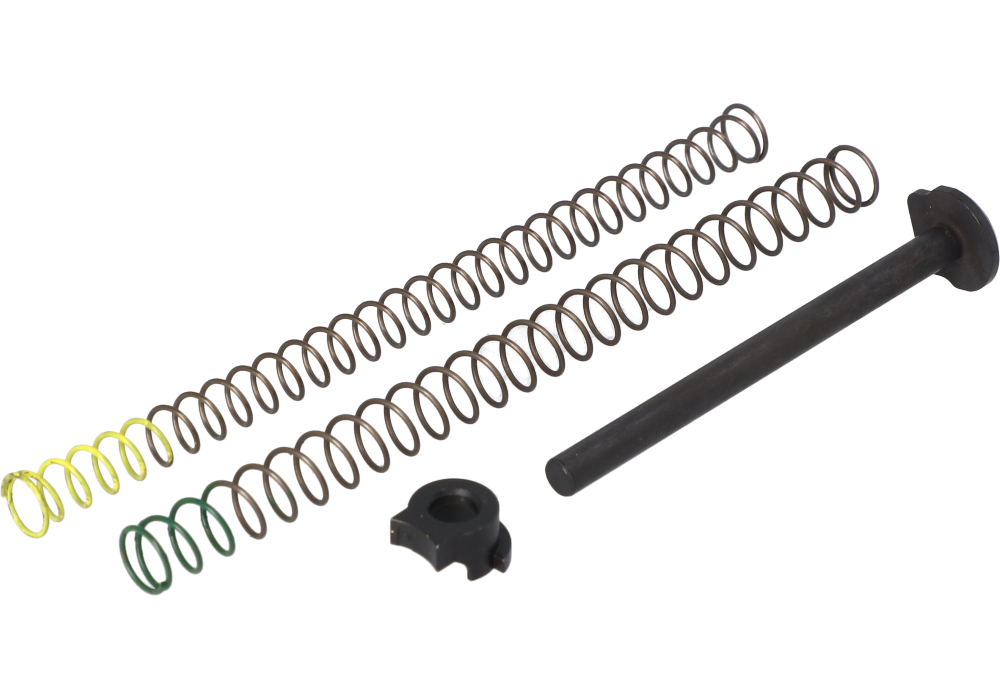
Recoil spring sets are replacement and tuning components for compatible semi-automatic firearms, helping manage the movement of the slide or bolt after a shot is fired. When a cartridge ignites, expanding gases drive the slide rearward, extracting and ejecting the spent case while compressing the recoil spring. The spring then returns the slide forward, allowing it to strip the next round from the magazine and chamber it. A properly matched recoil spring helps balance these movements, which can support reliable cycling, consistent function, and more manageable felt recoil. For shooters preparing for a 4th of July range session, a recoil spring set can be a practical addition to a maintenance kit, particularly when a familiar firearm will be used with a different ammunition load or after extended practice. These parts may also suit experienced firearm owners who want a replacement on hand before a training day, competition, outdoor range trip, or seasonal storage period. A fresh spring can restore the intended operating feel of a well-used firearm, much like replacing a worn component in any mechanical system. The change may be subtle at first: a smoother return to battery, a more predictable rhythm between shots, or fewer signs that the action is cycling harder or softer than expected. Recoil springs are not universal, however, and compatibility should always be confirmed by firearm make, model, caliber, generation, guide-rod arrangement, and the manufacturer’s specifications before purchase or installation.
Spring weight is commonly identified in pounds, and the correct rating depends on the firearm’s design and the ammunition being used. In general, a heavier recoil spring offers greater resistance during rearward slide travel and may be appropriate for certain heavier or higher-pressure loads when specifically recommended for that firearm. A lighter spring can make it easier for the action to cycle with lower-powered target ammunition, but choosing a spring that is too light or too heavy can create reliability problems, excessive frame or slide movement, feeding issues, failures to eject, or a slide that does not fully return to battery. Ammunition grain weight is one consideration, but it is not the only one; bullet construction, velocity, pressure, barrel length, firearm condition, and whether the firearm is fitted with other accessories can also affect cycling. Shooters assembling a 4th of July setup should match the spring to the ammunition they actually plan to use rather than selecting by spring weight alone. It is also useful to compare the replacement set with the factory specification and to inspect the guide rod, spring seat, and related components for unusual wear. Recoil springs are wear items, and service life varies with firearm type, ammunition, firing schedule, and maintenance habits. Many manufacturers recommend inspecting or replacing standard pistol recoil springs at defined round counts, often around 3,000 rounds, while some platforms and applications call for a different interval. Manufacturer guidance takes priority, and a spring should be replaced sooner if it shows deformation, binding, damage, inconsistent cycling, or a noticeable change in recoil behavior. Keeping a correctly matched spare set with range equipment can be a thoughtful gift for a responsible firearm owner, especially someone who takes regular training seriously and prefers to handle routine maintenance before a busy range outing.
Before installing any recoil spring set, unload the firearm completely, remove the magazine, inspect the chamber and magazine well, and follow the disassembly and reassembly procedures in the owner’s manual. Work in a clean, well-lit area where small parts cannot roll away, and use eye protection because compressed springs can release stored energy during installation. If the firearm has an unfamiliar design, a captured spring assembly, or a configuration that differs from the factory setup, qualified gunsmith assistance is a sensible choice. After installation, function-check the unloaded firearm according to the manufacturer’s instructions, then test it at a safe, appropriate range with the exact ammunition intended for regular use. Begin with a limited number of rounds and watch for failures to feed, extract, eject, or return fully to battery; any unusual condition is a reason to stop and have the firearm inspected. Recoil spring sets can complement a broader seasonal shooting plan, from maintaining a compact pistol used for practice during the cooler months to preparing a rifle or pistol platform for an organized holiday range day. Shooters comparing related equipment may also find useful context in 7.62 X39 July 4th Shooting Kits, particularly when planning ammunition, range gear, and maintenance supplies together. With careful attention to compatibility, spring rating, ammunition, service intervals, and safe installation, a recoil spring set can be a straightforward way to support dependable firearm function long after the fireworks have ended.