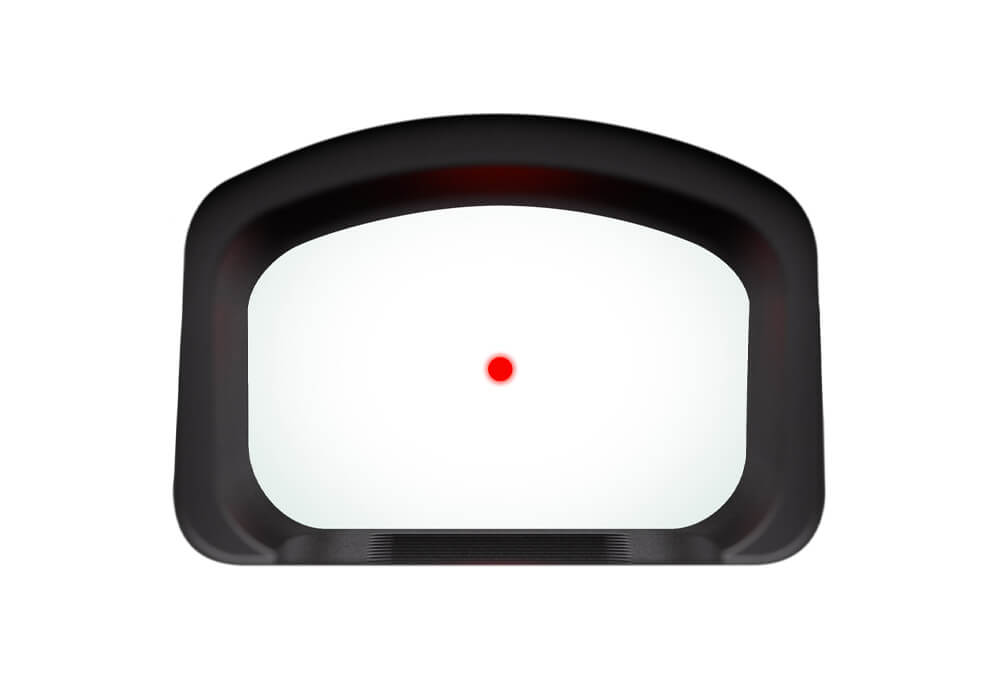
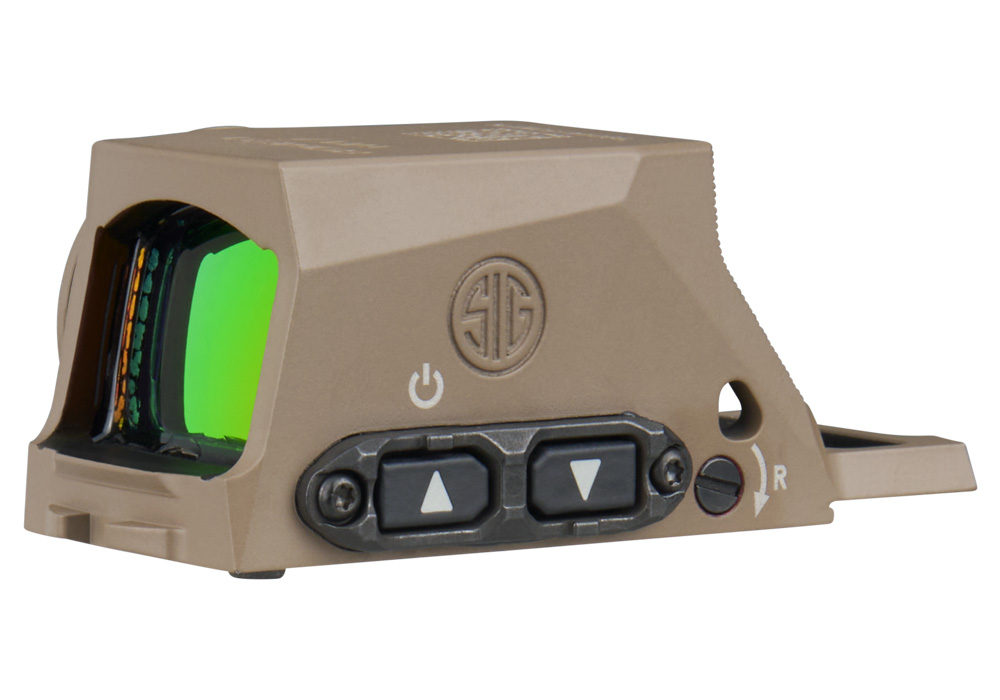
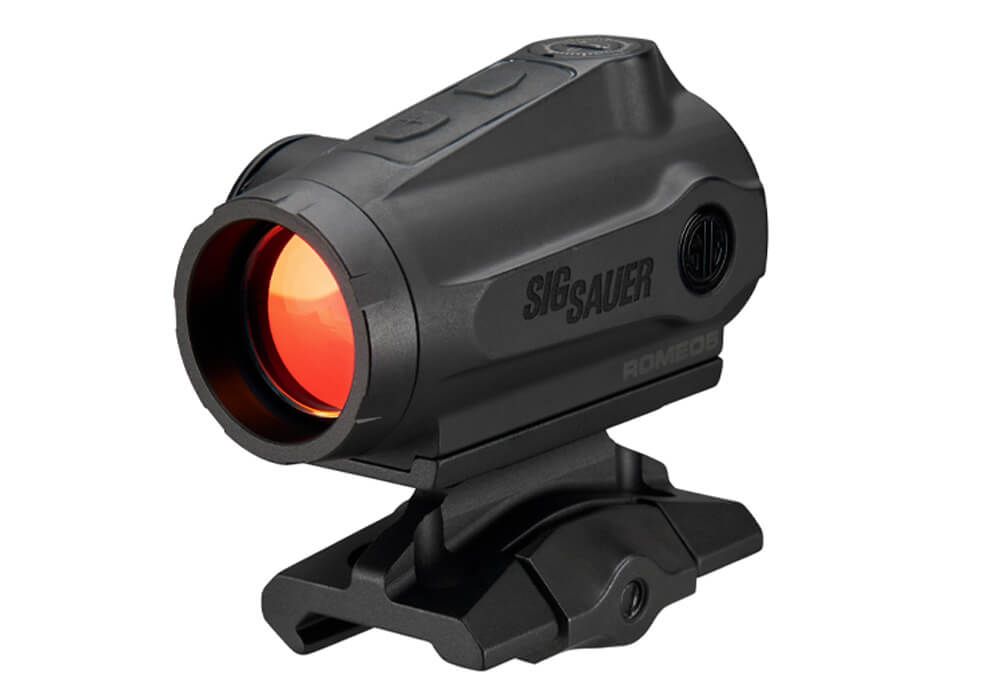
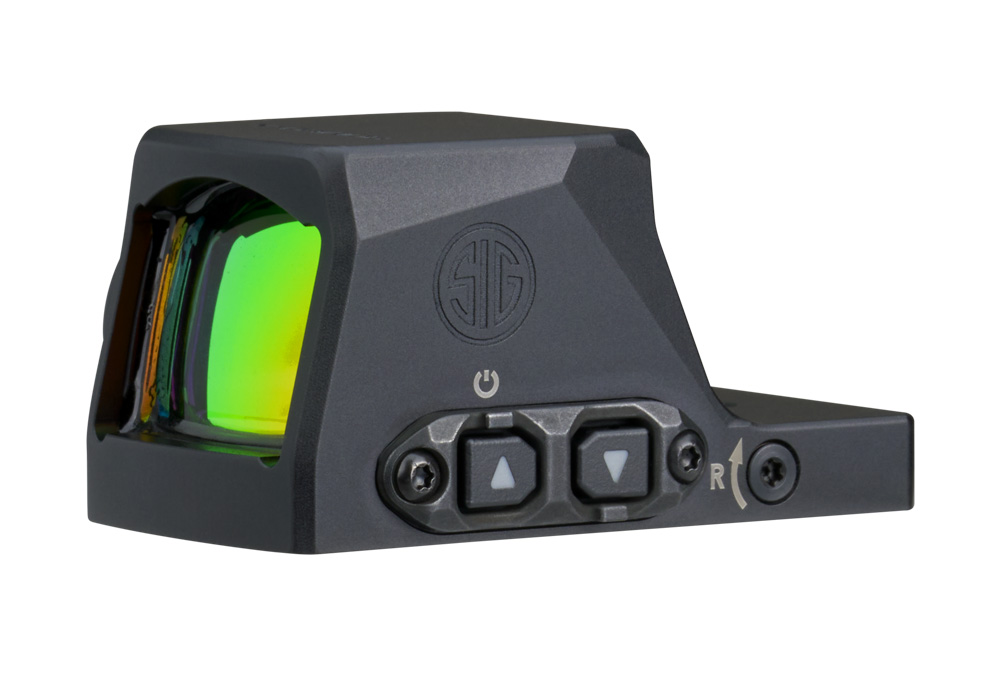
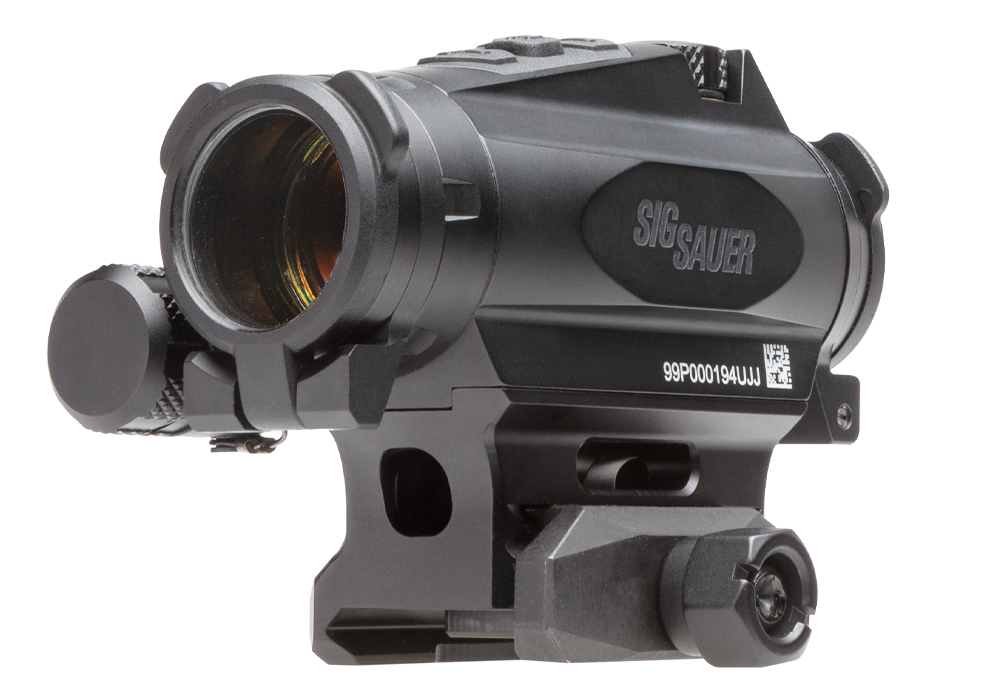
Red dot reticles offer a straightforward way to bring an illuminated aiming point into view without relying on the traditional alignment of a front sight, rear sight, and target. In a reflex or reflector sight, an LED projects the reticle onto a lens so it appears to rest on the target from the shooter’s perspective. This simple presentation can make target acquisition feel more natural, particularly when the sight is mounted correctly and the shooter practices presenting the firearm consistently. A major advantage is the ability to aim with both eyes open. Rather than narrowing your view to a single sighting plane, you can keep more of your surroundings in view while the eye naturally draws toward the illuminated dot. That broad field of vision can be useful on the range, during practical training, or in other situations where awareness of movement and surroundings matters. Red dot reticles are available in different shapes and sizes, and the best choice depends on the firearm, distance, lighting conditions, and the type of shooting involved. Dot size is commonly expressed in MOA, or Minute of Angle. At a given distance, a smaller dot covers less of the target and can support more precise aiming, while a larger dot is generally faster to see and place during close-range shooting. The optic’s brightness settings, lens clarity, housing design, battery access, and mounting compatibility also deserve attention when comparing options. A well-chosen reticle should complement the firearm rather than add unnecessary bulk or complicate the sight picture.
For many rifle applications, a 1 or 2 MOA dot can be appealing because it provides a fine aiming reference for deliberate shots at extended distances while still remaining visible against a range of backgrounds. A 3 MOA dot is a versatile middle ground and is frequently selected for pistols, where rapid presentation and practical accuracy need to work together. A 6 MOA dot is larger and easier to pick up quickly, making it a popular consideration for handguns used at closer distances, especially when the shooter values an uncomplicated sight picture. Ring-and-dot reticles take a different approach by pairing a prominent outer circle with a central aiming point. The ring can help guide the eye toward the center quickly, while the dot offers a more refined reference once the sight is on target. Reticle appearance is only part of the decision. Users should also consider whether the sight is intended for a pistol slide, rifle rail, or another compatible platform; whether the mounting footprint matches the chosen base or plate; and whether the optic offers sufficient adjustment range for the intended zero distance. Bright outdoor conditions may call for stronger illumination, while lower-light environments can make excessive brightness appear distracting or cause the dot to bloom. Adjustable intensity helps tailor the reticle to the setting, and automatic shutoff or motion-activated features can help preserve battery life when available. Many red dot sights are designed to be parallax-free or nearly so at practical distances, meaning the aiming point remains useful when the eye is not perfectly centered behind the optic. Even with that advantage, a consistent presentation and proper zero remain essential. The dot should be placed where the shooter expects it to appear, and the firearm should be handled and stored according to all applicable laws, manufacturer instructions, and range rules.
Red dot reticles can serve a wide range of shooters, from someone refining fundamentals on a target range to an experienced user looking for a faster, more visible aiming reference. They may be especially helpful for shooters who find a traditional front sight difficult to focus on, provided the optic is properly fitted and the user spends time learning the presentation. New users often benefit from beginning at a comfortable distance, confirming the zero with deliberate shots, and then practicing the movement of bringing the firearm into position while keeping both eyes open. Over time, the motion becomes more familiar: the firearm rises into the line of sight, the illuminated point appears, and the shooter can concentrate on the target rather than searching for a small front sight. That process is best developed gradually, with unloaded practice conducted in a safe direction and live-fire training performed under appropriate supervision. Red dot optics can also make thoughtful gifts for a recreational shooter, a competitor, or a family member who already owns a compatible firearm and has expressed interest in modernizing its sighting system. Gift buyers should confirm compatibility before purchasing, since mounting footprints, adapter plates, co-witness height, battery type, and available clearance can vary significantly. Those shopping for a broader selection can explore Precision Red Dots while comparing reticle size, illumination controls, construction, and intended use. During the warmer months and into cooler-season range days, a dependable red dot reticle can provide a clear, uncluttered aiming reference across changing light and weather. The right choice balances speed, precision, durability, and comfort, giving the shooter an optic that feels intuitive in the hands and remains practical through regular training.