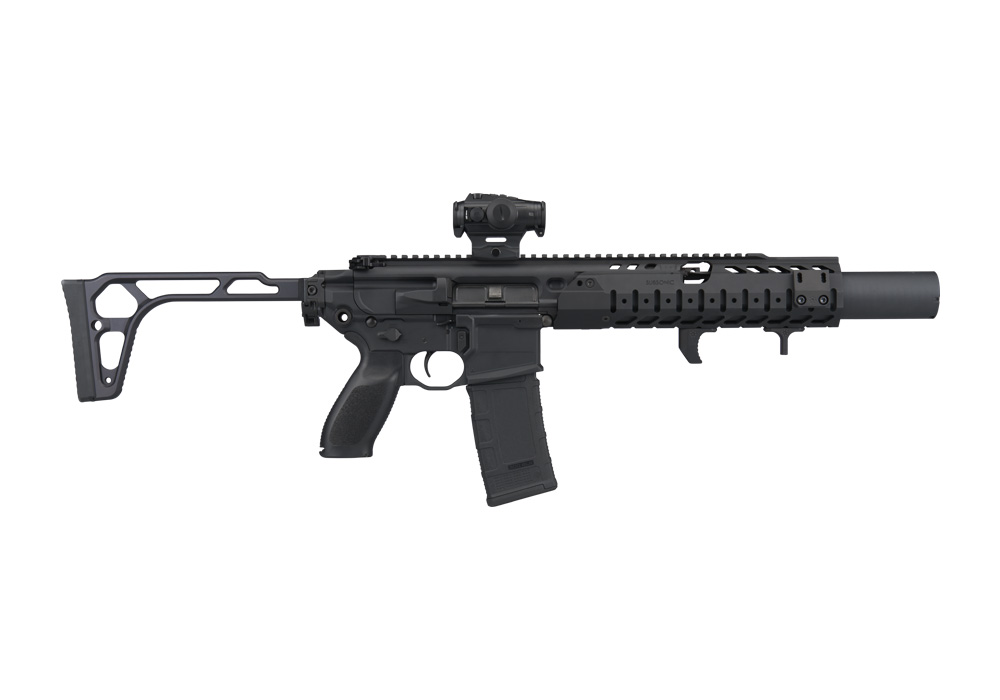
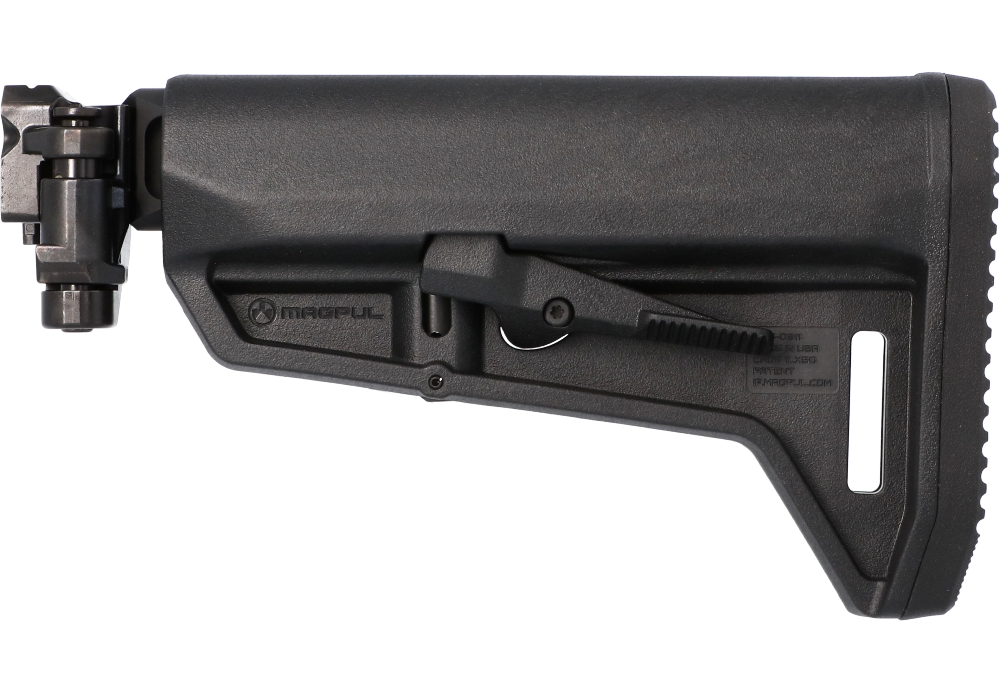
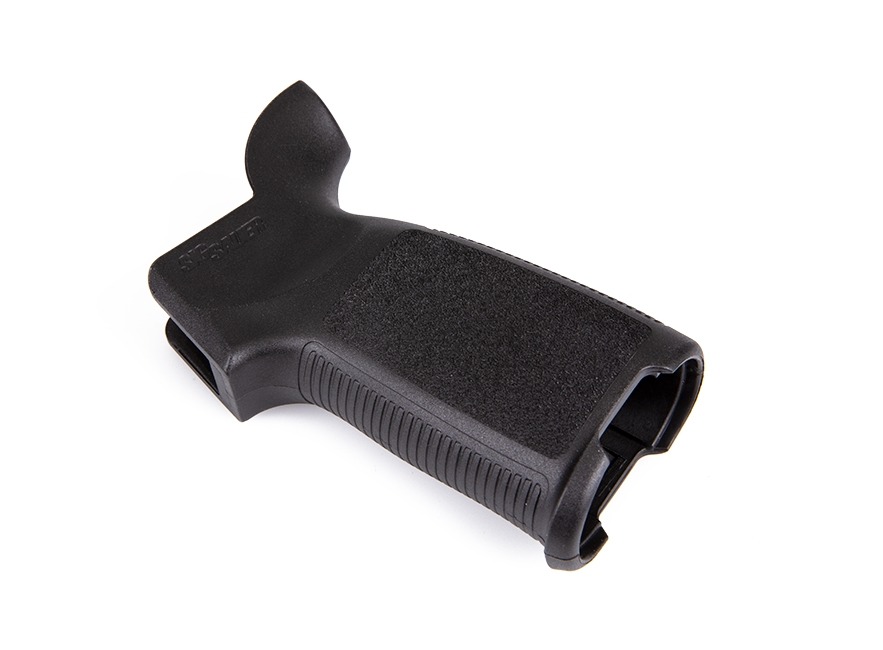
Rifle folding stock kits allow a compatible rifle’s shoulder stock to fold alongside the firearm, reducing its overall length for storage and transport. Unlike a telescoping stock, which adjusts length along the rifle’s rearward axis, a folding assembly pivots at a hinge. Some configurations combine both functions, while others pair a folding mechanism with a fixed-length shoulder stock. That distinction matters when comparing how a rifle fits its case, how much adjustment the shooter needs, and which components the firearm accepts. A complete folding stock assembly and a folding adapter are not interchangeable purchases: an assembly may include the shoulder stock and hinge, while an adapter may provide only the connection between an existing stock and a compatible receiver interface. Included hardware varies, so the component list deserves as much attention as the overall appearance. Fit begins with the firearm’s exact model, rear attachment system, and operating design. A 1913-style rear rail, a threaded receiver connection, and a platform-specific mounting arrangement each impose different requirements; a similar-looking attachment point does not establish compatibility. Even when the mounting interface matches, the folded stock needs adequate clearance around the receiver, controls, grip, and other installed accessories. Folding direction also affects the space the rifle occupies inside a fitted case and whether the stock rests against another component. For an owner moving an unloaded rifle between secure storage and a range case, those dimensions can matter more than a particularly slim profile in a photograph. The most useful comparison considers the entire assembly in both positions: folded for storage and fully extended for its intended use. Manufacturer specifications should establish the supported firearm configurations, included components, folded dimensions, and any restrictions on operation. A folding mechanism offers a storage benefit, but it does not eliminate the need for a correctly matched shoulder stock, a secure mounting interface, or a case that protects the firearm without pressing against its controls.
Materials and construction influence how a folding stock kit feels during handling and how it holds up to repeated use. Aluminum is common in structural components because it balances weight and rigidity, while steel may appear in hinge pins, latches, or other contact points. Polymer can provide durable contact surfaces without adding unnecessary weight. The material name alone, however, says little about the quality of the complete assembly. Hinge alignment, latch engagement, surface finish, and the relationship between adjoining parts all contribute to a solid connection. A well-fitted mechanism should engage as its manufacturer describes, without relying on improvised shims or forcing mismatched components together. Protective finishes help resist ordinary wear and corrosion, but hinge edges and other frequently handled areas still warrant inspection. Stock shape is equally important. A narrow, minimalist profile can occupy less space in a case, while a broader cheek surface may feel more comfortable during an extended range session. Neither shape is universally preferable; the useful choice depends on the rifle, the shooter, and the intended activity. Length of pull—the distance between the trigger and the rear contact surface—affects how comfortably the rifle fits against the shoulder. Where adjustment is provided, its range should suit the intended user without interfering with the folding mechanism. Cheek support and sight height also work together, particularly on rifles equipped with optics. A stock that looks appropriate can still place the shooter’s head awkwardly relative to the sighting system. For recreational target shooters, hunters, and owners who regularly transport compatible rifles, these practical fit details deserve attention alongside folded dimensions. A rifle that spends an afternoon on a bench presents different comfort demands from one carried between locations. As a gift, a folding stock kit is best suited to a recipient whose exact firearm configuration and preferences are known; it is a compatibility-dependent component rather than a universal accessory.
Care for rifle folding stock kits centers on keeping the hinge, locking surfaces, and attachment points in the condition specified by the manufacturer. Dust, grit, and residue can collect around moving joints, especially when a rifle travels frequently in a case. Routine inspection can reveal contamination, unusual wear, loose hardware, or a latch that no longer engages consistently. Cleaning products, lubricants, and maintenance intervals should follow the instructions for the particular assembly, since finishes and contact materials do not all tolerate the same treatment. More lubricant is not necessarily better, and aggressive solvents or abrasive cleaning can damage surfaces that otherwise need only routine attention. Any installation, adjustment, or repair beyond the owner’s familiarity belongs with a qualified gunsmith; a loose hinge or uncertain lockup is a reason to stop using the firearm until it has been evaluated. When a broader project includes components from Rifle Parts Kits, each part still requires its own compatibility check rather than an assumption that all rifle components work together. Legal configuration also matters. Under federal law, a shoulder-stock configuration with a barrel shorter than 16 inches can fall under short-barreled rifle requirements, and overall length and other characteristics can affect classification. State and local rules may impose additional restrictions on folding stocks or the resulting firearm configuration. Those requirements should be confirmed before purchase or installation. A folding hinge also does not establish whether a firearm can function with the stock folded; that depends on its operating system and the manufacturer’s explicit instructions. Many conventional buffer-tube arrangements require the folding assembly to be fully unfolded and locked for normal operation. For storage and transport, the rifle should be unloaded and secured against unauthorized access, with applicable transport rules observed. Folding reduces the space a compatible rifle occupies, not the responsibility associated with handling it. Correct fit, dependable lockup, appropriate care, and lawful configuration remain the defining considerations long after the novelty of a compact case fit has passed.