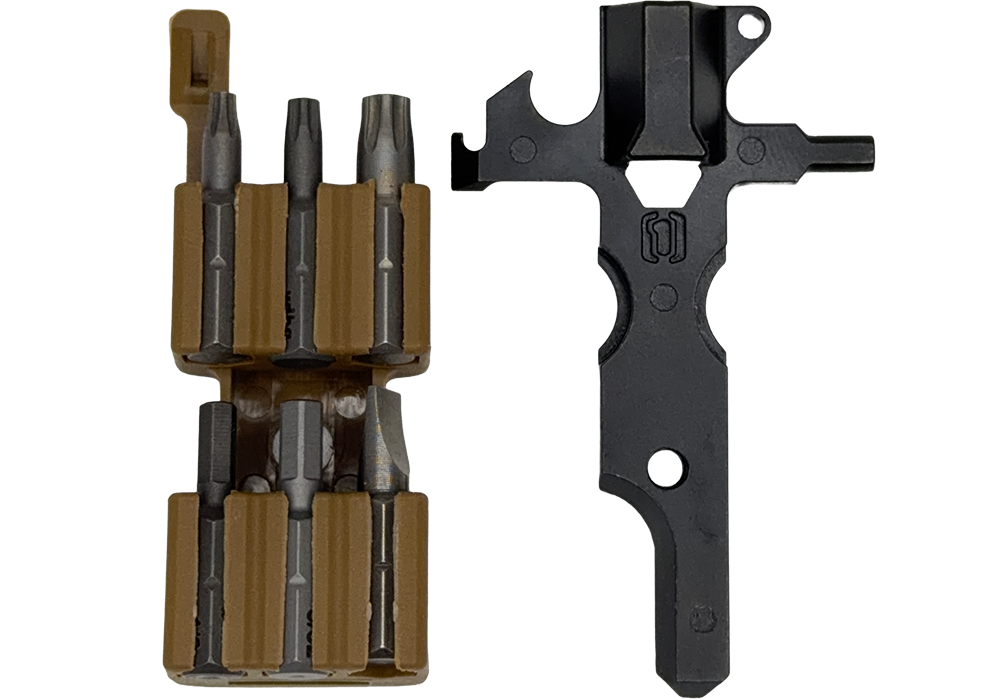
Rifle tools support the careful maintenance, adjustment, inspection, and preparation that help a rifle remain dependable through regular use. A well-chosen tool collection may include cleaning rods, bore guides, jags, brushes, patches, chamber brushes, and other accessories designed to remove carbon, copper, dust, and residue without harming the barrel or rifling. Bore guides are especially useful because they help keep a cleaning rod centered as it passes through the action, reducing unnecessary contact with the throat and receiver. A bore light or bore camera can provide a closer look inside the barrel, helping reveal fouling, wear, obstructions, or areas that need additional attention. For many owners, a rifle cleaning setup begins with simple maintenance after a range session and gradually expands as they learn which tools suit their rifles, ammunition, and shooting routine. A stable gun vise or maintenance stand can make this work more comfortable by holding the firearm securely while leaving both hands available for cleaning or adjustment. Look for sturdy construction, protective contact surfaces, and an adaptable design that supports the rifle without placing pressure on delicate controls, sights, or furniture. These tools can be useful for hunters preparing equipment before the cooler months, range users who shoot throughout the year, and new firearm owners building a practical maintenance kit. They can also make thoughtful gifts for a responsible rifle owner, particularly when selected around a known platform or a need such as cleaning, storage preparation, or optic installation. A compact kit may suit someone who travels to the range, while a more complete bench setup can be helpful for a dedicated hobbyist who spends quiet afternoons inspecting and maintaining equipment.
Rifle tools also play an important role when installing optics, replacing components, or making careful fitment adjustments. A torque wrench or torque limiter helps apply consistent inch-pound pressure to scope rings, bases, and other fasteners, reducing the risk of loose hardware or excessive force that could damage threads or crush an optic tube. A reticle leveling system helps align the scope with the rifle action so the crosshairs sit correctly when the rifle is shouldered, an especially valuable consideration for anyone who spends time making precise shots at varying distances. Hollow-ground screwdrivers and firearm-specific hex, Torx, and other bits are designed to fit common fasteners more closely than general household tools, helping reduce slipping, marring, and damaged screw heads. When comparing options, consider the fastener types used on the rifle, the measurement range of the torque tool, the clarity of its markings, and whether the set includes a storage case that keeps small bits organized. A rifle owner who has ever watched a tiny screw roll across a workbench knows how quickly a simple project can become frustrating without an orderly setup. Platform-specific multi-tools can provide a convenient field solution for minor adjustments, while a dedicated bench kit may offer better leverage and a broader selection for home maintenance. These categories are relevant to new optic owners, competitive shooters, hunters checking equipment before heading into the field, and experienced enthusiasts who prefer to handle routine adjustments themselves. For additional firearm maintenance and workshop options, explore Tools For Gunsmithing to find tools suited to a broader range of firearm projects.
For more involved rifle work, specialized tools can help support components securely and protect the firearm during disassembly or assembly. Brass, nylon, and steel pin punches are available for driving pins without relying on improvised objects that may slip or leave marks. A compatible hammer paired with the correct punch size can make controlled work easier, while a selection of roll-pin punches may help with components that use small retaining pins. Action blocks and receiver fixtures are intended to hold specific assemblies in a stable position, helping distribute pressure rather than concentrating it on thin or unsupported areas. On modern sporting rifle platforms, an armorer’s wrench may be used for tasks involving castle nuts, barrel nuts, or other platform-specific hardware, but compatibility matters; not every wrench fits every configuration. When choosing a rifle tool set, confirm that the tools match the action type, receiver pattern, barrel configuration, optic hardware, and fastener dimensions involved in the work. Material quality, handle comfort, corrosion resistance, storage, and replacement-bit availability are practical considerations, especially for tools that will be used repeatedly. It is also wise to select equipment that encourages a clean, organized work area, with small parts placed in a tray and the rifle supported on a stable, padded surface. Before maintenance or adjustment, the firearm should be unloaded, the chamber and magazine area checked, and ammunition kept separate from the workbench. During the warmer part of the year, a compact tool kit can travel easily to an outdoor range or training area; as the weather turns cooler, a well-organized bench setup can make indoor inspection and seasonal maintenance more convenient. Whether assembling a first toolkit, replacing worn equipment, or choosing a practical gift for a rifle owner, the right tools bring control and consistency to routine care while helping protect the finish, fasteners, optic, and operating components.