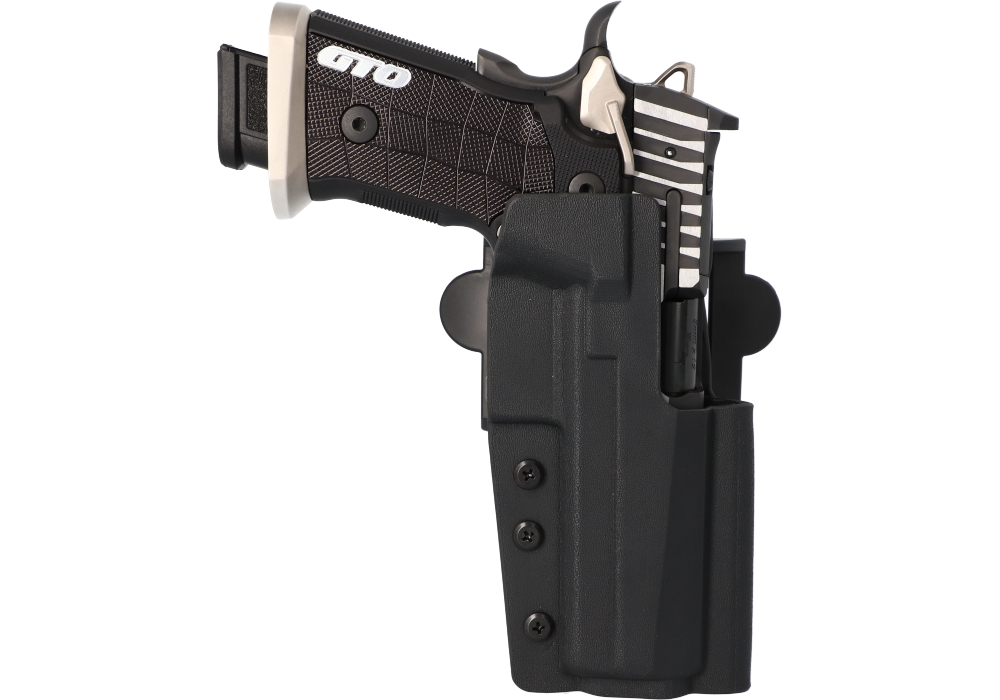
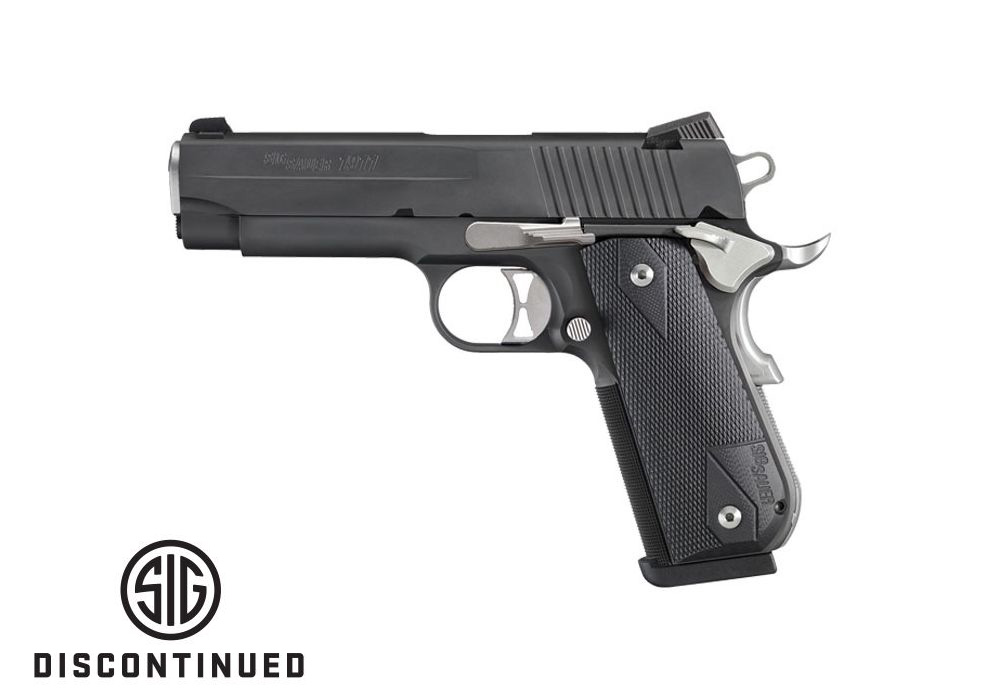
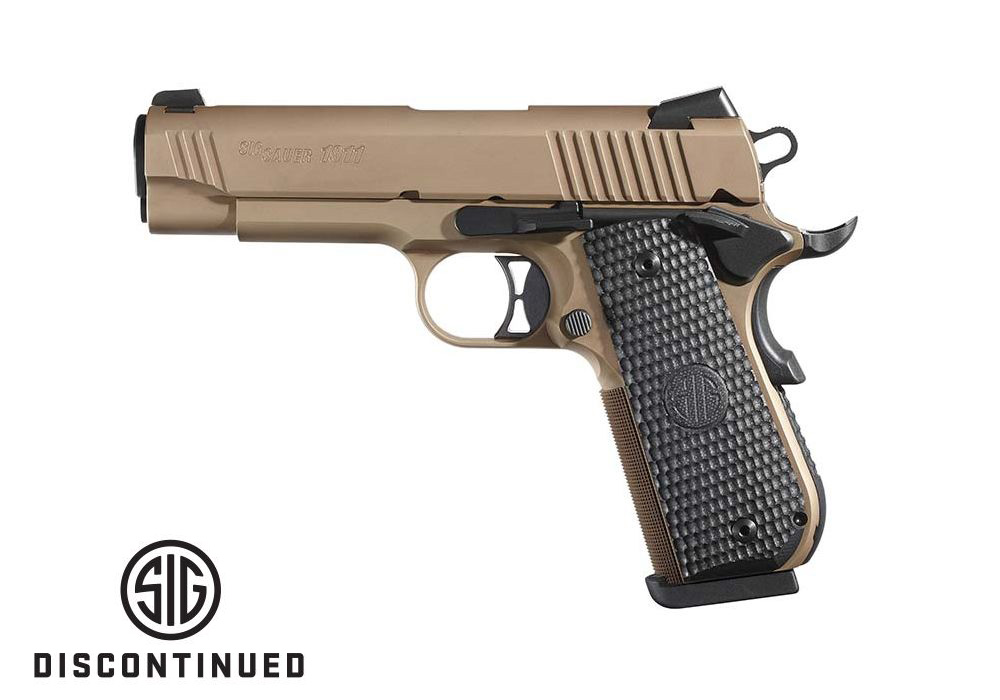
Choosing a 1911 holster starts with identifying the exact pistol it will carry. Although the 1911 platform has a familiar profile, differences in barrel length, slide dimensions, frame configuration, sights, safeties, and accessories can affect fit and performance. Common size categories include the full-size Government model with a 5-inch barrel, the Commander pattern with a 4.25-inch barrel, and compact Officer-style models with shorter slides and grips. A holster designed for one size may not properly support another, so confirm the pistol’s specifications before making a purchase. The same consideration applies to threaded barrels, optics-ready slides, extended controls, light attachments, and aftermarket modifications. A properly fitted holster should hold the pistol securely while allowing a smooth, consistent draw and dependable reholstering. Retention is especially important for a 1911, whether the holster uses a molded friction fit, adjustable tension, a thumb break, or another retention system. Look for coverage around the trigger guard and a design that helps keep the pistol in place during ordinary movement, bending, getting in and out of a vehicle, or spending time outdoors. A sturdy belt is equally important. The weight of a steel-frame 1911 can cause a flexible belt or poorly matched attachment system to sag, tilt, or pull away from the body, particularly with a full-size pistol. Matching the holster to a supportive belt helps maintain a stable position and makes the entire setup more comfortable through long days. For professionals who carry as part of their duties, equipment selection deserves added attention to uniform requirements, accessibility, retention standards, and training needs. Resources such as 1911 Pistols For Law Enforcement can provide useful context when evaluating a 1911 intended for professional use.
Carry position is another major consideration when comparing 1911 holsters. Inside-the-waistband designs are often selected for concealed carry because they keep the pistol close to the body and can reduce the visible outline beneath a shirt, overshirt, or light jacket. Positioning at the strong-side hip is a familiar choice, while appendix carry may suit some individuals depending on body shape, clothing, training, and the dimensions of the pistol. A full-size 1911 can be comfortable inside the waistband with the right ride height, cant, and belt, although its longer slide and heavier frame may call for careful adjustment. Outside-the-waistband holsters provide a straightforward draw and are popular for range sessions, training, field use, open carry where lawful, or concealed carry beneath a coat during cooler weather. They can also be easier to put on and remove without changing the rest of a belt setup. Shoulder holsters distribute the pistol’s weight across the torso and may be appealing to people who spend long periods seated, drive frequently, or wear layers during the cooler months. Each style has tradeoffs involving concealment, access, comfort, clothing, and safe handling. Leather remains a popular choice for its traditional appearance, quiet presentation, and ability to soften and conform with use. Over time, a well-maintained leather holster may develop a familiar feel against the body, much like a broken-in pair of boots. Molded synthetic materials offer a different experience, with a firm shape, consistent retention, resistance to moisture, and easy maintenance. Some users prefer the crisp sound and defined fit that accompany a rigid molded design, while others appreciate the refined feel and classic character of leather. Hybrid constructions may combine a leather or textile backing with a molded outer shell, balancing comfort against structure. Regardless of material, inspect the holster regularly for loose fasteners, worn stitching, damaged clips, altered retention, or anything that could interfere with the trigger or draw. A holster should cover the trigger guard, remain securely attached to the belt or body, and stay in the same position throughout normal movement.
1911 holsters can be useful additions to a personal range setup, a professional duty kit, or a thoughtful gift for a new firearm owner who already has a compatible 1911. They are also practical for experienced shooters who rotate between concealed carry, range practice, outdoor activities, and training. A second holster can serve a clear purpose when the primary setup is configured for a different season or carry position—for example, an inside-the-waistband option for lighter clothing and an outside-the-waistband option for use with a jacket or training belt. Before giving a holster as a gift, confirm the recipient’s exact 1911 size and any attached accessories. A gift that matches the wrong barrel length or lacks clearance for an optic or light may not be useful, while a properly matched holster can become one of the most frequently handled pieces of equipment in a shooter’s collection. Comfort should be evaluated alongside concealment and retention. A holster that feels fine while standing in front of a mirror may behave differently after several hours of walking, sitting, climbing stairs, or working behind a counter. Pay attention to pressure points, grip accessibility, muzzle coverage, ride height, cant, and whether clothing catches on the pistol during the draw. Practice should begin with an unloaded firearm in a controlled setting, following the owner’s manual and all applicable laws, and should include drawing, presenting, and reholstering at a deliberate pace. Regular dry practice can help build familiarity, while live-fire training confirms that the chosen position and retention system work as expected under realistic conditions. Store the pistol according to safe-handling practices whenever it is not being carried, and keep the holster clean and in good repair. With the right fit, a secure attachment method, and a carry style suited to the user’s routine, a 1911 holster helps turn a classic pistol into a practical, dependable part of a carefully considered setup.