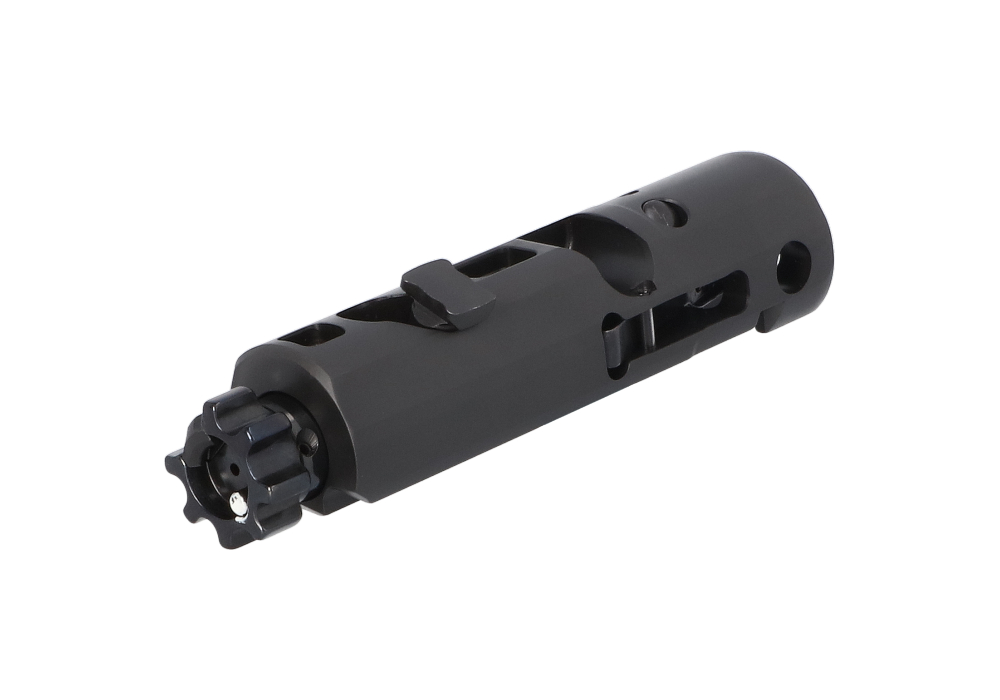
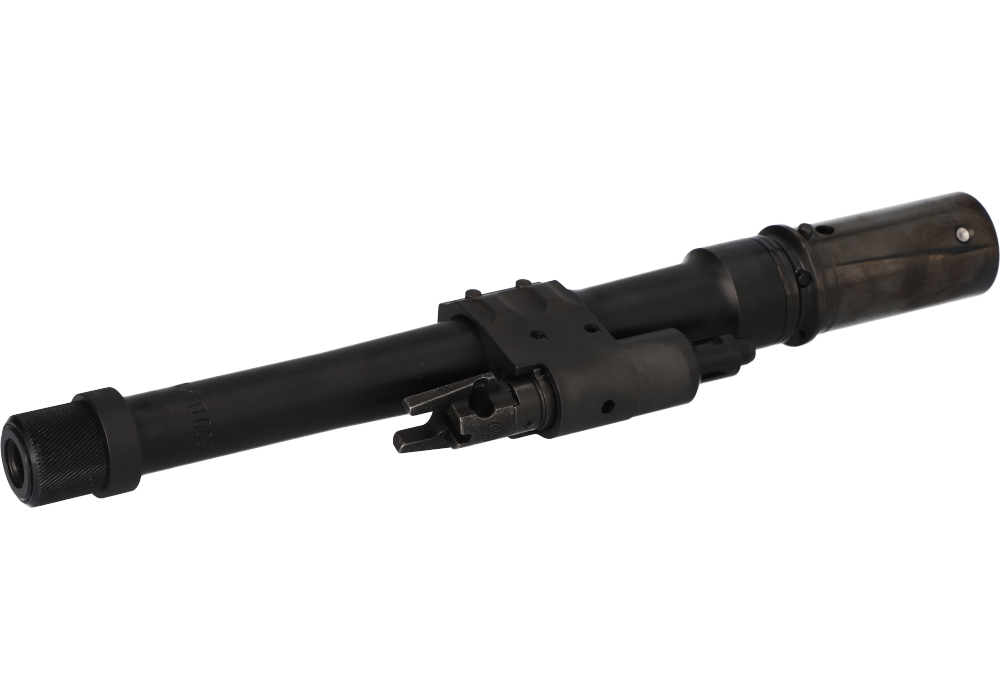
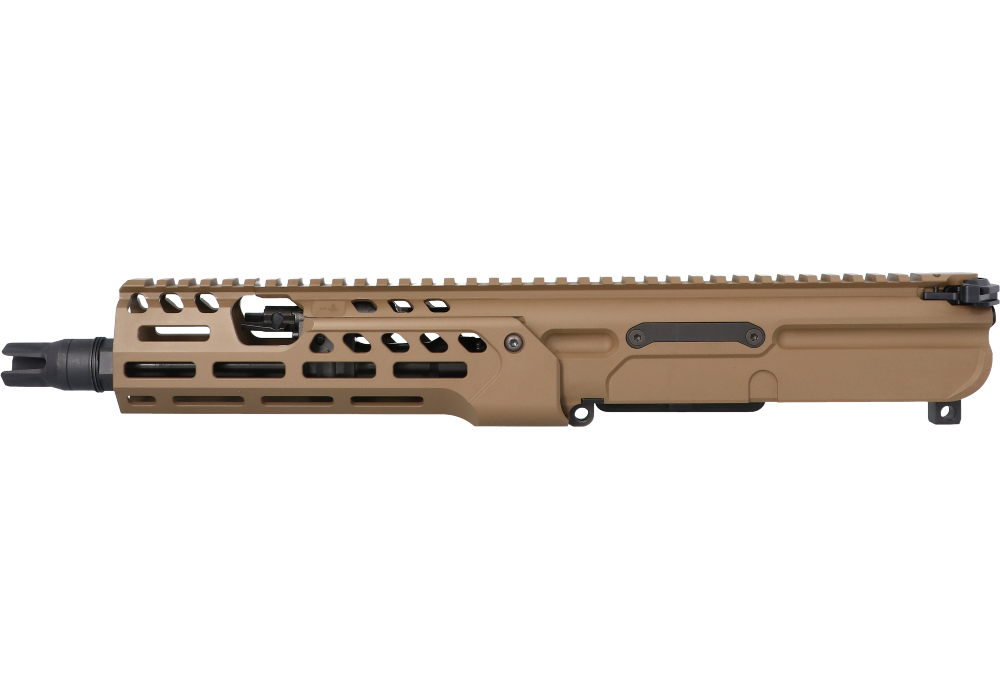
A 300 Blackout carrier group assembly is a central operating component for an AR-15-pattern firearm chambered in .300 AAC Blackout, commonly called .300 BLK. It houses the bolt, carrier, gas key, firing pin, cam pin, and retaining pin, working together to extract a fired case, chamber a fresh cartridge, cock the hammer, and lock the bolt into battery. Because .300 Blackout and 5.56 NATO use the same case head dimensions and share important AR-15 interface geometry, a standard 5.56/.223 bolt carrier group is generally compatible with .300 Blackout ammunition. That interchangeability gives builders and owners practical flexibility when selecting replacement parts, completing a new upper receiver assembly, or keeping a spare ready for maintenance. Even so, compatibility should always be confirmed against the receiver, barrel, gas system, ammunition, and manufacturer specifications before installation or use. A complete assembly can simplify the process by bringing the primary moving components together in one matched package, rather than requiring each part to be sourced separately. For someone assembling a .300 Blackout rifle for range practice, property use, training, or recreational shooting, the carrier group is a sensible place to focus on dependable construction and proper fit. It is also a useful addition to a workshop or range bag, particularly for owners who prefer to replace a worn assembly rather than troubleshoot individual internal components under time pressure. A spare carrier group may make a thoughtful gift for an experienced shooter, competitive participant, gunsmith, or firearm enthusiast who enjoys maintaining and configuring an AR-pattern platform. It is best presented as a practical piece of equipment for a compatible firearm, with the recipient’s platform, caliber, and intended setup confirmed in advance.
When comparing 300blk Carrier Group Assemblies, look beyond appearance and consider the materials, inspection practices, finish, gas key installation, and overall consistency of the assembly. The bolt is commonly produced from a purpose-selected steel such as Carpenter 158 or 9310, and magnetic particle inspection, often abbreviated MPI, can help identify surface flaws that may not be visible during a casual inspection. The carrier is typically made from 8620 steel, while the gas key should be securely attached with properly torqued and staked Grade 8 fasteners. Staking helps keep the fasteners from loosening during repeated cycling, which is especially important because the gas key receives gas from the operating system every time the firearm is fired. A properly finished carrier can resist wear and corrosion while providing smooth interaction with the upper receiver, bolt, cam pin, and charging handle. Common finishes may include phosphate, nitride, nickel boron, or other protective treatments, each offering different characteristics in terms of surface hardness, cleanability, appearance, and lubrication needs. Finish alone does not determine quality, so it should be considered alongside heat treatment, dimensional control, inspection, and assembly standards. Buyers should also check whether the assembly includes all required components, whether the bolt is marked or specified for the intended caliber, and whether the manufacturer provides clear information about testing and warranty support. For those browsing broader options, the Complete Bolt Carrier Assemblies collection can make it easier to compare complete configurations. A carrier group should move freely within a compatible upper receiver without unusual binding, scraping, or excessive looseness. It should also be lubricated according to the manufacturer’s instructions, as the bolt lugs, cam pin path, carrier rails, and gas rings depend on appropriate lubrication for reliable cycling. Before purchasing, confirm the intended barrel chambering and gas system, especially when a build may be configured for both lighter supersonic and heavier subsonic .300 Blackout loads. Ammunition selection can influence cycling characteristics, and a suppressor, adjustable gas block, or unusually short barrel may further change the operating behavior of the firearm.
A well-chosen carrier group assembly supports a broad range of .300 Blackout setups, from compact configurations intended for maneuverability to general-purpose rifles used at the range or on outdoor property. Supersonic loads are often selected for a flatter trajectory and familiar carbine performance, while subsonic loads are valued for a quieter shooting experience when used with appropriate equipment and in accordance with applicable laws. The carrier group itself does not determine the ammunition’s performance, but its condition and fit contribute to consistent feeding, extraction, lockup, and cycling. Before using any new assembly, inspect it for shipping damage, confirm that the bolt, gas key, firing pin, cam pin, and retaining pin are present, and follow the firearm and component manufacturer’s installation procedures. A qualified gunsmith can help verify headspace and function, particularly when the assembly is being paired with a new barrel or a modified upper receiver. Routine care is straightforward: unload the firearm, separate the upper and lower receivers as directed, clean carbon and residue from the appropriate surfaces, inspect the gas key and bolt lugs, and apply lubricant where specified. During cooler months, a clean and properly lubricated carrier group can help keep an outdoor session running smoothly, while careful storage in a dry environment helps protect exposed steel between uses. Owners who shoot frequently may appreciate keeping a second assembly on hand for maintenance rotation, travel preparation, or as a backup after extended practice. Whether selected for a first .300 Blackout build, a replacement project, or a practical gift for someone who takes pride in detailed firearm care, a quality carrier group assembly is an important part of a reliable, properly maintained AR-pattern platform. Always use the correct ammunition, follow safe-handling practices, and comply with all federal, state, and local requirements governing firearm parts, assembly, ownership, and use.