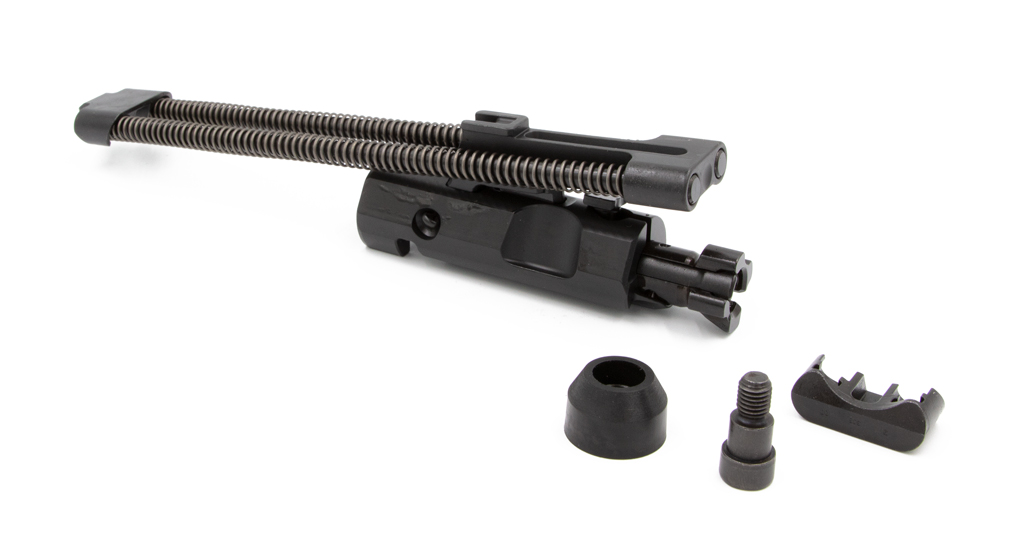
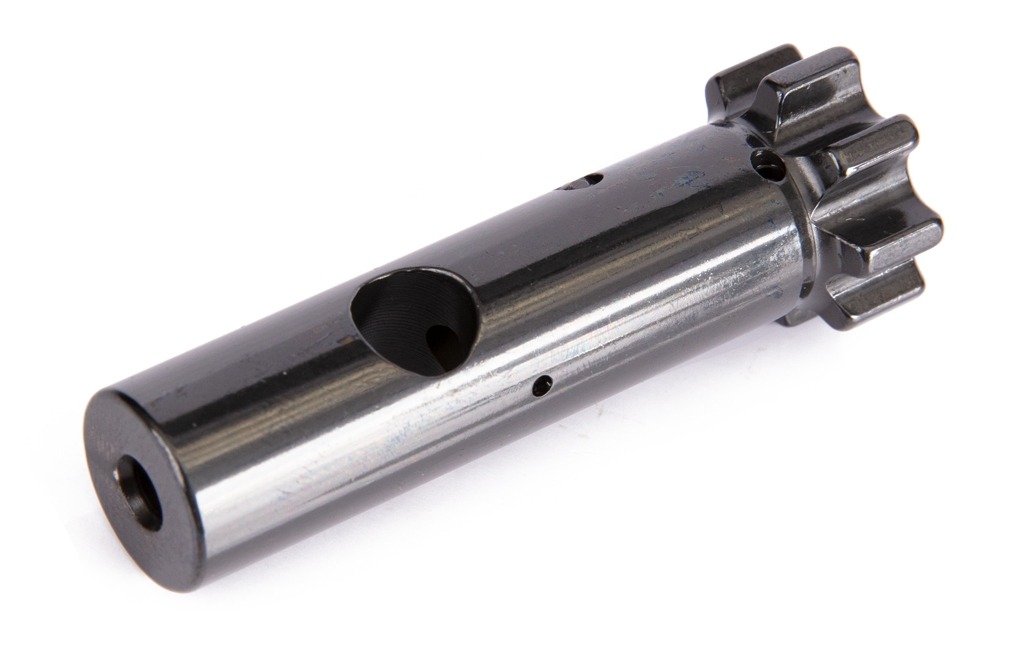
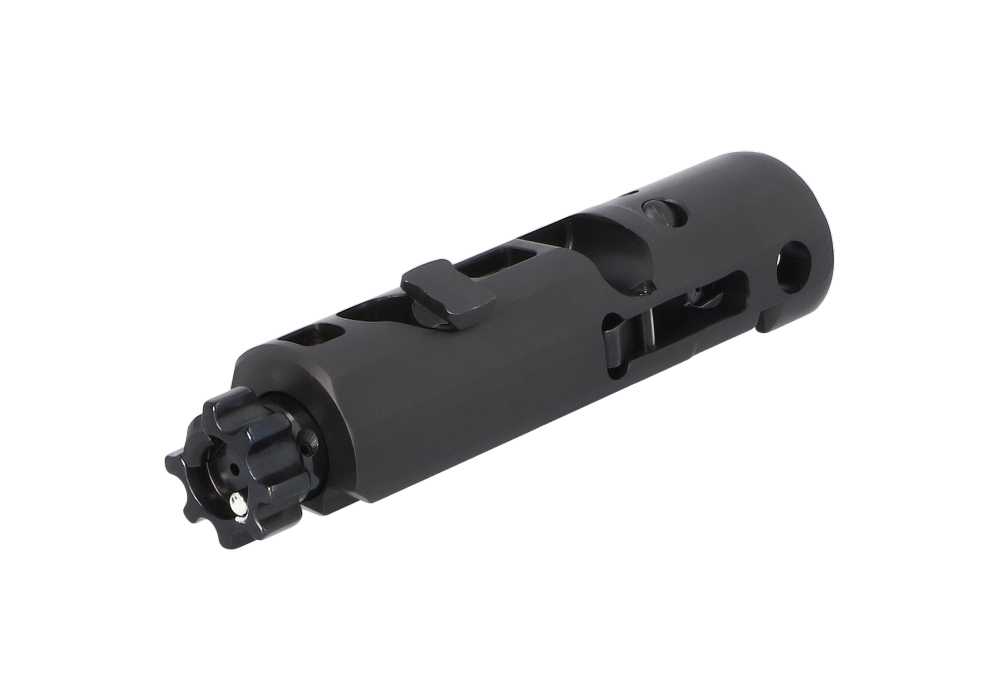
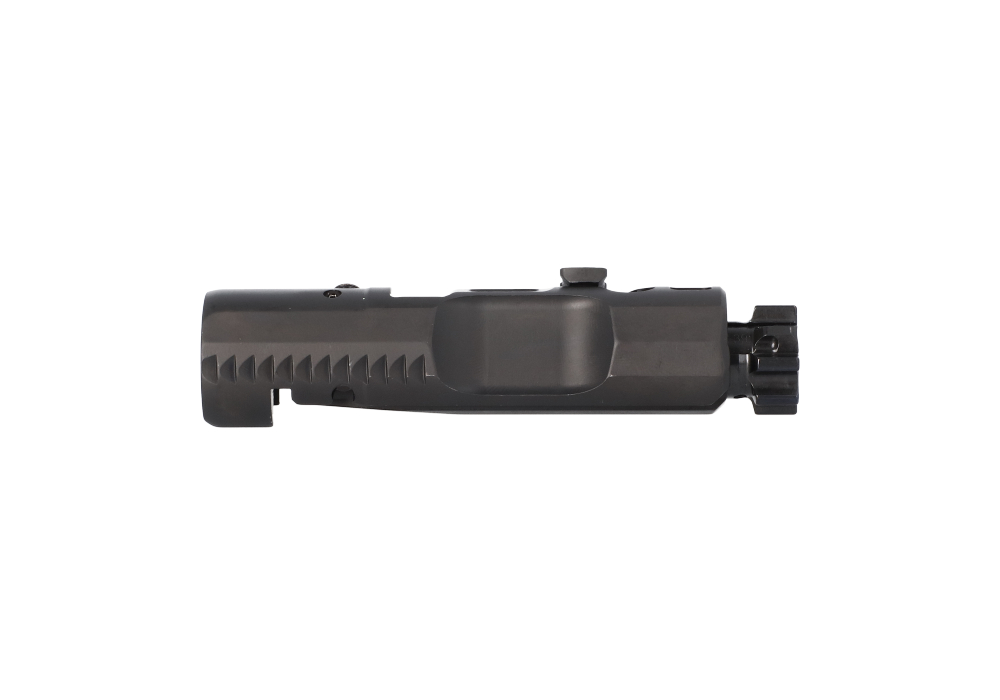
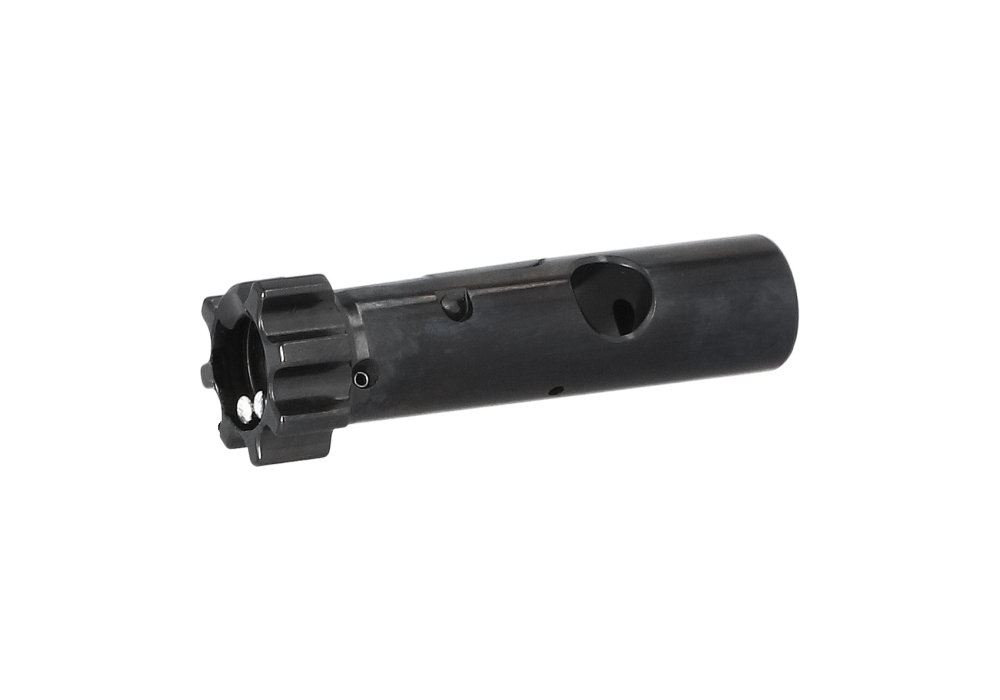
Carbine bolt carrier assemblies are the working heart of a compatible semi-automatic rifle, directing the sequence that takes place each time the firearm cycles. Often referred to as a bolt carrier group, or BCG, a complete assembly typically includes the carrier, bolt, gas key, firing pin, cam pin, and retaining pin. As a cartridge is fired, expanding gas drives the carrier rearward; the bolt unlocks from the barrel extension, the extractor pulls the spent case from the chamber, and the ejector clears it from the receiver. As the carrier moves forward again, it strips a fresh cartridge from the magazine, chambers it, and rotates the bolt into its locked position. That repeated movement happens in a brief, tightly coordinated sequence, which is why the right assembly matters to reliability, fit, and the overall feel of a carbine. When selecting a replacement or spare, begin with the rifle’s platform, chambering, operating system, and barrel extension rather than relying on appearance alone. The carrier profile, bolt dimensions, firing pin, cam pin, and gas key must all be appropriate for the firearm, and a complete assembly is often the simplest choice when replacing worn or missing components. A properly installed gas key should be securely staked, the bolt should have clean, well-formed locking lugs, and the extractor should provide firm tension without binding. Buyers comparing assemblies may also encounter different steel specifications and surface treatments. Carriers are commonly produced from durable alloy steel, while bolts use materials selected for repeated locking and unlocking stress. Phosphate finishes offer a familiar service finish, nitride treatments provide a hard, corrosion-resistant surface, and nickel boron options are known for a smooth feel and easy cleanup. Finish alone does not determine quality, so it should be considered alongside manufacturing standards, inspection, compatibility, and the intended operating conditions.
These assemblies can serve several practical roles. A rifle owner may need a direct replacement after extended use, keep a tested spare in a range bag, or choose a complete assembly while finishing a compatible build. Competitive shooters and frequent range users often appreciate having a properly matched spare available, particularly when a long training session or cold-weather outing makes an unexpected delay especially unwelcome. For a new owner, an additional assembly can be a thoughtful gift when the recipient already has a compatible rifle and has confirmed the required configuration; firearm components are personal purchases, and a quick check of the platform and chambering is more useful than guessing based on a photograph. During the cooler months, a carrier assembly that has been stored in a case or vehicle should be allowed to reach a stable temperature before inspection, since condensation can form on cold metal when it enters a warm room. Before installation or maintenance, verify that the firearm is unloaded, remove all ammunition from the work area, and follow the firearm manufacturer’s instructions. Inspect the carrier rails, bolt lugs, extractor, firing pin, cam pin, and gas key for unusual wear, peening, cracks, loose staking, or excessive fouling. Light lubrication on the bearing surfaces recommended by the manufacturer helps the assembly move smoothly, while too much oil can collect dust, powder residue, and other debris. It is also wise to confirm that the replacement assembly is intended for the same operating system and ammunition specification; a visually similar part may not be a suitable substitute. For shoppers looking for a traditional configuration, Mil Spec Bolt Carrier Assemblies can provide a useful starting point for comparing compatible options. With the correct fit, sound components, and sensible maintenance, a carbine bolt carrier assembly can support dependable cycling through routine practice, seasonal range days, and the many small moments when a rifle needs to function exactly as expected.