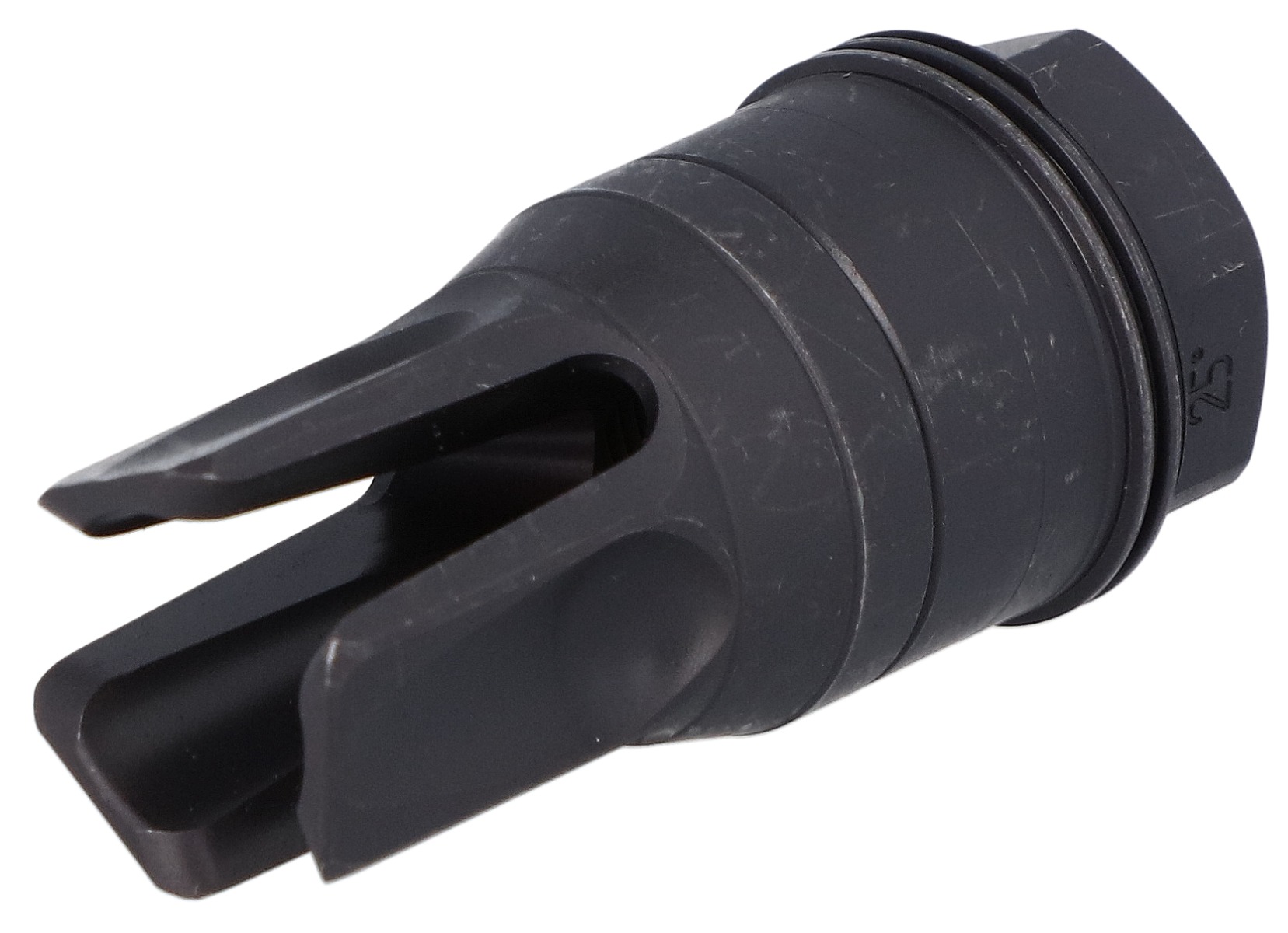
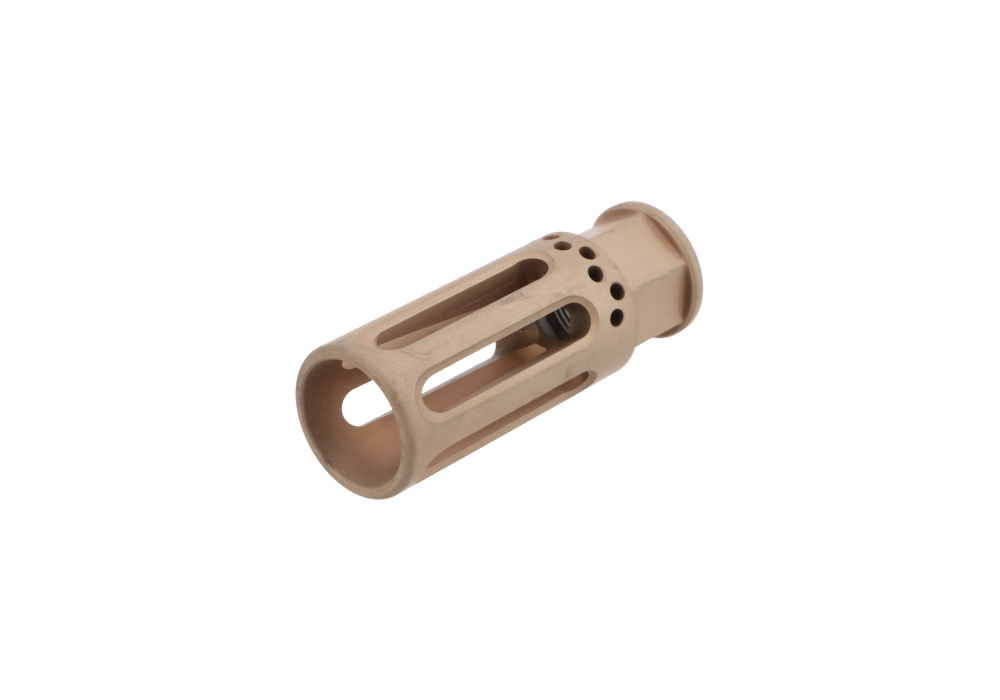
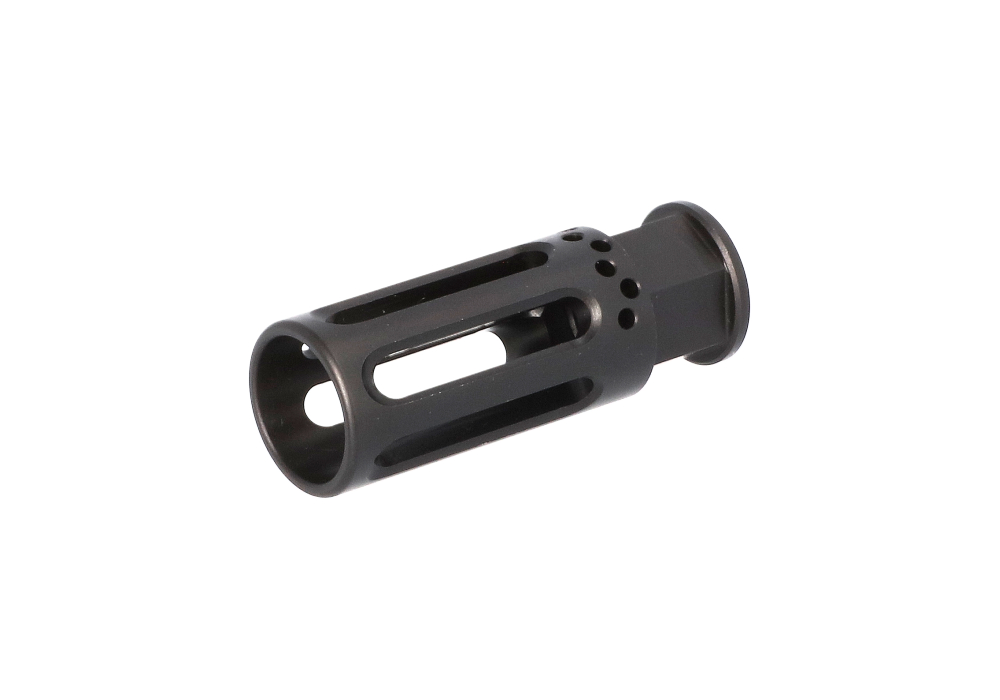
5.56 NATO flash hider adapters serve an important role at the front of a compatible rifle, combining flash mitigation with a practical interface for a suppressor system. The right adapter can help reduce the bright burst visible at the muzzle during low-light shooting while also providing a secure, repeatable point for attaching compatible equipment. For many rifles chambered in 5.56 NATO, the most familiar thread pattern is 1/2x28, although thread pitch should always be confirmed before ordering. A properly selected adapter may also help moderate muzzle movement through carefully positioned prongs or ports, allowing the shooter to keep the rifle settled during controlled fire. These parts are commonly selected by range shooters, hunters, competitors, instructors, and rifle owners who are configuring a host for a suppressor. They can also be a thoughtful gift for someone building a new upper receiver assembly or refining a well-used rifle, especially when the buyer knows the recipient’s barrel threading and suppressor interface. Because compatibility matters more than appearance alone, begin with the rifle’s caliber, barrel thread pattern, shoulder or taper profile, and the suppressor mounting system it must support. A flash hider that looks suitable may still be incompatible if its locking interface, indexing method, or rear geometry does not match the intended host.
Suppressor-ready flash hider adapters are available in several configurations, including three-prong designs, closed-tine styles, and systems with specialized locking features. Open-prong designs can provide effective flash concealment while allowing expanding gases to move away from the bore, and some configurations incorporate porting that helps limit muzzle rise. Quick-detach interfaces are useful for owners who move one suppressor between multiple rifles, provided each host has the correct adapter and each connection is checked before use. Some systems use an active spring-retention mechanism, while others rely on a taper, shoulder, locking collar, or proprietary lug arrangement to keep the suppressor firmly seated. Flow-through designs may be appealing to shooters who want an interface intended to manage gas movement without adding unnecessary complexity, while reverse-threading features can help resist loosening as the suppressor is removed. A shouldered adapter and a tapered adapter are not interchangeable by assumption; each is designed around a particular barrel and suppressor relationship. For that reason, the best selection is guided by the suppressor manufacturer’s compatibility information rather than by visual similarity. The 5.56 Caliber Suppressor Flash Hiders collection can help shoppers compare compatible configurations when planning a rifle and suppressor setup. Keep in mind that flash reduction, recoil feel, sound performance, and gas behavior depend on the complete system, including barrel length, ammunition, firing position, and suppressor design.
Installation deserves the same attention as product selection. Before fitting a 5.56 NATO flash hider adapter, verify the barrel threads, inspect the muzzle and shoulder for damage or debris, and follow the applicable installation instructions for the adapter and suppressor. Proper alignment is essential; a suppressor should never be used with an adapter that has not been checked for concentricity and secure seating. A qualified gunsmith can inspect the host, confirm alignment, apply the correct indexing method, and use the specified torque procedure without relying on guesswork. Thread compounds, shims, crush-style indexing components, and spacers are not universally interchangeable, so use only the components approved for the specific system. After installation, inspect the adapter periodically for carbon buildup, looseness, unusual wear, or changes in the locking feel. During the cooler months, temperature changes between storage, transport, and the range can affect how metal components feel during handling, making a careful pre-use inspection especially worthwhile. Store the rifle and accessories securely, follow all applicable laws and range rules, and use suitable eye and hearing protection whenever firing. A well-chosen adapter should complement the rifle rather than complicate it: the threads should match, the interface should lock with confidence, alignment should be verified, and maintenance should remain straightforward. With those details handled, a flash hider adapter becomes a durable part of a thoughtfully configured 5.56 NATO platform, whether the goal is a suppressor host for regular range sessions, a compact field rifle, or a carefully assembled gift for an experienced firearm owner.