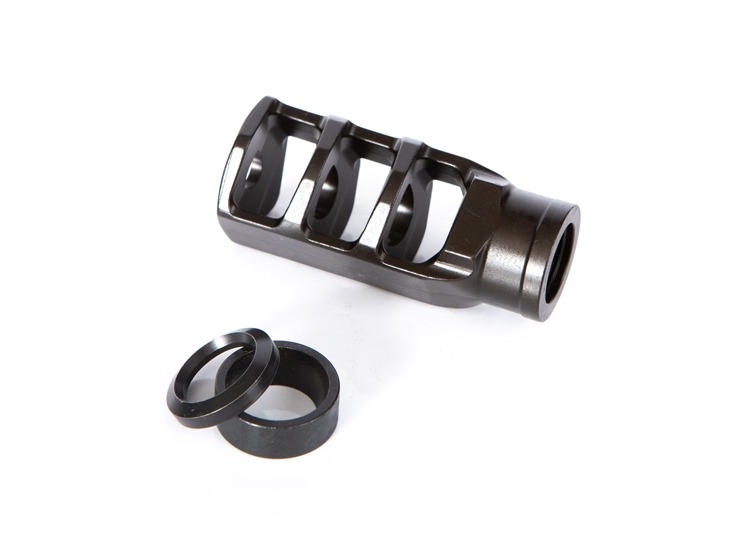
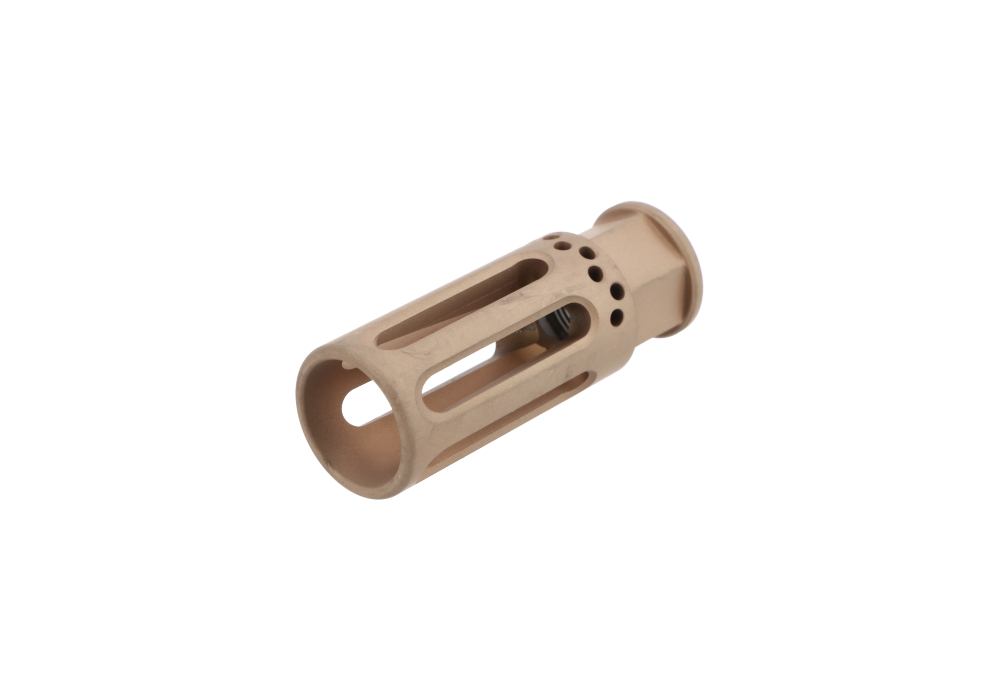
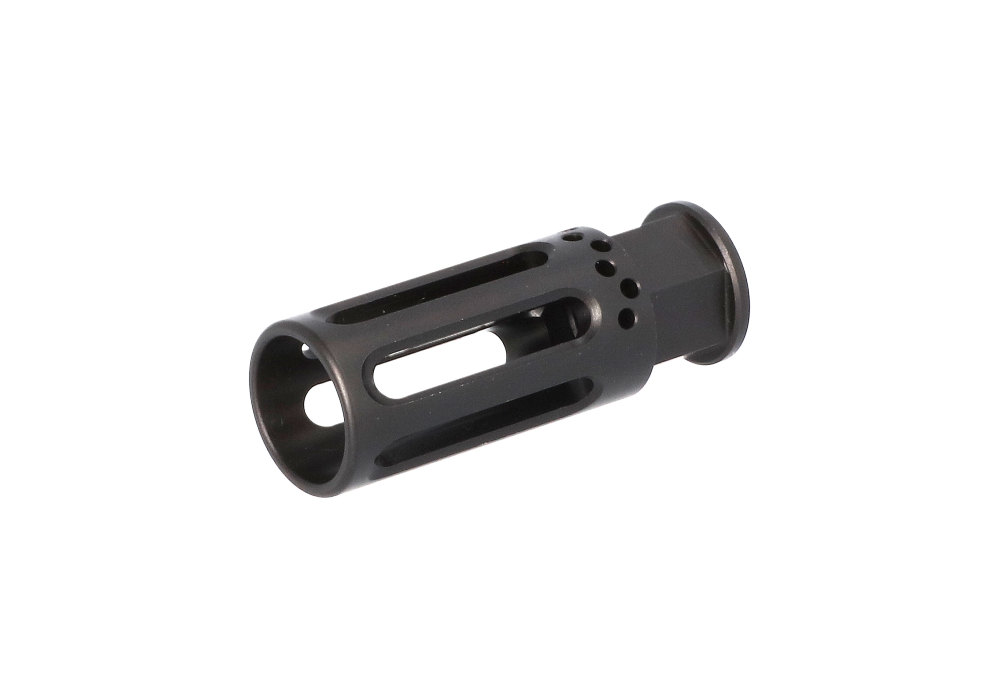
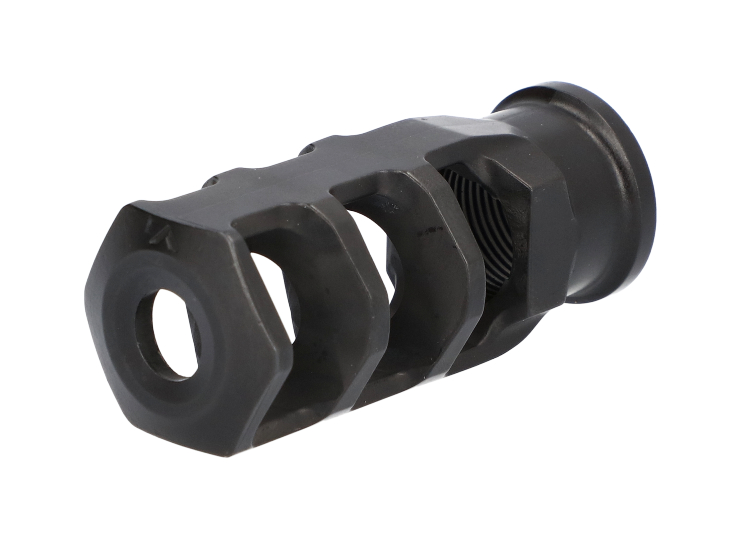
5.56 NATO muzzle compensators are muzzle devices designed to manage muzzle movement by redirecting propellant gases as a bullet exits the barrel. Their primary role is to help limit muzzle rise, although some designs also reduce felt recoil. Those functions overlap with muzzle brakes, but the terms do not describe exactly the same emphasis: a compensator primarily addresses muzzle movement, while a brake primarily addresses rearward recoil. Hybrid designs can combine elements of both, and some also incorporate features intended to reduce visible flash. Linear compensators form another category, generally directing blast forward rather than emphasizing the same recoil and muzzle-rise characteristics as other designs. These distinctions matter because no single device delivers every benefit equally. On a rifle chambered for 5.56 NATO, the recoil impulse is relatively light, yet muzzle movement and the character of that impulse can still influence how the firearm feels during a range session. A compensator changes that experience without eliminating recoil, sound, or the need for consistent firearm handling. Recreational target shooters, competition participants, and people attending structured range training may value different combinations of handling, dimensions, and blast characteristics. A device that feels comfortable on an open firing line may produce a noticeably sharper impression beneath a covered shooting bay, where nearby surfaces reflect sound and pressure. Neighboring shooters can also experience increased concussion from designs that direct gases to the sides. A compensator is not a suppressor, and reduced muzzle movement should never be mistaken for reduced hearing risk. Appropriate hearing and eye protection remain essential. The most useful description of a 5.56 NATO compensator therefore accounts for both its intended function and its tradeoffs, rather than treating recoil reduction, flash reduction, forward blast direction, and sound suppression as interchangeable features. Performance claims are most meaningful when they identify the effect being measured and the conditions behind the comparison; broad promises alone say little about how a device will feel on a particular rifle.
Materials, construction, and finish help determine how a muzzle compensator withstands repeated exposure to hot gases, firing residue, and routine handling. Steel and stainless steel are common choices because a muzzle device operates in a demanding environment, with surfaces exposed to heat and erosion during use. Alloy selection, manufacturing quality, and the geometry of the device all contribute to durability; a material name by itself does not establish service life. Protective finishes can help resist surface wear and corrosion, but they do not remove the need for care. Carbon deposits, cleaning chemicals, and contact with equipment can affect a device’s appearance over time, particularly around openings where residue accumulates. A uniform finish and cleanly machined surfaces are useful quality considerations, while cosmetic appearance alone cannot confirm correct fit or structural condition. Compatibility deserves equal attention. A 5.56 NATO designation identifies the intended cartridge family, but it does not establish that every compensator will fit every rifle chambered for that cartridge. Barrel threads, bore clearance, mounting surfaces, and the firearm manufacturer’s requirements all matter. Similar-looking components can have different interfaces, and a device should never be assumed compatible merely because it begins to thread onto a barrel. Fit and installation belong with a qualified gunsmith whenever the specifications or mounting arrangement are uncertain. Some muzzle devices also serve as interfaces for suppressors, but that role must be explicitly supported by the relevant manufacturers; an ordinary compensator is not automatically a suppressor mount. Overall length, weight, and external profile also affect how a rifle fits in a case and how its front end feels during handling. Compact dimensions may appeal to someone who prefers a less prominent accessory, while a longer or heavier design brings different physical characteristics. Those differences are worth considering alongside construction quality, without assuming that larger dimensions necessarily produce better results.
Long-term ownership brings together intended use, maintenance expectations, and the practical details of the firearm itself. For a recreational shooter who spends most range time at a shared bench, blast characteristics and consideration for adjacent firing positions may carry as much weight as the compensator’s stated performance. For a competition participant, applicable equipment rules can influence whether a particular category of muzzle device is suitable. A rifle used across several settings may call for a balanced feature set rather than an emphasis on one characteristic alone. The broader range of 5.56 Nato AR15 Muzzle Devices includes categories with different purposes, making the distinction between compensation, recoil management, and flash reduction especially relevant. Descriptive specifications are more useful than aggressive styling or broad claims: materials, dimensions, intended compatibility, and clearly stated mounting requirements provide a concrete picture of what a device is designed to do. Routine care should follow the firearm and accessory manufacturers’ recommendations, with attention to visible damage, unusual wear, corrosion, and changes in fit. Cleaning methods and chemicals suitable for one finish may not suit another, and residue should not be treated as a reason to alter openings or reshape any part of the device. Inspection by a qualified professional is appropriate when condition or alignment is in doubt. Safe handling and an unloaded firearm are essential whenever maintenance or inspection takes place. For a gift recipient, confirmed compatibility and an understanding of the owner’s preferences matter more than appearance; muzzle accessories are not universal-fit gifts. Applicable laws, range policies, and competition requirements also remain part of responsible ownership. A well-suited 5.56 NATO muzzle compensator brings together a clearly defined purpose, appropriate construction, verified fit, and manageable care requirements. Its value rests on how those characteristics match the firearm and its intended setting, with realistic expectations about recoil, muzzle movement, blast, and wear throughout continued use.