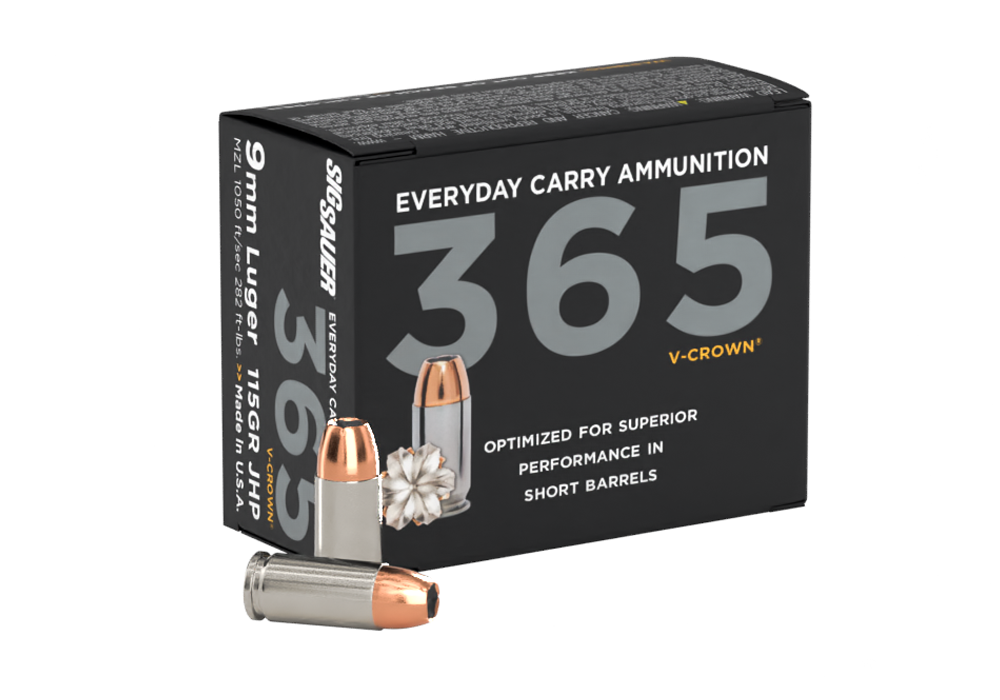
9mm hollow point rounds are designed for situations where dependable function and controlled bullet performance matter more than the economical volume associated with ordinary range ammunition. Also known as 9mm Luger or 9x19mm ammunition, these cartridges use a projectile with a shaped cavity in the nose. When the bullet encounters a suitable target, the cavity is intended to encourage expansion, producing a wider frontal profile than a traditional full metal jacket projectile. That change can help transfer energy efficiently and may reduce the likelihood of the bullet passing through a target with substantial residual energy, although results depend on the load, barrel length, impact conditions, and what the projectile encounters along the way. For that reason, 9mm hollow points are commonly selected for lawful personal protection, concealed carry, and home-defense applications, while full metal jacket ammunition remains a familiar choice for practice. The right selection starts with the firearm itself. Confirm that the pistol is chambered for 9mm Luger, read the owner’s manual, and select ammunition from a reputable manufacturer that is appropriate for the specific firearm. Bullet design, case construction, primer quality, and consistent dimensions all contribute to smooth feeding and reliable ignition. A cartridge that performs well on paper still needs to function in the individual pistol, magazine, and holster combination where it will be carried.
Among the most important details to compare are bullet weight, pressure rating, and intended use. Common 9mm hollow point weights include 115 grain, 124 grain, and 147 grain. Lighter bullets often produce higher velocities, while heavier bullets may offer a softer, more settled recoil impulse in some pistols and can be subsonic depending on the load. Those are useful general tendencies, not guarantees; published velocity is measured from a specified test barrel, and a compact carry pistol may produce different results. Ammunition marked +P is loaded to a higher pressure than standard-pressure ammunition and may provide additional velocity, but it can also produce sharper recoil, greater muzzle blast, and more wear over time. Only use +P ammunition if the firearm manufacturer specifically indicates that the pistol is rated for it, and follow all guidance in the owner’s manual. Standard-pressure ammunition is often a practical choice for shooters who prioritize comfortable practice and manageable control, while some experienced users choose +P after confirming compatibility and training with the increased recoil. Bullet construction also deserves attention. Some hollow points rely on an open cavity and carefully formed jacket, while others incorporate features intended to maintain expansion through heavy clothing or to keep the projectile’s components together when passing through intermediate materials. No design performs identically in every circumstance, and advertising language should never replace careful verification. Ballistic testing can provide useful comparisons, but the most meaningful check for a carry setup is reliable cycling in the actual handgun.
Before relying on any 9mm hollow point rounds for defensive use, fire enough of the selected load to confirm that the pistol feeds, fires, extracts, and locks back consistently with the magazines intended for carry. Many shooters begin with a modest quantity for function testing, then include additional practice sessions to become familiar with recoil, report, point of impact, and the feel of the trigger reset under realistic range conditions. Testing should be conducted at an approved range while following the four fundamental rules of firearm safety: treat every firearm as loaded, keep the muzzle pointed in a safe direction, keep the trigger finger outside the trigger guard until ready to fire, and be certain of the target and what lies beyond it. A defensive load that is difficult to control may be less suitable than one that allows accurate, repeatable hits, and a cartridge that groups well but causes feeding issues should not be trusted for carry. Inspect ammunition for damaged cases, questionable bullets, corrosion, or other visible defects, and rotate carried ammunition according to the firearm and ammunition manufacturers’ recommendations. Store cartridges in a cool, dry place away from children and unauthorized users; a locked container is appropriate for household storage, and local laws may impose additional requirements. These rounds can be a thoughtful purchase for a responsible adult who owns a compatible 9mm pistol, is legally permitted to possess ammunition, and understands safe handling, but ammunition should not be given to anyone who has not completed appropriate training or cannot secure it properly. For shoppers comparing the available selection, the 9mm Luger Expansion Hollow Points collection provides a focused place to review defensive 9mm options by bullet design, weight, and pressure specification. During the cooler months, when heavier clothing can become part of a real-world carry environment and range sessions may require a little more planning, a deliberate approach to selection, testing, and storage helps ensure that the ammunition fits both the firearm and the shooter’s established safety routine.