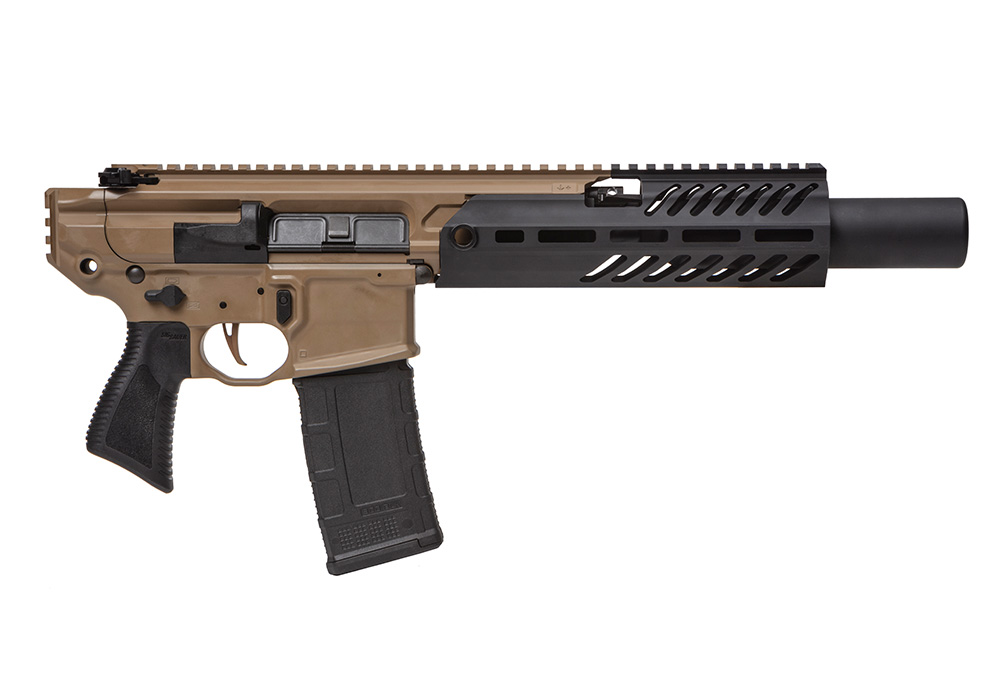
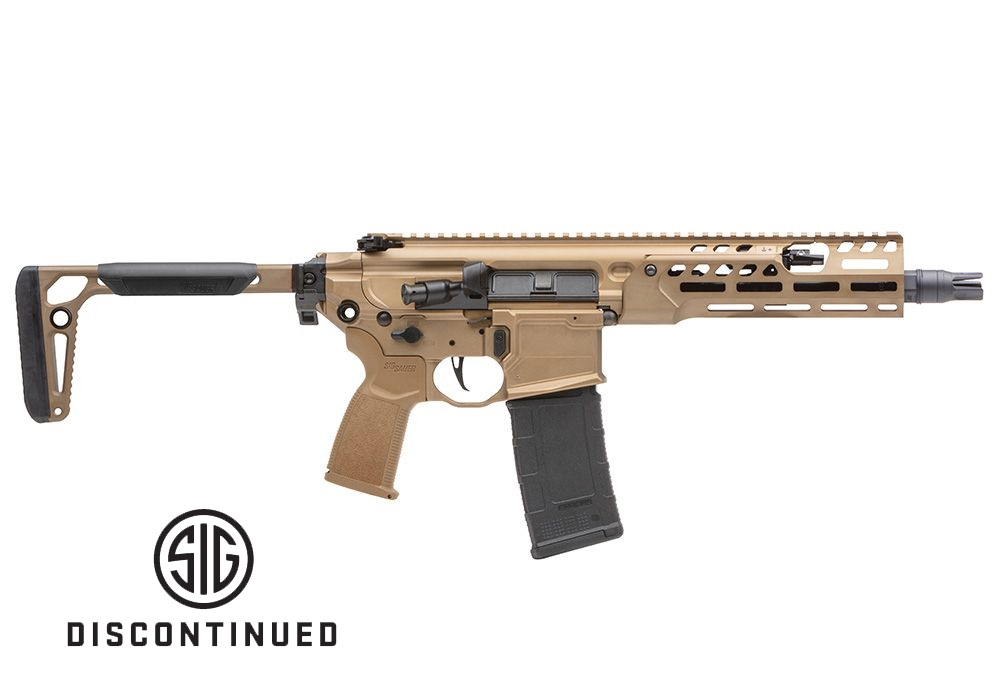
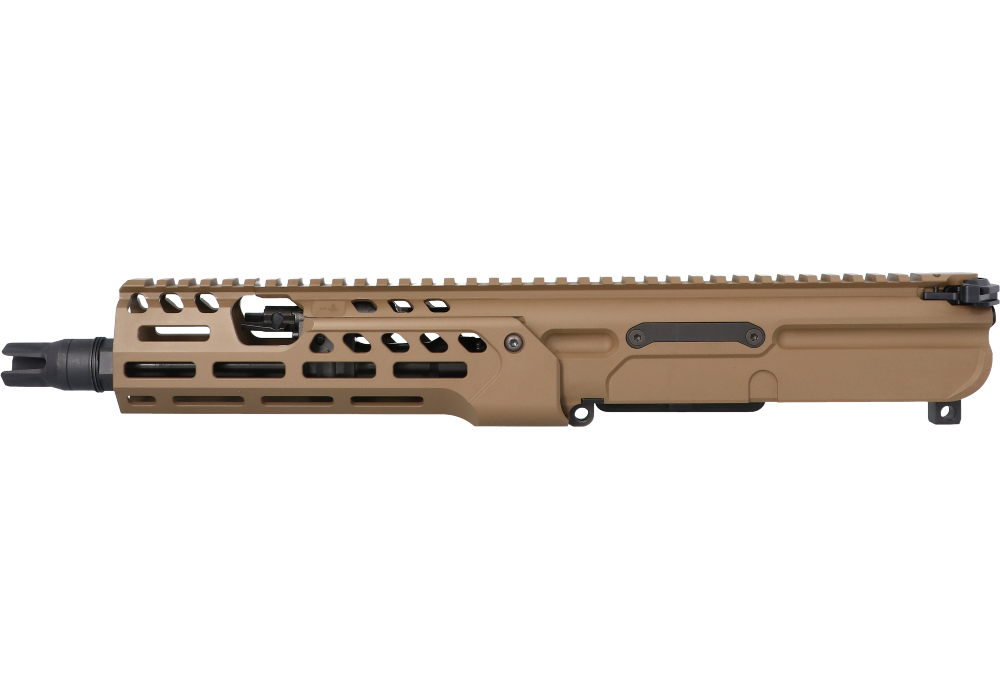
Aluminum Handguard 300 Blackout SBRs bring together a compact platform and a practical, adaptable fore-end for range use, home protection where lawful, training, and discreet transport. A handguard built for a .300 Blackout Short Barrel Rifle should complement the rifle’s barrel length rather than overwhelm its proportions. Very short barrels in the approximate 5.5- to 7.5-inch range are often paired with shorter handguards that leave the muzzle and muzzle device accessible, while barrels measuring roughly 8.3 to 9 inches commonly suit handguards in the 8.5- to 9.5-inch range. These proportions preserve a comfortable support-hand position while maintaining the compact character that makes a .300 Blackout SBR appealing. Aluminum is a popular choice because it offers a useful balance of strength, weight, and heat resistance, with 6061 and 7075 aluminum appearing frequently in durable designs. A hardcoat anodized finish helps protect the surface from ordinary wear, handling, and exposure during transport or outdoor practice. The right handguard should feel secure in the hand without making the front of the rifle unnecessarily heavy. That matters during a long training session, when a shooter may spend hours moving between shooting positions, checking a zero, or practicing controlled transitions. Before purchasing, confirm the handguard’s intended barrel-length range, mounting system, overall length, and compatibility with the upper receiver and barrel nut used on the firearm. SBR ownership and configuration can be subject to federal, state, and local requirements, so verify all applicable rules before buying, installing, or modifying components.
A free-float aluminum handguard surrounds the barrel without applying contact pressure along its length, which can help maintain consistent barrel movement and support repeatable accuracy when the rifle is fired from different positions. This design also gives the shooter a stable gripping surface for a light, controlled hold. M-LOK attachment slots are common on modern handguards and provide a streamlined way to mount compatible accessories such as lights, hand stops, sling hardware, and other mission-specific equipment. Picatinny rail sections may be useful when a mounted accessory requires a continuous rail interface, while a hybrid layout can provide flexibility without covering every surface in unnecessary hardware. Keep accessory placement intentional: a support-hand stop near the front can help establish a repeatable grip, while a weapon light should be positioned where it can be activated naturally without disturbing the firing grip. Buyers should also inspect the handguard’s internal diameter, especially when using a suppressor. A suppressor intended to sit partly beneath the handguard requires sufficient clearance, and an inner diameter around 1.75 to 1.8 inches is often considered when evaluating tucked configurations. Clearance must account for the suppressor’s actual outside diameter, mounting system, barrel alignment, heat expansion, and the handguard’s internal profile. A close fit can limit access to side M-LOK slots and may place accessories too near a hot suppressor. Always follow the suppressor and handguard manufacturers’ clearance guidance, and allow components to cool before handling or making adjustments. A carefully matched setup can retain a clean, compact appearance while leaving enough room for safe operation, accessory installation, and maintenance.
These products may appeal to experienced builders refining a compact .300 Blackout setup, owners replacing a damaged or outdated fore-end, or shooters assembling a lightweight platform for practice and responsible recreational use. They can also be a thoughtful accessory gift for an enthusiast who already owns a compatible SBR, although the recipient’s barrel length, upper receiver, barrel nut, accessory needs, and preferred mounting standard should be confirmed first. A handguard is not a universal fit, and an attractive finish or familiar layout does not compensate for an incorrect interface. Shoppers comparing aluminum handguard 300 Blackout SBRs should consider whether they prefer a minimalist tube, a broader grip area, integrated rail sections, or generous M-LOK coverage. Weight, length, outside profile, internal clearance, installation requirements, and finish durability all affect the final experience. Black finishes remain a versatile choice for a subdued, coordinated build; shoppers comparing complementary configurations can also browse Black Finish 300 Blackout SBRs. For cooler outdoor sessions, a handguard with comfortable contours and enough room for a gloved support hand can make a noticeable difference, while during warmer conditions, ventilation and sensible accessory placement can help keep the front end manageable as components heat. Inspect mounting hardware before use, confirm that the handguard is properly secured, check that the barrel remains free-floated, and verify that every accessory is tightened according to its manufacturer’s instructions. With those details addressed, an aluminum handguard can give a compact .300 Blackout SBR a balanced feel, dependable accessory support, and a clean, purpose-built appearance.